Why Windows Are Your Home’s Biggest Energy Leak
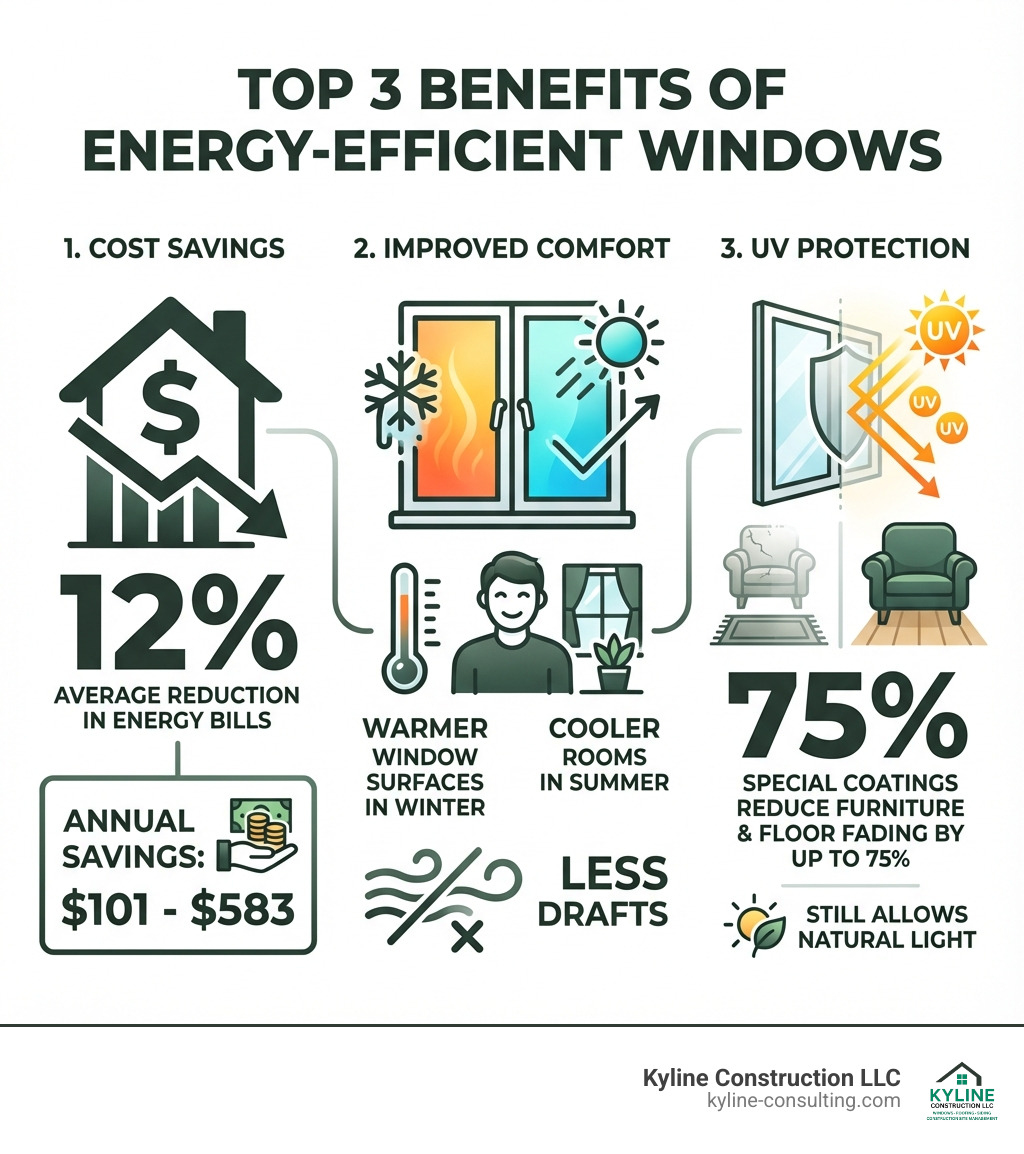
High efficiency windows are specially designed windows that minimize heat transfer through multiple panes of glass, low-emissivity (Low-E) coatings, insulating gas fills, and thermally improved frames—reducing your home’s heating and cooling costs by an average of 12% annually while improving comfort.
Key Facts About High Efficiency Windows:
- Energy Loss: 25-30% of your home’s heating and cooling energy escapes through standard windows
- Cost Savings: ENERGY STAR certified windows save $101-$583 per year when replacing single-pane windows
- Return on Investment: Expect an average 68.5% ROI on window replacement projects
- Federal Tax Credit: 30% of project costs up to $600 (through December 31, 2032)
- Comfort Benefits: Warmer interior glass in winter, reduced heat gain in summer, less UV fading
If you’ve ever felt a draft near your windows on a cold Ohio winter night, or noticed your AC struggling to keep up during summer, you’re not alone. Windows are one of the most common sources of energy loss in homes—but they’re also one of the most impactful upgrades you can make.
I’m Shawn Zeisler, of Kyline Consulting LLC, and I’ve spent my entire career in the construction industry helping Ohio homeowners improve their properties through quality exterior remodeling, including the installation of high efficiency windows that deliver real, measurable results. Let me walk you through everything you need to know to make an informed decision about upgrading your windows.
How Energy-Efficient Windows Work
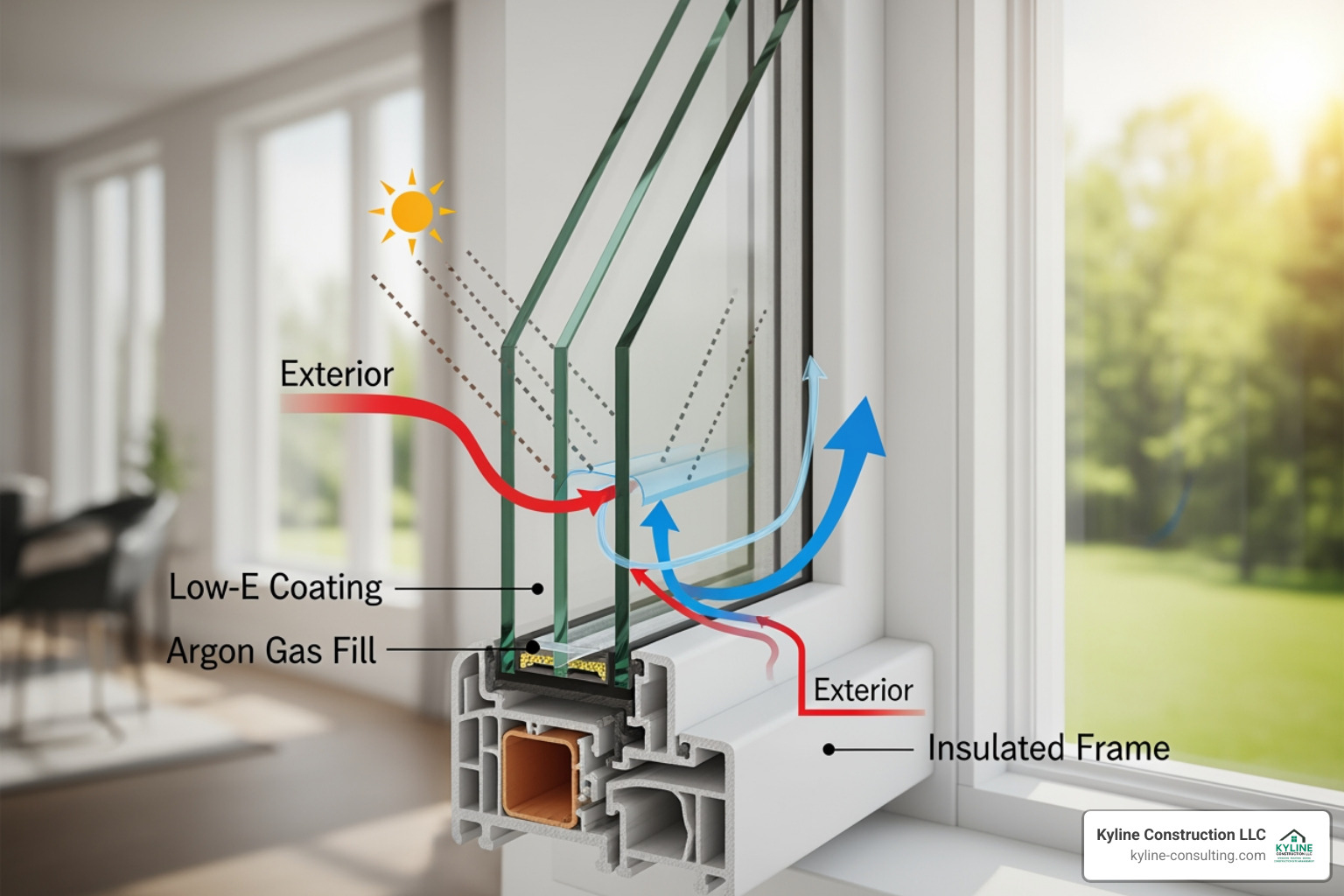
To appreciate high efficiency windows, it helps to understand the science. Windows are often the weakest link in a home’s thermal envelope, allowing heat to escape in winter and creep in during summer. This happens through three main mechanisms: conduction, convection, and radiation.
- Conduction: Heat transfers directly through window materials like glass, frame, and spacers.
- Convection: Air currents carry heat. If a window isn’t sealed tightly, warm air can escape and cold air can sneak in. Convection can also occur between glass panes if the space isn’t properly filled.
- Radiation: Heat radiates through space. Sunlight radiates heat into your home, and warm objects inside radiate heat towards colder window surfaces.
High efficiency windows are engineered to combat all three heat transfer methods using advanced glazing technology and frame materials.
Key Features of High Efficiency Windows
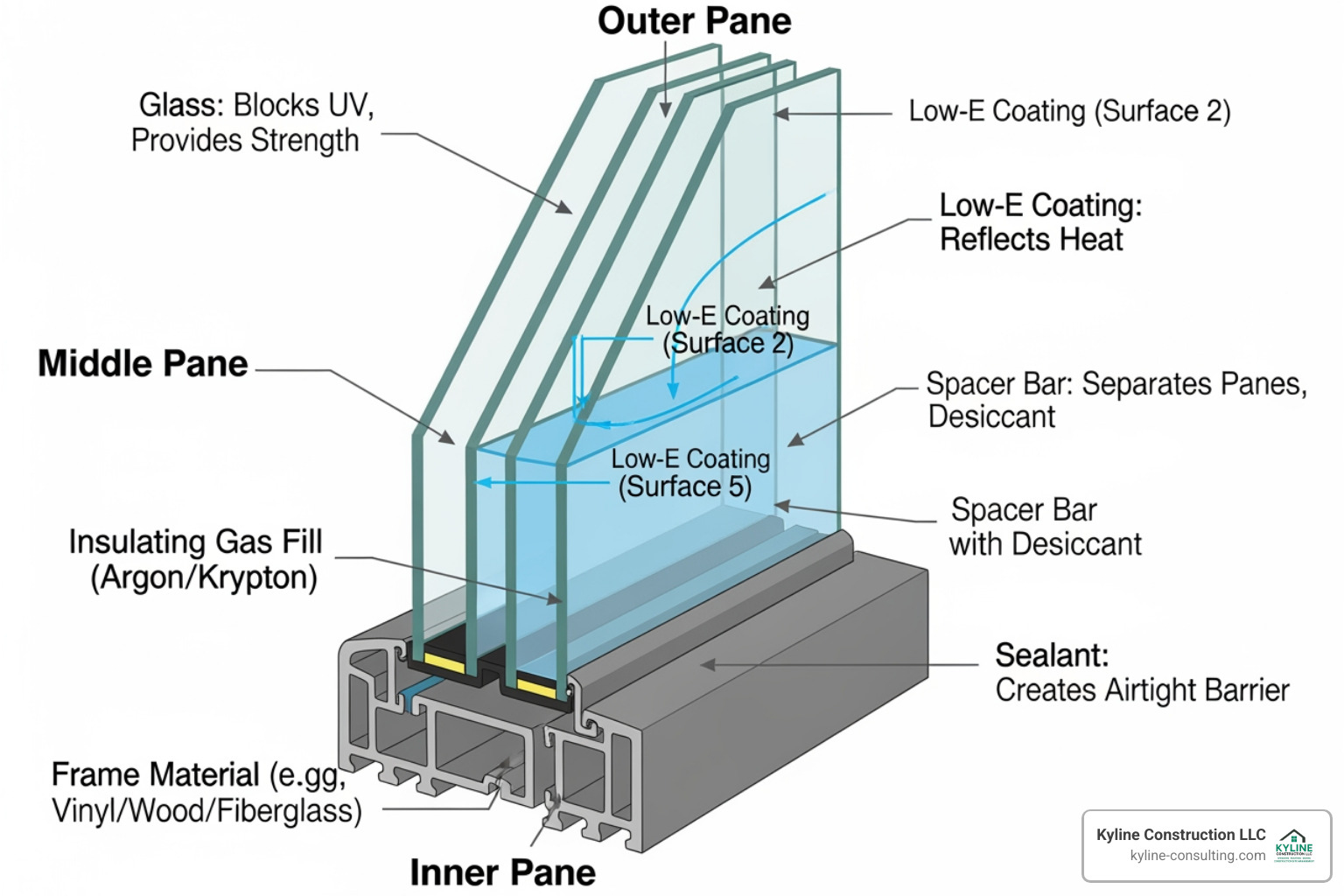
The magic of high efficiency windows lies in their innovative components:
-
Glazing Technology (The Glass Itself):
- Low-E Coatings: These microscopically thin, transparent metallic layers are applied to glass surfaces. They reflect radiant heat back into your home in winter and away from it in summer. This significantly reduces heat transfer without noticeably blocking visible light. A low-E coating can add as much insulation as an extra pane of glass.
- Gas Fills: Instead of air, the space between glass panes is often filled with inert gases like argon or krypton. These gases are denser than air, slowing heat transfer. Argon is a common, cost-effective choice, while krypton offers better insulation, especially in narrower spaces, though it’s more expensive.
- Warm-Edge Spacers: These separate the glass panes in an insulated glass unit (IGU). Traditional aluminum spacers conduct heat, creating a “cold edge.” Warm-edge spacers, made from less conductive materials, reduce this heat transfer, improving window efficiency and minimizing condensation.
-
Frame Materials: The frame also plays a crucial role. Modern high efficiency windows use materials that don’t readily conduct heat, such as vinyl, fiberglass, or composite materials, often with internal insulation chambers.
These features work in concert to create a superior barrier against energy loss, keeping your Ohio home comfortable and your energy bills lower.
Double-Pane vs. Triple-Pane Windows: Performance and Cost
When considering high efficiency windows, you’ll often hear about double-pane and triple-pane options. The choice balances performance, cost, and climate.
- Double-Pane Windows: These consist of two panes of glass separated by a sealed air or gas-filled space. They are a significant upgrade from single-pane windows and are the most common type of high efficiency window installed today. They typically cost between $150 and $1,290 to purchase and install.
- Triple-Pane Windows: As the name suggests, these have three panes of glass, creating two insulated spaces. Triple-pane windows are the most energy-efficient, providing superior insulation and excelling at reducing outside noise. This extra layer makes them more effective at preventing heat transfer. Triple-pane window pricing usually runs between $400 and $3,540 with an average cost of $1,920 per window.
Performance Difference: Triple-pane windows offer better insulation (lower U-factor) and can further reduce solar heat gain (lower SHGC) compared to double-pane, making them ideal for extreme climates or for homeowners seeking maximum energy savings and sound reduction. A U-factor of 0.20 or lower often indicates a triple-pane window.
Cost Difference: Triple-pane windows come with a higher upfront cost. However, the improved energy savings and comfort can lead to a quicker return on investment, especially in climates with significant heating and cooling demands, like ours in Ohio.
Understanding Window Ratings
To compare high efficiency windows objectively, standardized rating systems are essential. The National Fenestration Rating Council (NFRC) developed the standards used to qualify products for ENERGY STAR certification. These ratings measure a window’s energy performance:
- U-factor: Measures how well a window prevents heat from escaping. A lower U-factor indicates better insulation. Values typically range from 0.2 to 1.2.
- Solar Heat Gain Coefficient (SHGC): Measures how much solar heat a window transmits. A lower SHGC reduces cooling costs, which is beneficial for Ohio’s hot summers. A higher SHGC might be desired in colder climates for passive solar heating. Values range from 0 to 1.
- Visible Transmittance (VT): Indicates how much visible light passes through the window. A higher VT means more natural light, potentially reducing the need for artificial lighting. Values range from 0 to 1.
- Air Leakage (AL): Measures air movement through a closed window. A lower AL rating means the window is tighter and less prone to drafts, improving comfort and reducing energy waste. NFRC certification requires it to be 0.3 or below.
- Condensation Resistance (CR): Measures a window’s ability to resist condensation on the interior surface. A higher CR rating (on a scale of 1 to 100) indicates better resistance, which is helpful during Ohio’s humid seasons.
By understanding these ratings, you can make an informed decision about which high efficiency windows are best for your home and our local climate. For more in-depth information, refer to the official NFRC guidelines: Understanding Window Ratings.
Decoding the Label: How to Choose the Right Windows
Choosing the right high efficiency windows for your Ohio home can feel like navigating a maze of technical terms. Thankfully, there are clear labels designed to guide you.
The most important tool for comparing window performance is the National Fenestration Rating Council (NFRC) label. Every high efficiency window you consider should have one. The NFRC is an independent organization that establishes performance standards for windows and doors. Their label provides unbiased, standardized information on a window’s energy properties, including the U-factor, SHGC, VT, and sometimes AL and CR, which we discussed earlier. These ratings are customized to the exact window specifications, so you can trust that the numbers reflect the actual product you’re considering. To learn more about reading these labels, check out How To Read The Label.
Beyond the NFRC label, look for the ENERGY STAR program certification. The ENERGY STAR program, overseen by the EPA, sets energy efficiency standards for a wide range of products, including windows. More than 85% of windows sold in the United States today are ENERGY STAR certified, indicating they meet stringent criteria for energy efficiency. ENERGY STAR certified windows can save an average of 12% on energy bills each year.
The ENERGY STAR criteria for windows are custom to different climate zones across the United States, recognizing that a window suitable for a hot, sunny climate might not be ideal for a cold, northern one. Here in Ohio, we primarily fall into the North-Central climate zone, which means ENERGY STAR windows certified for our region will have specific U-factor and SHGC requirements designed to perform optimally in our mixed climate, where we experience both cold winters and warm summers. This ensures that the windows you choose are truly effective for your local conditions.
Comparing Window Frame Materials
While the glass is crucial, the window frame also significantly impacts a window’s energy efficiency, durability, and cost. Here’s a look at common frame materials for high efficiency windows:
| Frame Material | Cost (Relative) | Efficiency | Durability | Maintenance |
|---|---|---|---|---|
| Vinyl | Low to Mid | Good | Good | Low |
| Wood | Mid to High | Excellent | Good | High |
| Fiberglass | High | Excellent | Excellent | Low |
| Composite | Mid to High | Excellent | Excellent | Low |
- Vinyl Frames: Vinyl windows are a popular choice due to their affordability, low maintenance, and decent energy efficiency. They are made from PVC (polyvinyl chloride) and often feature multi-chambered designs that trap air for insulation. Vinyl windows often represent the best balance of cost-effectiveness and energy efficiency.
- Wood Frames: Wood is a natural insulator and offers excellent energy efficiency. It also provides a classic, aesthetically pleasing look. However, wood frames require regular maintenance (painting, staining, sealing) to prevent rot, warping, and insect damage. They are also typically more expensive than vinyl.
- Fiberglass Frames: Fiberglass frames are highly durable, stable, and offer excellent energy efficiency. They don’t warp, crack, or rot, and require very little maintenance. Fiberglass is also paintable, allowing for color changes. However, they are generally the most expensive option and can be less readily available.
- Composite Frames: These frames combine materials, often wood fibers and polymers, to leverage the best properties of each. For example, some composite materials are twice as strong as vinyl and incorporate recycled content. They offer excellent energy efficiency, durability, and low maintenance, often at a mid-to-high price point.
The impact on efficiency is clear: materials that resist heat transfer (like wood, fiberglass, and composite) and designs that minimize thermal bridging (like multi-chambered vinyl) contribute to better overall window performance. The impact on cost varies, with vinyl being the most budget-friendly upfront, and fiberglass/composite offering long-term value through superior performance and durability.
Understanding the Cost and ROI of High Efficiency Windows
Investing in high efficiency windows is a significant decision for any Ohio homeowner, and understanding the costs involved is key. The cost can vary widely based on several factors, but we can give you a general idea.
The cost of an energy-efficient window typically runs between $150–$4,000 on average before installation. For a whole-house replacement, the average cost ranges from $6,685 to $33,425, depending on the number, size, type, and style of windows. Here’s a breakdown of what you might expect for various projects:
- 5-6 windows: $6,685–$8,022
- 8-10 windows: $10,696–$13,370
- 13-15 windows: $17,381–$20,055
- 18-20 windows: $24,066–$26,740
- 23-25 windows: $30,751–$33,425
Factors Influencing the Cost
Several elements come together to determine the final price tag for your new high efficiency windows:
- Window Size: Larger windows naturally require more materials and can be more complex to install, leading to higher costs.
- Window Type: Different window styles have different price points. For example, a standard double-hung window will typically be less expensive than a bay window or a custom-shaped picture window.
- Frame Material: As discussed earlier, vinyl tends to be the most cost-effective, while fiberglass and certain composite materials can be more expensive due to their superior durability and efficiency.
- Glass Type: Upgrades like triple-pane glass, specialized Low-E coatings, or gas fills (krypton vs. argon) will increase the cost per window but also improve performance. Double-pane windows usually cost between $150 and $1,290, while triple-pane windows range from $400 to $3,540, averaging $1,920 per window.
- Labor Rates & Installation Complexity: The cost of professional installation varies. Factors like the number of windows, ease of access, and whether old windows need to be removed will influence labor costs. Window contractors typically charge $40–$65 per hour. Upper-story or difficult-to-access windows might cost around $600 each to install.
Are High Efficiency Windows Worth the Investment?
Absolutely! While the upfront cost of high efficiency windows can seem daunting, the long-term benefits and return on investment (ROI) make them a wise choice for most Ohio homeowners.
- Energy Savings: The most immediate and tangible benefit is the reduction in your energy bills. ENERGY STAR certified windows can save an average of 12% on energy bills each year. If you’re replacing single-pane windows, you could see estimated savings between $101-$583 per year. Even replacing older double-pane windows can lead to savings of $27–$197 annually. Over the lifespan of your windows, these savings add up significantly.
- Increased Home Value: High efficiency windows are a valuable upgrade that increases your home’s market appeal and resale value. According to Remodeling Magazine’s 2023 Cost versus Value Report, insulated vinyl window replacements with low-E glass had an average ROI of 68.5%. This is a strong return, often higher than other popular home improvement projects.
- Improved Comfort: Beyond the financial savings, the improved comfort in your home is invaluable. No more chilly drafts in winter or sweltering rooms in summer! High efficiency windows keep your indoor temperatures more consistent, making your home a more pleasant place to live.
Government Incentives and Rebates
To sweeten the deal, various incentives are often available to help offset the cost of installing high efficiency windows.
- Federal Tax Credits: Homeowners who install windows or skylights that meet certain ENERGY STAR standards may qualify for a federal tax credit. For windows purchased and installed between January 1, 2023, and December 31, 2032, you can claim 30% of the total project cost for both materials and labor, up to a maximum of $600. This is a fantastic way to make your investment even more affordable. You can learn more about this valuable incentive here: Learn more about this tax credit.
- State and Local Rebates: While federal incentives are consistent, state and local programs can vary. We always recommend checking with your local utility companies in Ohio (e.g., AEP Ohio, Duke Energy Ohio, Columbia Gas of Ohio) or municipal energy programs. They often offer rebates or incentives for energy-efficient home improvements, including window replacements. The ENERGY STAR Rebate Finder is also a great resource to find available programs in your area.
These incentives demonstrate a strong commitment from government and utility providers to encourage energy efficiency, recognizing the broader environmental and economic benefits.
Installation and Beyond: Maximizing Your Window’s Performance
Even the most technologically advanced high efficiency windows won’t perform optimally if they aren’t installed correctly. This is where professional installation truly shines.
Professional Installation: Why It Matters
- Ensuring Peak Performance: Proper installation is critical to achieving the advertised energy savings and comfort benefits. A poorly installed window can lead to air leaks (remember, the combined total of hidden air leaks in a home can equal a hole the size of an open window!), moisture intrusion, and compromised thermal performance, essentially negating your investment in high efficiency windows.
- DIY vs. Professional: While some homeowners might consider a DIY approach to save money, window installation is a complex job that requires specialized skills and tools. It’s usually best left to professionals. Incorrect installation can lead to drafts, water damage, voided warranties, and even structural issues.
- Warranty Protection: Many manufacturers’ warranties are contingent on proper installation according to their specifications. Professional installers, especially those certified by the manufacturer, ensure these guidelines are met, protecting your investment.
- Lead-Safe Practices: If your Ohio home was built before 1978, there’s a good chance it contains lead-based paint. Window replacement in such homes requires lead-safe work practices to protect your family from lead dust, which is a leading cause of lead poisoning in children. Certified professionals are trained in these crucial safety protocols.
- Our Expertise: At Kyline Construction LLC, our 40+ years of experience mean our professionals understand the intricacies of window installation, ensuring precise measurements, proper sealing, and meticulous finishing. We pride ourselves on quality and safety. Find out more about our comprehensive Services.
Signs of Inefficient Windows
How do you know if your current windows are underperforming? Look for these tell-tale signs:
- Drafts: Feeling cold air near closed windows, especially on windy days.
- High Energy Bills: A noticeable increase in heating or cooling costs without a change in usage.
- Faded Furniture or Flooring: UV rays penetrating old windows can cause fabrics, wood floors, and artwork to fade over time. High efficiency windows with Low-E coatings can reduce this fading by up to 75%.
- Condensation Between Panes: This indicates a failed seal in your insulated glass unit, allowing moisture to enter and compromising insulation.
- Difficulty Operating: Windows that stick, are hard to open or close, or don’t stay open.
- Visible Damage: Cracked panes, rotting wood frames, or deteriorated caulk.
The Role of Orientation and Shading
The sun is a powerful force, and how your windows interact with it can significantly impact your home’s energy efficiency.
- Window Orientation: Strategic placement of windows can either maximize or minimize solar heat gain.
- South-Facing Windows: In colder climates like Ohio, south-facing windows can be a boon for passive solar heating in winter. With high efficiency windows that have a higher SHGC, they can capture the sun’s warmth, reducing your heating load. In summer, properly sized roof overhangs can shade these windows when the sun is high, preventing overheating.
- East and West-Facing Windows: These windows receive intense direct sunlight in the morning (east) and afternoon (west). In warmer climates, it’s crucial to minimize heat gain through these windows with low SHGC glass or effective external shading.
- North-Facing Windows: These windows typically provide consistent, indirect light throughout the day and minimal solar heat gain, making them ideal for areas where soft, natural light is desired.
- External Shading: Nature can be your best friend in energy conservation. Deciduous trees (those that lose their leaves in autumn) planted near south, east, and west-facing windows provide shade in the summer, reducing cooling needs, and then allow the sun’s warmth to penetrate in winter once their leaves have fallen. Overhangs, awnings, and trellises can also provide effective seasonal shading. Learn more about planning a Landscape that reduces energy bills.
Dealing with Window Condensation
Condensation on windows can be a nuisance, obscuring views and potentially leading to mold growth. Understanding its causes and how high efficiency windows help is important.
- Interior Condensation: This occurs when the surface temperature of the window glass is below the dew point of the humid indoor air. High indoor humidity (from cooking, showering, humidifiers) combined with cold window surfaces is the culprit. High efficiency windows help mitigate this by having warmer interior glass surfaces, thanks to their superior insulation (multiple panes, gas fills, Low-E coatings). Managing indoor humidity through proper ventilation (venting dryers, kitchen, and bath fans directly outside) and using fans during and after showers/cooking is also crucial.
- Exterior Condensation: This is less common and usually occurs on hot, humid days when the outside surface of the window glass cools below the outdoor dew point. It’s often a sign of a very energy-efficient window, as it’s doing such a good job of keeping the inside temperature separate from the outside. While it can be annoying, it’s generally harmless and indicates your windows are working hard!
Frequently Asked Questions about Energy-Efficient Windows
We get a lot of great questions from Ohio homeowners about high efficiency windows. Here are some of the most common ones, answered by our experts. For even more insights, browse our full Articles & FAQs section.
What are the first signs that I need to replace my windows?
Beyond the obvious—like a shattered pane or a window that won’t open—subtler signs can indicate your windows are no longer efficient. If you’re feeling chilly even with the thermostat at 70 degrees due to cold window surfaces, or if rooms feel like a sauna in the summer due to heat gain, your windows might be the culprit. Other signs include visible drafts, escalating energy bills, condensation between the glass panes (a sign of a failed seal), and faded drapes, wood floors, or photographs from UV exposure. If your windows are difficult to open or close, or if they have visible rot or decay, it’s definitely time to consider an upgrade.
What is the difference between U-Factor and SHGC?
These are two of the most critical ratings on an NFRC label, and understanding them is key to choosing the right high efficiency windows for your Ohio home.
- U-Factor measures how well a window insulates—that is, how well it prevents non-solar heat from escaping your home in winter and entering in summer. A lower U-factor means better insulation and greater energy efficiency.
- Solar Heat Gain Coefficient (SHGC) measures how much of the sun’s heat passes through the window. A lower SHGC is beneficial in warmer climates or on south/west-facing windows in Ohio to reduce heat gain and lower cooling costs. A higher SHGC might be desired on south-facing windows in colder climates to maximize passive solar heating in winter.
Think of it this way: U-factor is about insulation, while SHGC is about sunlight’s heat.
How long does a whole-house window replacement take?
The duration of a whole-house window replacement project can vary significantly based on several factors, including the number of windows, their size, the type of windows being installed, and the complexity of the installation (e.g., rotten wood requiring repair). For an average-sized Ohio home with 10-15 windows, a professional crew can typically complete the installation in 1 to 3 days. Larger homes or those with custom windows or unforeseen structural issues might take longer. At Kyline Construction LLC, our experienced professionals work efficiently and carefully to minimize disruption to your home while ensuring a high-quality, lasting installation. We’ll provide a clear timeline during your free, no-obligation estimate.
Conclusion
We hope this comprehensive guide has shed some light on high efficiency windows. As we’ve explored, upgrading your windows is more than just a home improvement project; it’s an investment in comfort, savings, and sustainability for your Ohio home.
The benefits are clear: lower energy bills, a more comfortable living environment year-round, increased home value, and a reduced carbon footprint. From understanding the technical ratings like U-factor and SHGC to choosing the right frame materials and ensuring professional installation, each step contributes to maximizing your window’s performance.
At Kyline Construction LLC, we pride ourselves on bringing over 40 years of experience to every project, ensuring quality, safety, and meticulous craftsmanship for Ohio homeowners. We believe in providing transparent, free, no-obligation estimates because we want you to feel confident and informed about your home improvement decisions.
Ready to upgrade your home’s comfort and efficiency? Explore our Windows services to learn more and take the first step towards a brighter, more efficient home.