Is Your Pool Deck an Eyesore or a Hazard?
Concrete pool deck restoration brings weathered, cracked, or sunken pool decks back to life without the expense of full replacement. Here’s how to restore your deck:
Quick Restoration Options:
- Polyurethane Foam Injection (PolyLevel®) – Lifts sunken slabs and stabilizes soil beneath ($75+ per linear foot for cracks)
- Concrete Resurfacing – Applies a fresh overlay to cover cracks, stains, and pitting ($3-$5 per square foot basic, up to $15 for decorative)
- Cleaning & Sealing – Removes stains and protects the surface for minor issues
- Stamped or Spray Texture Overlays – Adds decorative patterns and slip-resistant finishes
Expected Results: A properly restored deck lasts 10-20 years and costs significantly less than the $30+ per square foot for replacement.
Your pool deck takes a beating. Between harsh Ohio winters with freeze-thaw cycles, scorching summer sun, pool chemicals, and constant foot traffic, even the toughest concrete shows its age. Cracks appear, slabs sink creating tripping hazards, and what was once a beautiful backyard retreat becomes an eyesore or worse—a safety concern for your family and guests.
The good news? You don’t need to tear everything out and start over. Modern restoration techniques can transform your damaged pool deck for a fraction of replacement costs. From lifting sunken slabs with polyurethane foam injection to applying fresh decorative overlays that look like natural stone, today’s methods are faster, more affordable, and surprisingly durable.
I’m Shawn, and through my work at Kyline Consulting, I’ve helped countless Ohio homeowners breathe new life into their outdoor spaces. Whether it’s repairing settlement issues or giving an old deck a complete aesthetic makeover, concrete pool deck restoration is one of the most rewarding projects because the change is immediate and the results last for decades.
Understanding the Damage: Common Problems and Their Causes
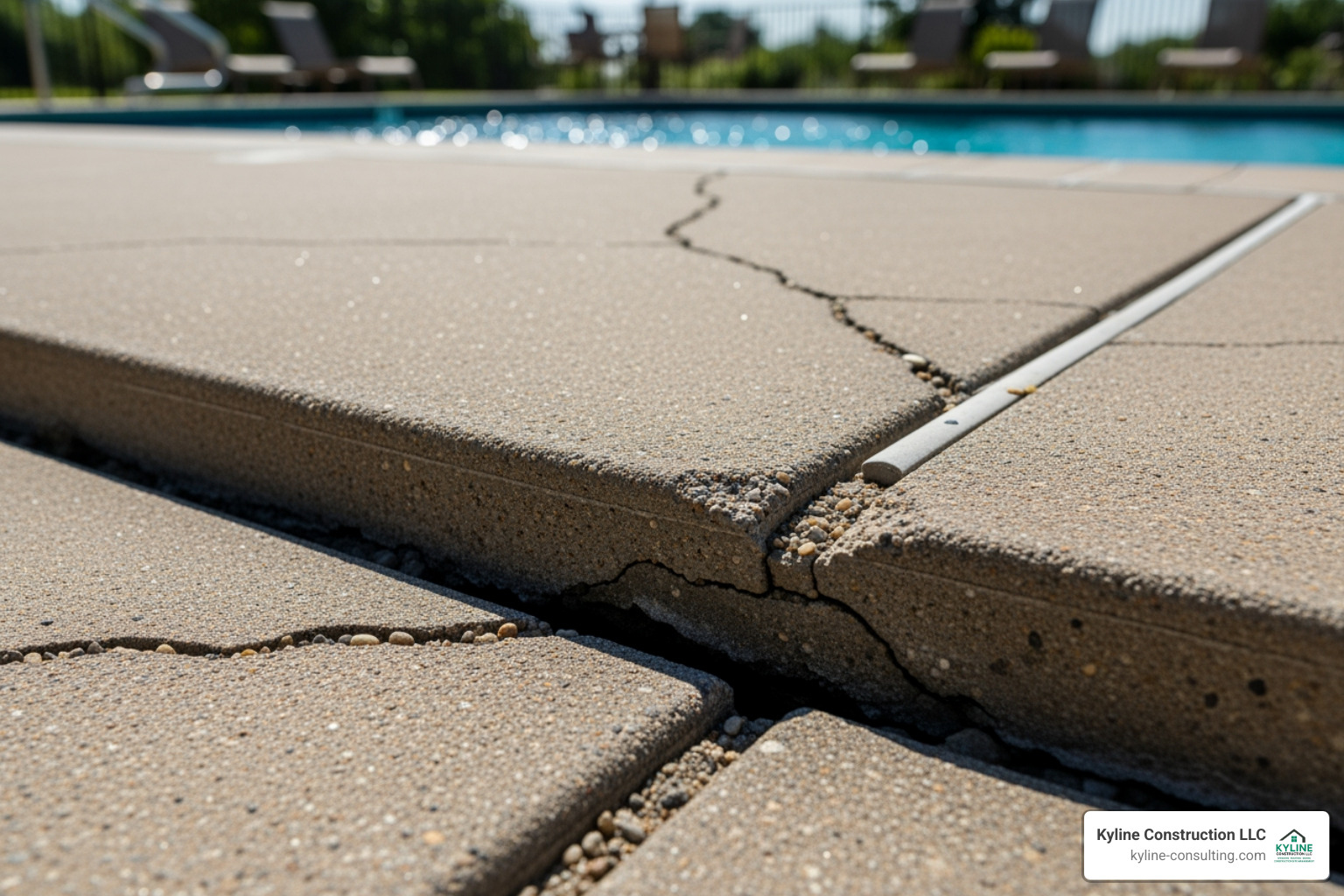
Before we can fix the problem, we need to know what we’re dealing with. Concrete pool decks face a tough life with sun, water, and foot traffic. The most common issues I see are cracks from freeze-thaw cycles, discoloration from UV rays and pool chemicals, and spalling, where the surface flakes away. One of the biggest concerns is a sinking or settling deck. This is often caused by the backfill soil around the pool not being compacted properly during construction, causing the heavy concrete slabs to settle unevenly over time. Understanding these causes is the first step toward a lasting repair.
If you want to dig a little deeper into how pool decks are typically built and why they age the way they do, the overview on Swimming pool decks is a handy general reference.
Signs Your Deck Needs Attention
When we assess a concrete pool deck, we’re looking for several key indicators that it’s time for some attention. These signs aren’t just cosmetic; they can point to underlying issues that affect safety and longevity.
Here are the common signs your concrete pool deck is calling for help:
- Cracks and Chipping: Hairline cracks can expand into wider fissures, compromising structural integrity and creating tripping hazards. Chipping (or spalling) means the top layer of concrete is deteriorating.
- Discoloration: Fading, blotches, or stubborn stains can make your deck look old and neglected. Sometimes, discoloration can even hide unseen cracks beneath the surface.
- Persistent Mold: If mold keeps reappearing despite cleaning, it might indicate moisture retention issues within the concrete.
- Uneven Surfaces: Slabs that have settled or shifted create dangerous tripping hazards. This is especially common around pools where backfill soil may not have been adequately compacted.
- Algae Growth: Similar to mold, persistent algae can indicate moisture problems and also makes the surface extremely slippery.
- Material Deterioration: Beyond simple cracks, you might notice the concrete itself becoming soft, crumbly, or heavily pitted.
The Great Debate: Repairing vs. Replacing Your Pool Deck
The question I get most often is whether to repair or replace. For most decks with surface-level issues or moderate settling, restoration is by far the smarter choice. It’s not just about saving money; it’s about saving time and reducing waste.
The Benefits of Concrete Pool Deck Restoration
Choosing concrete pool deck restoration over a full replacement offers a multitude of advantages that go beyond just fixing what’s broken:
- Cost-Effectiveness: This is usually the biggest factor. Basic pool deck resurfacing can cost around $3-$5 per square foot, and even decorative options might be around $15 per square foot. Compare that to pouring a new surface, which can easily run $30 or more per square foot. That’s significant savings for Ohio homeowners.
- Time Savings: Restoration projects are typically completed much faster than demolition and new construction. This means less disruption to your backyard and quicker access to your pool.
- Less Disruption: Tearing out an entire pool deck is a messy, noisy, and invasive process. Restoration minimizes the impact on your landscaping and daily life.
- Environmental Benefits: By restoring rather than replacing, we’re keeping tons of concrete out of landfills, which is a win for the environment.
- Increased Property Value: A beautifully restored and safe pool deck significantly improves your home’s curb appeal and market value.
- Improved Safety: By addressing cracks, uneven surfaces, and adding slip-resistant finishes, restoration makes your pool area much safer for everyone.
- Customizable Design: Resurfacing opens up a world of aesthetic possibilities, allowing you to choose colors, patterns, and textures that perfectly complement your home.
For more details on how we can help with your home improvement needs, including deck services, explore More info about our services.
When is Full Replacement Necessary?
While restoration is often the best solution, there are situations where a full replacement is truly necessary. We always conduct a thorough assessment to determine the best course of action. Generally, replacement is considered for:
- Major Structural Damage: If the concrete has widespread, deep cracks that indicate significant sub-base failure, or if the entire slab is heaving or sinking beyond repair.
- Widespread Deep Cracks: Hairline cracks are one thing, but if your deck is riddled with cracks wider than a quarter-inch that extend deep into the slab, it might be beyond the scope of effective resurfacing.
- Severe Foundation Issues: If the ground beneath the pool deck is severely compromised, leading to extensive and ongoing settlement, a more comprehensive solution involving foundation repair might be needed, which often necessitates replacement of the concrete.
- Professional Assessment Needed: An experienced professional needs to evaluate the extent of the damage to advise whether repair or replacement is the safest and most cost-effective long-term solution.
Your Guide to Concrete Pool Deck Restoration Methods
Once you’ve decided to restore, you have a few excellent options depending on the specific problem. From lifting sunken slabs to giving the entire surface a brand-new look, modern techniques can completely transform your deck.
Leveling Sunken Slabs with Polyurethane Injection
If your main problem is sinking slabs creating trip hazards, a method like PolyLevel® is a game-changer. It’s a professional-grade repair where a high-density polyurethane foam is injected through small, penny-sized holes drilled in the concrete. The foam expands, lifting the slab back to its original position and stabilizing the soil underneath to prevent future sinking. This process is incredibly fast, often allowing for use of the deck within hours, and much less invasive than tearing everything out. It’s a fantastic solution for addressing the common issue of settled concrete around pools in Ohio, especially where poorly compacted backfill soil is the culprit.
If you’re curious about how this compares to traditional mudjacking and other slab repair options, the general overview of Concrete leveling gives a good, neutral explanation of the different approaches.
A Fresh Face: The Concrete Pool Deck Resurfacing Process
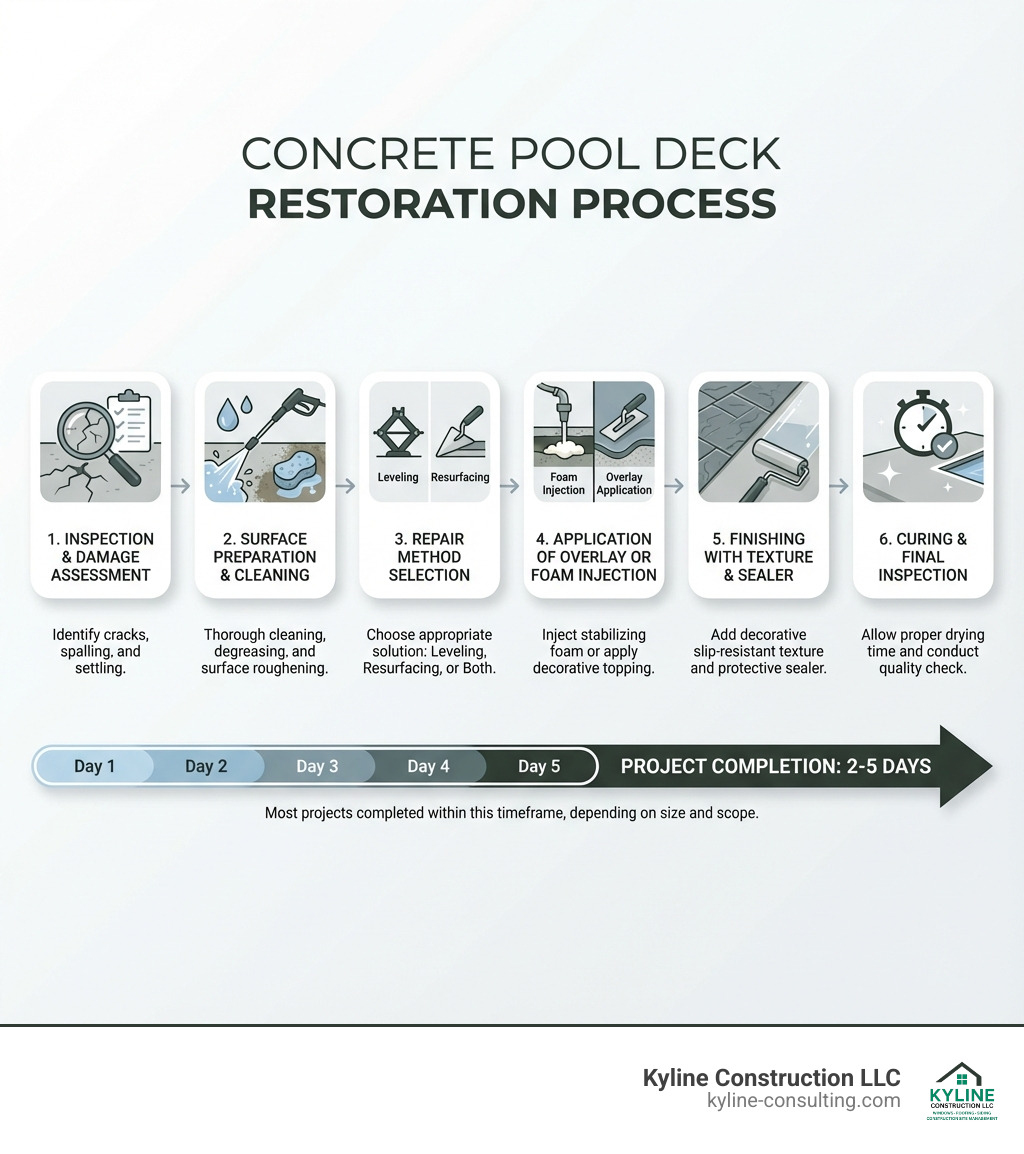
For cosmetic issues like cracks, stains, and pitting, resurfacing is the way to go. This involves applying a thin cement-based overlay that bonds to the existing concrete, creating a brand new, durable surface. The process is straightforward, but attention to detail is key:
- Inspection and Evaluation: We start with a thorough assessment of your deck’s condition, identifying all problem areas and determining the best resurfacing system.
- Surface Preparation: This is arguably the most crucial step. The existing concrete is carefully cleaned to remove dirt, grime, oil, and any old sealers. We might use power washing (around 3,000 psi) and specialized degreasers. Any loose concrete is removed, and the surface is often ground or etched to ensure proper bonding.
- Crack and Repair: All cracks, divots, and spalled areas are filled and repaired using appropriate patching compounds.
- Material Selection: Based on your aesthetic goals and the deck’s needs, we select the specific overlay product, colors, and textures.
- Overlay Application: The chosen overlay material (which often blends resins with cement, sand, and other additives for improved performance) is mixed and then applied. This can be sprayed, troweled, or squeegeed onto the surface in one or more coats.
- Texturing and Finishing: While the overlay is still wet, we can add decorative elements like stamping, stenciling, or a broom finish. A knockdown finish, created by spraying and then lightly troweling, is popular for its comfortable, slip-resistant texture.
- Sealing: Once the overlay has cured, a high-quality sealer is applied. This protects the new surface from UV rays, pool chemicals, stains, and abrasion, and often includes slip-resistant additives for safety.
The result is a deck that not only looks brand new but is also more durable and safer.
Exploring Resurfacing Systems and Finishes
Modern concrete pool deck restoration offers a vast array of resurfacing systems and aesthetic options. Thanks to advancements in materials, many of today’s overlay products blend resins with cement, sand, and other additives to improve performance, slip resistance, appearance, and the ability to bond to the existing concrete. Some coatings are even designed to resist damage from salt, pool chemicals, UV exposure, and freeze-thaw cycles, making them perfect for Ohio’s climate.
Here are some popular systems and finish options:
- Spray Texture Overlays (Knockdown Finish): This is a very popular choice for pool decks. A polymer-modified concrete material is sprayed onto the surface and then lightly “knocked down” with a trowel. This creates a textured, slip-resistant surface that is comfortable underfoot and stays cooler than traditional concrete. It can be integrally colored or stained.
- Stamped Concrete Overlays: For those who love the look of natural stone, brick, or wood, a stamped overlay is an excellent option. A thicker overlay is applied, and then special mats are pressed into the wet material to create realistic patterns and textures.
- Microtoppings: These very thin, fine-grained cementitious overlays are perfect for creating a smooth, seamless look or for achieving unique decorative effects with dyes and stains. They can be polished or textured.
- Acrylic Overlays: These systems offer excellent UV stability and are highly resistant to pool chemicals and abrasion. They can be applied in various thicknesses and finishes.
When it comes to aesthetics, the possibilities are virtually limitless:
- Color and Finish Options: You’re no longer stuck with plain gray.
- Integral Colors: Pigments mixed directly into the overlay material for consistent color throughout.
- Concrete Stains: Acid-based or water-based stains create translucent, variegated effects that mimic natural stone or add vibrant hues.
- Dyes: Similar to stains, but often more vibrant and UV-stable.
- Custom Colors and Hand-Applied Effects: Professionals can blend colors and use artistic techniques to create unique looks.
- Slip-Resistant Textures: Many overlays can incorporate aggregates or be textured to provide a non-slip surface, which is crucial for pool safety.
- Decorative Patterns: Beyond stamping, scorelines can be cut into the overlay to create geometric designs, or stencils can be used for intricate patterns.
Planning Your Project: DIY vs. Hiring a Professional
Deciding whether to tackle this yourself or hire a pro is a big part of the planning process. While a simple stain job might be a manageable DIY project, most restoration work benefits from an expert hand.
The DIY Approach: What to Consider
For the adventurous homeowner in Circleville or Columbus, some aspects of concrete pool deck restoration can be a rewarding DIY project.
- Potential Cost Savings: The primary motivator for DIY is saving on labor costs.
- Required Tools: You’ll need access to pressure washers, grinders, specific mixing equipment, and application tools like specialized sprayers, rollers, and trowels.
- Risk of Errors: Without experience, it’s easy to make mistakes in surface preparation, mixing ratios, or application techniques, leading to poor adhesion, uneven finishes, or short-lived results.
- Physical Labor: Resurfacing is hard work, involving heavy lifting, bending, and kneeling.
- Best for Simple Cleaning and Sealing: If your deck just needs a good clean and a fresh coat of sealer, DIY can be a good option. For more complex issues like extensive cracking or sinking, the DIY route becomes much riskier.
Many DIY enthusiasts have successfully revitalized their pool decks with staining and sealing. Just remember that a professional touch often ensures longevity and optimal results.
Why a Professional Concrete Pool Deck Restoration is Often Worth It
At Kyline Consulting, we know that while the DIY spirit is admirable, professional concrete pool deck restoration offers unparalleled benefits, especially for complex projects:
- Experience and Expertise: With over 40 years of experience, we’ve seen it all. Our professionals understand the nuances of concrete, the specific challenges of Ohio’s climate, and the best techniques for lasting repairs. We ensure quality craftsmanship and safety in every project.
- Proper Equipment: We have access to specialized, industrial-grade equipment for surface preparation, application, and finishing that isn’t typically available to homeowners.
- Efficiency and Speed: Our skilled teams can complete projects efficiently, minimizing disruption and getting you back to enjoying your pool faster.
- Warranties on Workmanship: We stand by our work, offering free, no-obligation estimates and ensuring that your investment is protected.
- Handling Complex Repairs: From significant crack repair to integrating new drainage solutions, professionals can tackle issues that are beyond the scope of most DIYers.
- Longevity of Repair: Proper surface preparation and application by experts mean your restoration will last significantly longer, often 10 to 20 years, making it a truly smart investment.
- Maintenance Advice: We provide guidance on how to maintain your newly restored deck to maximize its lifespan.
When you choose us, you’re not just hiring a contractor; you’re partnering with experienced professionals dedicated to changing your outdoor space safely and beautifully. For more information about our deck services and how we can help, visit More info about our deck services.
Frequently Asked Questions about Pool Deck Restoration
Here are answers to a few questions I hear all the time from homeowners in Ohio.
How much does it cost to restore a concrete pool deck?
The cost of concrete pool deck restoration can vary quite a bit depending on the condition of your existing deck, the type of restoration method you choose, and the square footage.
- Basic Resurfacing: For a simple refresh with a basic overlay, you can expect to pay around $3-$5 per square foot. This is significantly less than the $6-$10 per square foot it might cost to pour a new surface without any decorative options.
- Decorative Options: If you opt for more elaborate designs like stamped concrete overlays, custom colors, or specific textures, the cost can go up, often closer to $15 per square foot.
- Repairing Cracks: Small crack repairs can start around $75 per linear foot, with larger, more complex cracks costing more.
- Polyurethane Injection: For leveling sunken slabs, the cost will depend on the extent of the settlement and the amount of material needed, but it’s typically much more affordable than demolition and repouring.
Even at the higher end for decorative resurfacing, it’s still significantly less than the $30+ per square foot it can cost to tear out and pour a brand new deck. When you consider the value added and the extended lifespan, restoration is a very cost-effective solution.
How long does a resurfaced pool deck last?
With professional installation and proper maintenance, a resurfaced concrete pool deck can easily last 10 to 20 years. The lifespan depends on several factors:
- Quality of Materials: Using high-grade polymer-modified overlays and sealers makes a big difference.
- Expert Installation: Proper surface preparation and application are crucial for longevity.
- Maintenance: Regular cleaning and resealing every few years (typically 2-5 years, depending on the sealer and traffic) is key to its durability.
- Environmental Factors: While modern overlays are designed to resist UV, chemicals, and freeze-thaw cycles, extreme conditions can still impact lifespan.
A well-maintained, resurfaced deck can often outlast a new concrete pour that isn’t properly sealed or cared for.
What are the signs my pool deck needs more than just a cleaning?
While a good power washing can work wonders, some issues indicate that your pool deck needs more serious attention. If you observe any of the following, it’s time for a professional assessment:
- Deep, Wide Cracks: If cracks are wider than a quarter-inch, or if you can see them extending deep into the concrete, they’re likely structural.
- Uneven Slabs and Tripping Hazards: Any significant difference in height between adjacent concrete slabs is a serious safety concern and needs to be addressed through leveling.
- Severe Pitting and Spalling: If large areas of your deck are flaking, crumbling, or heavily pitted, the integrity of the concrete surface is compromised.
- Recurring Problems: If you’ve tried patching cracks or cleaning mold repeatedly without lasting success, there’s likely a deeper issue at play.
For urgent safety concerns, such as significant tripping hazards or structural issues, don’t hesitate to reach out for emergency repair services. We can help assess the situation and provide immediate solutions to keep your family safe.
Conclusion: Enjoy Your Revitalized Poolside Oasis
Restoring your concrete pool deck is one of the best investments you can make in your home’s safety, value, and your family’s enjoyment. It transforms a worn-out, hazardous area into a beautiful, safe, and inviting oasis. At Kyline Construction, we’ve spent over 40 years helping homeowners in Circleville, Columbus, and across Ohio with their exterior projects. We know the difference quality craftsmanship makes, with experienced professionals ensuring quality, safety, and free, no-obligation estimates.
Whether it’s a simple repair or a complete aesthetic overhaul, reviving your pool deck is a project that pays off every time you step outside. If you’re ready to transform your outdoor space, let’s talk about your deck project. We’re here to help you create the perfect retreat right in your own backyard.