Your Guide to Understanding Deck Rot Repair Expenses
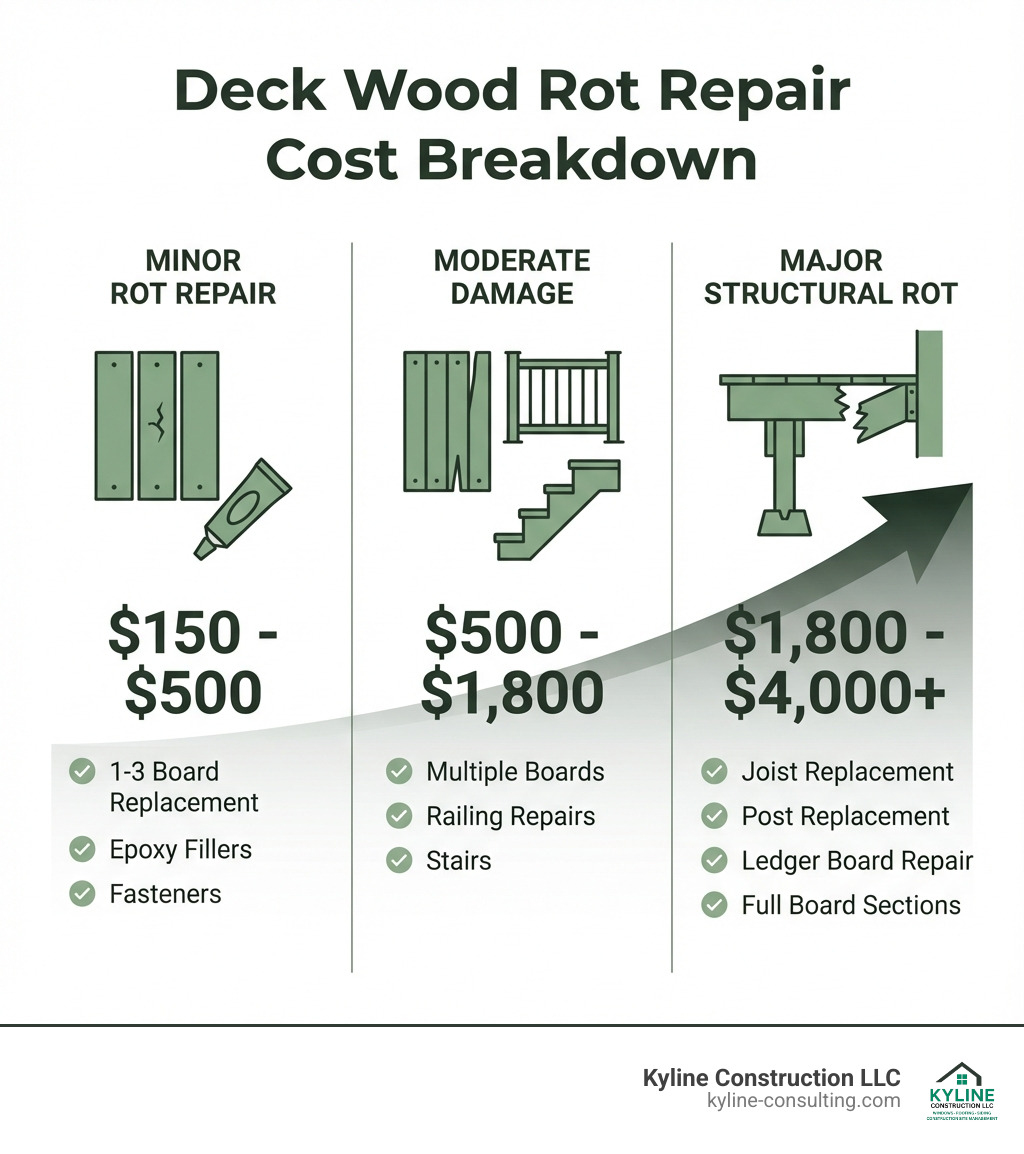
The cost to repair wood rot on deck structures typically ranges from $150 to $500 for minor repairs, while significant structural damage can run $1,800 to $4,000 or more. The final price depends on the extent of the damage, your deck’s size and material, and whether you need to replace surface boards or structural components like joists and posts.
Quick Cost Breakdown:
- Minor surface rot (1-3 boards): $150 – $500
- Moderate damage (multiple boards, railings): $500 – $1,800
- Major structural rot (joists, posts, ledger): $1,800 – $4,000+
- Full deck replacement: $7,900+ average
If you’ve noticed soft boards, discoloration, or cracking, you’re likely wondering about repair costs. Wood decks face harsh weather and moisture that lead to rot, a common issue in Ohio. Catching rot early can save you thousands. Ignoring it allows the rot to spread, weakening your deck’s structure and turning a minor repair into a costly replacement. Understanding the factors that drive the cost to repair wood rot on deck structures is essential.
I’m Shawn Zeisler, of Kyline Construction LLC in Circleville, Ohio. With a career in construction and exterior remodeling, I’ve seen how the cost to repair wood rot on deck structures varies based on early detection and proper assessment.
How to Spot Deck Rot and What Causes It
Wood rot is more than a cosmetic problem; it’s a structural threat that can make your deck a safety hazard. Understanding its causes and early signs is key to stopping it.
The primary cause of deck rot is microscopic fungi that thrive in moist wood (over 20% moisture content). These fungi digest the wood’s structural components, leaving it weak and crumbly.
Several factors create the ideal environment for fungi:
- Persistent Moisture: Rain, snow, and humidity keep wood wet, especially if the deck doesn’t dry properly.
- Poor Drainage: Puddles on the deck surface or around posts create constant dampness.
- Improper Flashing: The connection where your deck meets the house (the ledger board) needs proper flashing to divert water. If it fails, hidden rot can occur.
- Lack of Ventilation: Decks built too close to the ground can trap moisture underneath.
- Neglected Maintenance: Failing sealants and stains leave wood vulnerable to water absorption.
Homeowners can identify early signs of wood rot by looking for visual cues and performing a simple test. Keep an eye out for:
- Discoloration: Darker patches on the wood.
- Soft or Spongy Wood: If a section feels soft underfoot or you can easily indent it.
- Cracking or Splitting: Excessive or unusual cracking can indicate compromised wood.
- Green Algae or Mold/Mildew: These indicate a moisture problem and are often precursors to rot.
- Peeling Paint/Stain: This suggests moisture is trapped beneath the finish.
A simple yet effective method to check for rot is the “screwdriver test.”
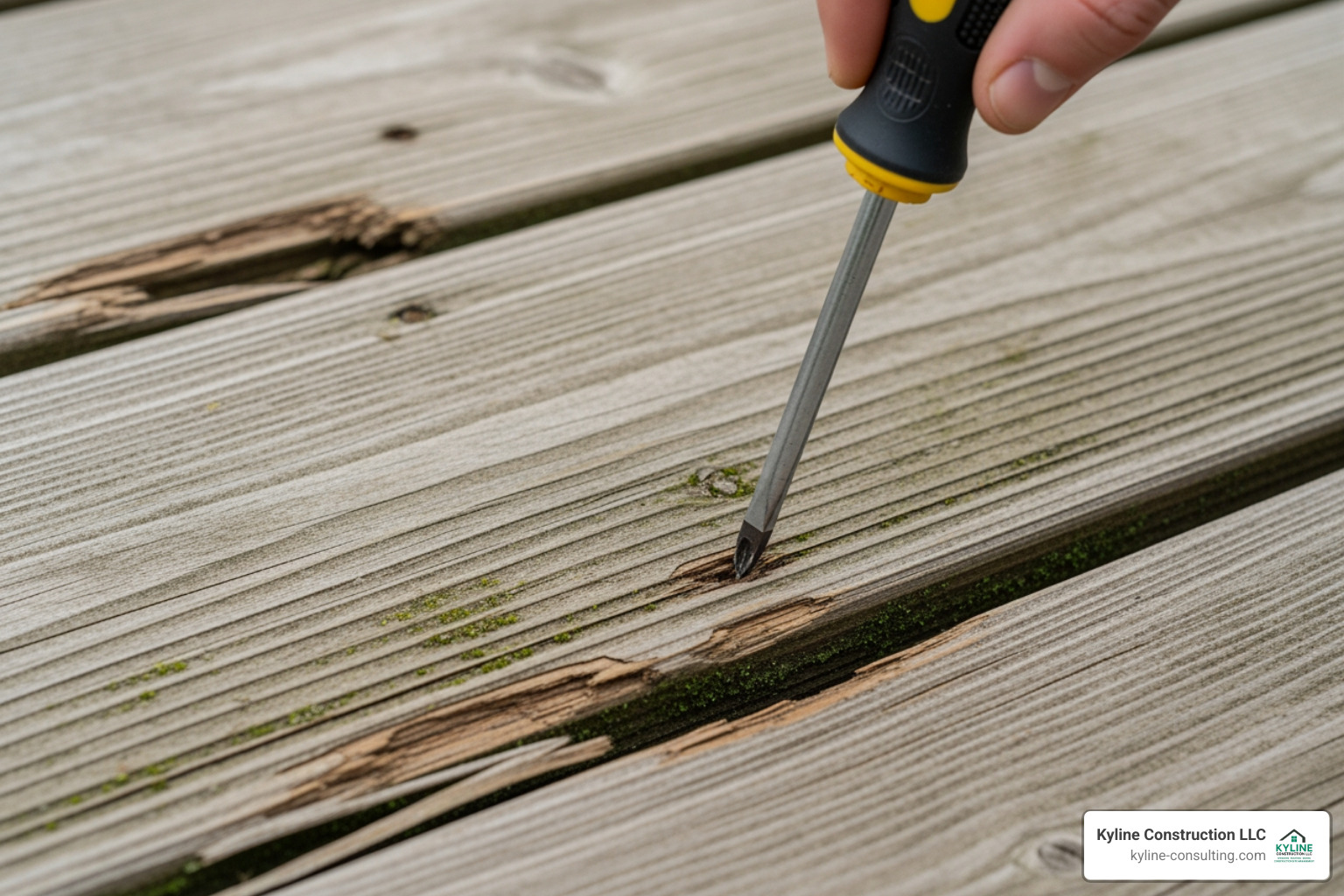
Gently probe suspect areas with a screwdriver. If the wood feels soft, crumbles, or you can sink the tool in more than 1/8 inch with little resistance, you’ve likely found rot. This test is crucial for assessing wood integrity. For more detailed information on wood decay, we often refer to resources like the U.S. Department of Housing and Urban Development.
Common Types of Deck Rot
While various fungi cause wood rot, they generally fall into a few categories:
- Brown Rot: The most common type, it makes wood shrink, crack, and become crumbly. Also known as “dry rot,” it still needs moisture to start.
- White Rot: Less common, this leaves wood looking white, bleached, or stringy.
- Wet Rot: A general term for decay in very damp conditions, often requiring direct contact with water.
Regardless of the type, all fungal growth leads to wood decomposition and structural weakening.
Where Rot Hides on Your Deck
Rot often hides in dark, damp places. Check these key areas to catch it early:
- Ground Contact Points: Support posts or stair stringers touching the ground.
- Under Planters or Mats: These trap moisture against the deck surface.
- Deck-to-House Connection (Ledger Board): A notorious spot for rot if flashing is compromised.
- Joists and Beams: The structural components underneath the deck.
- Stair Stringers and Treads: Stairs take a lot of abuse and are prone to water accumulation.
- Railing Posts: Where posts meet the deck surface, water can collect.
- Areas with Poor Airflow: Corners, shaded spots, or areas blocked by landscaping.
The National Average Cost to Repair Wood Rot on Deck
Understanding the average cost to repair wood rot on deck structures is key to budgeting. National averages provide a good starting point, but prices vary based on local labor rates and project challenges.
Across the country, the average cost of deck repair is around $500, with typical costs ranging from $250 to $1,200. Minor repairs might be as little as $150, while extensive, structural issues could push costs to $3,000 or more. For budgeting, it’s helpful to think in terms of square footage, with most repairs costing between $10 and $50 per square foot.
Costs for Minor, Localized Rot Repair
Minor rot repairs focus on surface-level issues that haven’t compromised the deck’s structural integrity. These are relatively inexpensive and prevent bigger problems.
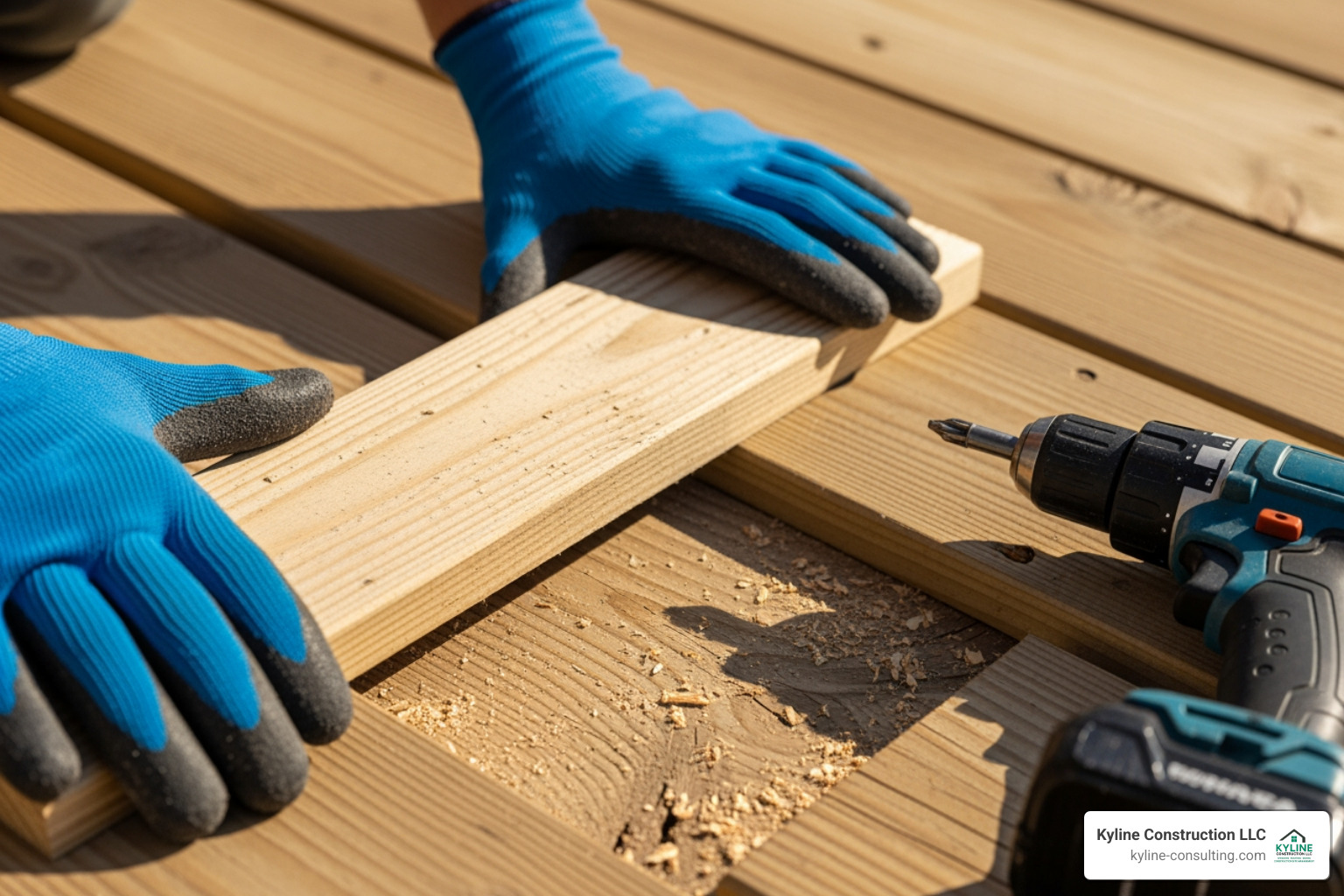
Common minor repairs and their costs include:
- Board Replacement: Replacing 1-3 rotted boards is a straightforward fix. Material costs are $25 to $85 per board.
- Epoxy Fillers: For minimal, non-structural rot, epoxy fillers can harden and restore wood. Material costs are $35 to $70 per quart.
- Sealants and Stains: Refreshing your deck’s finish is crucial preventative maintenance. Two gallons of premium deck finish and supplies can cost $100 to $300.
- Fasteners: Replacing loose or rusted fasteners might cost $10-$15 for construction screws.
While some minor repairs can be a DIY project, a handyman might charge $100-$250 for a small task like repairing a localized area of dry rot.
Costs for Significant or Structural Rot Repair
This is where the cost to repair wood rot on deck can escalate. Structural rot means the decay has reached the supporting elements like joists, posts, or the ledger board. These repairs are labor-intensive and critical for safety.
Costs for these extensive repairs often fall in the $1,800 to $4,000+ range. Here’s a breakdown:
- Joist Replacement: Rotted joists (the deck’s support frame) must be replaced. A single joist costs $150 to $350 to replace, with costs multiplying for multiple joists.
- Post Replacement: Replacing a rotted support post costs $200 to $600 each and is critical for stability.
- Ledger Board Repair: A rotted ledger board (where the deck attaches to the house) is a serious safety issue requiring immediate, complex repair. Substructure damage, including ledger issues, can cost around $4 per square foot to repair.
- Full Board Replacement (Sections): Replacing a large section of rotted deck boards can range from $500 to $1,000.
- Labor-Intensive Work: These repairs involve significant demolition and skilled carpentry. Labor costs are a major factor, with deck repair companies typically charging $45 to $90 an hour. A general contractor’s overhead can add another 13% to 22% to the total cost.
Key Factors That Influence Your Final Repair Bill
The final cost to repair wood rot on deck is shaped by many variables. Here are the key factors that influence your repair bill:
- Extent of Damage: Minor, localized rot is cheaper to fix than widespread decay affecting the substructure.
- Deck Size: Larger decks have more material and potential for widespread damage, leading to higher costs.
- Geographic Location: Labor and material prices vary by region. Local demand for contractors in areas like Circleville and Columbus can impact pricing.
- Labor Rates: Professional labor is a significant cost, with skilled carpenters charging $45 to $90 per hour.
- Deck Features: Complex designs with railings, stairs, or built-in benches add to repair costs.
- Site Elevation: High decks may require scaffolding, increasing labor time and costs.
For a comprehensive range of solutions, we invite you to explore Our full range of repair services.
How Decking Materials Impact the Cost to Repair Wood Rot on Deck
The type of material your deck is made from plays a crucial role in repair costs.
| Material Type | Material Cost (per sq. ft.) | Rot Resistance | Typical Repair Expense |
|---|---|---|---|
| Pressure-Treated Pine | $2 – $6 | Good | Lower (readily available, easy to work with) |
| Cedar | $3 – $8 | Good (natural) | Moderate (more expensive than PT, less common) |
| Redwood | $5 – $30 | Excellent | Moderate to High (can be harder to source, pricier) |
| Ipe (Exotic Hardwood) | $9 – $22.50 | Excellent | High (specialized tools, labor, and material cost) |
| Composite/PVC | $5 – $50 | Excellent (rot-proof) | Lower (replacement of board), but material is costly |
- Softwoods (Pressure-Treated Pine): Common and affordable. While treated to resist rot, it’s not immune. Repairs are less expensive due to material availability.
- Naturally Resistant Woods (Cedar, Redwood): These woods naturally resist rot but are more expensive than PT lumber. Repair costs are moderate.
- Exotic Hardwoods (Ipe): Extremely dense and rot-resistant, these are long-lasting but expensive. Repairs require special tools and expertise, increasing costs.
- Composite Decking: Virtually rot-proof. If a board is damaged, it needs replacement, and the material cost can be higher than wood ($8.20 – $50 per square foot), but you won’t be dealing with rot.
DIY vs. Professional: Analyzing the Cost to Repair Wood Rot on Deck
For minor, superficial repairs, a DIY approach can save on labor costs. However, for anything structural, professional help is the smarter investment.
DIY Considerations:
- Costs: You’ll pay for materials (lumber, fasteners, sealant) and possible tool rentals. Your time is also a factor.
- Risks: Complex repairs require significant skill. Mistakes can be costly and dangerous, and you might miss underlying damage.
Professional Benefits:
- Costs: You pay for labor ($45 to $90/hour) but gain expertise, efficiency, and peace of mind.
- Advantages: Professionals can spot hidden rot, ensure repairs meet building codes, and provide warranties. They are licensed and insured, protecting you from liability.
For anything beyond minor surface issues, the potential for costly mistakes and safety risks makes professional repair the more cost-effective choice in the long run.
The Role of Railings, Stairs, and Other Features
Features like railings and stairs are high-moisture areas vulnerable to rot, and repairing them can add to the overall cost.
- Railing Repairs: These are critical for safety. Minor fixes might cost $15-$75, but replacing a whole section can range from $500 to $4,000, depending on the material.
- Stair Stringer Repair: Stairs are prone to rot. Reinforcing them can cost $85-$100, while step repair is $15-$40 per step. Full stringer replacement is a more complex and costly job.
- Built-in Features: Repairing rotted benches, planters, or pergolas will add to the overall cost due to the custom carpentry required.
Repair or Replace? When Replacement Becomes the Smarter Choice
Homeowners with significant deck rot often face a tough choice: repair or replace? There’s a tipping point where the cost to repair wood rot on deck structures makes replacement the more prudent and economical decision.
Here are key indicators that suggest replacement is the smarter choice:
- Widespread Rot: If rot is pervasive throughout the substructure (joists, beams, posts), repairing every piece can be more expensive and less reliable than rebuilding.
- Compromised Structural Integrity: A bouncy or sagging deck, or a ledger board pulling away from the house, indicates a major safety hazard. Piecemeal repairs may not be enough to restore safety.
- Deck Age: The average lifespan of a wood deck is 10 to 15 years. If your deck is past this age and showing significant rot, investing in major repairs may not be worthwhile.
- Frequent Repairs: If you’re spending hundreds of dollars every year on repairs, a one-time replacement can be a better long-term investment.
- Poor Aesthetics: If the deck is heavily patched and weathered beyond refinishing, a replacement can dramatically boost curb appeal and home value.
The average cost of deck replacement is at least $7,900, but can range from $5,420 to $14,540. While this is a significant upfront cost compared to repairs (which average around $2,000), a new deck can offer an 89% return on investment.
If your deck has severe structural issues, it’s time to call in the professionals. We offer Help for severe structural issues and can provide an expert assessment to guide your decision.
Frequently Asked Questions about Deck Rot Repair Costs
Here are some of the most common concerns we hear from homeowners in Ohio dealing with deck rot:
What are the long-term costs of neglecting deck rot?
Neglecting deck rot is a costly mistake. The long-term consequences include:
- Spreading Decay: Rot will spread to healthy wood, compromising more of the deck’s structure.
- Structural Failure Risk: Weakened supports make the deck unstable, creating a collapse risk and severe safety hazard.
- Increased Future Repair Bills: A small repair can turn into a multi-thousand-dollar project as rot progresses.
- Pest Infestations: Rotting wood attracts pests like termites and carpenter ants, which can cause further damage and even spread to your home.
- Decreased Home Value: A deteriorated or unsafe deck lowers your home’s market value.
- Safety Hazards: Loose or splintered rotting boards can cause trips, falls, and injuries.
Are certain types of wood more prone to rot and more expensive to repair?
Yes, the type of wood significantly impacts rot resistance and repair costs:
- Pressure-Treated Pine: Common and affordable. It’s treated to resist rot but is not invincible. Repairs are generally less expensive.
- Cedar and Redwood: These woods have natural rot resistance but are more expensive than pressure-treated pine. Repair costs are moderate.
- Exotic Hardwoods (e.g., Ipe): Highly resistant to rot and pests, these woods are very durable but also very expensive. Repairs require specialized tools and labor, driving up costs.
- Composite Decking: This material is designed to be rot-proof. If a board is damaged, it needs replacement, and while the material can be costly ($8.25-$9.48 per sq. ft.), you eliminate rot as a concern.
What preventative maintenance can I do to avoid costly rot repairs?
Preventative maintenance is your best defense against deck rot. A few proactive steps can significantly extend your deck’s life:
- Annual Cleaning: Regularly clean your deck to remove moisture-trapping dirt, leaves, and debris.
- Regular Sealing or Staining: For wood decks, apply a quality sealant or stain every 1-2 years to create a protective barrier against moisture.
- Ensure Proper Drainage: Make sure water drains away from your deck and home. Clear gutters and grade the ground around the deck properly.
- Keep Debris Off Surfaces: Regularly sweep away leaves and other organic matter from the deck surface and between boards.
- Promptly Fix Minor Issues: Address loose fasteners, small cracks, or minor water pooling as soon as you notice them.
- Inspect Annually: Perform a thorough inspection of your deck at least once a year, using the “screwdriver test” on any suspicious areas.
- Consider Joist Tape: When building or resurfacing, applying joist tape to the top of joists and beams protects them from moisture and rot.
Secure Your Deck and Your Peace of Mind
Navigating the cost to repair wood rot on deck structures can feel overwhelming, but with the right information and professional guidance, you can make informed decisions that protect your investment and your family’s safety.
The key takeaways are clear:
- Early detection saves money: Addressing minor rot quickly prevents it from spreading and turning into a significantly more expensive structural repair or full replacement.
- Professional assessment is crucial for safety: For anything beyond the most superficial rot, a trained eye can identify hidden damage and assess structural integrity, ensuring repairs are done correctly and safely.
- Preventative maintenance is paramount: A consistent routine of cleaning, sealing, and inspecting your deck will be your best ally against the relentless march of wood rot.
At Kyline Construction LLC, we’re proud to transform Ohio homes with precision craftsmanship in siding, windows, and decks. With over 40 years of experienced professionals, we ensure quality, safety, and transparency in every project. We understand the unique challenges that Ohio weather poses to your deck, and we’re here to help.
Don’t let deck rot compromise your outdoor living space or your peace of mind. We offer free, no-obligation estimates in Circleville, Columbus, and surrounding areas throughout Ohio. Let us help you understand the true condition of your deck and provide a clear plan for repair or replacement.
Learn more about our professional deck services and let us help you secure your deck for years to come.