Why New Windows Are a Senior’s Best Friend
Free window replacement programs for seniors are available through federal, state, and local initiatives designed to help older adults reduce energy costs and improve home safety. Here are the main programs:
- Weatherization Assistance Program (WAP) – Federal program providing free energy upgrades including window replacement for low-income households at or below 200% of the Federal Poverty Level
- Low-Income Home Energy Assistance Program (LIHEAP) – Offers grants for window replacement through state agencies, typically for households at 150-200% of poverty guidelines
- USDA Section 504 – Provides loans up to $40,000 and grants up to $10,000 for seniors age 62+ in rural areas to repair or replace windows that pose health and safety hazards
- State and Utility Programs – Many states and local utility companies offer rebates and assistance for energy-efficient window replacements
If you’re a senior facing drafty windows and rising energy bills, you’re not alone. An estimated 2.44 million seniors in the U.S. live on less than $25,000 per year, making home repairs feel impossible. Old windows don’t just waste money—they can cause your home to lose more than 25% of its heat in winter, potentially costing you hundreds of dollars annually in higher heating and cooling bills.
Beyond the financial strain, inefficient windows create real comfort and health issues. Drafts make rooms uncomfortable, condensation can lead to mold growth, and temperature swings put extra stress on heating systems.
The good news? Multiple government programs exist specifically to help seniors replace old windows at little to no cost. These aren’t scams or too-good-to-be-true offers—they’re legitimate federal and state initiatives that have helped millions of households improve their homes.
I’m Shawn, a carpenter with Kyline Consulting, and I’ve seen how much of a difference quality windows make in a home’s comfort and energy efficiency. Over my career in construction, I’ve worked with many seniors navigating these free window replacement programs for seniors and helped them understand which upgrades will deliver the most value. This guide will walk you through the real programs available, who qualifies, and exactly how to apply.
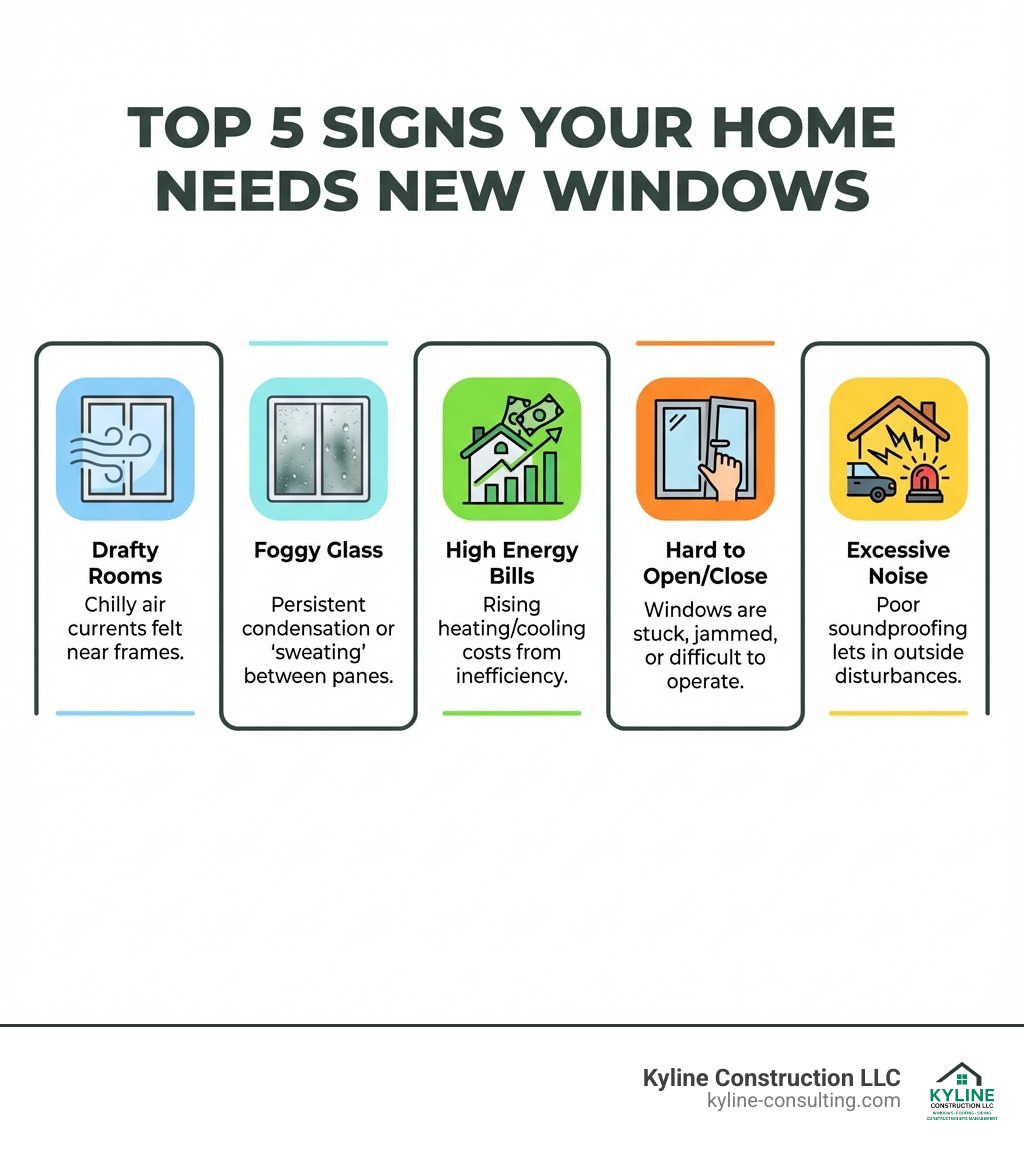
As anyone who’s spent a cold Ohio winter (or a hot summer!) battling drafty windows knows, the impact goes beyond just the energy bill. Old, inefficient windows can turn a cozy home into a constant battle against the elements. We’ve seen homes in Circleville and Columbus, Ohio where the difference new windows make is truly astounding.
First, let’s talk about comfort. Imagine being able to sit by your window without feeling a chill or a blast of hot air. New windows seal up those leaks, keeping your indoor temperatures consistent and your home comfortable year-round. This is especially important for seniors, as maintaining a stable indoor temperature is crucial for health.
Then there are the health benefits. Old windows can allow moisture to seep in, creating an environment ripe for mold and mildew. They can also let in outside pollutants and allergens. Energy-efficient windows, by creating a tighter seal, significantly improve indoor air quality. This means fewer sniffles, less dust, and a healthier living space.
Finally, safety and peace of mind are paramount. Replacing old, possibly rotting frames or single-pane glass with modern, secure windows improves your home’s security. It also means you won’t have to worry about a window getting stuck open or being difficult to close, which can be a real concern for seniors. We believe everyone deserves a safe, comfortable, and energy-efficient home.
Major Federal Programs: Your Guide to a Free Window Replacement Program for Seniors
When we talk about finding a free window replacement program for seniors, two federal giants usually come to mind: the Weatherization Assistance Program (WAP) and the Low-Income Home Energy Assistance Program (LIHEAP). These programs are designed to tackle energy inefficiency head-on, often including window replacement as a key component of their services. Their goal is to put money back into your pocket by reducing your utility bills, and they take a comprehensive approach to making your home more energy-efficient.
Both WAP and LIHEAP are administered at the state level, so while they are federal programs, the specifics of how they are implemented and who qualifies can vary slightly from state to state. For our neighbors here in Ohio, it’s good to know that these programs are actively working to help residents. We encourage you to explore them and learn if you qualify for WAP and find your state WAP office to apply or check if you are eligible for LIHEAP assistance.
The Weatherization Assistance Program (WAP) Explained
The Weatherization Assistance Program (WAP) is the largest residential energy efficiency program in the U.S., and it’s a fantastic resource for low-income households, including many seniors. Its primary purpose is to reduce energy costs for these households by increasing the energy efficiency of their homes, while also ensuring their health and safety.
So, how does it work? If you qualify, your journey typically begins with a no-cost energy audit. An energy auditor will visit your home, do a thorough walk-through, and use specialized equipment (like a blower-door test) to identify areas where your home is losing energy. They’ll analyze your utility bills and inspect everything from insulation levels to your heating system to your windows.
Based on this audit, WAP provides a range of upgrades and repairs at no cost to you. These can include:
- Insulating walls, attics, and floors
- Sealing air leaks and drafts around doors and windows
- Tuning up or replacing inefficient heating and cooling systems
- Installing energy-efficient lighting
- And yes, replacing broken window glass, or in many cases, replacing entire inefficient windows.
The program aims for a whole-home approach, ensuring that the improvements are comprehensive and deliver the most significant energy savings. The services are 100% free for those who qualify, which is a huge relief for many seniors on fixed incomes. Eligibility typically requires your household income to be at or below 200% of the federal poverty income guidelines. Households receiving Supplemental Security Income (SSI) often automatically qualify. WAP also prioritizes older adults (60+), individuals with disabilities, and households with children.
Here in Ohio, the Home Weatherization Assistance Program (HWAP) is our state’s version of WAP, providing these vital services to our communities. We’ve seen the comfort and savings these upgrades bring to homes across Ohio. You can learn more about the broader program at the Weatherization Assistance Program website.
How LIHEAP Can Help with Window Costs
The Low-Income Home Energy Assistance Program (LIHEAP) is another critical federal program that can indirectly, and sometimes directly, help with window costs. While LIHEAP’s main goal is to assist low-income families with their energy bills and energy crises, it also includes weatherization as one of its core services.
LIHEAP can provide funds for:
- Heating and cooling bill assistance: This is its most common function, helping to keep the lights on and the heat running.
- Energy crisis intervention: If you’re facing a utility shutoff, LIHEAP can step in to help prevent it or reconnect your services.
- Minor home repairs and weatherization: This is where window assistance comes into play. While not always a primary focus, LIHEAP grants can sometimes be used for window replacement services as part of a broader effort to lower energy expenses and make homes more energy-efficient.
Like WAP, LIHEAP is administered by state agencies, and eligibility requirements can vary. Generally, households need to have an income at or below a certain level, typically between 150% to 200% of the federal poverty guidelines. If you receive certain other benefits, you might automatically qualify.
For residents in Ohio, our state’s LIHEAP program is vital for managing energy costs. While it’s mainly known for bill assistance, it’s worth checking with your local LIHEAP office to see if they can help fund window replacements as part of their weatherization efforts. Every state determines its household income limits and the types of energy-saving upgrades it supports, so it’s always best to inquire directly. You can find out if you qualify for LIHEAP and get more information on their website.
Other Valuable Grants and Programs for Seniors
Beyond the federal staples of WAP and LIHEAP, there are other avenues for seniors in Ohio to get help with window replacements. These can come from different federal departments, state initiatives, local programs, or even utility companies.
We’ve found that often, the key to open uping these resources is understanding that window replacement is rarely a standalone program. It’s usually part of a larger effort to improve overall home safety, energy efficiency, or to address specific needs of vulnerable populations like seniors in rural areas.
USDA Section 504 Home Repair Program
For our neighbors living in rural parts of Ohio, the USDA Section 504 Home Repair Program is an incredibly valuable resource. This program provides financial assistance specifically to very-low-income homeowners to repair, improve, or modernize their homes. Crucially, it also offers grants to elderly (age 62 or older) very-low-income homeowners to remove health and safety hazards, and this often includes old, failing windows.
Here’s how it works:
- Eligibility: You must be the homeowner and occupy the house. You need to be unable to obtain affordable credit elsewhere, and your household income must not exceed the very low-income limit for your county. For grants, you must be 62 or older.
- Rural Area: The property must be in an eligible rural area. You can use the USDA Eligibility Site to check if your address qualifies.
- Loans vs. Grants:
- Loans can be used for general repairs, improvements, or modernization, including window replacement. The maximum loan is $40,000, with a fixed interest rate of just 1% and a 20-year repayment term.
- Grants are specifically for elderly homeowners (62+) to remove health and safety hazards. This is where a failing window that might be broken, drafty to the point of causing health issues, or simply unsafe could be replaced. The maximum grant is $10,000. If you sell your property within three years, the grant might need to be repaid.
- Combining Aid: The good news is you can often combine a loan and a grant, potentially getting up to $50,000 in assistance!
This program is a lifeline for many seniors in rural Ohio, helping them stay in safe, comfortable homes. If you think this might apply to you, we strongly recommend reaching out to your local USDA office. You can apply for home repair grants through Section 504 by visiting their website.
State, Local, and Non-Profit Assistance
Beyond the major federal programs and USDA initiatives, there’s a patchwork of assistance available that can still make a difference for Ohio seniors seeking window replacement. These programs often complement federal aid or fill gaps for specific needs.
- Ohio State Energy Offices: Your state energy office is a great resource for finding out about energy-efficient financing programs or specific state-funded initiatives. While the federal programs set the baseline, states often have their own programs or additional funding that can help.
- Utility Company Rebates: Many utility companies in Ohio offer rebates for installing ENERGY STAR certified products, including windows. These aren’t usually free replacements, but they can significantly offset the cost. Companies like AEP Ohio, Duke Energy Ohio, and Columbia Gas of Ohio often have energy efficiency programs. It’s always worth checking their websites or giving them a call to see what’s available. You can also find rebates near you for Energy Star products.
- Community Action Agencies: These local organizations are often the gateway to federal programs like WAP and LIHEAP, but they might also have their own local grants or connections to other non-profit resources. They are deeply embedded in the community and understand the specific needs and resources available locally. We work closely with these agencies in areas like Circleville and Columbus.
- Charities and Non-Governmental Organizations: While less common for full free window replacement programs for seniors, some charities and non-profits might offer assistance for home repairs, including windows, especially if there’s a health or safety concern. Organizations like Habitat for Humanity often have home repair programs that could include window replacements. It often takes some searching and direct inquiry to find these, but they can be invaluable.
These local and state-specific options show that even if you don’t fit the criteria for a federal program, there might still be help available. It’s about exploring all avenues!
How to Apply: A Step-by-Step Guide
Navigating the application process for a free window replacement program for seniors might seem daunting, but it’s usually a straightforward process once you know what to expect. Think of it like building a sturdy foundation for your home: it requires careful planning and the right materials.
The most important thing is to gather your documents and connect with the right local agencies. We’ve helped many homeowners in Ohio get through this, and we assure you, it’s worth the effort for the comfort and savings you’ll gain.
General Eligibility for a free window replacement program for seniors
While each program has its nuances, there are common threads for eligibility. Understanding these general requirements can help you determine which programs might be a good fit:
- Income Guidelines: This is almost always the primary factor. Most programs target low-income households. This is usually defined as a percentage of the Federal Poverty Level (FPL)—often at or below 200% for WAP, or 150-200% for LIHEAP. For example, if the FPL for a single person is around $14,580 (as of 2023), 200% would be $29,160. Make sure to communicate your Modified Adjusted Gross Income (MAGI), not just total earnings, as many sources are excluded.
- Age Requirements: For programs specifically targeting seniors, the age cut-off is typically 60 or 62 years old. The USDA Section 504 grant, for instance, requires applicants to be 62 or older.
- Homeownership vs. Renting: Most programs are geared towards homeowners, but WAP is a notable exception that often covers renters, provided you get written permission from your landlord. USDA Section 504 is strictly for homeowners.
- Disability Status: Many programs give priority to households with a disabled member.
- Receiving Other Benefits: If you receive Supplemental Security Income (SSI), Aid to Families with Dependent Children (AFDC), or certain other public assistance, you might automatically meet the income requirements for programs like WAP. Always report every qualified household member, including yourself, spouse, and dependents, to improve your chances.
Documents You’ll Likely Need
When applying for these programs, you’ll need to provide documentation to verify your eligibility. Having these ready can speed up the process significantly:
- Proof of Income: This is crucial. Be prepared to provide recent pay stubs, Social Security benefit statements, pension statements, tax returns, or other documents showing your household’s total income.
- Photo Identification: A valid driver’s license or state ID for all adult household members.
- Proof of Homeownership: A deed, mortgage statement, property tax bill, or other document showing you own and reside in the home.
- Recent Utility Bills: Copies of your electricity, natural gas, or other heating fuel bills. These help programs assess your energy burden and identify potential savings.
- Social Security Numbers: For all household members.
- Proof of Disability (if applicable): Documentation of disability status for any household member.
- Landlord Permission (for renters): If you’re a renter applying for WAP, you’ll need a signed agreement from your landlord.
Finding a local free window replacement program for seniors
The best way to find a free window replacement program for seniors in Ohio is to start local. These federal programs are administered through state and local agencies, often called Community Action Agencies.
- Start with the State WAP Office: The U.S. Department of Energy provides a map to help you find your state’s WAP office. You can choose your state, tribe, or territory on this map to find contact information for Ohio. They will direct you to the nearest local agency.
- LIHEAP Office Locator: Similarly, the Administration for Children and Families offers a map to find your local LIHEAP office. These offices are your direct point of contact for LIHEAP assistance.
- Community Action Agencies: These non-profit organizations exist in almost every county and are often the direct service providers for both WAP and LIHEAP. A quick online search for “Community Action Agency [Your County, Ohio]” should point you in the right direction. For example, in Columbus, you’d look for the local Community Action Agency serving Franklin County.
- BenefitsCheckUp.org: This is a fantastic, free online tool from the National Council on Aging. You can enter your ZIP code and some basic information, and it will help you identify benefit programs you might qualify for, including WAP and other money-saving initiatives. Visit BenefitsCheckUp.org to get started.
Legitimate programs will always have clear contact information and a transparent application process. If something feels off, it probably is.
For more information about our window services, visit our dedicated Windows page.
Frequently Asked Questions about Window Replacement Programs
It’s natural to have questions when exploring these programs. Here are some common ones we hear from homeowners in Ohio:
Do these programs install any type of window?
Most programs focus on energy efficiency, so they typically install ENERGY STAR certified windows. The goal is to reduce your energy bills, so the type of window is chosen to best achieve that for your home’s needs. The focus is on function over specific high-end styles. These are not about luxury upgrades, but about practical, energy-saving improvements.
I’m a renter, can I still get help?
Yes, renters can often qualify for programs like WAP. However, you will need to get written permission from your landlord before any work can be done. Since the program benefits the property by making it more energy-efficient and comfortable, landlords are often willing to approve the free upgrades. It’s a win-win!
Are there really ‘free money’ programs from the government?
Be very careful. While programs like WAP provide free services to those who qualify, you should be wary of ads claiming to give individuals “free money” for home repairs. Legitimate programs have a clear application process through official agencies, not through suspicious websites or unsolicited calls. The federal government does not offer “free money” to individuals for general home repairs. Always go through official government websites or local Community Action Agencies. If it sounds too good to be true, it probably is.
Let’s Seal Up Those Drafts for Good
We’ve covered a lot of ground today, from the invaluable free window replacement programs for seniors like WAP and LIHEAP, to the targeted assistance of USDA Section 504 for rural Ohio homeowners, and various state and local initiatives. The core message is clear: you don’t have to live with drafty, inefficient, or unsafe windows. There are legitimate resources available to help you improve your home, reduce your energy bills, and improve your comfort and safety.
Taking action on your windows isn’t just about saving money; it’s about improving your quality of life. A home that’s warm in the winter, cool in the summer, and free from drafts is a happier, healthier home.
As Shawn, a carpenter with Kyline Consulting, I know quality installation is just as important as the window itself. With over 40 years of experience, our team ensures every project in Ohio is done right, from the careful removal of old windows to the precise fitting of new ones. We prioritize quality and safety, ensuring your new windows maximize your comfort and savings for years to come. We also offer free, no-obligation estimates to help you understand your options.
Don’t let those drafts get you down any longer. Reach out today and let’s explore how we can help make your Ohio home more comfortable and energy-efficient.
Contact Us for a free, no-obligation estimate on your window project