Why Understanding Labor Costs Is the First Step to a Smooth Siding Project
Labor cost to replace siding is the largest expense in a siding project, often 50-70% of your total budget. Here’s a quick overview:
| Pricing Model | Typical Range | Best For |
|---|---|---|
| Per Square Foot | $1 – $12 per sq ft | Standard installations, easy comparisons |
| Hourly Rate | $40 – $75 per hour | Complex projects, repairs |
| Total Labor Share | 50-70% of project | Understanding your full budget |
Planning a siding replacement in Ohio can be overwhelming, with confusing estimates and wide price ranges. It’s hard to know what you should expect to pay, especially for labor.
But labor costs aren’t just a line item; they reflect the skill and time required to protect your home for decades. Understanding them helps you budget accurately, evaluate contractor quotes, and invest confidently.
This guide breaks down what drives siding labor costs, from materials to home design. You’ll learn what pushes prices higher, where to save without sacrificing quality, and how to read estimates like a pro.
As Shawn Zeisler, owner of Kyline Construction LLC in Circleville, Ohio, I’ve managed countless siding projects. My experience has shown that understanding the labor cost to replace siding is the foundation of a successful exterior remodel.
Breaking Down the Numbers: Average Siding Labor Costs
The labor cost to replace siding is typically priced per square foot or by the hour. Understanding these averages is the first step to budgeting for your Ohio siding project.
Nationally, labor costs for installation range from $1 to $4 per square foot, though this can climb to $12 per square foot when factoring in complex tasks like removal. For less defined projects or repairs, contractors may charge an hourly rate, generally between $40 to $75 per hour per worker. These are just benchmarks; your project’s specific details will determine the final cost.

Hourly Rate vs. Per-Square-Foot Pricing
Choosing between an hourly rate and per-square-foot pricing depends on your project’s predictability.
-
Per-Square-Foot Pricing: This is the most common model, offering a clear, upfront cost based on your home’s total siding area. It’s ideal for straightforward installations with standard materials and simple home designs, making it easy to compare contractor bids.
-
Hourly Rate Pricing: This model is better for complex projects, intricate repairs, or when unforeseen issues like hidden rot are finded. It ensures the contractor is fairly paid for the actual time spent on detailed work that can’t be easily quantified by square footage, such as on a historic home. Hourly rates typically range from $40 to $75 per worker.
Kyline Construction LLC will help you determine the best pricing model for your project, ensuring transparency. You can explore more about general labor wages and costs to understand the broader economic context for these rates.
Labor’s Share of Your Total Budget
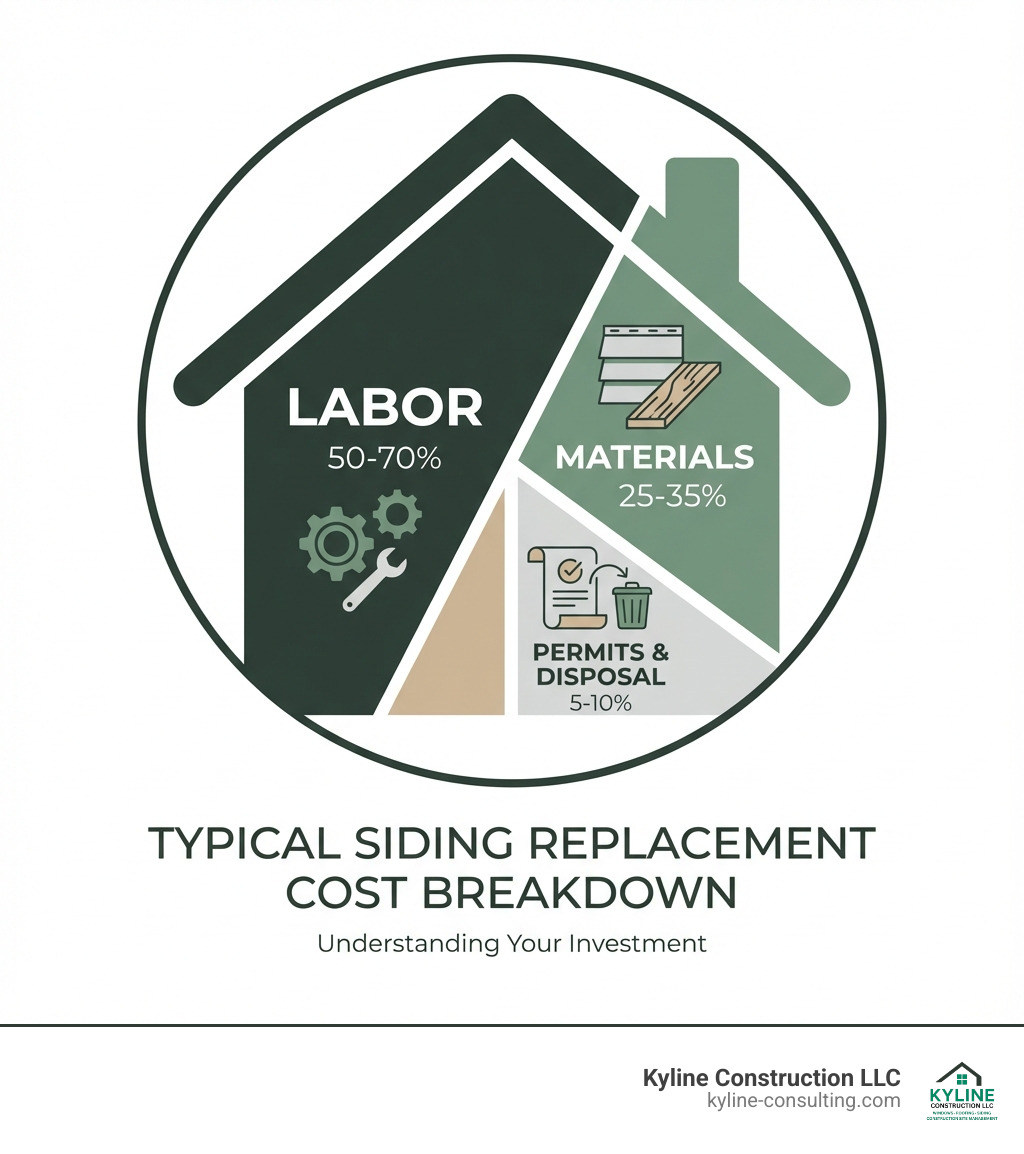
Labor is the largest part of your budget, typically accounting for 50% to 70% of the total siding replacement cost. For a $20,000 project, that means $10,000 to $14,000 is for labor. This high percentage reflects the skill, precision, and safety standards required for a quality installation.
Our experienced teams handle everything from meticulous cuts to proper sealing, ensuring your siding not only looks great but also protects your home. While the cost is significant, new siding offers a high return on investment (ROI) of 80% to 88%. Quality labor guarantees this long-term value. To learn more about how we ensure quality, visit our Siding services page.
What Influences the Labor Cost to Replace Siding?
Many elements can sway the final price tag, from the siding you choose to your home’s architecture. Understanding these factors is crucial for a realistic estimate in Ohio.

Material Matters: How Siding Type Affects Labor
The material you select directly impacts the labor cost to replace siding due to varying skill, tool, and time requirements.
- Vinyl Siding: As a budget-friendly option, vinyl is lightweight and installs quickly, generally leading to lower labor costs.
- Fiber Cement Siding: Materials like Hardie board are durable but heavy, requiring more effort, specialized tools, and a larger crew. The meticulous installation process increases labor time and cost.
- Wood Siding: Wood requires precise cuts, careful nailing, and extensive finishing (painting or staining). This detail-oriented work increases labor costs.
- Stone Veneer/Brick Siding: This is a highly specialized craft. These materials are heavy and require a skilled mason, making the process labor-intensive and among the most expensive options for labor.
When choosing siding, consider how its installation complexity will influence the overall labor cost to replace siding.
The Impact of Home Complexity and Design
The design of your Ohio home significantly influences the labor cost to replace siding.
- Number of Stories: A single-story home is easier to side than a multi-story house, which requires more safety precautions and scaffolding, adding to labor hours.
- Architectural Details: Gables, dormers, bay windows, and intricate trim require custom cuts and careful sealing, increasing labor costs.
- Complexity of Walls: A home with many corners and bump-outs demands more cutting and fitting than a simple, box-shaped structure.
- Accessibility: Difficult access due to landscaping or fences can slow down the installation, increasing labor time.
Our team at Kyline Construction LLC has the experience to execute even the most complex designs with precision.
Location and Contractor Experience
The labor cost to replace siding can vary by location. Metropolitan areas like Columbus, OH, may have higher labor rates than rural areas like Circleville, OH, due to cost of living and demand.
Beyond location, contractor experience is paramount. While a low bid is tempting, you get what you pay for. An experienced team like ours at Kyline Construction LLC, with over 40 years of combined experience, brings expertise, efficiency, and a commitment to quality and safety. Reputable contractors are also licensed and insured, protecting you from liability.
Choosing a contractor with a proven track record provides better long-term value. We offer transparent, free, no-obligation estimates. For more on our commitment to excellence, visit our Services page.
Beyond the Basics: Additional & Hidden Labor Costs
Some costs only appear once work begins. It’s wise to set aside a 10% to 20% buffer in your budget for these unexpected expenses. Thorough planning helps, but some things are only revealed when the old siding comes off.
The Cost of Removal and Disposal
Before new siding goes up, the old siding must come down. This removal process is a significant labor component. On average, removal can cost $1,000 to $3,000, or $0.80 to $1.50 per square foot. This includes the labor to detach panels and trim.
Disposal of the old material adds to the cost, including labor to load waste and fees for dumpster rental and landfilling. A critical consideration for older Ohio homes (pre-1980) is potential asbestos siding. Its removal requires specialized, licensed professionals and is significantly more expensive, drastically increasing the labor cost to replace siding.
Unforeseen Repairs and Prep Work
The most common hidden costs appear after removing old siding, revealing underlying issues. Our crews often find:
- Rotted Sheathing or Framing: Moisture damage may require carpentry repairs.
- Pest Damage: Termites or other pests may have caused damage that needs to be addressed.
- Inadequate Moisture Barriers: Older homes may lack proper house wrap, which is essential for protection and energy efficiency.
- Flashing and Trim Issues: Deteriorated flashing and trim must be repaired or replaced to ensure a watertight seal.
These repairs add time and labor to the project, which is why a contingency fund is so important. Learn more about how we handle these complexities in our Project Management insights.
Seasonal Swings: How Time of Year Impacts Rates
The time of year you schedule your project can affect the labor cost to replace siding due to supply and demand.
- Peak Season (Spring and Summer): This is the busiest time for contractors. High demand can lead to higher rates and longer wait times. It’s best to book several months in advance.
- Off-Season (Late Fall and Winter): Demand slows in cooler months. Contractors may offer more competitive rates to keep crews busy. While weather can cause delays, the potential labor savings can be appealing.
Scheduling your project during the off-season could be a smart, budget-friendly strategy.
Smart Savings: Reducing Labor Costs Without Sacrificing Quality
Managing the labor cost to replace siding without compromising quality is key. It’s about being strategic, not cutting corners. The 2024 Cost vs. Value Report from the Journal of Light Construction shows siding replacement offers a strong return on investment, and a quality installation protects that value.
DIY vs. Professional: A Cost-Benefit Analysis of the labor cost to replace siding
The idea of DIY is tempting, as it could save 25% to 40% on the total project by eliminating the labor bill. However, we strongly caution against it. Siding installation is a complex job that requires:
- High-level skills to prevent costly water damage, mold, and structural issues.
- Awareness of safety risks, especially when working at heights.
- A significant time commitment that can stretch a professional’s 7-14 day job into months.
- Specialized tools that are expensive to buy or rent.
A DIY job also lacks the workmanship warranties offered by professionals like Kyline Construction LLC and may void manufacturer warranties. The potential for costly mistakes and safety hazards makes professional installation the wiser, more cost-effective choice in the long run.
Strategic Planning for a Leaner Budget
Even with a professional, you can manage the labor cost to replace siding with smart planning:
- Get Multiple Quotes: Obtain at least three detailed estimates from reputable contractors to compare scope, materials, and labor costs. Be wary of unusually low bids.
- Choose Cost-Effective Materials: Opting for vinyl siding, which is less labor-intensive to install than fiber cement or stone, can significantly reduce labor costs.
- Schedule During the Off-Season: Contractors may offer more competitive pricing in late fall or winter.
- Do Simple Home Prep: Clear landscaping and outdoor furniture to ensure the crew can work efficiently.
- Consider Partial Replacement: If only one side of your home is damaged, a partial replacement can lower costs. Ensure the new siding matches the old.
- Mix Materials Strategically: Use premium materials like stone as accents and pair them with a more cost-effective siding for the rest of the house. This gives a high-end look without the high-end labor cost to replace siding for the entire exterior.
These strategies can help you create a siding plan that fits your budget while delivering the quality your home deserves.
Frequently Asked Questions about Siding Labor Costs
We often hear similar questions from Ohio homeowners about siding replacement. Here are some quick answers regarding the labor cost to replace siding.
What is the cheapest siding to have installed?
Vinyl siding is typically the cheapest to have installed. Its lower material cost, lightweight nature, and quick, interlocking installation process reduce the overall labor hours required. This makes it an excellent choice for budget-conscious homeowners.
How does removing old siding affect the labor cost to replace siding?
Removing old siding is a separate, labor-intensive phase that significantly adds to the labor cost to replace siding. The cost covers the time to carefully detach old panels and trim, haul away the debris, and pay for disposal fees. It also accounts for the possibility of finding and repairing hidden damage underneath, which requires additional labor.
How long does siding replacement typically take?
A typical siding replacement on an average-sized Ohio home takes between 7 to 14 days. This timeline can vary based on:
- Home Size and Complexity: Larger, more detailed homes take longer.
- Siding Material: Vinyl is faster to install than heavier materials like fiber cement or stone.
- Weather Conditions: Rain, wind, or extreme cold can cause delays.
- Crew Size: A larger crew can often work more quickly.
At Kyline Construction LLC, we provide a clear project timeline in our estimates, factoring in these variables to give you a realistic completion date.
Your Partner in a Perfect Siding Project
Navigating a siding replacement, especially the labor cost to replace siding, can seem daunting. At Kyline Construction LLC, our goal is to empower you with knowledge for confident decisions. We believe in transparency and clear communication.
By understanding what drives labor costs—from materials and home complexity to removal and contractor experience—you can better evaluate estimates and invest wisely. A quality installation protects your home, improves energy efficiency, and adds long-term value.
With over 40 years of experience, our team is committed to delivering precision craftsmanship and exceptional results for every siding project in Circleville, Columbus, and throughout Ohio. We offer free, no-obligation estimates because we stand by our work.
When you’re ready to transform your home’s exterior with confidence, and for a precise and transparent estimate on your Ohio home’s siding project, explore our siding solutions. We’re here to help every step of the way.