Why Understanding Window Replacement Costs Matters
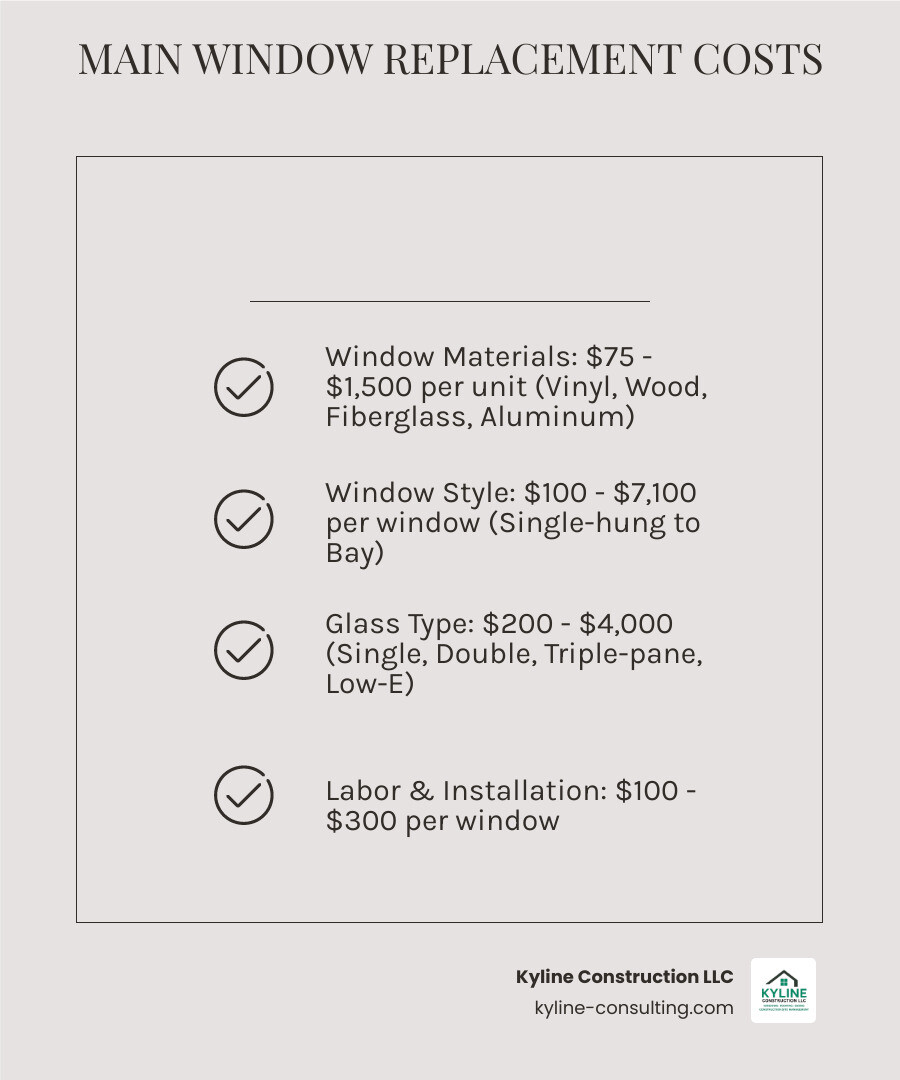
Cost to replace windows typically ranges from $300 to $1,500 per window, with most homeowners spending an average of $750 per window including materials and labor. For a whole-house project replacing 10-15 windows, expect to invest between $7,500 and $18,000. Here’s what drives these costs:
- Frame Material: Vinyl ($100-$900), Wood ($150-$1,300), Fiberglass ($500-$1,500), Aluminum ($75-$400)
- Window Style: Single-hung ($100-$400), Double-hung ($150-$650), Casement ($150-$1,000), Bay ($900-$7,100)
- Glass Type: Single-pane ($200-$500), Double-pane ($500-$2,000), Triple-pane ($1,000-$4,000)
- Labor & Installation: $100-$300 per window for standard installations
- Additional Costs: Permits, structural repairs, disposal fees, trim work
For many Ohio homeowners, window replacement feels overwhelming. Prices vary wildly, and it’s hard to know if you’re getting a fair deal. One contractor might quote $500 per window, while another says $1,200 for the same project.
Understanding the factors behind window replacement costs helps you budget smarter. The 2024 Cost vs. Value Report places the national average for replacing 10 windows at $21,264, though Ohio costs are often slightly lower. Size, style, material, glass type, and installation complexity all influence the final price.
What matters most is that investing in quality windows with proper installation saves you money over time. Energy-efficient windows can cut heating and cooling bills by 7-15% annually, and homeowners often see a 67-76% return on investment at resale. For example, replacing old, drafty windows can save over $1,200 per year on energy bills.
I’m Shawn Zeisler, owner of Kyline Construction LLC in Circleville, Ohio, and I’ve spent my entire career in construction helping homeowners steer projects like window replacement. Throughout my experience, I’ve seen how understanding the cost to replace windows empowers homeowners to make confident, value-driven decisions for their homes.
Understanding the Average Cost to Replace Windows
Let’s dive deeper into the average window replacement costs for Ohio homeowners. According to Angi’s 2025 data, the national average for a full project is around $7,357, or about $750 per window. Costs can range from $300 to $2,500 per window, meaning a large 25-window project could cost $18,000 to $20,000.
Costs in Ohio can be slightly less than the national average, but the main factors influencing price are window type, frame material, glass options, and installation complexity. Your unique home and preferences will ultimately determine the final investment.
For more detailed information about our window services and how we can help you find the perfect fit for your Ohio home, please visit our dedicated page: More info about our window services.

Signs It’s Time for a Replacement
Ignoring signs of window failure can lead to higher energy bills, discomfort, and even structural damage. Here are the most common indicators that it’s time for a replacement:
- Drafty Windows: Feeling a breeze near a closed window indicates poor seals or warped frames, forcing your HVAC system to work harder.
- Condensation Between Panes: Moisture or fog between glass panes means the seal has failed, which compromises the window’s insulating ability.
- Decaying or Damaged Frames: Visible rot, warping, or corrosion on wood, vinyl, or aluminum frames compromises the window’s structural integrity and efficiency.
- Difficult Operation: Windows that are difficult to open, close, or keep open are not just an annoyance but a potential safety hazard, indicating frame or hardware issues.
- Skyrocketing Energy Bills: A sudden spike in energy bills often points to old, inefficient windows. The U.S. Department of Energy states that 25%–30% of home heating and cooling energy is lost through windows, so replacement can lead to significant savings. U.S. Department of Energy data on energy loss.
- Noise Pollution: Increased outside noise suggests poor sound insulation from single-pane glass or failing seals.
Full-Frame vs. Retrofit Installation Costs
Window replacement involves two primary installation methods: full-frame and retrofit (or insert). Each has different costs and applications.
Retrofit (Insert) Replacement Explained:
This method involves placing a new window within the existing frame. It’s less invasive and more affordable because the original frame stays.
- Cost: Labor costs are lower, typically $100-$300 per window.
- When to Choose: Choose this method if your existing frames are in good condition. It’s faster and preserves original trim, though it slightly reduces the glass area.
Full-Frame Replacement Explained:
This means removing the entire window and frame down to the rough opening and installing a completely new unit.
- Cost: Labor is more expensive ($180-$1,500 per window) due to demolition, potential repairs, and complex finishing.
- When to Choose: This is necessary if existing frames are rotted or damaged. It allows for inspection of the rough opening and ensures a perfectly sealed, energy-efficient fit with maximum glass area.
While a retrofit can save money upfront, a full-frame replacement is a smarter long-term investment if there are underlying issues with the existing frame.

Key Cost Factors: A Detailed Breakdown
Beyond averages, your specific cost to replace windows depends on three main drivers: size, quantity, and complexity. Larger or custom-sized windows cost more than standard ones, potentially adding 25-50% to the price. While replacing more windows increases the total project cost, it can lower the per-window rate. Finally, project complexity—such as second-story access or the need for structural repairs—will add to labor time and expense.
Breaking Down the Cost to Replace Windows by Material
The frame material impacts cost, durability, maintenance, and energy efficiency. Here’s a comparison of common options for Ohio homeowners:
| Material | Average Cost per Window (Installed) | Durability | Maintenance | Energy Efficiency |
|---|---|---|---|---|
| Vinyl | $100 – $900 | Good (approx. 20 years lifespan) | Low (clean with soap and water) | Good (insulating properties) |
| Wood | $150 – $1,300 | Excellent (30+ years with maintenance) | High (painting, staining, sealing required) | Excellent (natural insulator) |
| Fiberglass | $500 – $1,500 | Excellent (up to 40 years lifespan) | Very Low (highly resistant to warping, fading) | Excellent (strong insulator) |
| Aluminum | $75 – $400 | Good (strong, resistant to corrosion) | Low (minimal upkeep) | Poor (conducts heat/cold easily) |
| Composite | $300 – $1,200 | Excellent (35+ years lifespan) | Low to Moderate (can fade with prolonged UV) | Very Good (blends wood and polymer properties) |
Vinyl windows are a popular, affordable, low-maintenance option with good energy efficiency.
Wood windows offer classic beauty and excellent insulation but require regular maintenance to prevent rot in Ohio’s climate.
Fiberglass windows are a durable, low-maintenance, and highly energy-efficient option, making them a great long-term investment despite a higher initial cost.
Aluminum windows are strong and budget-friendly but are poor insulators, which can lead to higher energy bills in Ohio.
Composite windows blend materials like wood and polymer for excellent durability and efficiency with less maintenance than pure wood.
How Window Style Affects Price
Window style affects your home’s look and the overall cost to replace windows. Here are common styles and their average installed costs:
- Single-Hung Windows: Affordable and popular; only the bottom sash opens. Average Cost: $100 – $400
- Double-Hung Windows: Both sashes move for better ventilation and easy cleaning. Average Cost: $150 – $650
- Casement Windows: Hinged on the side, they crank open for excellent ventilation and a tight, energy-efficient seal. Average Cost: $150 – $1,000
- Awning Windows: Hinged at the top, they open outward to allow ventilation even in light rain. Average Cost: $400 – $950
- Picture Windows: Fixed, non-opening windows that offer maximum light and are very energy-efficient. Average Cost: $65 – $700
- Sliding Windows: These windows slide open horizontally and are easy to operate. Average Cost: $100 – $400 (pocket) to $700 – $1,500 (sliding tilt)
- Bay and Bow Windows: These multi-panel windows project outward, adding space and curb appeal. Their complexity makes them one of the most expensive options. Bay Window Cost: $900 – $7,100; Bow Window Cost: $1,500 – $6,500
- Custom Windows: Custom-shaped or sized windows start at $1,000+ per unit.
The Price of Different Glass Types
The glass you choose is critical for both the cost to replace windows and their energy efficiency.
- Single-Pane Glass: The least expensive option ($200-$500), but its poor insulation makes it unsuitable for Ohio’s climate, leading to higher energy bills.
- Double-Pane Glass: The industry standard ($500-$2,000), featuring two panes of glass with an insulating air or gas fill. It offers a great balance of cost and performance for Ohio homes.
- Triple-Pane Glass: The best choice for maximum energy efficiency and soundproofing ($1,000-$4,000). The higher upfront cost provides superior comfort and long-term energy savings.
- Low-E Coatings: This microscopic coating ($300-$1,100 extra) reflects heat, keeping your home warmer in winter and cooler in summer. It adds to the cost but provides excellent ROI through energy savings.
- Argon Gas Fills: This non-toxic gas is denser than air and is used to fill the space between panes, improving insulation. It’s a standard feature in most energy-efficient windows.
We recommend Energy Star-certified windows, which meet strict EPA guidelines and can lower energy bills by an average of 12% annually. This investment pays for itself through reduced heating and cooling costs. Find more at Energy Star-certified windows information.
Labor, Installation, and Other Expenses
Labor and installation are a significant part of the total cost to replace windows. Proper installation is critical for energy efficiency and durability. Labor costs typically range from $100 to $300 per window but can increase based on these factors:
- Window Type and Size: Large or complex windows (bay, bow) require more installation time.
- Installation Method: Full-frame replacements cost more due to increased demolition and finishing.
- Accessibility: Upper-story or hard-to-reach windows require more time and equipment, increasing labor costs.
- Structural Issues: Finding rot or damage around the window opening requires repairs, adding to labor costs.
- Experience and Expertise: Experienced installers may have higher rates, but it’s an investment in quality workmanship and a long-lasting installation.
For more information on how our professional teams handle various home improvement projects, including window installation, please visit our services page: More info about our general contracting services.
Additional Costs to Consider
When budgeting, remember to account for these potential additional expenses:
- Building Permits: Permits may be required depending on your location in Ohio to ensure compliance with building codes. We can advise on local requirements.
- Structural Repairs: If we find rot or damage when removing old windows, repairs are necessary before installing the new units, which can be a common hidden cost.
- Old Window Disposal Fees: Always confirm if disposal fees for old windows and debris are included in your quote.
- Trim and Finishing Work: New interior and exterior trim or paint may be needed after installation for a finished look.
- Window Accessories: Accessories like grids, special hardware, or window tinting ($50-$1,650 per window) will add to the cost.
We recommend a 10-20% budget buffer for unforeseen circumstances, especially in older homes.
How to Save on Your Cost to Replace Windows
There are smart ways to manage your cost to replace windows without sacrificing quality.
- Replace Multiple Windows at Once: Replacing several windows at once often lowers the per-window cost due to economies of scale.
- Consider Off-Season Installation: Scheduling your project in the off-season (fall or winter) can sometimes lead to lower prices.
- Get Multiple Quotes: Get at least three detailed quotes from reputable contractors to compare prices, materials, and warranties.
- Choose Standard Sizes and Styles: Sticking to standard sizes and common styles like single- or double-hung reduces material costs.
- Prioritize Energy Efficiency: Energy-efficient windows have a higher upfront cost but save you money long-term on energy bills.
- Explore Retrofit Installation When Possible: If your frames are in good shape, a retrofit installation saves on labor and materials.
- Look for Rebates and Tax Credits: Check for local utility rebates and federal tax credits. You may be able to claim up to 30% of installation costs (max $600) for installing ENERGY STAR® certified models. This credit is available from Jan 1, 2023, to Dec 31, 2025. Learn more at Federal tax credits for energy efficiency.
- Don’t DIY Complex Installations: While DIY saves on labor, improper installation can cause costly damage and void warranties. Professional installation is recommended for most projects.
Frequently Asked Questions about Window Replacement Costs
Here are answers to common questions we hear from Ohio homeowners about window replacement.
Is it cheaper to repair or replace a window?
The answer depends on the problem. Minor issues like a small crack (around $100) or faulty hardware are cheaper to repair, with average repairs costing $400. However, for significant problems like fogging between panes (a failed seal), frame rot, or persistent drafts, replacement is the better long-term solution. While replacement has a higher upfront cost to replace windows, new energy-efficient windows reduce utility bills and improve home value, making them more cost-effective over time than a temporary repair.
What is the cheapest type of window to buy?
For the lowest upfront cost to replace windows, aluminum ($75+) and vinyl ($100+) frames with a single-hung or picture style ($65+) are the cheapest. However, we advise against the absolute cheapest options, like single-pane glass, for Ohio homes due to poor insulation and higher long-term energy costs. A vinyl, double-hung window with double-pane glass offers the best balance of affordability and energy efficiency. The cheapest window upfront is rarely the cheapest over its lifetime.
Does replacing windows increase my home’s value?
Yes, replacing windows is a great investment that increases home value. According to the 2025 Cost vs. Value Report, homeowners can recoup up to 76% of the cost at resale. New windows boost curb appeal and are a major selling point for buyers, who value the energy savings. The U.S. Department of Energy estimates new windows can save 7-15% on annual energy costs. The added comfort and soundproofing also make your home more attractive to potential buyers.
Your Next Steps for a Smarter Window Investment
Navigating the cost to replace windows can be complex, but understanding the key factors helps Ohio homeowners in Circleville and Columbus make informed decisions.
To summarize, your total cost will be influenced by:
- The number and size of windows.
- Your chosen frame material (vinyl, wood, fiberglass, etc.).
- The window style (double-hung, casement, bay, etc.).
- The glass type and energy-efficient features (double-pane, Low-E).
- The installation method (full-frame vs. retrofit).
- Additional costs like permits and repairs.
Quality installation is crucial. Even the best windows will underperform if installed incorrectly. Professional installation ensures energy efficiency, longevity, and peace of mind, protecting your investment.
At Kyline Construction LLC, we believe in providing long-term value. With over 40 years of experience, we pride ourselves on precision craftsmanship in siding, windows, and decks, changing Ohio homes with quality, safety, and attention to detail. We’re here to guide you through every step, ensuring you understand your options and feel confident in your choices.
Ready to take the next step towards a more comfortable, energy-efficient, and valuable home? We’re here to help you get started with a clear, no-pressure estimate. Get your free, no-obligation estimate for your window project today.