Why Understanding Window Efficiency Ratings Matters for Your Home
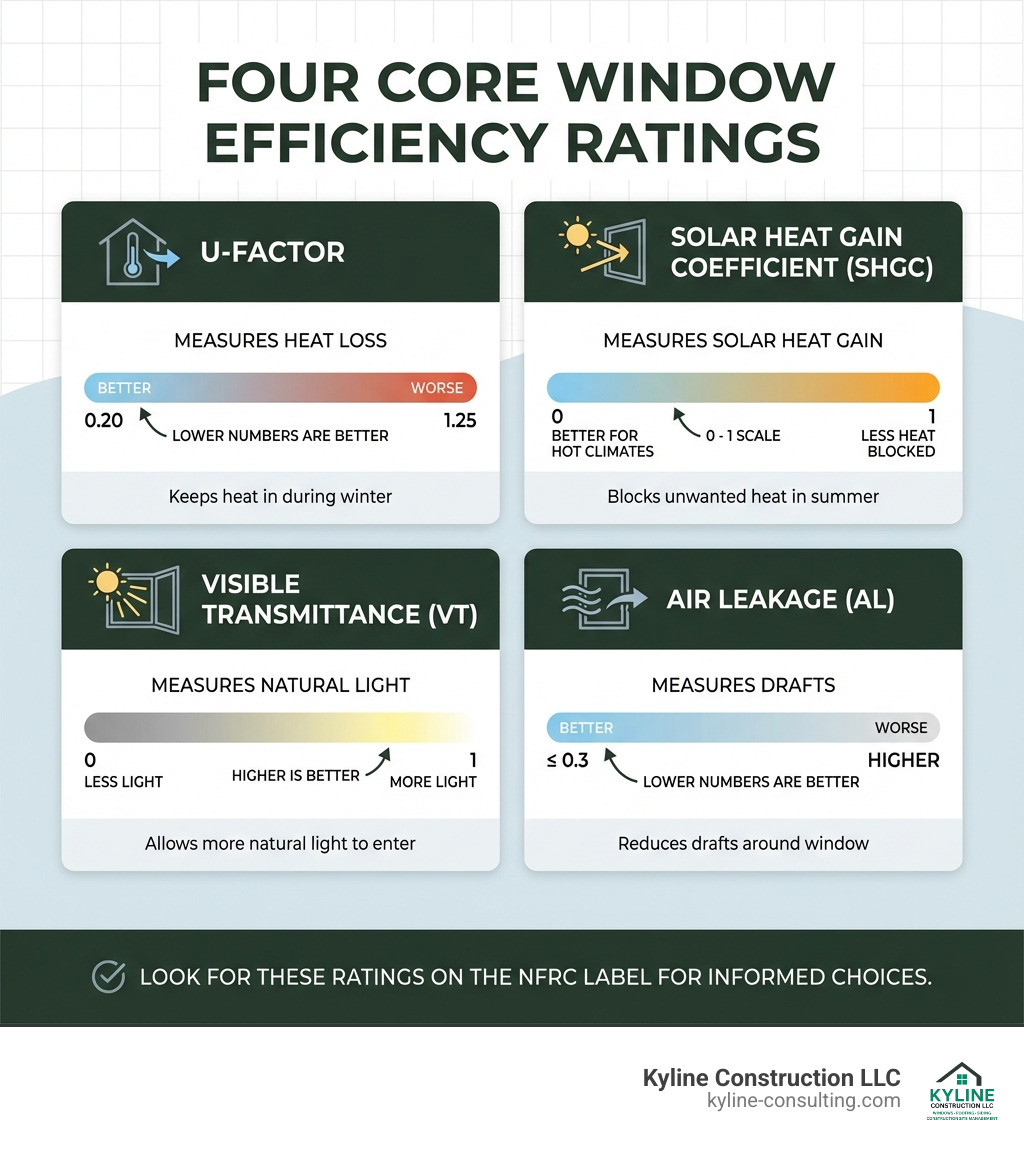
Window efficiency ratings help you understand how well your windows prevent heat loss, block unwanted solar heat, allow natural light, and resist air leakage. These ratings directly impact your energy bills, home comfort, and long-term value.
The four core window efficiency ratings you need to know:
- U-Factor – Measures heat loss through the window (lower is better, range 0.20-1.25)
- Solar Heat Gain Coefficient (SHGC) – Measures solar heat coming in (lower is better for hot climates, range 0-1)
- Visible Transmittance (VT) – Measures how much natural light enters (higher is better, range 0-1)
- Air Leakage (AL) – Measures drafts around the window (lower is better, should be ≤ 0.3)
If you’re considering new windows for your Ohio home, you’re making a decision that will affect your energy costs for decades. Windows and doors can account for up to 35% of your home’s heat loss, and inefficient windows can cost you over $150 per year in wasted energy. On the flip side, ENERGY STAR®-certified windows can save you an average of 45% on your energy bill.
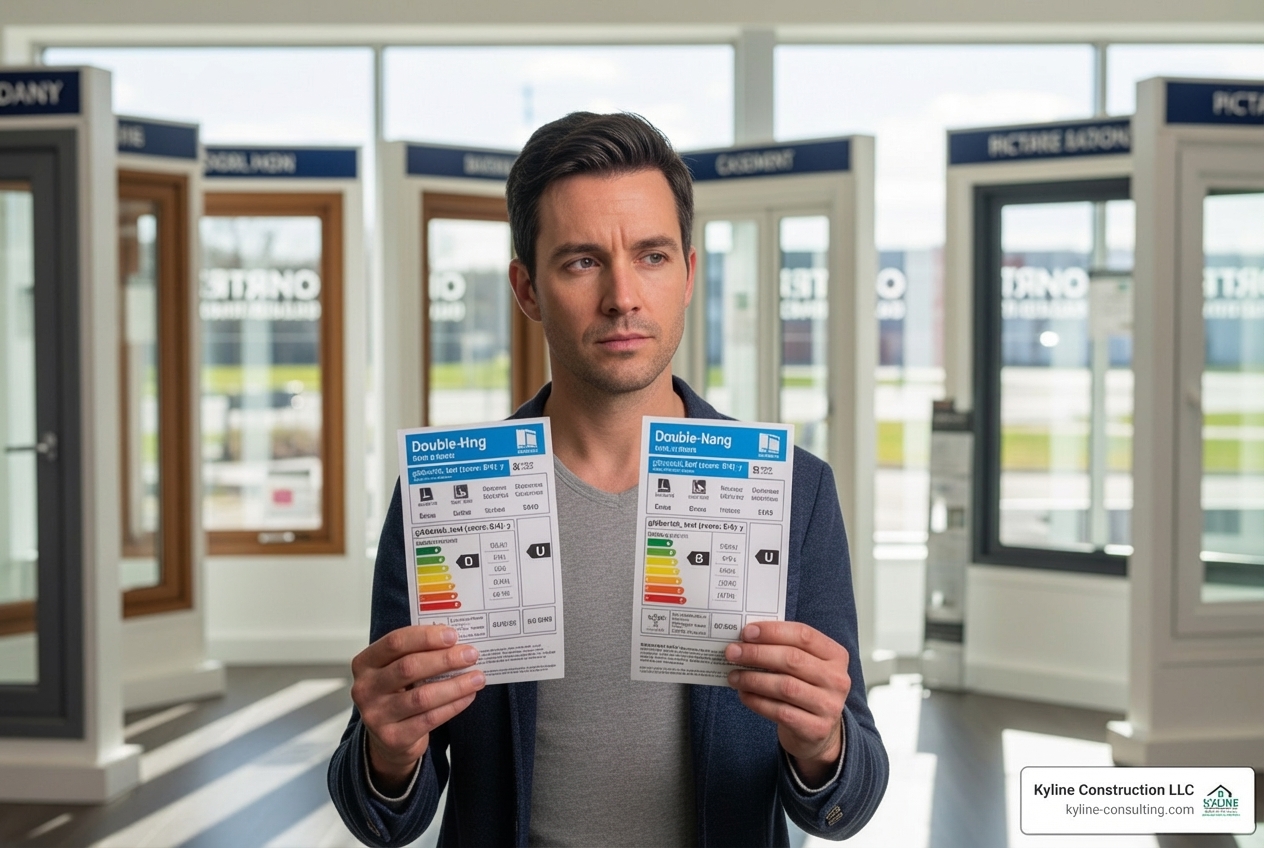
The National Fenestration Rating Council (NFRC) provides independent, certified ratings that let you compare windows side-by-side. These aren’t marketing claims – they’re tested, verified numbers that show exactly how a window will perform in your home.
I’m Shawn Zeisler, owner of Kyline Construction LLC, and I’ve spent my entire career in construction helping Ohio homeowners make smart decisions about their properties, including understanding Window efficiency ratings and how they impact long-term performance. This guide will walk you through everything you need to know to make an informed choice.
Decoding the NFRC Label: The Four Core Ratings
When we talk about window efficiency, we often hear terms like U-factor or SHGC. But what do these really mean for your home? The National Fenestration Rating Council (NFRC) is a non-profit organization that provides unbiased, standardized information on window, door, and skylight performance. They’re like the independent referees of window efficiency, ensuring that all products are tested, certified, and labeled using consistent, scientifically validated methods.
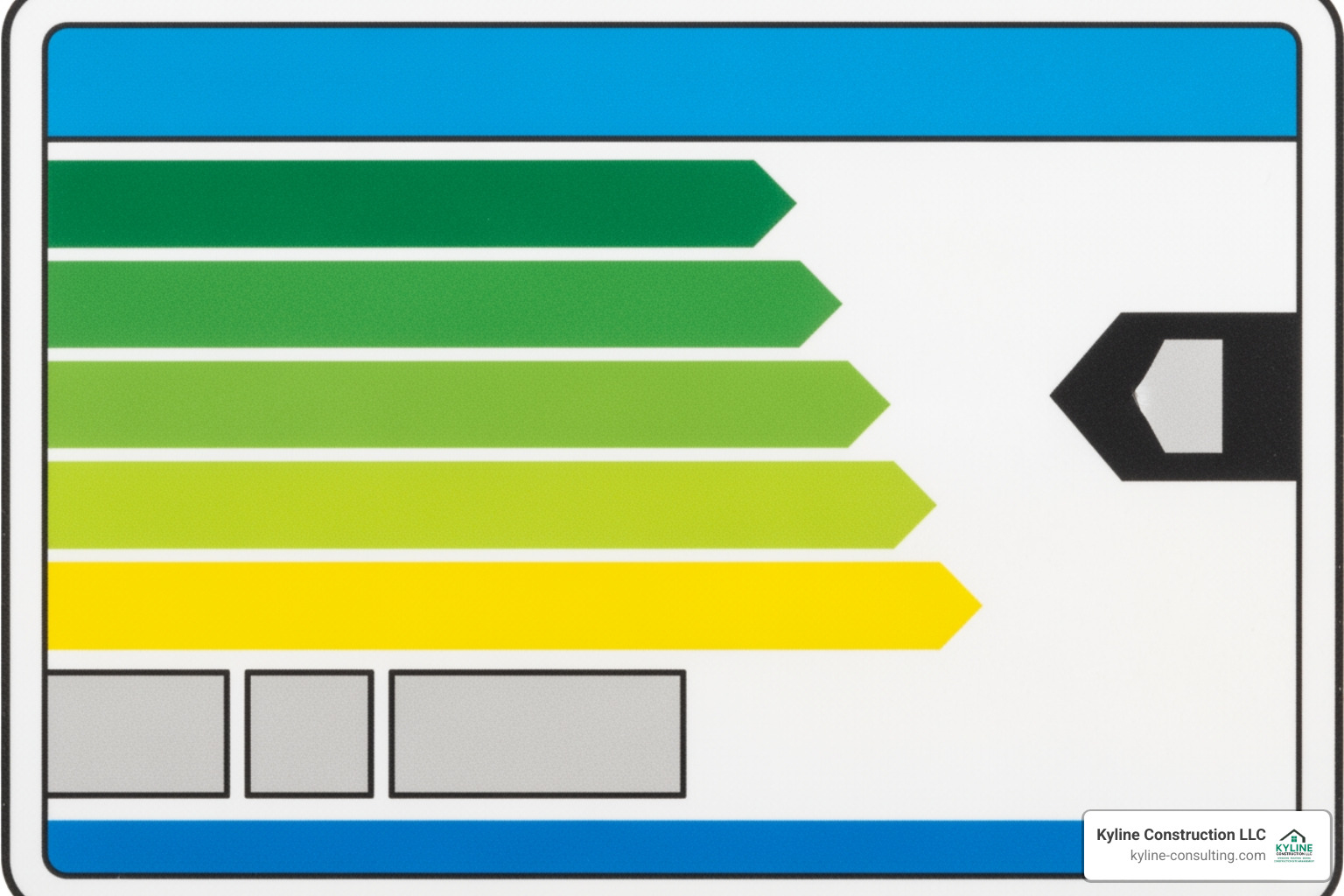
This means that when you see an NFRC label, you’re getting an “apples-to-apples” comparison of how different windows will perform. The label breaks down a window’s energy performance into several key categories, helping us understand its potential for gaining or losing heat, as well as how much sunlight it lets into your home. This objective data is crucial for making informed decisions about product performance, especially when considering a significant investment for your Ohio home. You can learn more about the National Fenestration Rating Council directly.
Let’s explore the four core ratings you’ll find on most NFRC labels:
U-Factor: Measuring Heat Loss
The U-factor is arguably one of the most critical window efficiency ratings, especially for us here in Ohio, where we experience cold winters. It measures the rate at which a window, door, or skylight transmits non-solar heat flow. Think of it as how well a product keeps heat from escaping a room.
The lower the U-factor, the better a window insulates. This means less heat loss from your home in the winter and less heat gain from the outside in the summer, leading to significant energy savings. U-factor values generally range from 0.25 to 1.25 (measured in Btu/h·ft²·°F) on residential labels, but can range from 0.20 to 1.20 in some contexts. The lower this number, the more energy-efficient the product.
The NFRC U-factor rating represents the entire window’s performance – not just the glass. This includes the frame material, the glazing (number of panes), and even the spacer material between the glass panes. Every component contributes to the overall U-factor, making it a comprehensive measure of a window’s insulating power.
Solar Heat Gain Coefficient (SHGC): Managing the Sun’s Heat
The Solar Heat Gain Coefficient (SHGC) measures the fraction of solar radiation admitted through a window, door, or skylight. In simpler terms, it tells you how well a product blocks heat caused by sunlight. This rating is measured on a scale from 0 to 1.
The ideal SHGC for your Ohio home depends heavily on the specific window’s orientation and your climate.
- Lower SHGC values (closer to 0) mean less solar heat is transmitted. This is excellent for reducing cooling loads during our hot Ohio summers, especially for windows facing south or west that receive direct, intense sunlight. If you want to keep your home cool and minimize air conditioning costs, a lower SHGC is your friend.
- Higher SHGC values (closer to 1) mean more solar heat is transmitted. In colder climates or for windows on the north or east sides of your home, a higher SHGC can be beneficial, allowing passive solar heating to help warm your home in the winter, potentially reducing heating costs.
Typical SHGC values range from 0.25 to 0.80. Understanding this balance is key to selecting windows that perform optimally year-round in Ohio’s mixed climate.
Visible Transmittance (VT): How Much Light Gets In?
Visible Transmittance (VT) measures the amount of visible light a window lets through. It’s expressed as a number between 0 and 1, with higher VT values indicating that the glass allows more natural light into your home.
Why is VT important? Windows with a high VT can significantly reduce the need for artificial lighting during the day, saving energy and lowering your electricity bills. Beyond energy savings, ample natural light has been shown to have positive impacts on our well-being. Studies suggest that brief indoor exposure to natural light can significantly reduce afternoon sleepiness and improve overall mood.
So, if you value bright, naturally lit spaces and want to harness the power of daylighting, a higher VT is a rating you’ll want to prioritize. Values generally range from 0.20 to 0.80.
Air Leakage (AL): Stopping Drafts in Their Tracks
Air Leakage (AL) measures the rate at which air passes through joints in the window, door, or skylight. It quantifies how much air “leaks” in or out around the closed product. This rating is expressed in cubic feet of air passing through one square foot of window area per minute (cfm/ft²).
A low AL value indicates a tighter product with less air leakage. This is crucial for both energy performance and home comfort. High air leakage means drafts, which can make your home feel cold in winter and hot in summer, forcing your HVAC system to work harder and increasing your energy bills. The NFRC and ENERGY STAR labels generally accept air leakage ratings below 0.3 cfm/ft². The lower this metric, the better, as it directly translates to fewer drafts and a more consistent indoor temperature.
While a window might have excellent AL ratings from the factory, proper installation is paramount. Even the most airtight window can become a source of drafts if not installed correctly. This is why choosing experienced professionals like us at Kyline Construction LLC for your window installation is just as important as choosing high-rated windows.
Beyond the Basics: Other Important Window Efficiency Ratings
While U-factor, SHGC, VT, and AL are the core window efficiency ratings, there are a few other important metrics that can further inform your purchasing decision and help you achieve comprehensive performance.
Condensation Resistance (CR): A Measure of Clarity
Condensation Resistance (CR) measures how well a window resists water build-up on its interior surface. This rating is scored on a scale from 0 to 100, with a higher condensation resistance factor indicating that the window is less likely to allow moisture to accumulate.
While CR isn’t directly an energy performance rating in the same way U-factor is, it’s closely related to comfort and window longevity. Condensation can obscure views, lead to mold growth, and over time, damage window frames and sills. High CR windows help maintain clearer views and a healthier indoor environment, especially in Ohio’s humid conditions or during extreme temperature swings. This rating is optional on NFRC labels, but it can be a valuable indicator of a window’s quality and overall performance.
Energy Rating (ER): A Combined Performance Score
The Energy Rating (ER) is a comprehensive measure of a window’s energy efficiency. It balances the U-factor, the SHGC, and Air Leakage into a single score, providing a holistic view of a window’s performance. The ER is typically measured on a scale between 0 and 50 – the higher the number, the better the overall energy efficiency.
While more commonly used in Canadian standards, the ER value offers a convenient way to compare products when available. For instance, research indicates that good performing windows and doors often have an ER of 29 or higher. To be ENERGY STAR certified in some contexts, windows and doors may need a minimum ER of 34, showcasing its importance as a balanced metric.
Light-to-Solar Gain (LSG): The Best of Both Worlds
Light-to-Solar Gain (LSG) is a ratio of a window’s Visible Transmittance (VT) to its Solar Heat Gain Coefficient (SHGC) (VT/SHGC). This metric helps us understand the relative efficiency of different glass types in transmitting daylight while simultaneously blocking unwanted heat gains.
A higher LSG means that a window lets in a significant amount of natural light without allowing an excessive amount of solar heat to enter. This is particularly valuable for maximizing daylighting and reducing the need for artificial lighting, while still managing cooling loads and reducing glare. While not always provided on NFRC labels, understanding the concept of LSG can help you balance your desire for bright spaces with your need for thermal comfort.
How to Use Window Efficiency Ratings for Your Home
Now that we’ve demystified the various window efficiency ratings, the big question is: how do you use this information to make the best choice for your Ohio home? It all comes down to understanding your specific needs, your climate, and how different window components contribute to these ratings.
The Role of ENERGY STAR® Certification
When shopping for new windows, one of the easiest ways to identify energy-efficient options is to look for the ENERGY STAR® label. This is a voluntary program that helps consumers identify products with superior energy performance. For windows, doors, and skylights, ENERGY STAR qualification is based on independently tested, certified, and verified NFRC ratings, specifically U-factor and SHGC.
ENERGY STAR-certified windows are rigorously evaluated against stringent energy efficiency requirements. Investing in these windows can lead to substantial savings; research shows that ENERGY STAR®-certified windows can save you an average of 45% on your energy bill. This means a significant reduction in your heating and cooling costs, putting more money back in your pocket over the long term.
Matching Ratings to Your Climate Zone
The ideal window efficiency ratings for your home are heavily influenced by your climate. Ohio falls into what’s often considered a mixed climate zone (specifically Zone 5 in many energy code classifications), meaning we experience both cold winters and hot, humid summers. This necessitates a balanced approach to window selection.
For our Ohio homes, we need windows that perform well in two key areas:
- Minimizing Heat Loss (Low U-factor): During our chilly winters, a low U-factor is crucial to keep the warmth inside your home, reducing the strain on your heating system.
- Controlling Solar Heat Gain (Appropriate SHGC): In the summer, a lower SHGC is beneficial to block unwanted solar heat, helping your air conditioning run more efficiently and keeping your home cooler. However, a slightly higher SHGC on north or east-facing windows might allow some passive solar heating in winter without overheating in summer.
To determine the desired performance ratings for your specific home and climate within Ohio, we recommend exploring tools like the Efficient Windows Collaborative. You can use their window selection tool for existing homes or for new construction to help guide your choices based on localized data.
How Window Components Affect Your Ratings
The overall window efficiency ratings are a sum of their parts. Various components work together to determine how well a window performs. Here’s a look at how key elements impact U-factor and SHGC:
| Component | Impact on U-Factor (Heat Loss) | Impact on SHGC (Solar Heat Gain) |
|---|---|---|
| Frame Material | Insulated frames (like vinyl, wood, and fiberglass) reduce heat transfer and lower the overall U-factor compared to non-insulated materials like aluminum. | The frame has a minimal impact on SHGC compared to the glass. |
| Glazing | More panes of glass (e.g., triple-pane vs. double-pane) create more insulating layers, significantly lowering the U-factor. | Additional panes of glass can slightly reduce the amount of solar heat that passes through, lowering the SHGC. |
| Gas Fills | Inert gases like Argon or Krypton are denser than air and provide better insulation between glass panes, which lowers the U-factor. | Gas fills have a negligible direct impact on SHGC. |
| Low-E Coatings | These microscopic metallic coatings reflect heat back to its source, keeping your home warmer in winter and cooler in summer, which dramatically lowers the U-factor. | Low-E coatings are specifically designed to block solar heat (infrared light), which significantly lowers the SHGC while still allowing visible light to pass through. |
You can learn more on window components and how they contribute to a high-performance window system.