Why Understanding Contractor Types Matters for Your Home Investment
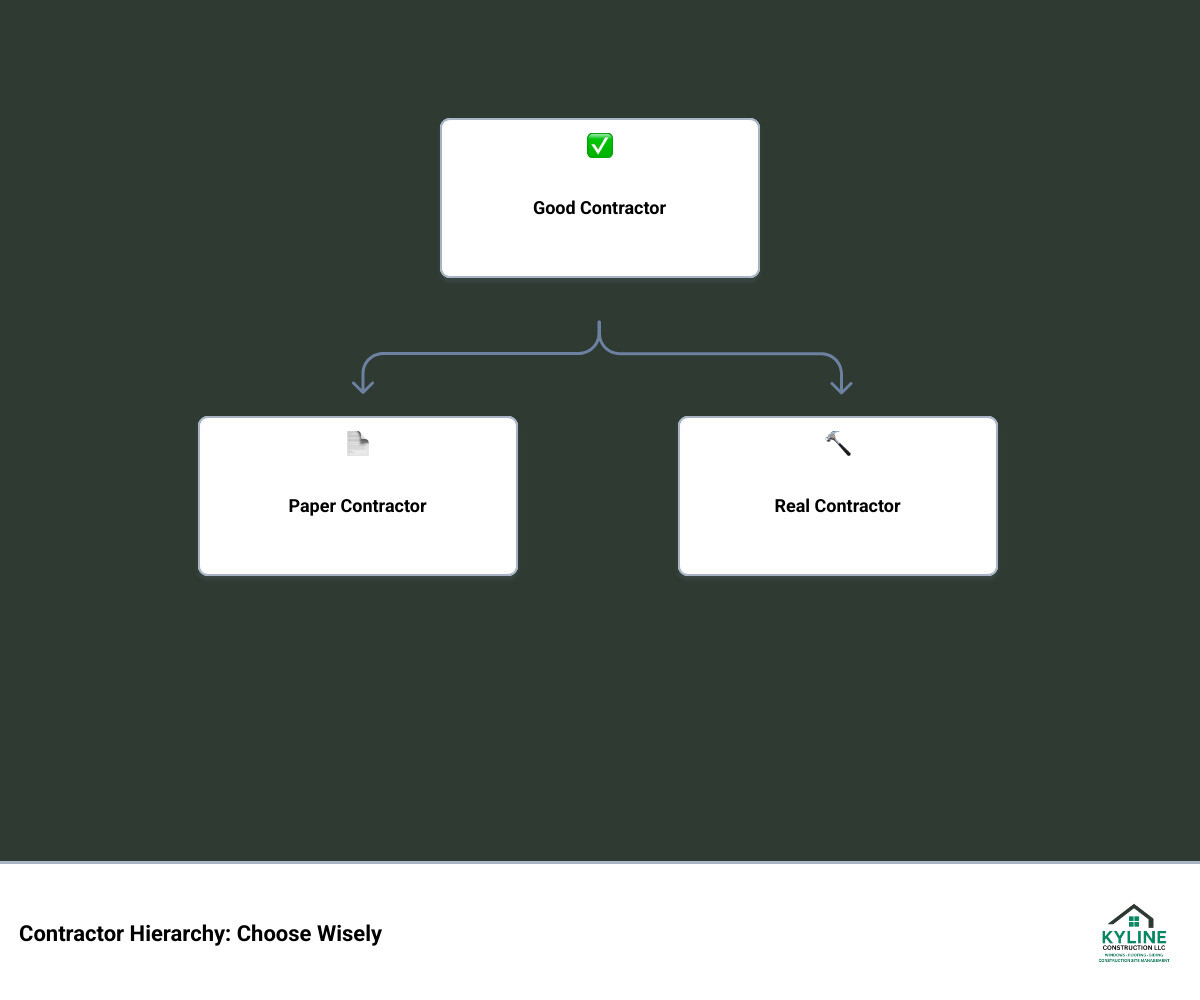
Good Contractor, Paper Contractor, Real Contractor — these terms get thrown around in the construction industry, but most homeowners don’t know what they actually mean until it’s too late. Here’s what you need to know before you sign your next contract:
| Contractor Type | What They Do | Key Characteristic |
|---|---|---|
| Paper Contractor | Coordinates subcontractors for all work | Helpless if a subcontractor quits or fails |
| Real Contractor | Can physically complete the work themselves | Has the trade skills to finish the job personally |
| Good Contractor | Either type who delivers quality and communication | Licensed, insured, and accountable |
The difference isn’t just semantics — it’s about who shows up when things go wrong.
In Central Ohio’s home improvement market, paper contractors are everywhere. Research shows that approximately two-thirds of contractors in homebuilding are paper contractors who subcontract everything out. They never swing a hammer, cut a piece of siding, or install a window themselves. Instead, they act as middlemen between you and the actual workers.
The real problem? When your subcontractor walks off the job or does shoddy work, a paper contractor is paralyzed. They don’t have the skills to step in. A real contractor is your ultimate insurance policy; they can grab their tools and finish your project themselves if a crew disappears.
This isn’t about being anti-paper contractor. It’s about knowing what you’re paying for. Some projects benefit from pure coordination. But for most homeowners investing $11k-$17k in full siding repair or $400-$900 per window, you deserve someone who can stand behind their work with actual skill, not just a signature.
I’m Shawn, and I’ve spent my entire working career in construction right here in Central Ohio. Through my experience running projects from start to finish, I’ve seen every variation of Good Contractor, Paper Contractor, Real Contractor — and I know which model protects homeowners best.
Defining the Players: Good Contractor, Paper Contractor, Real Contractor
When you’re looking to upgrade your home in Circleville or Columbus, you’ll likely meet a variety of professionals. To make the best choice, we need to break down the “Big Three” identities in the industry.

The Paper Contractor (PC)
A Paper Contractor is essentially a project manager or a salesperson. They don’t own a truck full of tools, and they don’t have sawdust in their hair. Their “work” happens on paper—contracts, schedules, and invoices. While this model is common, it relies entirely on the quality of the subcontractors they hire. If the sub walks off the job, the project grinds to a halt because the PC doesn’t have the trade skills to pick up a hammer and keep things moving.
The Real Contractor
A real contractor is what I consider a true tradesperson. We believe that to lead a project, you have to know how to do the project. A real contractor has the “tool belt” experience. They might use subcontractors for specific tasks, but they possess the technical proficiency to finish the job personally if a crew quits or underperforms. This hands-on ability is the only true guarantee that your home won’t be left in a state of mid-construction limbo.
The Good Contractor
A good contractor can technically be either of the above, provided they meet high standards of ethics and professionalism. However, in my professional opinion, a “good” paper contractor is still a higher risk than a “good” real contractor because of that lack of direct trade control. If the labor market gets tight and subs start jumping ship, only the real contractor can ensure your project reaches the finish line.
When deciding which one you need, it helps to understand What Kind of Contractor Do You Need? based on the complexity of your project.
Identifying a Real Contractor
How do you spot a real contractor? Look at their hands and their history. A real contractor doesn’t just talk about Siding; they can explain the specific physics of how a panel expands and contracts in Ohio’s humidity.
The hallmark of a real contractor is the ability to finish the work. If a siding crew leaves a project 90% done and disappears, a Paper Contractor has to spend three weeks finding a new sub who is willing to finish someone else’s mess. A real contractor puts on their boots, grabs their tools, and finishes that last 10% themselves to keep your project on schedule.
The Rise of the Paper Contractor: Pros, Cons, and Profit Margins
The construction industry has shifted. In many markets, including right here in Central Ohio, the “salesman” model has taken over.
| Feature | Paper Contractor | Real Contractor |
|---|---|---|
| Direct Labor | 100% Subcontracted | In-house or Heavily Supervised |
| Trade Knowledge | Theoretical / Sales-focused | Practical / Hands-on |
| Markup | Often up to 55% after materials | Competitive, based on skill |
| Subcontractor Risk | Project stops if subs quit | Contractor finishes the work personally |
The PC model thrives on volume. While this is great for their bank account, it can be tough on your wallet and your timeline. When a salesperson takes a 55% cut just for making phone calls, you aren’t paying for better materials—you’re paying for their marketing budget.
Risks of the Good Contractor, Paper Contractor, Real Contractor Model
The biggest risk with a pure Paper Contractor is “Project Paralysis.” If they don’t know the trades, they can’t effectively perform quality control or step in during a crisis. They are at the mercy of whatever the subcontractor tells them.
Common criticisms include:
- Total Dependency: If the subcontractor quits, the Paper Contractor is helpless to advance the project.
- Lack of Oversight: If the PC is busy selling the next job, who is watching your Windows being installed to ensure they are flashed correctly?
- Warranty Woes: If the PC goes out of business, your “warranty” is just a piece of paper, and they have no skills to offer you a repair themselves.
As noted on AsktheBuilder.com, trust is earned through expertise. When a contractor lacks trade knowledge, they can’t protect the owner’s interests because they don’t know what “wrong” looks like until it starts leaking.
Why a Real Contractor is Your Best Bet in Central Ohio
In Central Ohio, our weather is brutal on homes. This is why having a real contractor matters. The “Real” model ensures that the person you signed the contract with actually understands the physics of the build and, crucially, possesses the ability to complete the work themselves if a subcontractor fails to show up.
Whether it’s building custom Decks or replacing a full run of siding, the real contractor is your safeguard against abandonment. If you’ve ever wondered why labor costs seem high, check out our guide: Don’t Get Sided Tracked: Understanding Your Siding Replacement Labor Bill. You’ll see that you’re paying for precision and the security of knowing the job will be finished no matter what happens with the crew.
How to Vet Your Builder: Spotting the Paper Boys
How do you know if you’re talking to a real contractor or just a “Paper Boy”? You have to interview them.
- Ask “Who is doing the work?”: If they say “my crews,” ask if those are W2 employees or 1099 subcontractors.
- Check the “Truck Test”: Does the guy giving the estimate have tools in his truck, or is it a spotless SUV with a laptop?
- Technical Questions: Ask a specific question about the installation. “How do you handle the flashing around the window header?” A real contractor will answer instantly. A Paper Contractor might say, “My guys handle that to code.”
- Verify Licensing: In Ohio, check local registration. While some states like Idaho have specific Consumers Guide to Contractors manuals, in Columbus and Circleville, you should always ask for proof of insurance and local bonding.
Don’t be afraid to ask for a breakdown of costs. If you suspect the price is inflated just to cover a salesman’s commission, read Is Your Siding Estimate Too High? A Homeowner’s Guide to Fair Pricing.
Choosing Between a Good Contractor, Paper Contractor, Real Contractor
Once you’ve done your research, get everything in writing. A handshake is nice, but as the saying goes, “good businesses don’t work that way.”
A solid project plan should include:
- A Written Contract: Required for any major work. Your House -Hiring a Contractor suggests that a contract is your best defense against “scope creep.”
- Insurance Proof: Don’t just take their word for it; ask for the certificate.
- Specific Materials: Ensure they aren’t using “or similar” language to swap out high-quality Roofing materials for cheaper alternatives.
Frequently Asked Questions about Contractor Types
What is the main difference between a paper contractor and a real contractor?
The main difference is trade skill and involvement. A paper contractor is a manager who hires others to do 100% of the work. A real contractor is a builder who has the skills to perform the work themselves and often supervises the project on-site to ensure technical standards are met.
Can a paper contractor provide high-quality work?
Yes, they can—but it depends entirely on the subcontractors they hire. The risk is that the paper contractor cannot personally verify the quality of the technical work because they lack trade experience. If a high-quality sub leaves, the quality of your project might drop with the next sub they hire.
Why does Shawn emphasize the ability to finish the job personally?
In my 40+ years of experience, I’ve seen crews walk off jobs for a variety of reasons. If your contractor is a “paper boy,” your project stops until he finds a new crew. If your contractor is a real contractor, he picks up a hammer and keeps the project moving. It’s the ultimate insurance policy for the homeowner.
Conclusion
At Kyline Construction LLC, we’ve spent over 40 years transforming Ohio homes in Circleville and Columbus. We believe in the real contractor model because it’s the only way to guarantee precision craftsmanship. When you hire us for siding, windows, or decks, you aren’t just hiring a salesperson—you’re hiring a team of professionals who know the trades inside and out.
If you’re ready for a free, no-obligation estimate from a team that actually knows how to swing a hammer, check out our full range of Services. Let’s make sure your home investment is handled by someone who knows the difference between a good contract and a great build.