
How Much Can New Windows Actually Save You? A Central Ohio Homeowner’s Guide
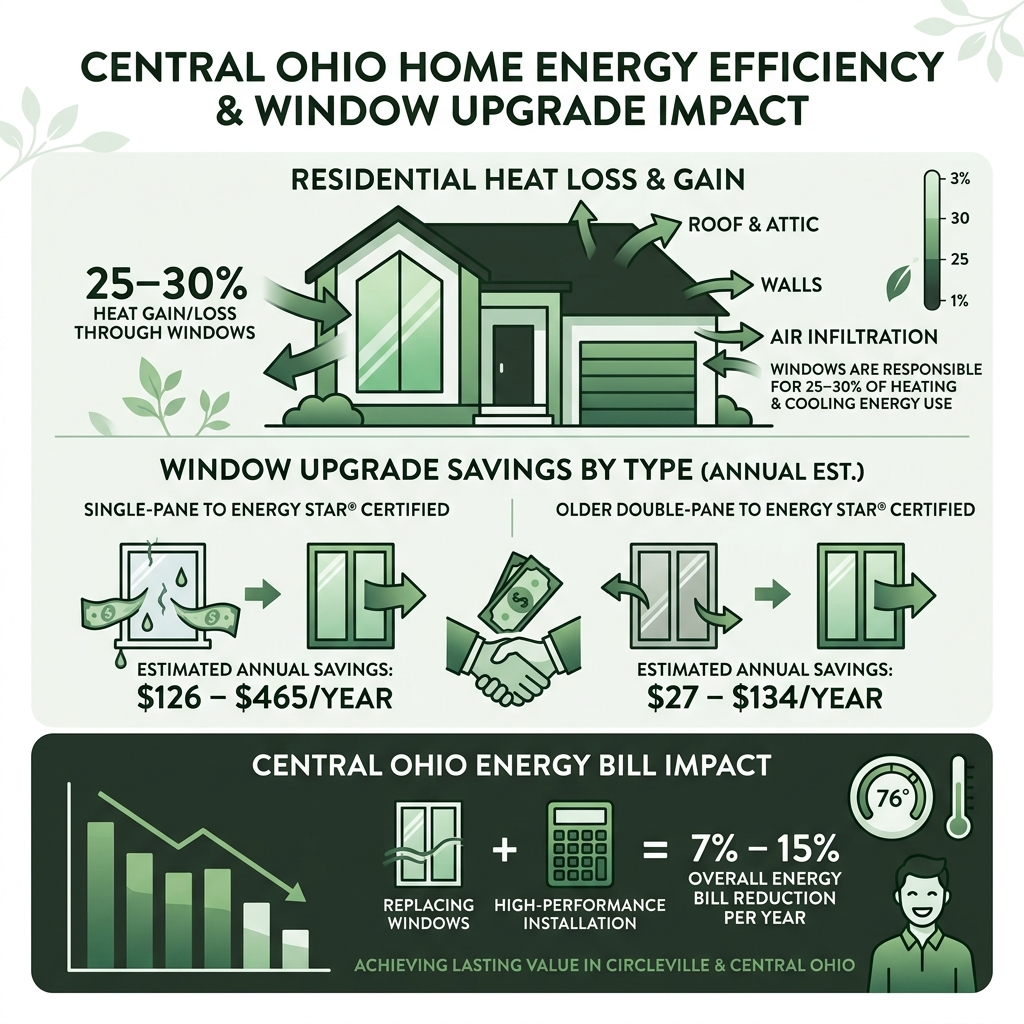
The average energy savings with new windows ranges from $126 to $465 per year when replacing single-pane windows with ENERGY STAR-certified models, according to the U.S. Department of Energy. Here’s a quick breakdown:
| Upgrade Type | Estimated Annual Savings |
|---|---|
| Single-pane → ENERGY STAR certified | $126 – $465/year |
| Older double-pane → ENERGY STAR certified | $27 – $134/year |
| Overall home energy bill reduction | 7% – 15% per year |
Windows are responsible for 25–30% of your home’s heating and cooling energy use. That’s a significant slice of your utility bill — and one that new, high-performance windows can meaningfully cut.
But the real number you can expect depends on your home’s size, your current windows, your local climate, and how well the windows are installed. This guide walks you through all of it.
I’m Shawn, owner of Kyline Consulting LLC in Circleville, Ohio — a real contractor specializing in vinyl siding and window replacement. I’ve spent my entire career helping Central Ohio homeowners get real value from upgrades like energy-efficient windows. I’ve seen how much the average energy savings with new windows can vary based on installation quality and product selection, and I’ll share what actually matters so you can avoid “paper contractors” and make a smart decision.
Average energy savings with new windows terms at a glance:
Understanding the Average Energy Savings with New Windows
When we talk about the average energy savings with new windows, we aren’t just pulling numbers out of a hat. These figures come from rigorous modeling. According to the U.S. Department of Energy and ENERGY STAR data, the move from drafty, single-pane glass to modern, certified units can slash your annual energy bills by 7% to 15%. For a typical home in the Columbus area, that translates to a range of $126 to $465 in savings every single year.
If you are upgrading from older double-pane windows that have “clear” glass (meaning no special coatings), the savings are more modest but still helpful, typically landing between $27 and $134 per year. The Methodology for ENERGY STAR Savings Estimates for Windows explains that these estimates are based on a standard 2,000 to 2,400 square foot home. In our neck of the woods—Central Ohio—the savings lean toward the higher end of the scale because our winters are cold enough to make your furnace work overtime.
Choosing the right material is also a huge factor. We specialize in vinyl because it offers incredible thermal resistance without the maintenance headaches of wood. You can find more info about energy efficient vinyl windows to see why they are often the smartest pick for Ohio weather.
How to Calculate Your Average Energy Savings with New Windows
To get a “real world” estimate for your house in Circleville or Columbus, you need to look at a few variables: your current utility rates, the square footage of your home, and what you’re burning for heat (gas vs. electric).
In Central Ohio, most of us use natural gas for heating. Because gas is often cheaper than electricity, your dollar savings might look different than someone in a purely electric home, but the energy reduction (measured in BTUs) remains high.
| Window Type Baseline | Annual Savings (Cold/Mixed Climate) | BTU Savings (Millions) |
|---|---|---|
| Single-Pane | $260 – $340 | 24.8M |
| Double-Pane (Clear) | $55 – $75 | 4.7M |
Note: Estimates based on DOE regional data for the East North Central region.
Factors Influencing Average Energy Savings with New Windows
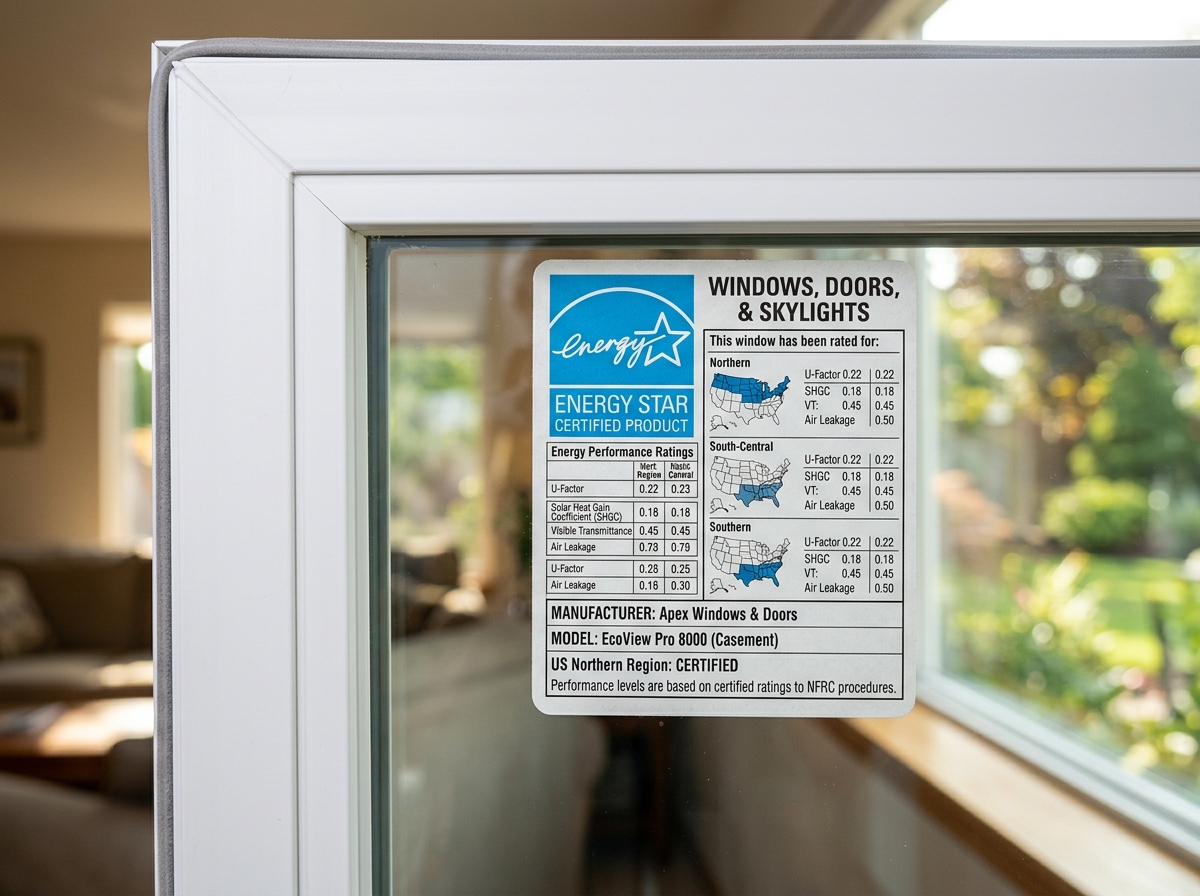
Not all windows are created equal. If you’re shopping for the best average energy savings with new windows, you need to speak the language of performance ratings. Here are the “Big Four” features Shawn looks for:
- U-factor: This measures how well the window keeps heat inside. The lower the number, the better it is at insulating. In Ohio, you want a low U-factor to combat those January freezes.
- SHGC (Solar Heat Gain Coefficient): This tells you how much heat from the sun comes through the glass. In our climate, we want a balanced SHGC—enough to help warm the house in winter, but not so much that you’re roasting in July.
- Low-E Coatings: These are microscopic metallic layers that reflect infrared energy. It keeps heat inside during winter and reflects it away in summer.
- Gas Fills: Instead of just air between the panes, manufacturers use Argon or Krypton gas. These gases are denser than air and provide much better insulation.
For a deeper dive, check out our Smart shopper’s guide to window performance ratings.
High-Performance Features That Drive Costs Down
When we’re out in the field in Columbus, we often get asked if triple-pane is “worth it.” While double-pane windows with Argon gas are the standard and provide excellent ROI, triple-pane windows can offer an additional 20% to 30% in energy savings. However, they come with a higher price tag and are heavier, which requires a very sturdy frame.
Frame material matters just as much as the glass. Vinyl frames are designed with multi-chambered interiors. These “pockets” of air act as additional insulation, preventing the frame itself from conducting cold into your living room. This is a massive upgrade over old aluminum frames, which basically act like a radiator for the cold.
According to the Department of Energy, heat loss through windows can account for nearly a third of your heating bill. By combining insulated vinyl frames with high-tech glass, you’re essentially putting a thermal “blanket” over the openings in your home. You can learn everything you need to know about energy efficient windows on our blog to see how these components work together.
Real Contractors vs. Paper Contractors: Why Installation Matters
This is where I get a little fired up. You can buy the most expensive, highest-rated window in the world, but if it’s installed poorly, your average energy savings with new windows will be exactly zero.
There is a massive, critical difference between what I call “paper contractors” and “real contractors.” A paper contractor is essentially a sales organization with a fancy website but no actual tools. They sell you the job with a slick presentation, then flip it to the lowest-bidding subcontractor they can find. They often have never personally installed a window or handled a vinyl siding integration in their lives. If that subcontractor disappears, the paper contractor is stuck because they lack the technical skill to finish the work.
At Kyline Construction, we are real contractors. We’ve been in the trenches for over 40 years. If there’s a complication on-site, I don’t call a middleman—I grab my tools and solve it myself. We focus on the “envelope” of the home, ensuring every window is perfectly plumb, level, and hermetically sealed. We specialize in the complex interface between your window frames and vinyl siding to prevent air infiltration. We don’t just “slap them in”; we ensure the structural integrity of the opening is sound. Proper installation by a real contractor prevents the drafts that the “stack effect” pulls through your home. For more on how professional work impacts your daily life, read about maximizing home comfort with efficient windows.
Calculating the ROI and Long-Term Value
Let’s talk money. A single window replacement generally costs between $400 and $900 depending on the size and features. While that’s an investment, the ROI comes from three places:
- Immediate Energy Savings: As we discussed, you’ll see a drop in your monthly gas and electric bills immediately.
- Home Resale Value: According to the 2025 Cost vs. Value report, homeowners typically recoup about 68% to 75% of the window replacement cost in added home value.
- Tax Credits: Thanks to the Inflation Reduction Act, you can currently claim a federal tax credit of 30% of the project cost, up to $600 per year, for ENERGY STAR certified windows.
When you factor in rising energy costs—which have been trending upward at about 4.5% per year—the long-term value of “locking in” a lower energy requirement for your home is significant. If you’re curious about the paperwork, we have a guide on how to apply for federal window assistance.
When to Prioritize Window Replacement in Central Ohio
How do you know it’s time? If you’re standing in your kitchen in Circleville and you can feel the breeze coming through a closed window, it’s time. Other signs include:
- Condensation: If you see fog or moisture between the panes of glass, the seal has failed. The insulating gas is gone, and the window is now just a piece of glass.
- Operational Issues: If you have to fight the window to open it, or if it won’t stay up, it’s a safety hazard.
- The “Stack Effect”: This is a big one in Ohio. Warm air rises and escapes through your attic, which creates a vacuum that pulls cold air in through leaky windows on the lower floors.
While we always recommend checking your attic insulation (it’s often the most cost-effective first step), windows are the “weakest link” in your home’s walls. If your windows are 20+ years old, they simply don’t have the technology to keep up with modern energy standards. We even have resources for how seniors can get low-cost window replacements through various assistance programs.
Frequently Asked Questions About Window Savings
How much can I save by upgrading from single-pane to double-pane windows?
In Central Ohio, you can expect to save between $125 and $340 per year. The exact amount depends on how many windows you replace and how high you keep your thermostat in the winter. ENERGY STAR certified double-pane windows are the “sweet spot” for most Columbus homeowners.
Are there tax credits available for energy-efficient windows in 2024?
Yes! Under the Energy Efficient Home Improvement Credit, you can get a tax credit of 30% of the cost of the windows, capped at $600 per year. To qualify, the windows must meet ENERGY STAR Version 7.0 requirements for our climate zone.
Should I replace my windows or add attic insulation first?
This is a “Shawn’s expert tip” moment: If your budget is tight, start with an energy audit. Often, sealing the attic is the biggest bang for your buck because of the stack effect. However, if your windows are drafty, rotting, or have failed seals, they are actively throwing money out the window every month. Ideally, you want a sealed “thermal envelope” from the basement to the roof.
Conclusion
At the end of the day, the average energy savings with new windows makes them one of the most reliable home improvements you can make. You get a more comfortable home, lower bills, and a higher resale value.
But remember: the product is only half the battle. Don’t gamble your home’s efficiency on a “paper contractor” who doesn’t know a sash from a sill and has never actually swung a hammer. These sales-first companies lack the hands-on expertise required for a truly high-performance installation. At Kyline Construction LLC, we are real contractors who bring 40+ years of Central Ohio experience to every project. We take immense pride in precision craftsmanship—whether we’re installing high-efficiency vinyl windows or performing a full vinyl siding repair (which typically runs $11k-$17k for a standard home).
If you’re ready to stop overpaying the utility company and start enjoying a draft-free home, give us a call. We offer free, no-obligation estimates to homeowners in Circleville, Columbus, and throughout Central Ohio.


