Understanding What You’ll Really Pay for Vinyl Siding
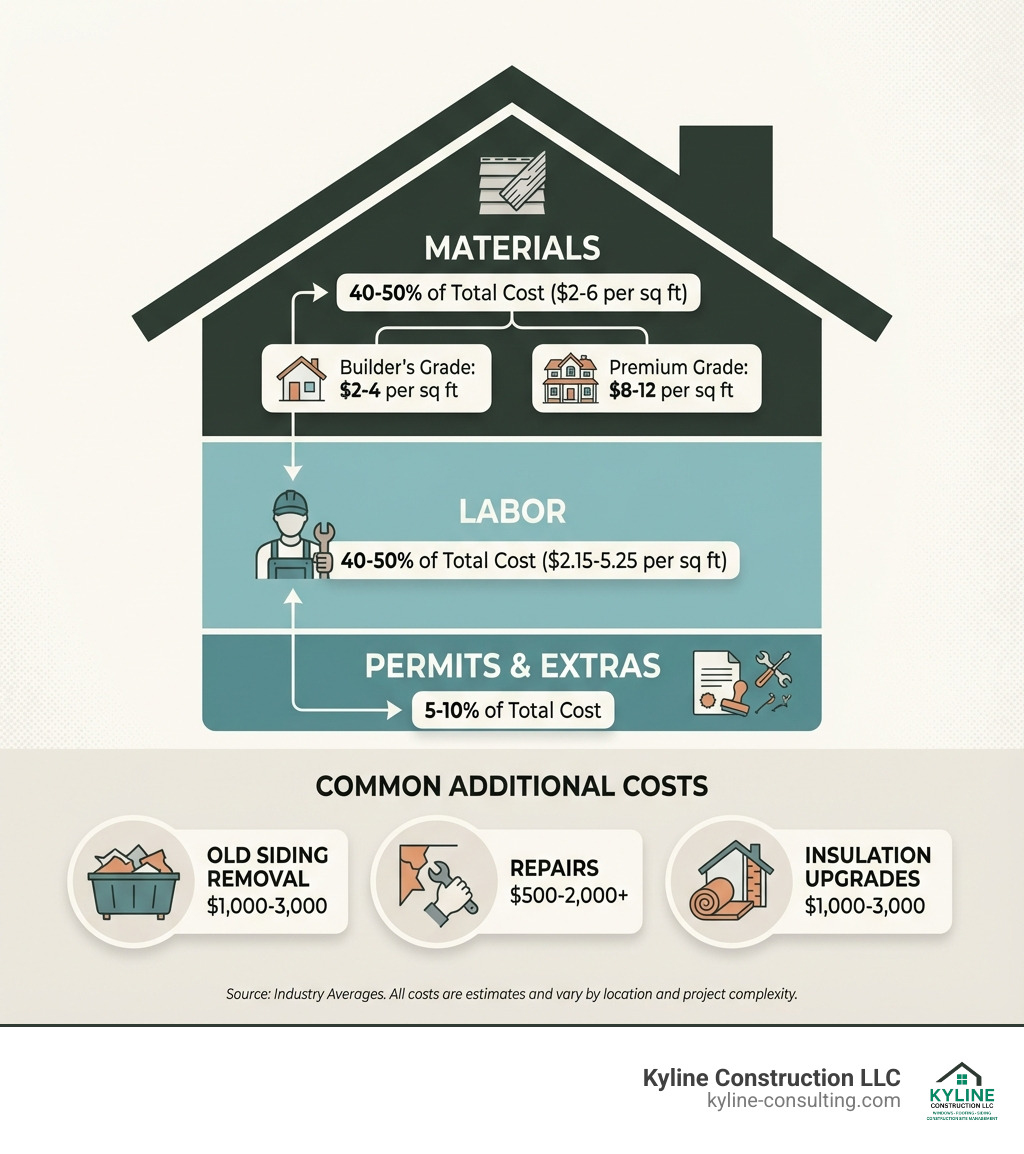
The cost per sq ft for vinyl siding typically ranges from $3 to $12 installed, with most homeowners paying around $7.50 per square foot. Here’s what you need to know:
- Material only: $2 to $6 per sq ft
- Labor: $2.15 to $5.25 per sq ft
- Total installed cost: $3 to $12 per sq ft
- Average project (2,500 sq ft home): $6,250 to $26,875
Key factors that affect your price:
- Siding quality (builder’s grade vs. premium)
- Style and texture (traditional lap vs. fancy profiles)
- Your home’s complexity (lots of corners, multiple stories)
- Regional labor rates
- Removal of old siding and repairs
Look, when homeowners ask me what vinyl siding will cost, I tell them straight – there’s no one-size-fits-all number. I’m Shawn Z. of Kyline Consulting, and I’ve been in construction for years, putting up siding on everything from simple ranches to complicated Victorians right here in Ohio. Every house is different, and understanding the real cost per sq ft for vinyl siding means knowing what drives those numbers up or down.
In this guide, I’m going to break down exactly what you’ll pay, what affects the price, and how to get the most bang for your buck. No contractor speak – just the facts from someone who’s measured, cut, and installed thousands of square feet of siding.
The Bottom Line: Average Cost Per Sq Ft for Vinyl Siding
So, you’re wondering about the big picture: what’s the average cost per sq ft for vinyl siding? Nationally, we see it ranging from $3 to $12 per square foot installed. That’s a pretty wide spread, right? It covers everything from the most basic materials and straightforward jobs to high-end styles and more complex installations.
For most folks, the average vinyl siding project in the U.S. lands somewhere around $11,437. If you’ve got a medium-sized home, say around 2,500 square feet, you could be looking at a total project cost anywhere from $6,250 to $26,875. That range includes both the materials and the hard work of putting it all up. For a specific 2,500 sq. ft. home, the cost per sq ft for vinyl siding could be around $6.40, potentially climbing to $8.20 for higher quality materials.
These are ballpark figures. The actual amount you pay will depend on a few key variables we’re going to dig into, but knowing these averages gives you a good starting point for your budget.
How to Figure Your Total Project Cost
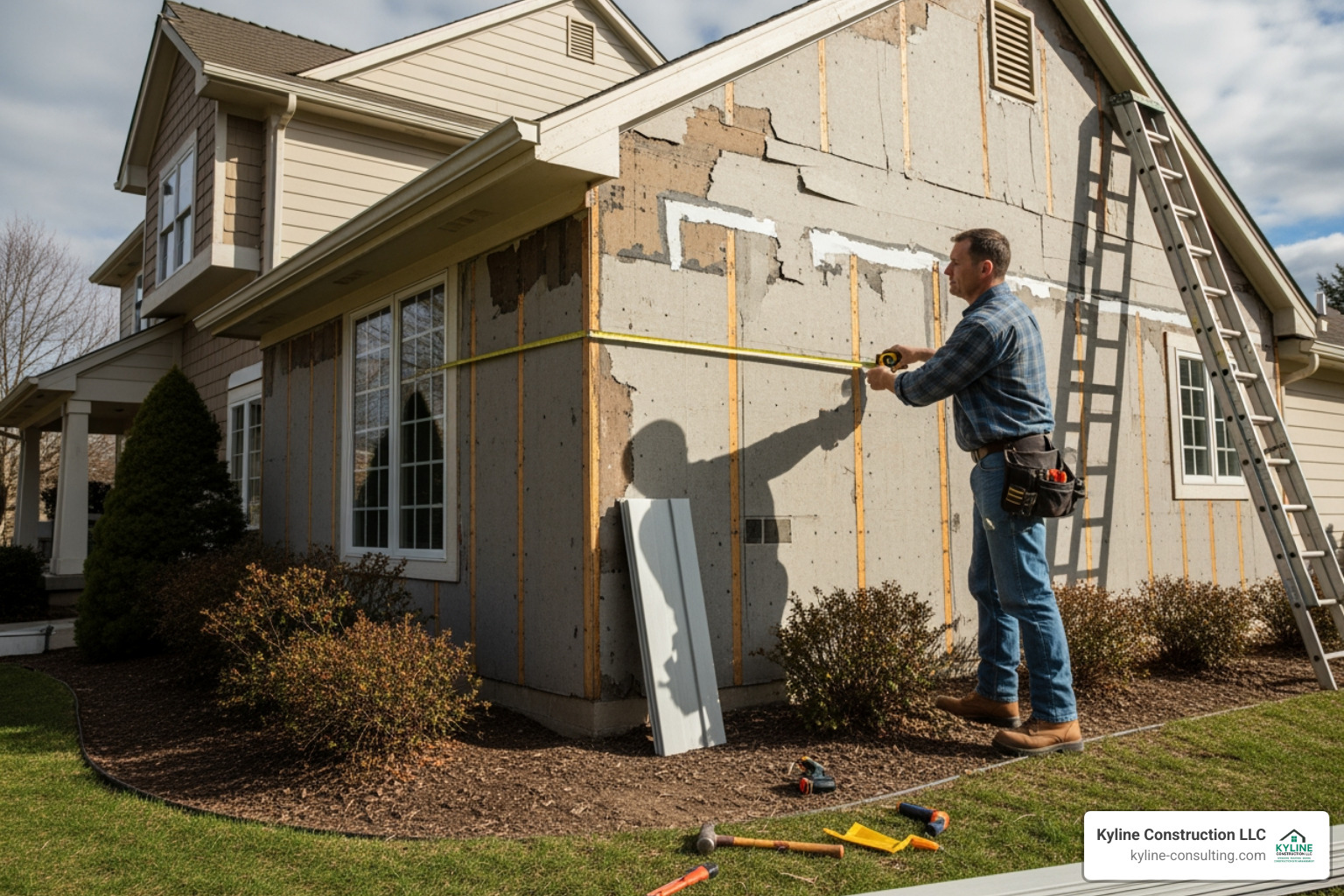
Before you can nail down your cost per sq ft for vinyl siding, you need to know how much siding your home actually needs. It’s not as simple as using your home’s interior square footage. Here’s a quick guide:
- Measure Your Walls: Get the length and height of each exterior wall and multiply them to get the square footage of each section.
- Account for Gables: For triangular gables, multiply the base by the height and divide by two.
- Add it Up: Sum the square footage of all your wall sections and gables.
- Subtract Openings: You can subtract the area of large windows and doors, but know that some contractors don’t, as the extra cutting and fitting around them can balance out material savings.
- Add for Waste: Always add 10-15% to your total for cuts, overlaps, and mistakes. This is a crucial step.
Once you have your total square footage, you can multiply it by the estimated cost per sq ft for vinyl siding to get a rough project cost. For instance, a 2,000 sq. ft. house might need closer to 2,480 sq. ft. of actual siding, so don’t just go by your real estate listing!
What’s the Split Between Materials and Labor?
When you look at the total cost per sq ft for vinyl siding, it’s usually a pretty even 50/50 split between materials and labor.
The vinyl siding itself averages around $3.80 per square foot. Labor is about $3.70 per square foot on average, but in Ohio, you can expect to pay between $2.15 and $5.25 per square foot.
Why the range in labor costs? It comes down to the crew’s experience, the complexity of your home (a simple ranch vs. a multi-story home with lots of angles), and even the time of year you schedule the project. While material cost is fairly fixed for a given product, labor can fluctuate.
What’s Driving Your Siding Bill? Key Cost Factors Explained
Alright, let’s talk about what really makes that cost per sq ft for vinyl siding jump around. It’s not just about the size of your house. We’re talking about the quality of the material, the style you pick, where your home is located, and any hidden surprises we might uncover during the job. Choosing wisely in these areas can make a big difference to your bottom line.
Material Quality & Thickness: From Builder’s Grade to Premium
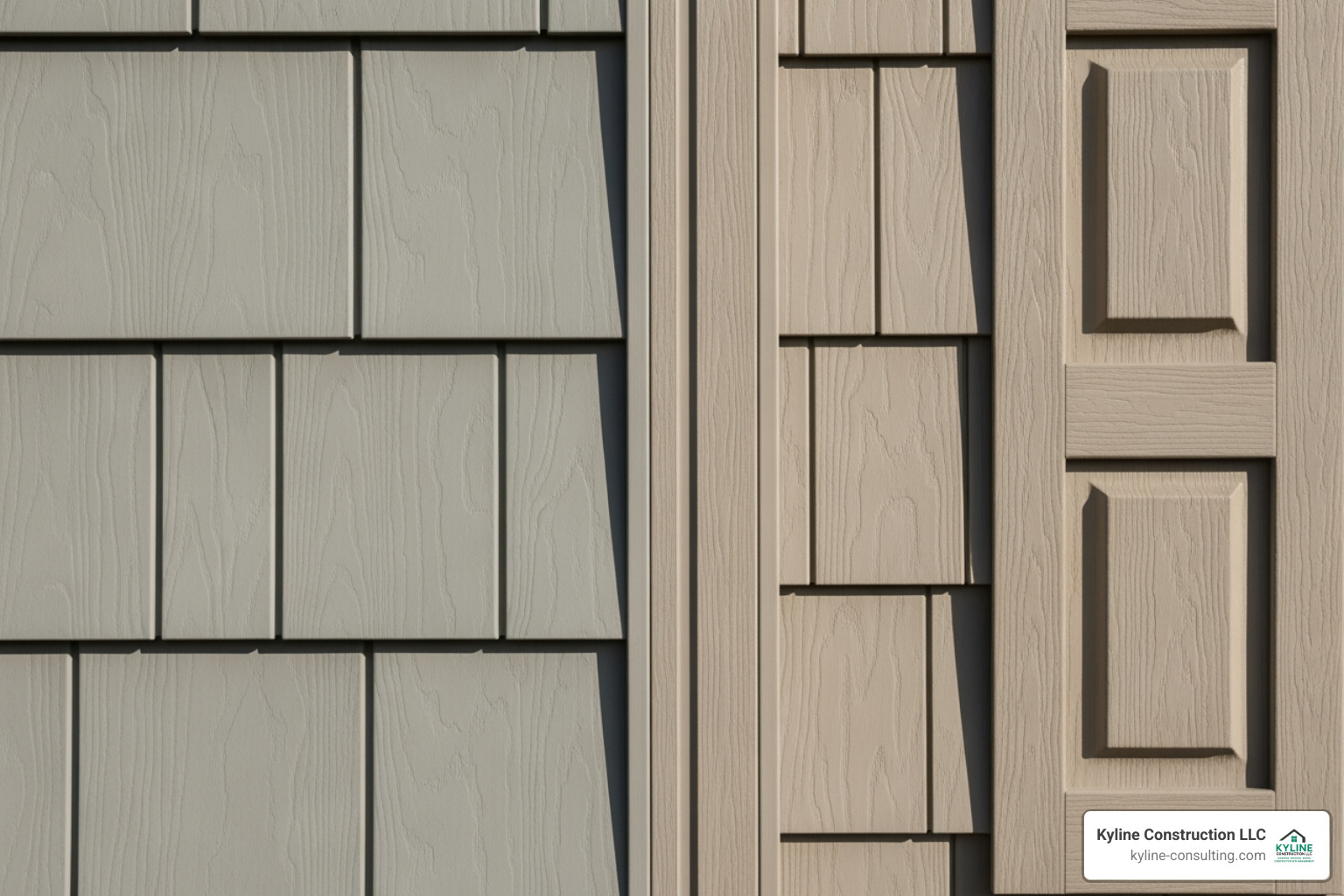
When it comes to vinyl, thickness is a big deal for durability and the cost per sq ft for vinyl siding.
- Builder’s Grade (0.40mm): The least expensive option at $2 to $4 per sq ft (material only). It’s less durable and may last around 15 years.
- Standard Grade (0.44mm): A good balance of affordability and sturdiness, often lasting 20-25 years.
- Premium Grade (0.52mm+): The top-tier stuff. It’s thicker, more rigid, and can cost $8 to $12 per sq ft for materials, but it can last 30 years or more.
Thicker siding is more resistant to impact and warping, which is great for our Ohio weather. Higher quality siding also comes in longer panels, which means fewer seams and a cleaner look.
Siding Style & Texture: More Than Just a Pretty Face
The style you choose affects both the look and the cost per sq ft for vinyl siding.
- Traditional Lap and Dutch Lap: These are the most popular and affordable styles, with material costs from $2 to $6 per sq ft.
- Board and Batten: This vertical style offers a distinctive look and costs a bit more, from $3.50 to $9 per sq ft.
- Shake and Scalloped: Great for accents, these styles replicate cedar shakes or Victorian scallops. Expect material costs of $3.50 to $9 per sq ft.
- Log, Brick, or Stone-Look: These mimic natural materials but are at the higher end of vinyl costs, often $5 to $10 per sq ft.
Smoother textures are generally less expensive than those that replicate wood grain. You can find more on siding styles and colors to help visualize what might work for your home.
Labor, Location, and Your Home’s Quirks
As a carpenter, I can tell you that labor is a huge part of the final bill.
- Regional Labor Rates: Costs vary based on the local economy. Here in Ohio, whether you’re in Circleville or Columbus, we provide fair, competitive pricing.
- Architectural Complexity: A simple ranch house is easier and cheaper to side than a multi-story home with lots of gables, dormers, and corners. Each extra cut adds time and cost. Our crew at Kyline Construction LLC has the experience for any challenge.
- Prep Work: Removing old trim or making minor repairs before we start is factored into the labor cost.
We take pride in our siding services and our ability to handle homes of all shapes and sizes.
The “Extras” That Can Add Up
Don’t forget to budget for these necessary extras, which can impact the total cost per sq ft for vinyl siding.
- Old Siding Removal: Typically $1,000 to $3,000, including disposal fees.
- Underlayment Repairs: Finding and fixing rot or water damage after removing old siding is crucial. This can add $500 to $2,000+.
- House Wrap and Insulation: A new house wrap ($0.50-$2 per sq ft) is a smart move. Adding insulation can cost $1,000 to $3,000.
- Permits: Most Ohio municipalities require permits, usually costing $50 to $500.
- Trim, Soffit, and Fascia: Replacing these elements along with your siding is common and ensures a finished look. This can add several thousand dollars to the project.
Vinyl vs. The Other Guys: A Cost & Durability Showdown
It’s always a good idea to compare vinyl siding to other common materials out there. While we’re big believers in vinyl for its value, understanding the alternatives helps you make an informed decision for your Ohio home. Here’s a quick look at how vinyl stacks up against some of the other popular options:
| Material | Installed Cost/Sq. Ft. | Lifespan | Maintenance Level |
|---|---|---|---|
| Vinyl Siding | $3 – $12 | 20-40 years | Low |
| Fiber Cement | $4.50 – $15 | 50+ years | Moderate |
| Wood Siding | $2.25 – $18 | 25-55 years | High |
| Aluminum Siding | $3 – $12 | 40+ years | Low |
This table gives you a general idea, but let’s dive a little deeper into each.
Vinyl Siding
Vinyl siding remains one of the most popular choices for homeowners across Ohio, and for good reason. It’s a fantastic, cost-effective option, with the cost per sq ft for vinyl siding typically being lower than many other materials. It’s also incredibly low maintenance – a simple wash with soap and water usually does the trick.
Modern vinyl siding is durable, shock- and scratch-resistant, and comes in a huge variety of colors and styles. The color is actually part of the material itself, so you don’t have to worry about it chipping or fading like paint. We’ve seen well-maintained vinyl siding last anywhere from 20 to 40 years, protecting homes from our Ohio weather.
While we’re talking about home exteriors, don’t forget to check out our windows services – new windows can complement your new siding beautifully and boost your home’s energy efficiency.
Fiber Cement Siding
Fiber cement siding is a heavyweight contender known for being extremely durable, resisting fire, insects, and rot. It can last 50 years or more, making it a long-term investment. However, it comes with a higher initial cost per sq ft ($4.50 to $15 installed) and is a heavier material that requires specialized, time-consuming installation by a skilled crew.
Wood Siding
Wood siding offers a classic, natural aesthetic but is generally more expensive, with installed costs from $2.25 to $18 per square foot. The biggest drawback is the high maintenance; it requires regular painting or staining to protect it from rot and pests. While it can last 25-55 years, that’s only with consistent care.
Speaking of wood, if you’re thinking about outdoor living spaces, take a look at our decks services too!
Getting a Good Return and Saving Some Coin on Your Project
Investing in new siding for your home in Ohio is a smart move. Not only does it spruce up your curb appeal, but it also acts as a critical shield, protecting your home’s structure from the elements. Think of it as putting a fresh, tough coat of armor on your biggest investment.
Is New Siding a Good Investment? (ROI)
Absolutely! Replacing your siding with vinyl is a home improvement that gives you a solid return on your investment (ROI). Reports like Remodeling’s 2021 Cost vs Value Report show that homeowners can recover a significant portion of the project’s cost, with some estimates as high as 80%. This means that when you sell, the money you put into new siding largely comes back to you in increased home value. Plus, great curb appeal makes your home more attractive to buyers from the start.
Tips for Lowering the Cost Per Sq Ft for Vinyl Siding
I’ve picked up a few tricks to help homeowners manage the cost per sq ft for vinyl siding without cutting corners on quality. Here are my top tips:
- Get Multiple Quotes: This is my most important piece of advice. Get at least three detailed quotes from reputable Ohio companies to compare prices, materials, and what’s included.
- Off-Season Installation: If you can wait, scheduling your project in the late fall or early spring might get you a better deal on labor, as it’s a slower time for contractors.
- Choose Standard Styles: Sticking to traditional lap or Dutch lap styles can significantly reduce material costs compared to fancier profiles. They still look great and offer excellent protection.
- Consider DIY Demolition: If you’re handy, you might save on labor by removing the old siding yourself. Just be aware that you might uncover issues that need professional attention.
- Don’t Overbuy Materials: Work with your contractor to accurately calculate your needs, including 10-15% for waste, to avoid overspending or project delays.
- Regular Maintenance: Keep your new siding clean with soap and water. This simple step extends its life and keeps it looking new for years. You can find more tips on proper siding maintenance.
Frequently Asked Questions about Vinyl Siding Costs
We get a lot of questions about vinyl siding, and that’s a good thing! It means homeowners are doing their homework. Here are some of the common ones I hear:
How long does vinyl siding actually last?
On average, you can expect vinyl siding to last a good 20 to 40 years, but it can be even longer. The biggest factors are the quality of the material (premium grades last longer than builder’s grade), our Ohio climate, and proper maintenance. But the most critical factor is professional installation. If siding isn’t installed correctly, it can fail prematurely, which is why hiring an experienced crew is so important.
Is insulated vinyl siding worth the extra money?
Insulated vinyl siding, which runs about $6 to $12 per square foot installed, has a layer of rigid foam insulation on the back. For many Ohio homeowners, I’d say yes, it’s worth it. The main benefits are:
- Energy Savings: The added insulation (R-value) helps keep your home warmer in winter and cooler in summer, which can lower your energy bills.
- Increased Durability: The foam backing makes the panels more rigid and resistant to impacts from hail or stray baseballs.
- Better Appearance & Quieter Home: The insulation helps panels lay flatter for a smoother look and can dampen outside noise.
The long-term energy savings and durability often make it a smart investment.
What are the biggest mistakes homeowners make when getting new siding?
Over my 40 years, I’ve seen a few common missteps. Here’s what to avoid:
- Choosing the Cheapest Bid: The lowest price often means cut corners, cheap materials, or inexperienced labor, which can lead to expensive repairs later.
- Not Checking Contractor Credentials: Always verify your contractor’s license, insurance, and references. Our 40+ years of experience at Kyline Construction LLC ensures quality and safety.
- Ignoring Underlying Wall Issues: Never cover up rot or water damage. These problems must be fixed before new siding goes on.
- DIY Installation Without Experience: Siding installation is complex. Improper work can cause buckling and leaks, voiding warranties. It’s a job best left to the pros.
- Not Getting a Detailed Contract: Your contract should outline everything—materials, labor, extras, timelines, and payment schedules—to avoid surprises.
Let’s Wrap This Up
Well, there you have it – the ins and outs of the cost per sq ft for vinyl siding. As someone who’s seen it all, I can tell you that vinyl siding is a solid, budget-friendly choice for homeowners in Ohio. It offers great curb appeal, excellent protection, and requires relatively low maintenance, making it a smart investment for your home.
We’ve covered the key cost factors: the quality and thickness of the material, the style you pick, the complexity of your home’s architecture, and those important “extras” like old siding removal and necessary repairs. Getting a good understanding of these elements will help you budget effectively.
The importance of professional installation can’t be overstated. A skilled crew ensures your siding is put up right, protecting your home for decades and living up to its full potential. For homeowners in Ohio, the team at Kyline Construction LLC provides free, no-obligation estimates to ensure your project is done right. We’re committed to quality, safety, and delivering results that you’ll love for years to come.
Don’t hesitate to reach out. We’re here to help you get the best value and a fantastic finish for your home. Contact us to discuss your siding project today!