Is It Time to Replace Stucco with Siding on Your Home?
Replacing stucco with siding is one of the most impactful exterior upgrades a homeowner can make — and in Central Ohio, it’s becoming increasingly common for good reason.
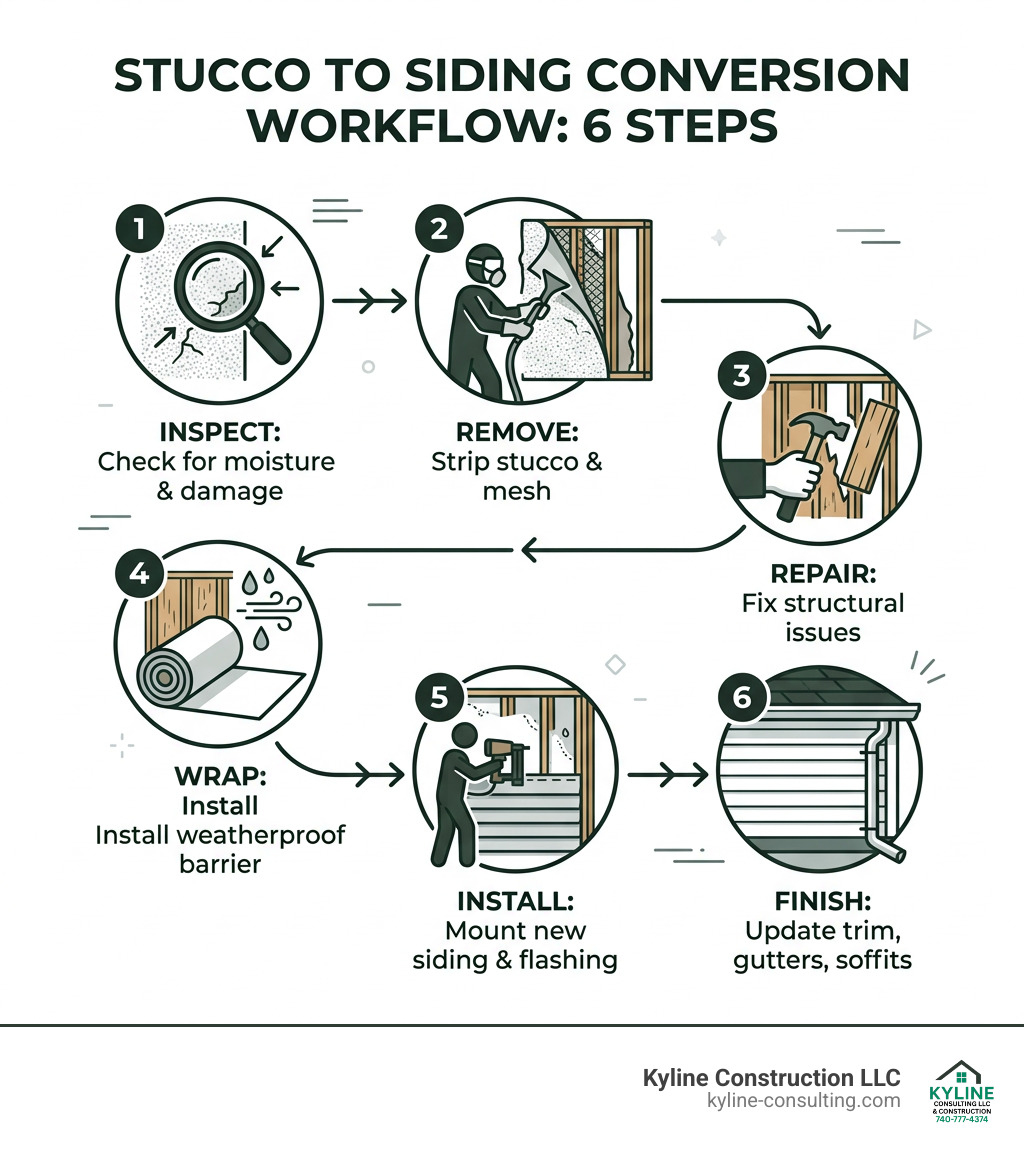
Here’s a quick overview of what the process involves:
| Step | What Happens |
|---|---|
| 1. Inspect | Check behind stucco for moisture damage, rot, or mold |
| 2. Remove | Strip stucco, mesh wire, and nails from the home’s frame |
| 3. Repair | Fix any damaged wood or structural issues uncovered |
| 4. Wrap | Install weatherproof house wrap or insulation board |
| 5. Install | Attach new siding with proper flashing and drainage |
| 6. Finish | Update trim, soffits, fascia, and gutters |
Cost range: $11,000–$17,000 for most Central Ohio homes, depending on size, siding material, and condition of what’s underneath.
Timeline: Most projects take 1–2 weeks from start to finish.
Best materials: Fiber cement, engineered wood, and luxury vinyl are the top choices.
Stucco was once considered a premium exterior finish. It looked sharp and held up reasonably well in dry, stable climates. But Central Ohio’s freeze-thaw cycles are brutal on stucco. Water gets into hairline cracks, freezes, expands, and makes those cracks bigger. Over time, that leads to bulging walls, mold, and water damage behind the surface — problems that are expensive to fix and easy to miss until they’ve gotten serious.
That’s why so many Ohio homeowners are making the switch to modern siding. It’s not just about looks. It’s about protecting the structure of your home with a material that actually holds up to Ohio weather.
I’m Shawn, a construction professional at Kyline Construction LLC, and I’ve spent my entire career in construction helping Central Ohio homeowners navigate exactly this kind of project — including stucco-to-siding conversions where we’ve uncovered everything from minor surface cracks to significant rot hiding behind a wall that looked fine from the outside. In this guide, I’ll walk you through everything you need to know to make a smart, informed decision about replacing stucco with siding on your home.
Replace stucco with siding basics:
- cost to remove and replace siding
- labor cost to replace siding
- siding replacement cost per square foot
Why Homeowners Choose to Replace Stucco with Siding
In my years working around Columbus and Circleville, I’ve seen stucco go from the “gold standard” to a major headache for homeowners. Stucco is essentially a rigid shell made of concrete-like aggregates. While it looks great on a Mediterranean villa, it doesn’t handle the Ohio “yo-yo” weather very well.
When you replace stucco with siding, you’re moving from a rigid, brittle material to a flexible, breathable system. Stucco is prone to cracking because houses naturally shift over time. In our region, the ground freezes and thaws, causing foundations to move just enough to snap that brittle stucco shell. Once a hairline crack appears, moisture finds its way in.
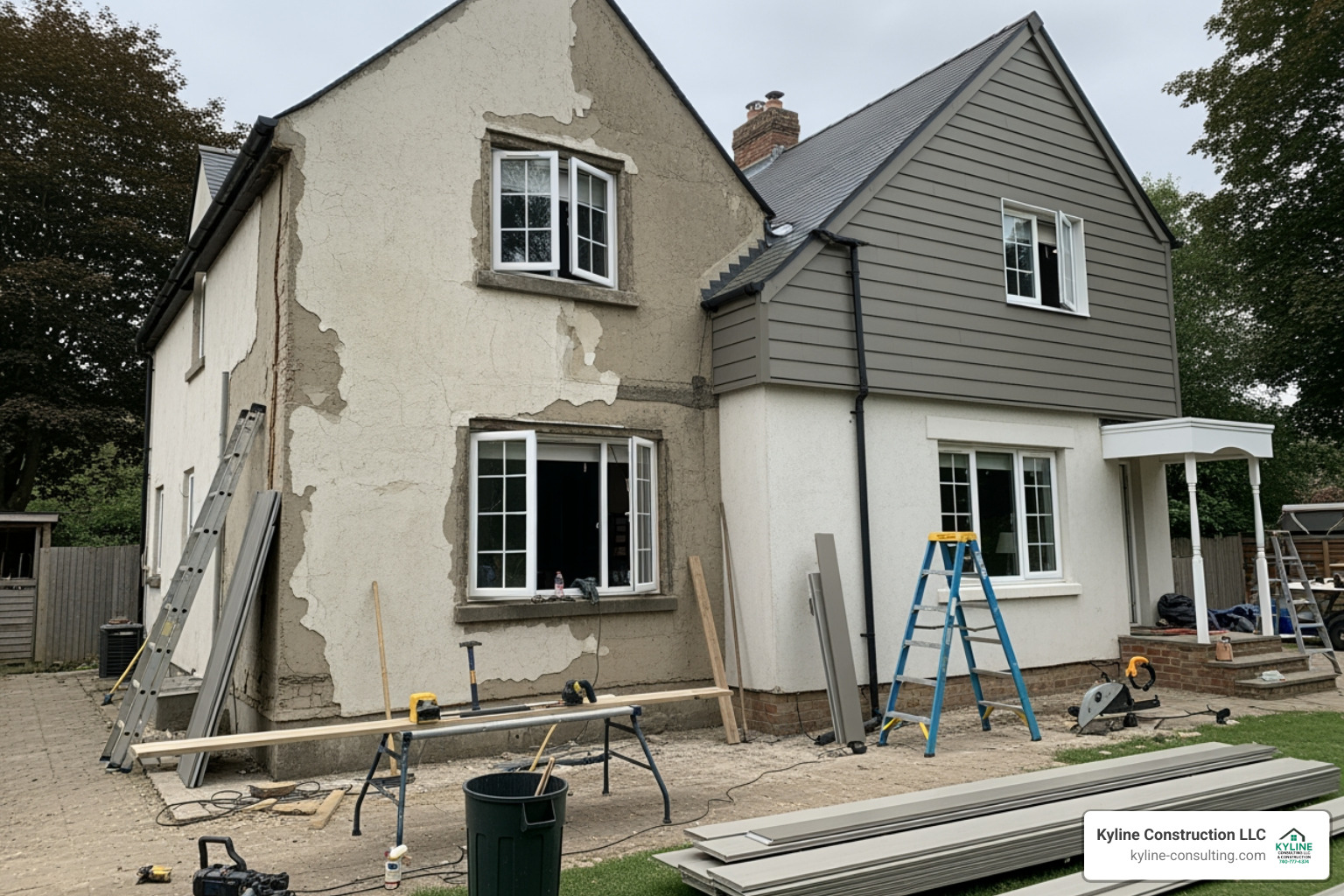
Moisture is the silent killer of Central Ohio homes. If water gets trapped behind stucco, it stays there. Traditional stucco was often applied directly over wood framing without a proper drainage plane. This leads to mold growth and wood rot that can compromise your home’s structural integrity. By switching to siding, you gain better energy efficiency and a Class A fire rating for construction materials, which is a massive safety upgrade. Plus, modern siding systems are designed to shed water and allow the walls to “breathe,” preventing the rot issues common with old stucco.
Common Signs Your Stucco is Failing
How do you know if your stucco has reached the end of the road? Keep an eye out for these red flags:
- Brown Streaks: Often called “stucco tears,” these dark stains below windows or near rooflines usually indicate water is rotting the wood or rusting the metal mesh behind the finish.
- Bulging Walls: If the stucco feels like it’s pulling away or looks “wavy,” moisture has likely caused the underlying wood sheathing to swell.
- Crumbling Edges: Check the bottom of your walls (the weep screed). If it’s brittle or falling off, the system is failing.
- Gaps Around Windows: If the seal between the stucco and your window frames has pulled apart, you have a direct highway for rain to enter your walls.
If you’re seeing these issues, it’s time to consult with Ohio siding contractors who understand the specific challenges of our local climate.
The Benefits of Fiber Cement as a Stucco Replacement
When homeowners ask me for the “best” replacement, I usually point them toward fiber cement, specifically brands like James Hardie. It is incredibly durable and resists the pests we deal with in Ohio, like termites and carpenter bees.
Fiber cement is made from a mix of wood fiber and cement, giving it a masonry-like feel but with the versatility of siding panels. It won’t rot, it’s fire-resistant, and it holds paint much longer than traditional wood. For those who love the look of stucco but hate the maintenance, you can even get fiber cement panels that mimic the smooth texture of stucco without the cracking risks. To see how it stacks up against other options, check out more info about the best vinyl siding brands.
Top Alternatives for Your Stucco Transition
Choosing the right material is the most exciting part of the process. You aren’t just fixing a problem; you’re giving your home a total makeover.
| Material | Durability | Maintenance | Best For |
|---|---|---|---|
| Vinyl | Moderate | Very Low | Budget-conscious homeowners |
| Fiber Cement | High | Low | Long-term protection & ROI |
| Engineered Wood | High | Moderate | Natural wood look without the rot |
Luxury vinyl has come a long way. It’s now thicker, more fade-resistant, and can even come with foam backing for added R-value (insulation). If you want to really boost curb appeal, we often suggest stone veneer accents around entryways or “board and batten” styles for a modern farmhouse look. You can find more details on these styles on our siding services page.
Why replace stucco with siding Made of Engineered Wood?
Engineered wood, or composite siding, is a fantastic middle ground. It offers the authentic look of real wood but is treated with waxes and resins to resist moisture and insects.
- Lifespan: You can expect a 25-50 year lifespan with proper care.
- Installation: Unlike fiber cement, which requires special shears, we use circular saws for cutting composite, allowing for very clean, precise joints.
- Weight: It’s lighter than fiber cement, which can sometimes reduce the labor strain on the home’s structure.
Understanding the siding replacement labor bill is key here, as material weight and cutting requirements directly impact how many “man-hours” a project takes.
The Step-by-Step Process to replace stucco with siding
Replacing stucco isn’t as simple as nailing up new boards. It’s a surgical process.
- Hard Hat Safety & Removal: We start by “scoring” the stucco into manageable sections. This is loud, dusty work. We have to pull off the cement layer, the underlying metal mesh (lathe), and thousands of individual nails that held that mesh to your studs.
- The “Discovery” Phase: Once the walls are naked, we inspect for wood rot. It’s common to find damage around windows. We fix these structural issues before moving forward.
- The Building Envelope: We install a high-quality house wrap. If the home needs extra warmth, we add an insulation board.
- Furring Strips: What is a furring strip? These are treated wood strips we install over the wrap to create a flat surface and a “rain screen” gap. This ensures that if moisture ever gets behind the siding, it can drain out rather than sitting against your house.
- Flashing: We reset windows if necessary and install new metal flashing to direct water away from openings.
Understanding the Cost to replace stucco with siding
Let’s talk numbers. I always tell my clients in Columbus and Circleville to be wary of “too good to be true” quotes. To replace stucco with siding, you are paying for two separate projects: a complex demolition and a precision installation.
- Square Footage: Most projects fall between $12 and $30 per square foot installed.
- Removal Costs: Removing stucco is labor-intensive. It can cost up to $1,500 per 100 square feet just to get the old stuff off and disposed of.
- Dumping Fees: Stucco is heavy. Landfills charge by weight, and those fees add up quickly.
- Underlying Damage: Budget an extra 10% for “surprises” like rotted plywood or insect damage found after removal.
For a deeper dive into these numbers, read The Square Deal: Unpacking Siding Replacement Costs. If you receive a bid that seems off, our guide on if your siding estimate is too high can help you spot red flags.
Can You Install Siding Directly Over Existing Stucco?
I get asked this a lot. The short answer is: You can, but I usually advise against it.
Installing siding over stucco (an “overlay”) involves using furring strips to create a nail base. While this saves on demolition costs, it creates a few big problems:
- Wall Thickness: It makes your walls 1-2 inches thicker. Your windows will look “sunken” into the house, which looks strange and makes proper flashing almost impossible.
- Trapped Moisture: If there is already a leak or mold in your stucco, covering it up just seals the problem inside. It’s like putting a band-aid over an infected wound.
- Weight: Stucco is already heavy. Adding another layer of siding puts extra stress on your foundation.
A professional assessment is mandatory before even considering an overlay.
Choosing a Real Contractor in Central Ohio
This is where I get a bit passionate because it directly affects the quality and completion of your home. In the Columbus area, there are a lot of “paper contractors.” These are essentially marketing firms with a fancy website and a sales team, but they don’t actually know how to swing a hammer. They sub out 100% of the work to the lowest bidder and often don’t even show up to the job site. If their subcontractor walks off the job or hits a snag, your project sits unfinished because the “contractor” doesn’t have the technical skills to step in.
At Kyline Construction LLC, we believe in being “real contractors.” To me, the ultimate test of a real contractor is what happens when things go wrong. If my crew doesn’t show up or a subcontractor quits mid-job, I don’t just make phone calls and offer excuses. I have the tools, the knowledge, and the skills to strap on a tool belt and finish the siding myself. You aren’t just hiring a middleman; you’re hiring a builder who can actually build. This ensures your home is never left exposed to the elements while a paper contractor hunts for a new crew.
When you’re looking at the 5 best local siding contractors in Ohio, ask them: “Who is actually doing the work, and if your crew quits tomorrow, can you personally finish this installation?” If the answer is no, you’re dealing with a paper contractor. We’ve handled projects from Dublin to Westerville, and the difference is always in the hands-on expertise that guarantees the job gets done right, no matter what.
Frequently Asked Questions about Stucco Replacement
How long does it take to replace stucco with siding?
A typical home takes about 1 to 2 weeks. The removal phase usually takes 2-3 days, followed by a day or two of wood repairs and wrapping. The actual siding installation takes the remainder of the time. Weather is the biggest variable—we can’t install house wrap in a downpour!
Does replacing stucco increase home value?
Absolutely. Stucco failure is a well-known “scare” for home buyers. By replacing failing stucco with a durable, modern material like fiber cement, you’re removing a major liability from the home inspection report. It significantly boosts curb appeal and can provide a great return on investment.
Can I replace stucco on just one side of my house?
Yes! This is a common strategy for homeowners on a budget. We often replace stucco with siding on the “weather-exposed” side first (usually the side that faces the prevailing winds and rain) and use transition trim to make it look intentional. It’s a great way to phase the project.
Conclusion
Replacing your stucco isn’t just a home improvement project; it’s an investment in peace of mind. No more worrying about the next big storm or those growing cracks in the entryway. With over 40 years of experience, we’ve seen it all, and we know how to do it right the first time.
If you’re ready to stop patching cracks and start enjoying a beautiful, low-maintenance exterior, give us a call at Kyline Construction LLC. We serve Circleville, Columbus, and the surrounding Central Ohio areas with precision craftsmanship. We’d be happy to come out, take a look at your home, and provide a free, no-obligation estimate.
Transform your home with expert siding services and let’s get your house protected for the next 40 years.