Why Energy Star Rated Windows Matter for Your Home and Wallet
Energy star rated windows are windows independently tested and certified to meet strict energy efficiency guidelines set by the U.S. Environmental Protection Agency (EPA) and the Department of Energy (DOE).
Here’s what you need to know at a glance:
| Feature | What It Means for You |
|---|---|
| Lower U-Factor | Less heat escapes in winter |
| Lower SHGC | Less solar heat enters in summer |
| NFRC Label | Third-party verified performance — no guessing |
| Climate Zone Certified | Rated specifically for your region |
| Energy Savings | Up to 13% reduction in household energy bills |
Walk through an older Central Ohio home in January and you’ll feel it — that cold draft near the window, the furnace cycling non-stop, the heating bill that never seems to make sense. Standard windows, especially older single-pane units, are often the biggest source of energy waste in a home. In summer, it flips: the sun pours through the glass and rooms turn uncomfortable fast.
Central Ohio’s climate doesn’t make things easy. The region swings from frigid winters to hot, humid summers — meaning your windows need to work hard in both directions.
The good news? Replacing underperforming windows with certified, high-efficiency options is one of the most impactful upgrades a homeowner can make.
I’m Shawn, owner of Kyline Consulting LLC in Circleville, Ohio — I’ve spent my entire career in construction as a ‘real contractor’ helping Central Ohio homeowners avoid the pitfalls of ‘paper contractors’ and make smart decisions about upgrades like energy star rated windows. I’ve seen how the right window, installed with professional expertise, can transform a home’s comfort and efficiency. In this guide, I’ll walk you through everything you need to know to choose, buy, and install windows that actually perform.
Quick energy star rated windows definitions:
Decoding the Label: What Makes Energy Star Rated Windows Different?
When you’re shopping for windows in Columbus or Circleville, you’ll see the ENERGY STAR logo everywhere. But what does it actually mean? It’s not just a sticker for show. To earn that label, a window must be manufactured by an ENERGY STAR partner and undergo rigorous third-party testing.
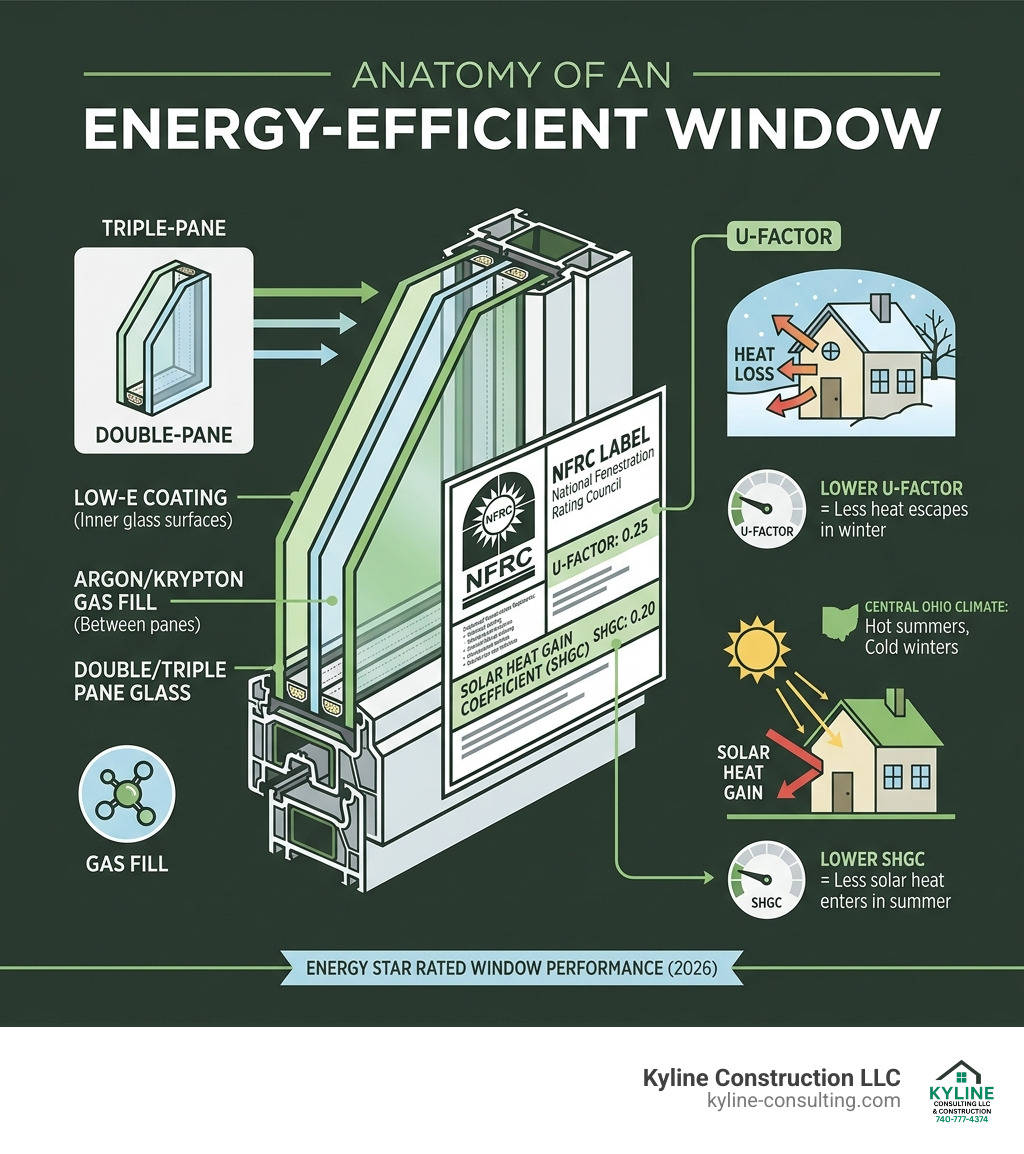
The Department of Energy (DOE) and the EPA set the bar, but the National Fenestration Rating Council (NFRC) does the heavy lifting of verification. Think of the NFRC like the “nutrition label” for your window. It tells you exactly how that unit will perform in the real world. Beyond just heat and cold, these ratings cover things like Visible Transmittance (VT)—which measures how much natural light gets through—and Air Leakage (AL).
Most modern standards require an Air Leakage rating of 0.3 cfm/ft² or lower. If a window is “leaky,” it doesn’t matter how good the glass is; you’re basically leaving a small hole in your wall. For a deeper dive into these numbers, check out our Smart Shoppers Guide To Window Performance Ratings.
Understanding U-Factor and SHGC in Energy Star Rated Windows
If you want to sound like a pro when talking to a contractor, focus on two acronyms: U-Factor and SHGC.
- U-Factor: This measures the rate of heat transfer. It tells you how well the window insulates. In Central Ohio, where we get those biting winter winds, you want a low U-Factor. Ratings typically range from 0.25 to 1.25. The lower the number, the better the window keeps the heat inside your house.
- SHGC (Solar Heat Gain Coefficient): This measures how much solar radiation comes through the glass. In the summer, a high SHGC turns your living room into a greenhouse. A lower SHGC (usually between 0.25 and 0.80) blocks more of that heat, keeping your AC from working overtime.
| Rating Type | Desired Value for Ohio | Benefit |
|---|---|---|
| U-Factor | Low (≤ 0.30) | Better Winter Insulation |
| SHGC | Moderate to Low | Balanced Summer Cooling |
The NFRC Label: Your Proof of Performance
The NFRC label is the only way to verify that energy star rated windows actually do what the salesperson says they do. It provides a standardized way to compare different brands. One often-overlooked metric on this label is Condensation Resistance. Rated from 0 to 100, a higher number means the window is better at resisting moisture buildup on the glass—a common headache in humid Ohio summers.
When we install windows at Kyline Construction LLC, we always tell homeowners to keep those labels until the job is done. It’s your proof for tax credits and your assurance that the window is certified for our specific climate zone.
Choosing the Right Windows for the Central Ohio Climate
Central Ohio sits in a bit of a “swing” territory. Depending on the specific map you look at, we often fall into the North-Central climate zone, though we have plenty of days that feel like the Northern zone. This means we need windows that can handle 95-degree humidity in July and sub-zero wind chills in January.
Because of these temperature swings, many homeowners are moving toward triple-pane options. While double-pane is the standard, triple-pane windows often meet the “Most Efficient” designation, offering U-factors as low as 0.20. These units typically use Argon or Krypton gas fills between the panes. These gases are denser than air, providing an extra layer of thermal resistance that keeps your home’s interior glass warmer to the touch in winter. You can learn more about these choices in our guide: Beyond The Pane Everything You Need To Know About Energy Efficient Windows.
Why Vinyl is the King of Central Ohio Window Frames
In my 40+ years in the industry, I’ve seen all kinds of materials—wood, aluminum, fiberglass. But for the average Central Ohio home, vinyl is the undisputed king. Why? Because it’s built for our weather and pairs perfectly with vinyl siding. In a region where vinyl siding is the gold standard for protection, choosing vinyl windows ensures a seamless, weather-tight seal for your entire exterior.
High-quality vinyl windows feature fusion-welded corners, which means the frame and sash are melted together into a single solid piece. This eliminates the gaps that lead to air leaks. Unlike wood, vinyl won’t rot or require painting every five years. It’s also designed with “thermal breaks” or multi-chambered frames that trap air, acting as an extra insulator. For the eco-conscious homeowner, energy efficient vinyl windows are a smart choice because they last for decades and are often made with recycled content.
Energy Star Rated Windows for Different Home Styles
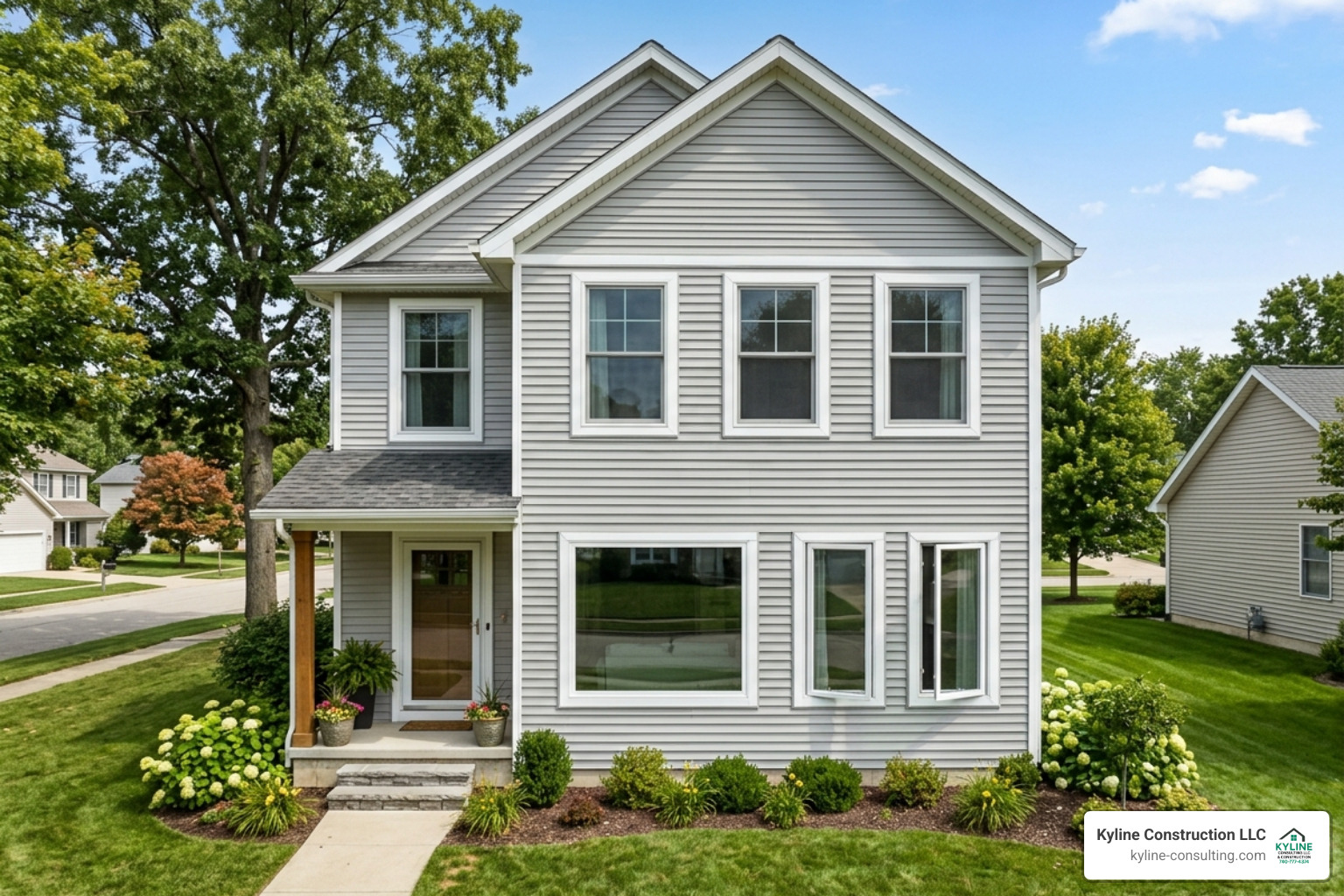
Efficiency doesn’t mean you have to sacrifice style. Energy star rated windows come in every configuration imaginable.
- Double-Hung: The most popular choice in Columbus. Both sashes slide up and down, and they usually tilt in for easy cleaning.
- Casement: These crank outward. Because they seal tightly against the frame when closed, they often have some of the best air-leakage ratings.
- Picture Windows: Since they don’t open, they are naturally the most energy-efficient.
- Sliding Glass Doors: Modern versions now feature the same high-performance glass and frames as windows, ensuring your patio entrance isn’t a giant energy drain.
The Real Cost of Installation: Paper Contractors vs. Real Pros
Here is where I get a little fired up. You can buy the most expensive, top-tier energy star rated windows on the market, but if they are installed poorly, they are worthless. This is why understanding the massive gap between ‘paper contractors’ and ‘real contractors’ is vital.
A paper contractor is essentially a salesperson masquerading as a builder; they manage spreadsheets and marketing, but they don’t know the first thing about the actual physics of a window installation. They hire the cheapest subcontractors available to keep their overhead low. If those subs walk off the job or botch the flashing against your vinyl siding, the paper contractor is stuck because they don’t actually know how to pick up a hammer and fix it. They sell jobs, they don’t build them.
At Kyline Construction LLC, we are ‘real contractors.’ If my crew hits a snag, I have the technical skills to step in and finish the job personally. We don’t just “pop” a window in. We ensure the rough opening is properly insulated with low-expansion foam and that the exterior is flashed to shed water away from your home’s vinyl siding. Improper moisture management is the #1 cause of window failure and wall rot, and a paper contractor simply lacks the field experience to ensure your home stays dry.
For a full window replacement in our area, you can expect to pay between $400 and $900 per window depending on the style and glass package. It’s a significant investment, which is why we follow Building America guidelines for high-performance installation, including lead-safe practices for any home built before 1978.
Maximizing Your Investment with Incentives and Proper Care
One of the best parts about choosing energy star rated windows is that Uncle Sam wants to help you pay for them. Under current federal tax credits, homeowners can claim 30% of the product cost, up to $600 per year, for windows that meet the “Most Efficient” criteria. This credit is available through 2032, making it a great time to plan an upgrade.
Local utility companies in Ohio also frequently offer rebates for energy-efficient upgrades. You can use the ENERGY STAR Rebate Finder to see what’s available in your specific zip code. If you’re looking for ways to make the project even more affordable, we have a guide on how to get free or low-cost energy efficient windows.
Once installed, maintenance is key. Even the best windows can experience condensation if your indoor humidity is too high. We recommend using exhaust fans in kitchens and baths and ensuring your window treatments allow for some airflow against the glass.
Long-Term Benefits of Energy Star Rated Windows
The benefits of these windows go far beyond just a lower utility bill.
- Energy Savings: On average, replacing single-pane windows with ENERGY STAR certified ones saves about 12-13% on annual energy bills.
- UV Protection: High-performance windows have special coatings that act like sunscreen for your house. They can reduce the fading of your furniture, carpets, and photos by up to 75%.
- Noise Reduction: The same gas fills and multiple panes that keep out the cold also do a fantastic job of blocking street noise.
- Home Value: Buyers in Central Ohio know our weather. Having certified windows is a huge selling point that adds real value to your property.
Frequently Asked Questions about Energy Efficient Windows
How much can I actually save on my energy bills?
Nationwide, homeowners save an average of 12% to 13% when replacing old single-pane windows. In a climate like ours in Circleville or Columbus, where we use both heavy heating and heavy cooling, those savings often sit on the higher end of that spectrum. Over the life of the windows, the ROI is substantial.
Do I need triple-pane windows in Ohio?
While not “required” for basic certification, triple-pane windows are highly recommended for the Northern and North-Central zones. They provide that extra “Most Efficient” boost, which is especially noticeable during those brutal January cold snaps when you want to sit near a window without feeling a chill.
What is the difference between Energy Star and “Most Efficient”?
The “Most Efficient” designation is an annual award given to the “best of the best.” While standard ENERGY STAR windows are great, “Most Efficient” units (like those with a U-factor of 0.20 or lower) represent the cutting edge of window technology.
Conclusion
Upgrading to energy star rated windows isn’t just about aesthetics; it’s about taking control of your home’s environment and your financial future. Whether you’re in the heart of Columbus or out in the quiet neighborhoods of Circleville, the right windows make all the difference, especially when integrated into a home with vinyl siding.
At Kyline Construction LLC, we bring over 40 years of experience to every job. We aren’t just here to sell you a product; we’re here to ensure your home is safe, efficient, and comfortable for decades to come. The difference between us and a ‘paper contractor’ is simple: I am a ‘real contractor’ who stands behind every pane of glass we set and every bead of caulk we lay. We don’t hide behind a desk; we are on the job site ensuring the work is done right the first time.
If you’re ready to stop throwing money out the window, give us a call. We offer free, no-obligation estimates to help you find the perfect fit for your home and budget.