Soffit and Fascia Repair in Central Ohio: Spotting Rot Before It Reaches the Roof
Soffit and fascia repair rarely starts with a homeowner looking at the soffit. It starts with a stain on the ceiling, a gutter that pulls away from the house, or a bird going in and out of the same spot under the eave every morning. By then the trim has usually been wet for a couple of seasons already.
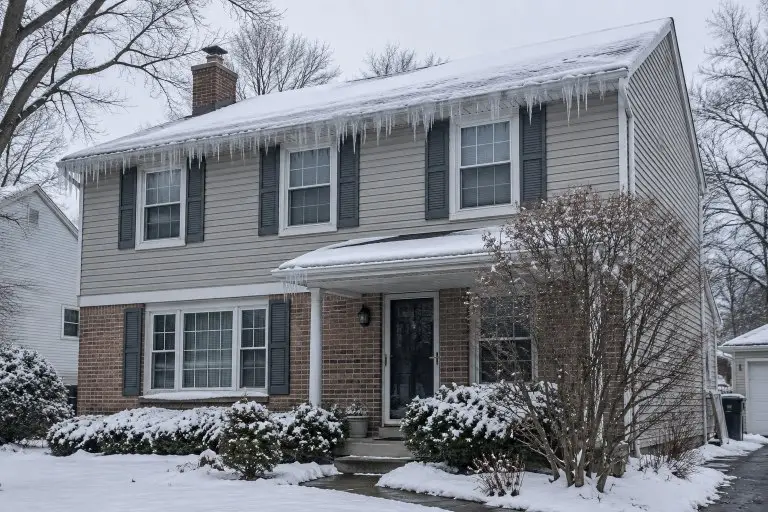
The eave is where your roof, gutters, siding, and attic all meet, so a small problem there spreads into three other systems. September is the perfect month to deal with it in Central Ohio, because the wood is dry, the weather still cooperates, and if bats are using your eave, Ohio’s bat exclusion rules restrict sealing those openings from October 15 through March 31.
What the soffit and fascia are doing up there
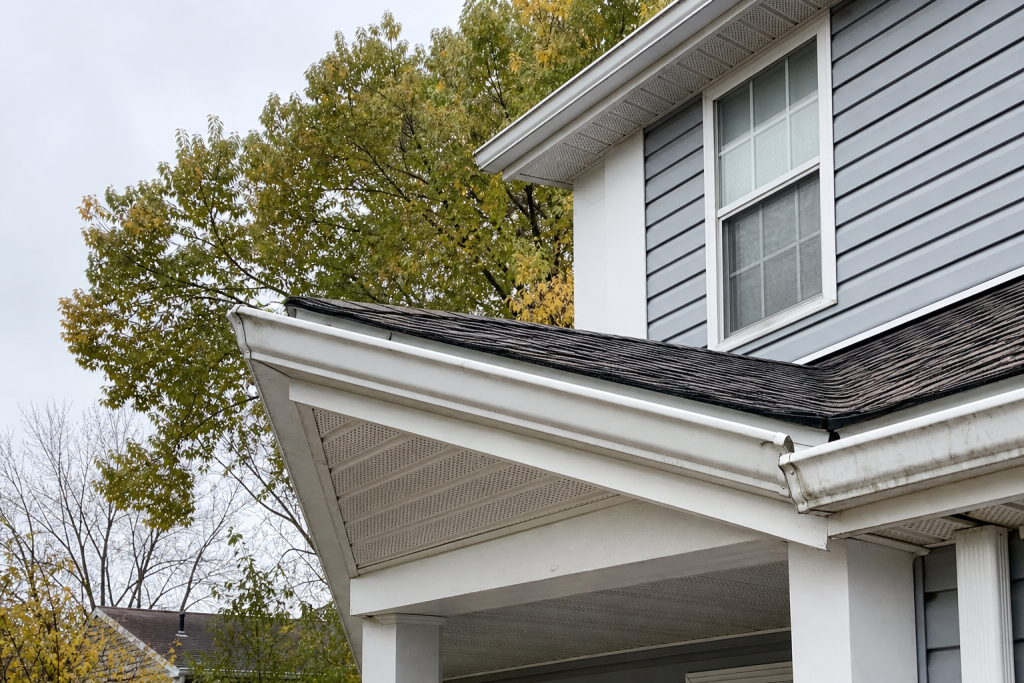
The fascia is the vertical board running along the edge of the roof, and it carries the gutters. The soffit is the panel enclosing the underside of the eave, and on most homes it also feeds air into the attic. Vinyl soffit comes solid, vented, hidden vent, or as a mix of solid and vented panels. The vented sections exist to move air and keep moisture and heat from building up behind the material (Vinyl Siding Institute Installation Manual).
That makes the eave both structural and mechanical. When the fascia softens, the gutter loses its anchor. When the soffit vents get painted over, packed with insulation, or replaced with solid panel during a re-side, the attic stops breathing.
Signs you need soffit and fascia repair
Walk the perimeter of the house from the ground with binoculars, then look again from a ladder at the corners where gutters end. You’re checking for:
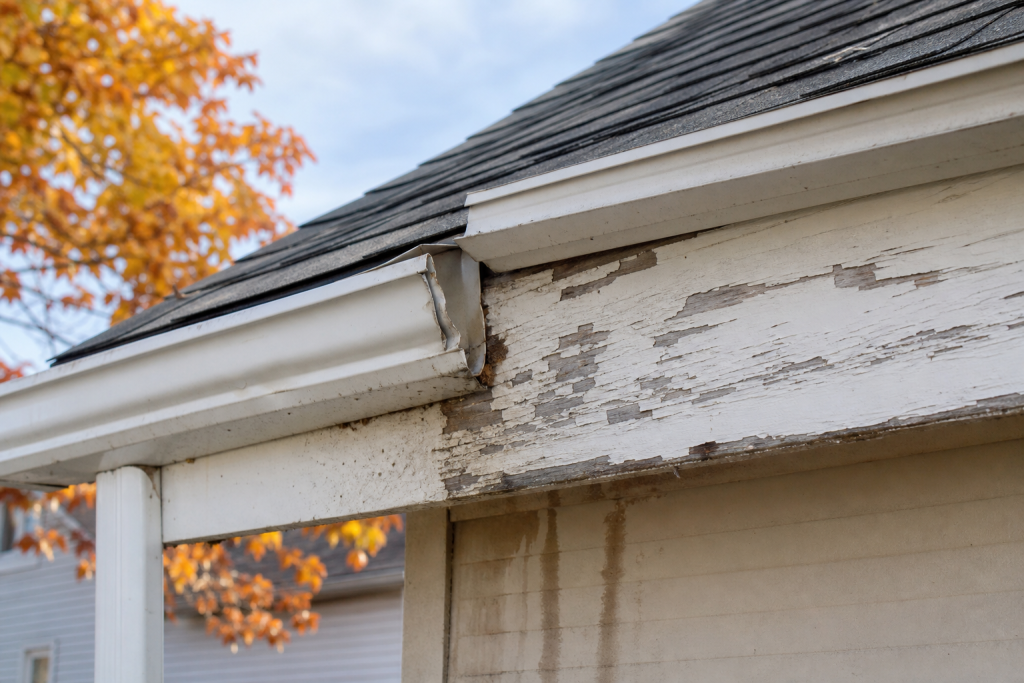
- Dark streaks or peeling paint on the fascia, usually right below a gutter seam or a downspout elbow.
- Wood you can push a screwdriver into, or trim that feels spongy through the paint.
- Gutter spikes or hangers pulling loose, or a section of gutter that has dropped at one end.
- Gaps at the corner where soffit meets fascia, along with wasp nests, bird nests, or droppings underneath.
- Soffit panels sagging, stained, or buckled, which usually means water is running behind them.
- Blocked soffit vents, either from insulation shoved into the eave or from paint sealing the perforations.
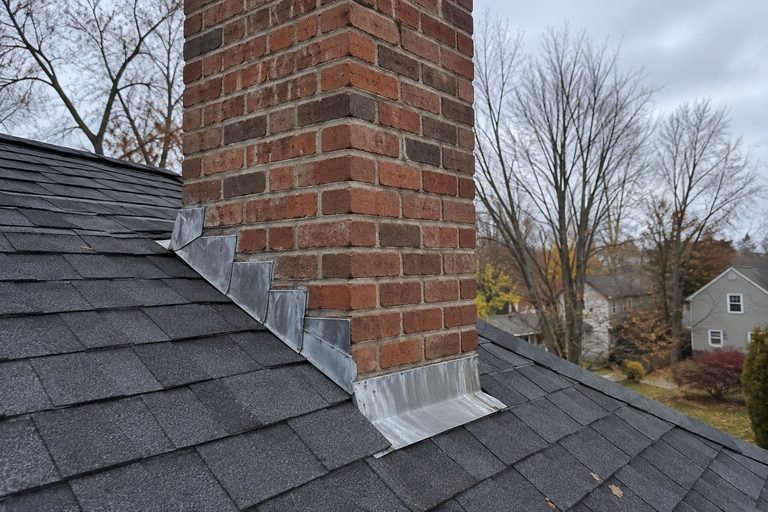
Two of these together usually mean the water problem started upstream at the roof edge, so the fix involves the drip edge, gutter slope, or flashing as well as the trim itself. We handle the trim and the roof edge together under roofing and siding work rather than treating the trim as a standalone job, since replacing a rotted board without correcting what soaked it just resets the clock.
Why wet trim turns into rot instead of drying out
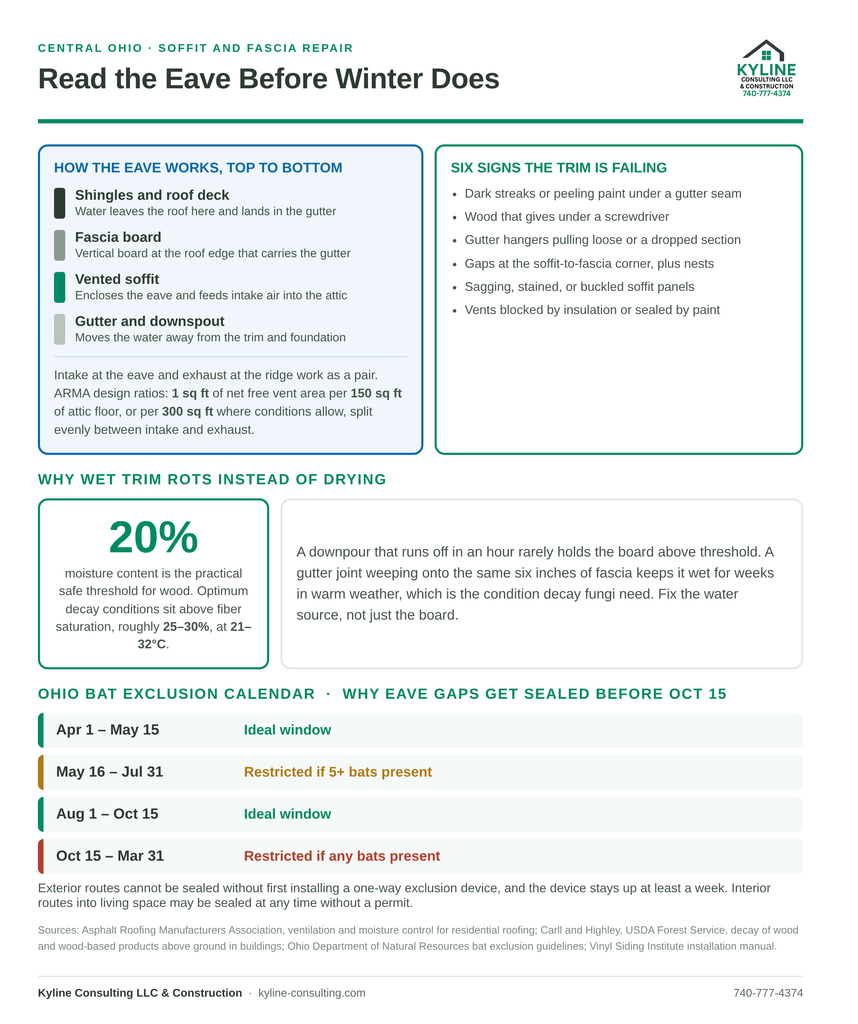
Wood doesn’t rot because it gets wet once. Decay fungi need sustained moisture, and the research on decay in buildings puts optimum conditions for most decay fungi above fiber saturation, at roughly 25 to 30 percent moisture content, with the long-standing 20 percent moisture rule holding up as the practical threshold for keeping wood safe. Optimal temperatures for those fungi run about 21 to 32°C, which is an ordinary Ohio summer (Carll and Highley, USDA Forest Service).
That’s why a slow drip matters more than a downpour. Rain that runs off in an hour rarely holds the board above threshold for long. A gutter joint weeping onto the same six inches of fascia keeps the water there for weeks in warm weather, which is exactly the condition decay wants.
Blocked soffit vents cause winter problems on the roof
Attic ventilation works as a pair: intake at the eaves through the soffit, exhaust at the ridge. The Asphalt Roofing Manufacturers Association gives two common design ratios, one square foot of net free ventilation area per 150 square feet of attic floor, or one per 300 square feet where conditions allow, with the area split evenly between intake and exhaust (ARMA).
A ridge vent with no working intake is one of the most common findings on older Central Ohio homes, and it costs you twice in the winter. A vented attic is supposed to keep the roof deck cold and carry away water vapor from inside the house. When it can’t, snow melts on a warm deck and refreezes at the cold eave, which is how ice dams form and back water up under the shingles. Air sealing the ceiling below and restoring adequate ventilation are the two ways to attack it (Penn State Housing Research Center).
So a soffit that looks fine but no longer breathes turns into a stained ceiling, damp insulation, or shingle damage at the eave. If you already have ice dam history on one side of the house, check the intake vents on that side first.
Materials, and how each one gives up
| Trim material | Where you see it | Typical failure | Maintenance it needs |
|---|---|---|---|
| Painted wood | Older homes, original trim | Rot at gutter seams and board ends once moisture stays above about 20 percent | Repaint before bare wood shows, keep gutters draining |
| Aluminum wrap over wood | Retrofit over existing fascia | Hidden rot underneath, since the wrap sheds water but traps what gets behind it | Check seams and end caps, watch for staining below the wrap |
| Vinyl soffit | Most re-siding work | Sagging panels, cracked panels from cold-weather cutting, vents painted shut | Keep perforations clear, avoid painting vented panels |
| Fiber cement or composite trim | Newer builds and upgrades | Joint separation and paint failure at cut ends | Seal cut ends, maintain caulk joints |
Vinyl siding and soffit are claddings, not water barriers, and the system is designed to let what’s underneath breathe (VSI). Wrapping or covering rotted wood without replacing it is the shortcut that costs the most later, because the damage keeps moving into the rafter tails while the outside looks new.
The mid-October deadline most homeowners don’t know about
Open soffit gaps get used by bats, and Ohio regulates when you can seal them. Under the state’s exclusion guidelines, exterior routes cannot be sealed without first installing a one-way exclusion device, and there are two restricted periods each year (Ohio DNR).
| Period | Status for bat exclusion |
|---|---|
| Apr 1 to May 15 | Ideal window |
| May 16 to Jul 31 | Restricted if 5 or more bats are present |
| Aug 1 to Oct 15 | Ideal window |
| Oct 15 to Mar 31 | Restricted if any bats are present |
Interior routes into living space can be sealed at any time without a permit, and exclusion devices must stay up at least a week before the opening is closed. If bats are using your eave, that turns a one-day trim repair into a two-week sequence, so the practical deadline for closing it this year is early October rather than the first cold snap.
When to call someone
Paint failure on a fascia board you can reach safely is homeowner work. Get help when the wood is soft, when the gutter has moved, when soffit panels are stained from behind, or when you find nesting material, because each of those means the repair reaches past the trim. Storm damage at the eave is its own case, and emergency repair exists for the nights when a section of soffit or gutter comes down and the attic is open to weather.
Fix the eave in September and you buy back a dry attic, gutters that stay attached, and a roof edge that handles the freeze-thaw cycle without help. Call Kyline at 740-777-4374 to schedule a soffit and fascia repair look before the first hard freeze.
Frequently Asked Questions
How do I know if my fascia is rotted or just needs paint?
Press a screwdriver into the board near the gutter seams and the ends. Firm wood under peeling paint is a paint job. Wood that gives or crumbles is rot, and it needs replacement plus a fix for whatever kept it wet.
Can soffit and fascia repair be done without replacing the gutters?
Often yes. The gutters come down to reach the fascia and go back up once the board is sound. If the gutters are damaged or pitched wrong, replacing them at the same time avoids soaking the new board.
Do blocked soffit vents really cause ice dams?
They contribute. Ice dams form when snow melts on a warm roof deck and refreezes at the cold eave. Intake at the soffit and exhaust at the ridge keep the deck cold, and air sealing the ceiling below reduces the heat reaching it.
What time of year is best for this work in Central Ohio?
Late summer through mid fall. The wood is dry, paint and sealant cure properly, and you stay ahead of Ohio’s October 15 bat exclusion restriction if any sealing is needed at the eave.
Should I replace wood trim with vinyl or aluminum?
Either works if the wood underneath is sound and ventilation stays intact, and new fascia installation over sound framing holds paint and gutter hangers better than patching a failing board. Covering rot without removing it hides the problem while the damage spreads into the rafter tails.
How long does the repair take?
A few damaged sections are usually a one-day job. Full eave replacement around a house takes longer, and any bat exclusion adds at least a week because the device has to stay in place before the opening is closed.
Fix the eave in September and you protect a dry attic, gutters that stay attached, and a roof edge that handles the freeze-thaw cycle without help. Call Kyline at 740-777-4374 to schedule a soffit and fascia repair look before the first hard freeze.