Why Most Ohio Yards Make Fence Installation Harder Than You Think
Building a fence on uneven ground is one of the most common challenges homeowners face — and one of the most underestimated.
Most yards in the U.S. slope away from the house. That simple fact changes everything: how you lay out the fence line, how deep your posts go, and whether you end up with gaps big enough for a dog to walk through.
Here’s a quick answer to the core question:
The two proven methods for fencing on a slope are:
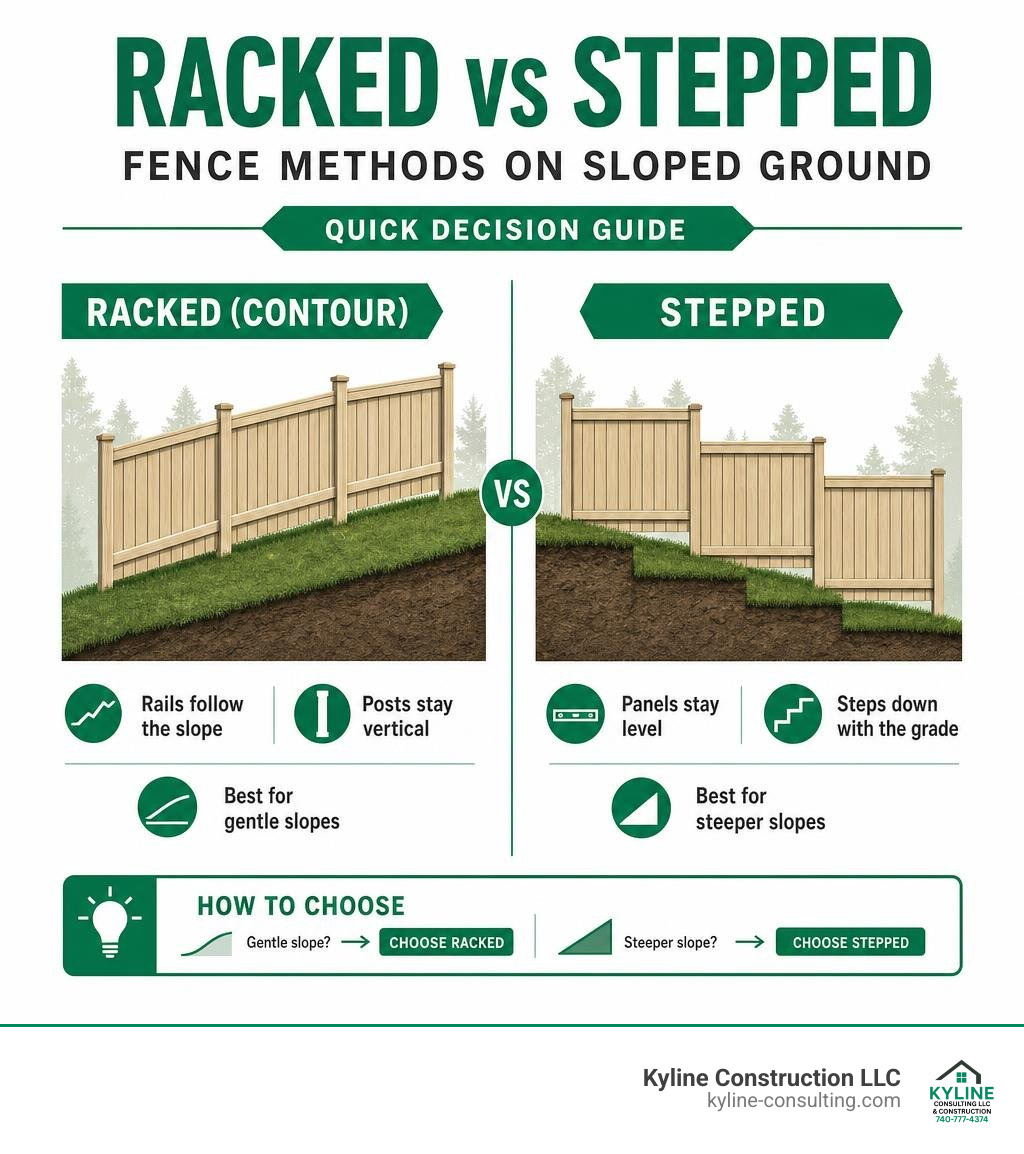
- Contour (racked) fencing — rails angle with the slope; posts stay vertical; best for gentle grades
- Stepped fencing — panels stay level; each section drops like a staircase; best for steeper slopes
The right choice depends on how steep your yard is and what you need the fence to do.
The Core Methods for Building a Fence on Uneven Ground

When you look at a hill in your backyard, you might think you just need to dig holes and start nailing boards. But terrain transitions require mathematical precision. If you don’t calculate the “rise over run” (the vertical change in height over a horizontal distance), you will end up with a structurally unstable fence that looks like a roller coaster designed by a toddler.
As a real contractor, I always tell folks that there is a massive difference between “paper contractors” and the guys who actually know how to build. A paper contractor is just a broker in a clean pickup truck with a clipboard. They sub everything out, have no idea how to actually handle a transit level or a post-hole digger, and lack the hands-on skills to solve real-world problems. If their subcontractors walk off the job, the paper contractor is completely helpless. When we handle a project at Kyline Construction LLC, we are real contractors with the deep, hands-on expertise to finish every single detail ourselves if we have to. We don’t hide behind clipboards; we do the hard physical work and get our hands dirty to ensure structural integrity.
When dealing with slopes, we rely on three primary methods outlined in How to Build a Fence on Uneven Ground – Engineer Fix. Understanding these methods is the first step to a successful installation.
The Contour (Racked) Fencing Method
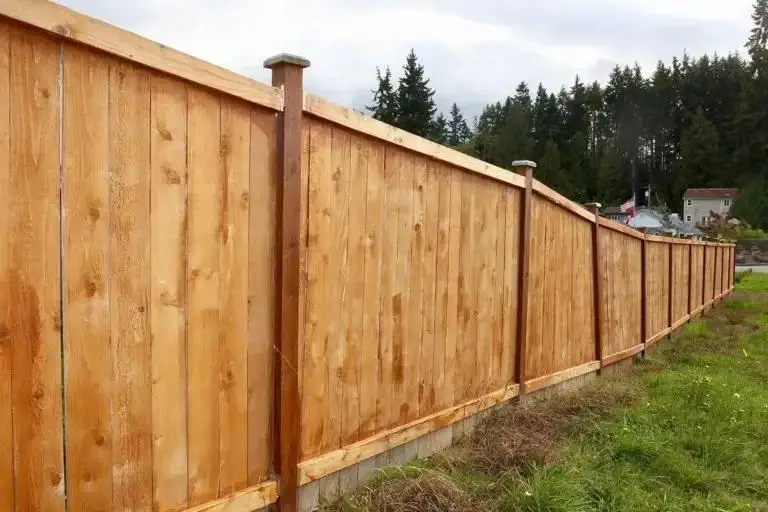
The contour method, also known as racking, is the art of making the fence flow smoothly with the natural curve of the earth. In this setup, your posts are installed perfectly vertical (plumb), but the horizontal rails run parallel to the ground’s slope.
This creates a clean, continuous line along the top and bottom of the fence, which is fantastic for keeping pets and kids secure because it minimizes ground gaps. However, materials have physical limits on how much they can rack:
- Wood Fencing: Highly customizable. Since we build wood fences picket-by-picket on-site, we can rack them to almost any gradual slope.
- Aluminum Fencing: Standard 6-foot aluminum fence sections can rack up to 20 inches over a 6-foot run. If you use double-punch sections, they can rack up to 40 inches.
- Vinyl Fencing: Vinyl privacy panels typically rack between 2 to 10 inches over an 8-foot section, while vinyl picket styles can handle 3 to 24 inches depending on the specific product design.
If you are planning a racked installation in areas like Licking County, check out our guide on Fence Installation in Pataskala Ohio to see how local soil conditions impact post stability.
The Stepped Fencing Method
If your yard looks more like the rolling hills of Hocking Hills than a flat Columbus suburb, the stepped method is your best friend. Instead of forcing the rails to run parallel to the ground, the stepped fence keeps every section perfectly level.
To accommodate the slope, each consecutive panel is stepped down the hill like a staircase. The posts must be cut to varying heights to match this stair-step pattern.
While this looks incredibly sharp and organized, it does have one major drawback: it leaves triangular gaps under the bottom of each panel. If you have a small dog, they will find these gaps in about five seconds.
For steep slopes (typically anything over a 15-degree angle), stepping is often the only practical option, especially if you are using rigid pre-built panels. You can learn more about choosing between these styles in Building a Fence on Uneven Ground: 3 Proven Methods – Ozark Fence Company.
Planning and Laying Out a Slope Fence
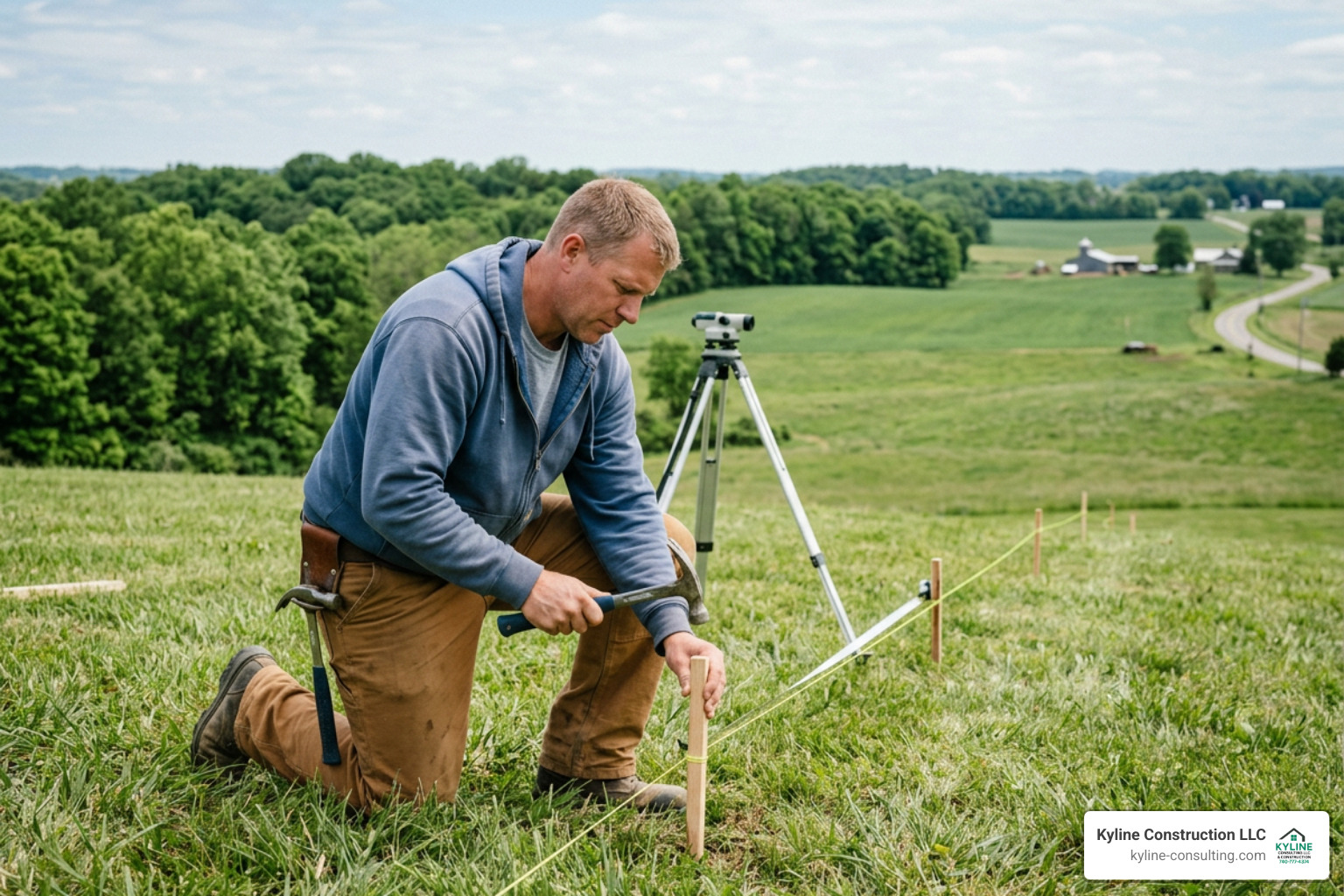
Before you buy a single bag of concrete or touch a shovel, you need a plan. Site preparation is where DIYers usually fail. If you don’t map out your utilities and property lines, you might end up fencing in your neighbor’s prized rose bushes or, worse, puncturing a gas line. Always call 811 before you dig!
Here is a quick look at how these two main methods stack up against each other:
| Feature | Contour (Racked) Method | Stepped Method |
|---|---|---|
| Best Slope Angle | Mild to moderate (under 15 degrees) | Steep (over 15 degrees) |
| Ground Gaps | Minimal (excellent for pets) | Large triangular gaps (requires infill) |
| Aesthetics | Smooth, flowing line | Structured, staircase appearance |
| Installation Difficulty | High (requires precise rail angling) | Moderate (keeping panels level is easier) |
| Pre-built Panel Friendly | No (requires rackable or stick-built) | Yes (ideal for standard pre-built panels) |
Planning Your Layout for Building a Fence on Uneven Ground
To plan your layout, you will need stakes, high-visibility mason line, a line level, and a plumb bob.
First, drive your stakes at the high and low points of your proposed fence line. Run a tight string line between them. Hang a line level on the string to establish a true horizontal reference line.
Once your reference line is level, you can measure down to the ground at regular intervals to map out the exact rise and run of your hill. Use a plumb bob to transfer your measurements from the elevated string line straight down to the grass. This ensures your post markings remain perfectly aligned on a horizontal plane, rather than drifting as the hill slopes.
For projects in Franklin County, our team at Kyline Construction LLC often utilizes these precise layout techniques. Learn more about our local projects by visiting Fence Installation in New Albany Ohio.
Calculating Post Spacing and Heights on Slopes
Calculating post spacing on a slope requires a bit of geometry. If you measure 8 feet along the sloping ground, the horizontal distance between those posts will actually be shorter than 8 feet. If you are using pre-built panels, this will ruin your day because the panels won’t reach from post to post!
To avoid this, always measure your post spacing horizontally using a level string line, rather than running your tape measure flat against the grass.
If you are using the stepped method, you must calculate the exact step height (the “drop”) for each panel. To do this, divide the total vertical drop of the slope by the number of fence panels you plan to install. For example, if you have a 36-inch drop over a run of four panels, each panel must step down exactly 9 inches.
For a deeper dive into these calculations, check out How to Build a Post and Rail Fence on a Slope – Builders Villa.
Step-by-Step Guide to Installing a Fence on a Slope
Once your layout is marked, it’s time to get dirty. Building a fence on a hill is physically demanding, but following a structured process makes the job manageable and ensures your fence won’t sag or lean over time.
Choosing the Right Materials when Building a Fence on Uneven Ground
Your choice of material heavily dictates how you install a fence on a slope.
- Wood: This is the most forgiving material for uneven ground. You can easily cut individual pickets to match the terrain. We highly recommend using cedar or redwood over pressure-treated pine because cedar naturally resists warping and rotting in Ohio’s damp soil.
- Vinyl: A great low-maintenance option. However, standard vinyl panels are rigid. If you want to rack a vinyl fence, you must buy specifically designated “rackable” vinyl systems.
- Composite: Composite materials are highly durable, with an impressive lifespan of 25 to 50 years. When working with composite, always use circular saws with carbide-tipped blades to get clean, professional cuts.
For homeowners looking to coordinate their new fence with other exterior upgrades, we also offer professional siding and window installations. For instance, we can install high-quality vinyl siding to match your new backyard aesthetic. A full siding repair typically runs between $11k-$17k, with vinyl siding costing around $6 to $12 per square foot. New energy-efficient windows generally range from $400-$900 per window.
If you’re in Licking County, you can explore our local work at Fence Installation in Newark Ohio. For step-by-step wood panel tips, read How to Install Wood Fence Panels on Uneven Ground: Easy Steps | (2026).
Setting Posts and Attaching Rails on a Hillside
On a slope, gravity is pulling your fence downhill. This means your posts need to be anchored deeper than they would be on flat ground.
While a standard flat-ground post hole is 24 to 30 inches deep, we recommend digging slope post holes to 36 inches or deeper to ensure they sit well below the Ohio frost line and have enough leverage to resist soil movement.
When setting your posts:
- Add 3 to 4 inches of gravel to the bottom of the hole for drainage.
- Set the post in the hole and use a level to ensure it is perfectly plumb (vertical) on all sides. Do not align the post with the angle of the hill!
- Pour in your concrete. We prefer dry-pouring the concrete mix, tamping it down tightly to eliminate air pockets, and then hydrating it with water. Let the concrete cure for at least 24 to 48 hours before attaching rails.
- Use the cut-after method: Leave your posts slightly taller than necessary during installation. Once the rails are attached, run a string line across the tops of the posts and cut them all to a uniform, clean height.
Minimizing Gaps and Ensuring Ground Security
If you chose the stepped method, you will have triangular gaps under your fence. To keep pets in and pests out, you need to manage these gaps:
- Kick Boards: Install a horizontal, pressure-treated rot board (usually a 2×6 or 2×12) along the bottom of the fence panels to bridge the gap to the ground.
- Gravel Berms: Build up the soil or create a gravel berm under the low spots to level out the ground directly beneath the fence.
- Landscaping: Planting dense shrubs or placing heavy decorative stones along the exterior of the fence is a beautiful way to block gaps naturally.
Frequently Asked Questions About Fencing on Slopes
Should a fence follow the ground contour or stay level?
It depends on your aesthetic preference and the severity of the slope. If you want a smooth, continuous look that hugs the ground and prevents gaps, choose the contour (racked) method. If you prefer clean, horizontal lines and your slope is steep, the stepped method is the better choice.
How do you prevent gaps under a stepped fence?
You can prevent gaps by installing pressure-treated kick boards along the bottom of the panels, using wire mesh infills, or adding landscaping elements like mulch, soil, or decorative stone to build up the ground level.
When should you hire a professional instead of DIY?
If your yard has a slope greater than 15 degrees, has rocky or clay-heavy soil, or if you are using heavy materials like vinyl or ornamental iron, you should hire a professional.
A DIY mistake on a slope can lead to a fence that sags, leans, or fails within a few winters. A real contractor has the experience, heavy machinery, and structural knowledge to ensure your fence stands strong for decades.
Conclusion
Building a fence on uneven ground doesn’t have to be a headache. Whether you choose to rack your panels for a smooth, continuous line or step them down like a beautiful staircase, the secret always lies in the preparation, the math, and the depth of your posts.
At Kyline Construction LLC, we bring over 40 years of hands-on professional experience to every single job site in Central Ohio. We don’t just sit in an office and pass papers; we know how to handle the challenges of Ohio’s clay soils and rolling hills.
If you want a beautifully crafted, structurally sound fence that adds value and security to your home, we are here to help. Contact us today for a free, no-obligation estimate!