Why Energy-Efficient Replacement Windows Are Essential for Central Ohio Homes
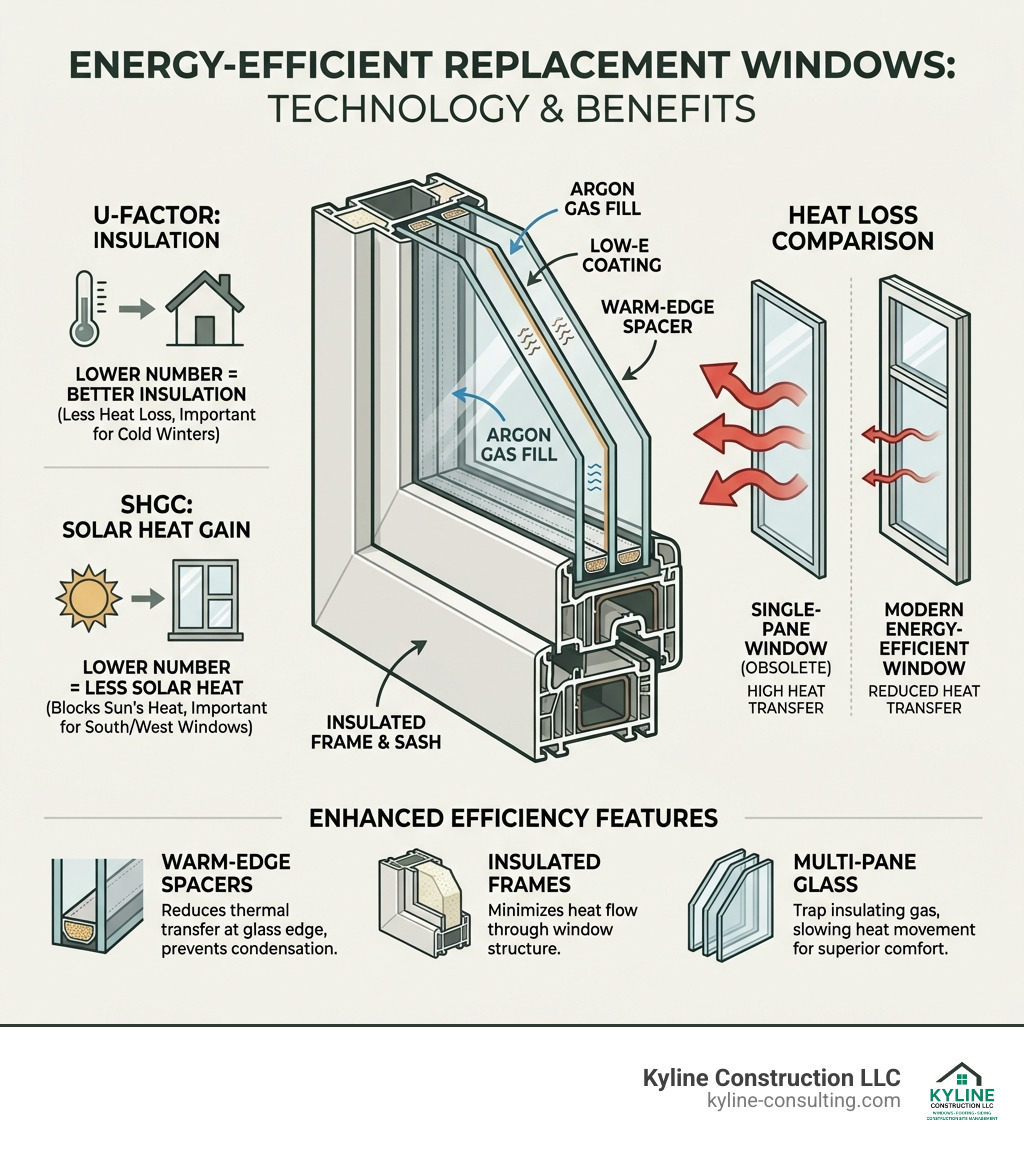
Energy-efficient replacement windows are designed to reduce heat loss and solar heat gain through advanced glazing, gas fills, low-E coatings, and insulated frames. When choosing them, focus on these key performance ratings:
- U-factor (0.10-0.60): Lower numbers mean better insulation—critical for cold Central Ohio winters
- SHGC (0.15-0.60): Lower numbers block more solar heat—important for south and west-facing windows
- Air Leakage: Lower ratings mean tighter seals against drafts
- ENERGY STAR Certification: Guarantees 7-15% annual energy savings and meets EPA standards by climate zone
If your windows aren’t efficient, you’re likely losing 70% of your home’s heat through them and your doors. That’s not just uncomfortable during a February cold snap in Columbus—it’s expensive. I’ve seen electric bills drop by $100 per month after window replacement, and homeowners recoup about 78% of the cost when they sell.
Here in Central Ohio, we deal with brutal winters and humid summers. Your windows need to handle both. Single-pane windows and even older double-pane models simply can’t keep up with our temperature swings. Air leaks around poorly installed windows can collectively equal a hole the size of an open window—imagine leaving one cracked all winter.
The right windows combine the right glass technology (low-E coatings, argon gas, triple-pane options) with the right frame materials (vinyl, fiberglass, or insulated wood). But here’s what most homeowners miss: even the best window fails if installation is sloppy. I’ve torn out brand-new “energy-efficient” windows that were drafty because a “paper contractor” didn’t know how to seal them or simply didn’t care enough to check the work of their hired help.
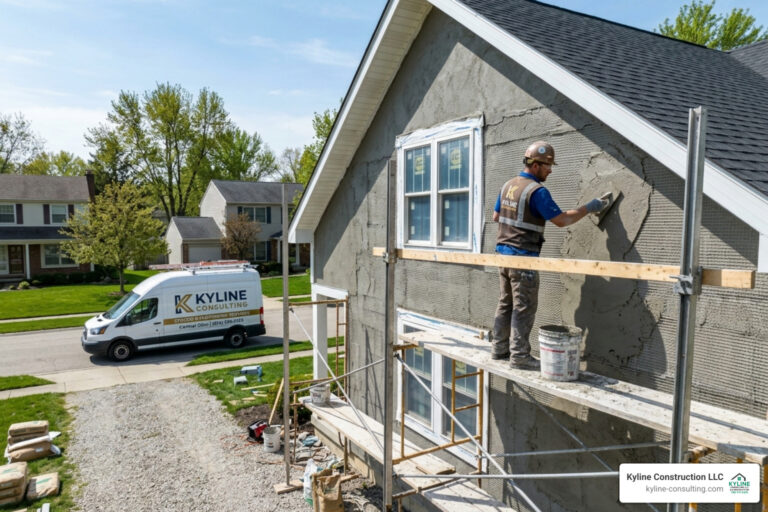
I’m Shawn, and I’ve been working in construction my entire career, running Kyline Construction LLC here in Central Ohio. I’ve installed hundreds of energy-efficient replacement windows, and I’ve also fixed just as many botched installations where homeowners were abandoned by paper contractors who couldn’t actually do the work themselves when things went wrong.
Energy-efficient replacement windows terms made easy:
- Window efficiency ratings
- free window replacement program for seniors
- energy efficient glass block windows
Decoding the Label: Performance Ratings for Energy-Efficient Replacement Windows
When you start shopping for energy-efficient replacement windows, you’ll see a sticker from the National Fenestration Rating Council (NFRC). Don’t let the jargon scare you off. Think of it like the nutrition label on a cereal box—it tells you exactly what’s inside and how it’s going to affect your home’s “health.”
The U-factor is the big one for us in Columbus and Circleville. It measures how well the window keeps heat inside. In our neck of the woods, where January feels like living in a freezer, you want a low U-factor. Ratings typically range from 0.10 to 0.60; the lower the number, the better the window is at keeping your furnace from working overtime.
Then there’s the Solar Heat Gain Coefficient (SHGC). This measures how much solar radiation comes through the glass. In the summer, a high SHGC turns your living room into a greenhouse. For Ohio, we usually look for a balance—low enough to keep the July sun from cooking the house, but not so low that we lose out on “free” solar heat during the winter.
Air Leakage (AL) is often overlooked but it’s a pet peeve of mine. It measures how much air moves through the window’s joints. A lower AL rating means fewer drafts. Finally, Visible Transmittance (VT) tells you how much natural light gets through. You want efficiency, but you don’t want to live in a cave!
For a deeper dive, check out our Smart Shopper’s Guide to Window Performance Ratings.
| Rating Term | Typical Range | What to Look For (Ohio) |
|---|---|---|
| U-factor | 0.10 – 0.60 | Lower (Better insulation for winter) |
| SHGC | 0.15 – 0.60 | Lower to Mid (Blocks summer heat) |
| Air Leakage | ≤ 0.3 | Lower (Fewer drafts) |
| VT | 0 – 1 | Higher (More natural light) |
The Anatomy of High-Performance Glazing and Frames
What actually makes a window “efficient”? It’s not just thicker glass. It’s a combination of high-tech components working together.
- Low-E Coatings: These are microscopic layers of silver or tin oxide. They reflect infrared light (heat) while letting visible light through. In the winter, they reflect your home’s heat back inside. In the summer, they reflect the sun’s heat back outside. Bonus: they can block up to 75% of UV rays, saving your carpets and furniture from fading.
- Gas Fills: We don’t just leave plain air between the panes anymore. We use inert gases like Argon or Krypton. These gases are denser than air, which slows down the transfer of heat through the window.
- Warm-Edge Spacers: These keep the glass panes the correct distance apart. Old-school aluminum spacers conducted cold right to the edge of the glass, causing condensation. Modern spacers use foam or specialized polymers to keep the edges warm.
- Frame Materials: Vinyl is a champion in Central Ohio because it’s affordable ($400-$900 per window usually) and has great insulating properties. Fiberglass is incredibly strong, and wood offers a classic look with natural insulation, though it requires more maintenance.
For more technical details, the Department of Energy provides a great Consumer Guide to Energy-Efficient Windows Fact Sheet | Department of Energy.
Why ENERGY STAR Certified Energy-Efficient Replacement Windows Matter
Looking for the ENERGY STAR label is the easiest way to ensure you’re getting a quality product. These windows are independently certified to meet strict EPA guidelines based on climate zones. For those of us in the North-Central zone (which includes Columbus), ENERGY STAR windows can save you between 7% and 15% on your annual energy bills.
It’s not just about the money, though. These windows make your home significantly more comfortable. No more “cold spots” near the glass while you’re trying to watch the Buckeyes game. You can learn more about the specific requirements at Residential Windows, Doors, & Skylights | ENERGY STAR.
Choosing Styles for Your Energy-Efficient Replacement Windows
The style of the window actually impacts its efficiency.
- Casement Windows: These have a crank and close tight against a seal, much like a refrigerator door. They are among the best for preventing air leakage.
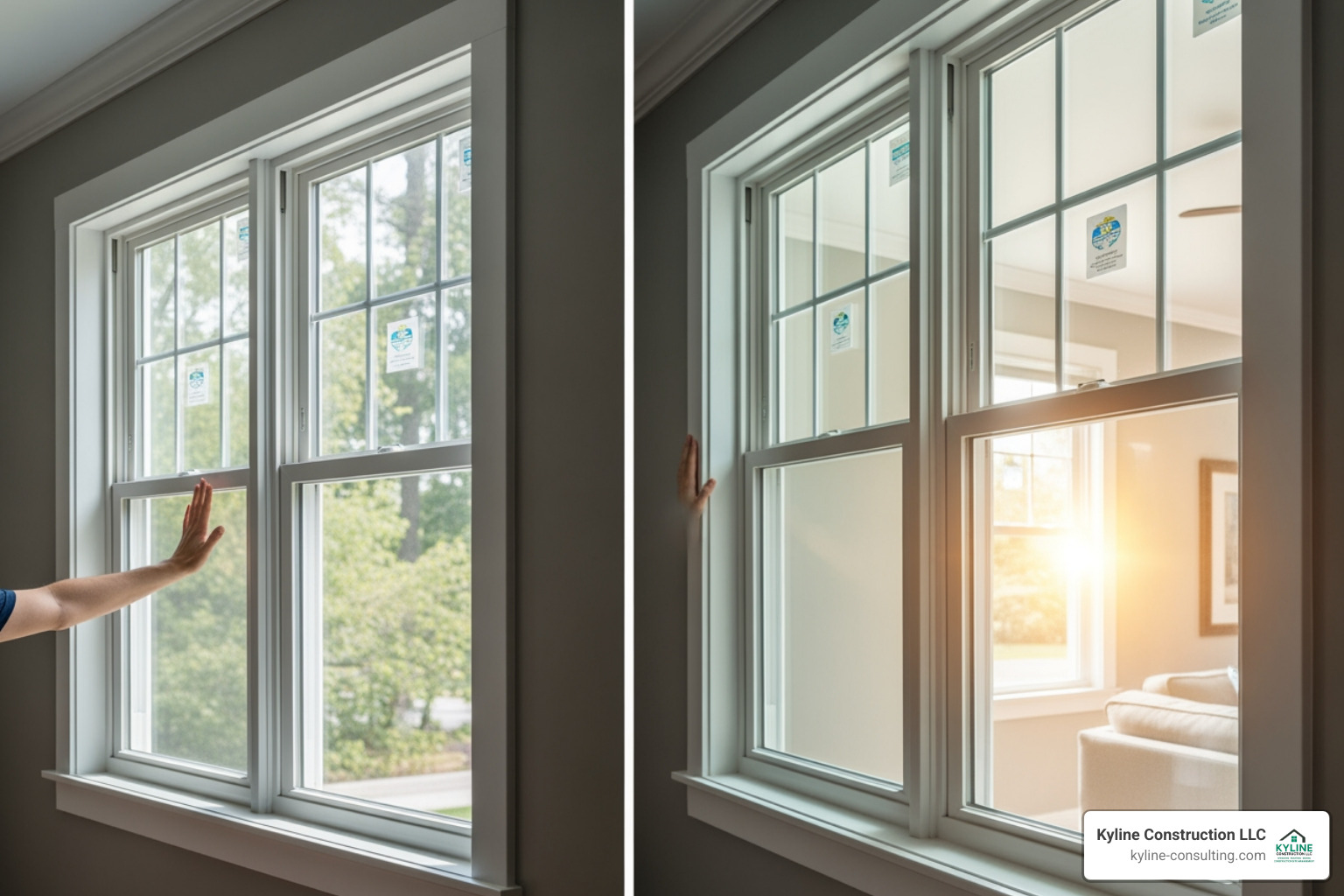
- Double-Hung Windows: Very popular in Columbus for their traditional look. While modern versions are much better than the old ones, they generally aren’t quite as airtight as casement or fixed (picture) windows because of the sliding tracks.
- Slider Windows: Great for wide openings, but like double-hungs, they rely on weatherstripping that can wear down over time.
Check out our full gallery of Windows to see these styles in action.
Strategic Selection for the Central Ohio Climate
Designing for the “Buckeye State” means playing a game of two halves. We have high heating loads in the winter and significant cooling loads in the summer.
Pro Tips: Consider your window orientation.
- South-facing windows: These get the most sun. In the winter, they provide “passive solar” heat. If you have a large south-facing window, you might want a slightly higher SHGC to let that winter warmth in, provided you have a roof overhang to shade it in the summer.
- West-facing windows: These are the “AC killers.” The afternoon sun hits these hard. We always recommend a very low SHGC for west-facing windows to prevent your house from turning into a sauna at 4:00 PM.
You can read more about these strategies in our guide, Beyond the Pane: Everything You Need to Know About Energy Efficient Windows, or explore the DOE’s advice on designing the home to take advantage of the sun.
Real Contractors vs. Paper Contractors: Ensuring Proper Installation
This is where I get serious. You can spend $2,000 on the world’s most efficient window, but if it’s installed by a “paper contractor,” it’s a waste of money.
A paper contractor is essentially a middleman. They sit in an office, sell you a job with a slick presentation, and then hire the cheapest subcontractors they can find. The danger here is simple: the person you signed the contract with often doesn’t know how to actually install a window. If those subcontractors walk off the job because they found a better-paying gig mid-afternoon, the paper contractor is helpless. They can’t finish the work, leaving your home exposed to the elements while they scramble to find another crew.
At Kyline Construction LLC, we are real contractors. I’ve been doing this for 40 years. My rule is simple: I don’t hire anyone to do a job that I couldn’t finish myself. This is the ultimate safeguard for you. If a crew disappears or a subcontractor quits, I don’t make excuses or leave your house unfinished. I’m the one out there with the flashing tape and the caulk gun, personally completing the installation to ensure your home is sealed tight. A real contractor is a tradesman first and a businessman second.
Proper installation involves:
- Air Sealing: Using non-expanding foam or backer rod to seal the gap between the window frame and the house’s rough opening.
- Flashing: Ensuring water sheds away from the opening, not into your walls.
- Lead-Safe Practices: If your home was built before 1978, it likely has lead-based paint. We follow strict EPA lead-safe work practices to protect your family from toxic dust. You can find more safety info at www.epa.gov/lead Protect your family from lead..
Don’t just take a salesman’s word for it. Check out the Federal Trade Commission Evaluate installers guide for tips on vetting contractors.
ROI and Financial Incentives for Ohio Homeowners
Replacing windows isn’t cheap—expect to invest between $400 and $900 per window for a quality installation. However, it is one of the smartest investments you can make in your home.
According to data from Remodeling Magazine, the national ROI for wood window replacement is roughly 69.5%. When you factor in the energy savings (that $100/month I mentioned earlier), the windows eventually pay for themselves. Plus, homeowners typically recoup about 78% of the cost in added home value when it comes time to sell.
There are also federal tax credits available for ENERGY STAR certified windows, often covering 30% of the product cost up to a certain limit. For a better idea of how to plan your project, read our guide on How to Estimate Your Window Replacement Budget or see the Remodeling Magazine 2018 ROI data.
Frequently Asked Questions about Energy-Efficient Windows
How do I stop window condensation and air leaks?
Condensation on the inside of the glass usually means your indoor humidity is too high. Use exhaust fans in the kitchen and bath. However, if you see condensation between the panes, the seal has failed, and the window needs to be replaced. Air leaks are usually caused by poor installation or failing weatherstripping. We solve this by ensuring a precision fit and using high-quality sealant and insulation during the install.
Are there programs for seniors to upgrade windows?
Yes! There are several local and federal programs designed to help seniors on a fixed income improve their home’s efficiency. Drafty windows are a health hazard for older adults. You can find a comprehensive list of resources in our article: Don’t Get Drafted: How Seniors Can Get Free or Low-Cost Window Replacements.
How does window orientation affect my energy bill?
As I mentioned, south-facing windows are great for winter warmth, but west-facing windows can cause your AC bill to skyrocket in August. Beyond the windows themselves, you can use a landscape that reduces energy bills. Planting deciduous trees on the south and west sides of your home provides shade in the summer but lets the sun through once the leaves fall in the winter.
Conclusion
Upgrading to energy-efficient replacement windows is about more than just a lower utility bill—it’s about making your home a sanctuary where you aren’t fighting drafts or sweltering in the sun.
At Kyline Construction LLC, we bring 40+ years of experience to every job in Columbus and Circleville. We aren’t paper contractors who hide behind a desk; we are craftsmen who can—and will—do the physical work ourselves to ensure your home is protected. If a subcontractor quits, the job doesn’t stop, because we have the skills to finish it ourselves. Whether you’re looking for vinyl, wood, or specialized glass block options, we ensure the job is done right the first time.
Ready to see the difference a real contractor makes? Schedule your free estimate for energy-efficient windows today, and let’s get your home ready for whatever the Ohio weather throws at us next.