Why Your Single Pane Windows Are Costing You More Than You Think
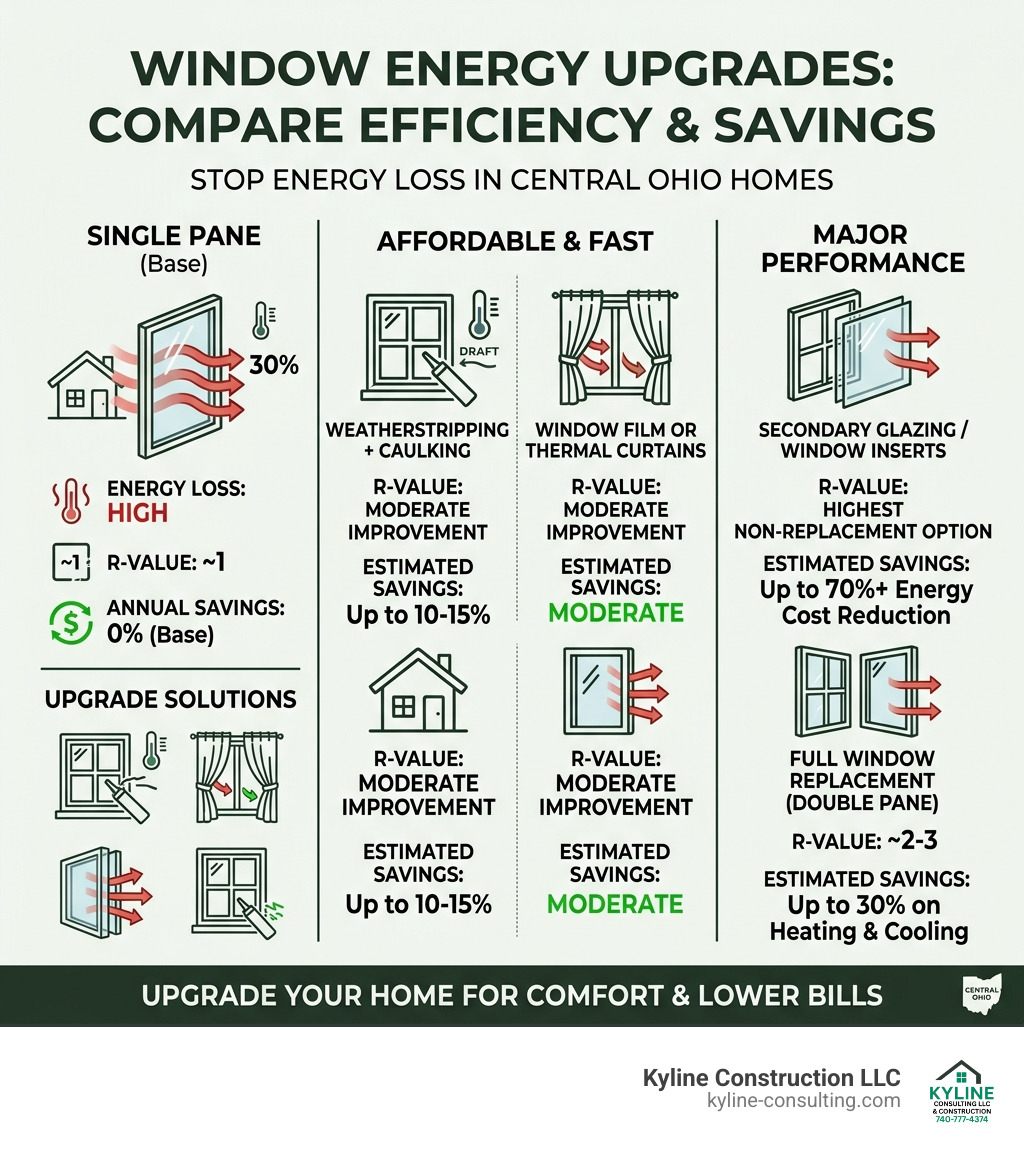
Energy efficient single pane glass is not a myth — but it does require the right upgrades to get there. If you have single pane windows and want to stop the drafts and cut your energy bills, here are your best options:
Quick answers for Central Ohio homeowners:
| Goal | Best Solution | Estimated Savings |
|---|---|---|
| Stop drafts fast | Weatherstripping + caulking | Up to 10-15% |
| Cut heat loss affordably | Window film or thermal curtains | Moderate improvement |
| Major upgrade, no replacement | Secondary glazing / window inserts | Up to 70%+ energy cost reduction |
| Best long-term result | Full window replacement (double pane) | Up to 30% on heating & cooling |
Single pane windows have an R-value of about 1. That means they barely slow down heat transfer at all. For comparison, a standard double pane window sits between R-2 and R-3. In Central Ohio, where winters routinely push into the single digits, that gap matters — a lot.
About 30% of a home’s heating energy walks straight out through the glass. That’s not a small leak. That’s your furnace working overtime every night from November through March.
The good news: you don’t have to replace every window in your house to see real results. There’s a range of solutions — from a $15 roll of window film to a professional secondary glazing install — and knowing which one fits your situation can save you thousands.
My name is Shawn, and I’ve spent my entire working career in construction, helping Central Ohio homeowners protect and improve their homes through projects like window upgrades, exterior remodeling, and everything in between. At Kyline Construction LLC, I’ve seen how much comfort and money the right approach to energy efficient single pane glass can recover for a homeowner — and how much the wrong approach can waste.
Quick energy efficient single pane glass terms:
The Reality of Energy Efficient Single Pane Glass
Let’s be honest: calling standard single pane glass “energy efficient” is like calling a screen door “waterproof.” It just isn’t designed for it. When we talk about energy efficient single pane glass, we are usually talking about a standard sheet of float glass that has been modified or retrofitted to act like its more expensive cousins.
Standard single pane windows have an R-value (insulating power) of roughly 1.0. In contrast, modern sealed insulating glass units (IGUs)—those double or triple pane windows you see in newer Circleville and Columbus homes—deliver 3–5× better insulation, with R-values pushing 5 or higher.
Why Single Panes Struggle
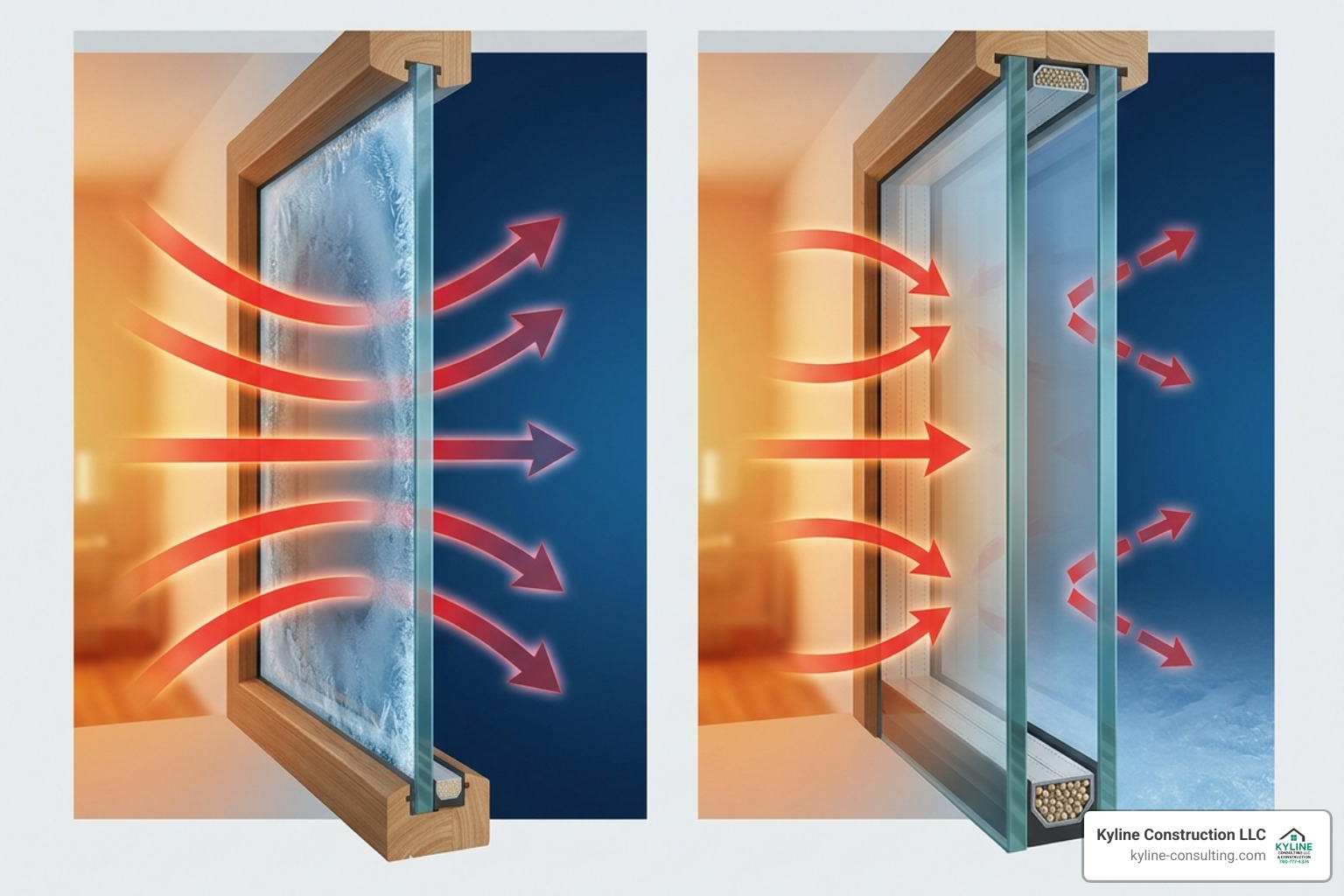
The physics are simple. A single pane of glass is a solid conductor. Heat from your living room hits the glass, travels through it, and radiates out into the April 2026 Ohio chill. Because there is no air gap to slow it down, the surface temperature of the glass stays freezing. This leads to three major headaches:
- Condensation: Warm indoor air hits the cold glass, turns into water, and eventually rots your wood sills or breeds mold.
- Noise: A single sheet of glass does almost nothing to block the sound of a neighbor’s lawnmower or Columbus traffic.
- Thermal Discomfort: You can feel the “cold” radiating off the window even if the rest of the room is 72 degrees.
There is some exciting news on the horizon, though. The Department of Energy has been funding research into Low-Cost Vacuum Insulated Glass (VIG) specifically for retrofitting these old windows. This tech uses a tiny vacuum gap between two thin sheets of glass to provide wall-like insulation in a unit only 12mm thick. While it’s becoming more available, most of us in Central Ohio are still dealing with traditional single panes that need immediate help.
| Feature | Single Pane Glass | Sealed IGU (Double Pane) |
|---|---|---|
| R-Value | ~1.0 | 2.0 to 4.0+ |
| U-Value (Heat Loss) | ~1.2 (High) | 0.3 to 0.5 (Low) |
| Noise Reduction | Minimal | 20–30 dB reduction |
| Condensation Risk | High | Low (with proper seals) |
| Energy Impact | High bills, low comfort | 20-30% energy savings |
How to Make Single Pane Windows More Energy Efficient
If a full replacement isn’t in the cards this year, we can still make those windows fight harder. At Kyline Construction LLC, we always tell folks that the first step to maximizing home comfort with efficient windows is sealing the leaks you can actually feel.
Step 1: Caulking and Weatherstripping
Before you buy fancy glass, check the frame. If you can see daylight or feel a breeze, the glass isn’t the only problem.
- Caulking: Use a high-quality exterior caulk to seal the gaps between the window frame and your home’s siding. Inside, use a paintable caulk to seal the trim.
- Weatherstripping: Foam tape or V-seal strips can be applied to the sash where it meets the frame. This can reduce air infiltration by a massive margin—sometimes up to 97% if the windows were particularly drafty.
Step 2: Window Films
Window film is a DIY-friendly way to create energy efficient single pane glass. These films are essentially thin layers of polyester that you “shrink-wrap” over the frame or adhere directly to the glass.
- Heat-Shrink Kits: These create a dead-air space between the glass and the room, acting like a temporary second pane.
- Low-E Films: These stick directly to the glass and reflect radiant heat back into the room during winter and out during summer.
Step 3: Storm Windows and Thermal Curtains
Adding a secondary barrier is one of the most effective ways to boost performance. You can learn more about choosing the best energy efficient storm windows to see which style fits your home’s look. Additionally, heavy thermal curtains can reduce heat loss by about 10% just by creating another layer of insulation.
Understanding energy efficient single pane glass coatings
If you are reglazing your old windows rather than replacing them, you can actually buy glass with high-tech coatings already applied. One example is LoĒ-i89 glass, which is designed for cold climates like ours. It has a sputtered coating that reflects heat back into the room, effectively turning a single pane into a much better insulator without the thickness of a double pane unit. This is a game-changer for historic homes in downtown Columbus where the original sashes must stay.
Advanced Retrofits: When to Consider Secondary Glazing
For those who want to keep their historic wood windows but hate the $400 monthly heating bills, secondary glazing is the “gold standard” of retrofits. This involves installing a lightweight, high-performance insert on the interior of your existing window.
Technologies like SLIP™ (Slim Line Insulating Pane) or lightweight secondary windows use ultra-thin glass in low-profile frames. According to research from the GSA, these systems can reduce window energy costs by an average of 72.9%. In a cold climate like Central Ohio, a double-pane secondary window can increase the interior glass surface temperature by 20°F—taking a window from a freezing 48°F to a comfortable 68°F even when it’s 21°F outside.
This is the ultimate way to achieve energy efficient single pane glass performance. It maintains the exterior aesthetic (no bulky storm windows) while providing noise reduction and thermal performance that rivals brand-new windows. Before you buy, check out our smart shoppers guide to window performance ratings to understand terms like SHGC and U-factor.
Cost-benefit of energy efficient single pane glass upgrades
Is it worth it? Let’s look at the numbers.
- Upfront Cost: A high-end window insert might cost $150–$300, whereas a full replacement window usually runs $400–$900 per window.
- Energy Savings: You can expect to save up to 30% on your heating and cooling demand.
- Payback Period: For professional retrofits, the payback period is often between 5 and 11 years. For DIY weatherstripping and film, it’s usually less than one season!
Beyond the math, there’s the “comfort factor.” You can sit by the window without a sweater, and the street noise from Broad Street or Route 23 finally fades away. For more tips, read our guide on maximizing energy savings in your home.
When to Stop Patching and Start Replacing
As much as I love a good retrofit, sometimes a window is just too far gone. If your frames are rotting, the sashes are warped, or you’re spending every weekend with a caulk gun just to keep the curtains from fluttering, it’s time to talk about replacement.
In Central Ohio, we highly recommend energy-efficient vinyl windows. They don’t rot, they don’t need painting, and they come with modern IGUs that make energy efficient single pane glass look like a relic of the past. When we do a full exterior overhaul, we often match these new windows with high-quality vinyl siding.
When we handle these jobs, we pay attention to the details that “paper contractors” miss. For example, when we install composite trim around those windows, we only use circular saws—never hand saws—to ensure the cleanest possible cuts. That composite trim is built to last 25-50 years, and it needs to be installed with precision to protect your new investment.
If you’re worried about the price tag, you might want to look into how to get free energy efficient windows through various local and federal grant programs. You can also learn why energy efficient vinyl windows are a smart choice for our specific four-season climate.
Real Contractors vs. Paper Contractors
This is a point I’m passionate about. In the Columbus and Circleville markets, you’ll find a lot of “paper contractors.” These are guys who spend all their money on fancy TV commercials and high-pressure salesmen. They don’t own tools, and they’ve never climbed a ladder. They just sell the job and sub it out to the cheapest crew they can find.
At Kyline Construction LLC, we are “real contractors.” My philosophy is simple: I don’t sell anything I can’t build myself. If a crew walks off a job or a sub gets sick, a real contractor has the skills, the truck, and the tools to strap on a tool belt and finish the job personally. That’s the 40+ years of experience talking. When you hire us, you aren’t just buying a window; you’re buying the peace of mind that the person in charge actually knows how to flash a window frame so it doesn’t leak in five years.
Frequently Asked Questions about Single Pane Efficiency
Can window film really stop drafts in Ohio winters?
Window film is great for stopping radiant heat loss (the heat that moves through the glass), but it won’t stop a draft if your window frame is leaky. You have to use caulk and weatherstripping first to stop the air, then use the film to help the glass hold onto the heat.
Is it cheaper to retrofit or replace single pane windows?
Retrofitting is almost always cheaper upfront. A DIY kit is $20, and a professional insert is $200-$300. A full replacement window is $400-$900. However, if your frames are in bad shape, the retrofit won’t last. In that case, replacement is the cheaper long-term move because it stops the damage to your home’s structure.
How do I know if I have a “paper contractor” or a real pro?
Ask them a technical question. Ask how they handle the flashing or what specific circular saw blade they use for composite trim. A paper contractor will try to pivot back to the “lifetime” sales pitch or a financing plan. A real pro will geek out on the details of the installation.
Conclusion
Whether you choose to upgrade your existing setup to achieve energy efficient single pane glass or decide it’s finally time for a full replacement, the goal is the same: a comfortable, efficient home that doesn’t bleed money every time the wind blows off the Scioto River.
At Kyline Construction LLC, we’ve spent four decades perfecting the art of the home envelope. From precision window installs to vinyl siding that stands up to Ohio’s wildest weather, we pride ourselves on craftsmanship that lasts. We don’t believe in high-pressure sales—just honest work from real contractors who know their way around a job site.
If you’re tired of the drafts and ready to see what your options look like, we’d love to help. We offer free, no-obligation estimates in Circleville, Columbus, and throughout Central Ohio. Let’s get your home ready for whatever the next season brings.
Schedule your window consultation with Shawn and the team today!