Is Replacing Cedar Siding with Vinyl Worth It? Here’s What Ohio Homeowners Need to Know
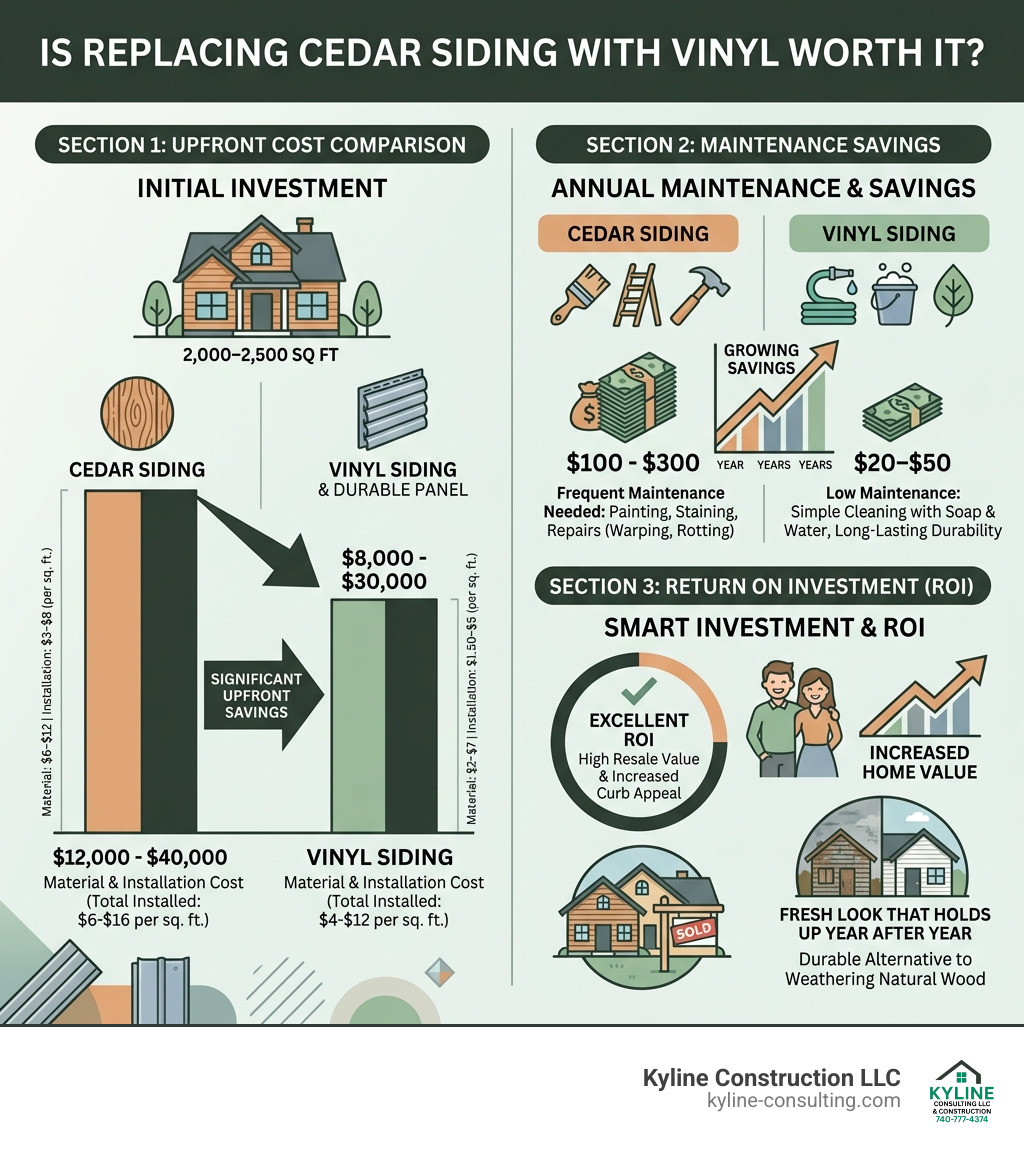
The cost to replace cedar siding with vinyl typically runs between $8,000 and $30,000 for a medium-sized home, depending on size, labor, and material grade. Here’s a quick breakdown:
| Factor | Cedar Siding | Vinyl Siding |
|---|---|---|
| Material cost (per sq. ft.) | $6–$12 | $2–$7 |
| Installation (per sq. ft.) | $3–$8 | $1.50–$5 |
| Total installed (per sq. ft.) | $6–$16 | $4–$12 |
| Full replacement (2,000–2,500 sq. ft. home) | $12,000–$40,000 | $8,000–$30,000 |
| Annual maintenance | $100–$300 | $20–$50 |
Bottom line: Vinyl costs significantly less upfront and ongoing compared to cedar.
Your cedar siding has been taking a beating. Central Ohio winters are wet, cold, and unforgiving — and natural wood siding feels every bit of it. Over time, cedar warps, rots, fades, and demands expensive maintenance cycles every few years. It’s no surprise that more and more homeowners in the region are making the switch to vinyl.
The appeal is simple: lower cost, less upkeep, and a fresh look that holds up year after year. But before you commit, it helps to understand exactly what you’re getting into — the real costs, the process, and what separates a job done right from one that causes headaches down the road.
I’m Shawn, owner of Kyline Consulting LLC, a general contracting and exterior remodeling company based in Circleville, Ohio — and I’ve spent my entire working career in construction, including dozens of cedar-to-vinyl transitions across Central Ohio that taught me exactly where projects go right and where they go sideways. In this guide, I’ll walk you through everything you need to know about the cost to replace cedar siding with vinyl so you can make a confident, informed decision for your home.
Discover more about cost to replace cedar siding with vinyl:
Breaking Down the Total Cost to Replace Cedar Siding with Vinyl
When we sit down with a homeowner in Columbus or Circleville, the first question is always about the bottom line. It’s important to realize that the cost to replace cedar siding with vinyl isn’t just about the price of the new panels. You’re paying for the removal of the old wood, the preparation of your home’s “envelope,” and the precision labor required to make vinyl look like a million bucks.
The material price gap is the most obvious difference. Cedar is a premium natural resource, and its prices fluctuate with the timber market. Vinyl, being a manufactured product, offers much steadier pricing. On average, a full siding replacement project in the U.S. lands around $11,000 to $17,000, but when you are stripping off heavy cedar, the labor intensity goes up.
| Project Component | Estimated Cost (Per Sq. Ft.) |
|---|---|
| Cedar Removal & Disposal | $0.70 – $2.00 |
| New Vinyl Materials | $2.00 – $7.00 |
| Installation Labor | $1.50 – $5.00 |
| Permits & Inspections | $150 – $500 (Total) |
For more detailed comparisons on how these figures stack up against other materials like fiber cement, you can check out this Siding Cost 2026 — Vinyl, Fiber Cement, Wood & More Compared | NexTool guide. Planning your budget effectively starts with understanding these moving parts, as outlined in Your Guide To Siding Replacement Costs.
Estimating the Material Cost to Replace Cedar Siding with Vinyl
Not all vinyl is created equal. If you go with “builder-grade” thin vinyl, you might save money today, but you’ll regret it when the first Ohio hail storm rolls through. We typically recommend mid-to-high-grade vinyl or composite cladding for homeowners who want that wood-like look without the wood-like headache.
Composite cladding is a fantastic alternative. It’s incredibly durable and often requires the use of circular saws for composite cutting rather than standard snips, which speaks to its density. While standard vinyl lasts 20-40 years, high-quality composite can boast a 25-50 year lifespan.
When you’re budgeting for your home’s new look, insulated vinyl—which has a foam backing—usually costs about $8 per square foot installed but can save you significantly on energy bills during our freezing Ohio winters.
Labor Factors in the Cost to Replace Cedar Siding with Vinyl
Labor usually accounts for 40% to 50% of your total bill. In Central Ohio, labor rates are influenced by the complexity of your home. If you have a two-story Colonial with multiple gables, bump-outs, and dormers, the installation hours will climb.
A standard 2,000 sq. ft. home typically takes a crew of 3-4 professional installers about 1 to 2 weeks to complete. This includes the time-consuming process of carefully removing the cedar without damaging the underlying sheathing. If you want to dive deeper into how we calculate these hours, take a look at our article on understanding your siding replacement labor bill.
Why Central Ohio Homeowners Prefer Modern Vinyl Over Natural Wood
I’ve seen a lot of beautiful cedar homes in the Columbus area, but I’ve also seen the “cedar stress” that comes with them. Cedar is like a high-maintenance pet—it looks great, but it needs constant attention.
The biggest driver for switching is the maintenance comparison. Cedar requires staining or painting every 3 to 7 years. In our humid summers and wet winters, that wood is prone to rot, warping, and moisture penetration. Then there are the biological threats. Woodpeckers love drumming on cedar, and insects like termites or carpenter bees see it as an invitation to dinner.
Modern vinyl is virtually impervious to these issues. It doesn’t rot, it doesn’t attract pests, and the color is “baked in,” meaning it won’t peel or flake. Instead of spending $2,000 every few years on a professional stain job, you just hit it with a garden hose once a year. You can use this 2026 Vinyl Siding Cost Calculator to see how much you could save over the life of your home. Many homeowners find that replacing cedar siding with vinyl is the single best way to upgrade their home’s durability.
The Step-by-Step Guide to a Successful Siding Transition
Replacing siding isn’t just about slapping new panels over the old ones. In fact, if a contractor tells you they can just “go over” your old cedar, run the other way. That’s a recipe for trapped moisture and hidden rot.
- Inspection and Cedar Removal: We start by stripping the home down to the sheathing. This is the only way to inspect for structural issues, water damage, or pest infestations that were hidden behind the cedar.
- Wall Prep and House Wrap: Once the walls are bare and repaired, we install a breathable house wrap. This acts as a moisture barrier that keeps liquid water out but allows water vapor to escape from inside the house.
- Insulation: This is the best time to add rigid foam insulation. It adds an extra layer of thermal protection, helping keep your Columbus home warm in January.
- Starter Strips and Corner Posts: We install the “skeleton” of the vinyl system. Everything must be perfectly level here, or the whole house will look crooked.
- Expansion Gaps: Vinyl expands and contracts with the temperature. We nail it into the center of the slots and leave about 1/32 inch (the thickness of a dime) between the nail head and the siding. This prevents the siding from warping or “buckling” when the Ohio sun hits it.
Choosing the right brand is just as important as the install. We’ve done the legwork for you in our guide where we researched the best vinyl siding brands.
Real Contractors vs. Paper Contractors: Who is Touching Your Home?
This is where I get a bit passionate. In the home improvement world, there is a massive divide between “paper contractors” and “real contractors,” and for a siding project, this distinction is everything.
A paper contractor is basically a salesperson with a laptop and a marketing budget. They sell you the job, take a significant cut, and then sub it out to the lowest bidder available that week. They often lack the technical expertise to oversee the nuances of vinyl expansion or proper moisture barrier sealing. If that crew walks off the job or runs into a structural snag, the paper contractor usually doesn’t have the tools, the knowledge, or the skills to pick up a hammer and finish it themselves. You are left dealing with a middleman who doesn’t actually know how to build.
At Kyline Construction LLC, we are real contractors. We bring over 40 years of hands-on experience to the table. We don’t just manage paperwork; we manage the build. If my guys run into a snag, I’m right there on the ladder to handle it. We manage our specialized crews tightly, ensure every safety standard is met, and we take pride in the fact that we can—and will—personally ensure the vinyl is hung to perfection. We offer free, no-obligation estimates because we believe in transparency. When you look at your siding replacement bill, you should know exactly who is doing the work and that they have the literal, physical experience to back it up. Don’t trust your home’s envelope to a desk jockey; hire a real contractor who knows the trade inside and out.
Frequently Asked Questions about Siding Replacement
Is it necessary to remove existing cedar siding before installing new vinyl?
Yes, absolutely. We call this “stripping to the sheathing.” Installing vinyl over cedar creates a “moisture sandwich” where water gets trapped between the layers. This leads to rot in your home’s framing that you won’t see until it’s a massive, expensive problem. Stripping the old material allows us to perform a full rot inspection and ensure structural integrity.
What is the expected return on investment (ROI) for this project?
Siding replacement is one of the smartest moves you can make for your home’s value. In the Midwest, you can typically expect to recoup about 80% of the project cost in added resale value. Beyond the sticker price, you’ll see lower utility bills thanks to modern insulation and house wraps. We call that the square deal because it pays you back in both equity and monthly savings.
How does the maintenance of vinyl compare to cedar over 20 years?
Over a 20-year span, the difference is staggering. For cedar, you’d likely pay for 3 to 5 professional painting or staining jobs, costing you anywhere from $10,000 to $20,000 total. Vinyl requires none of that. You’ll spend maybe $50 a year on some soap and a soft brush. That’s a savings of over $2,000 every few years that stays in your pocket instead of going to a painter.
Conclusion
The final verdict? If you’re tired of the endless cycle of staining, woodpecker holes, and worrying about rot, the cost to replace cedar siding with vinyl is one of the best investments you can make for your Ohio home. You get the look of premium wood with the “set it and forget it” convenience of modern materials.
At Kyline Construction LLC, we’ve spent decades perfecting the art of the siding swap. We know the Central Ohio climate, and we know exactly how to protect your home for the long haul. If you’re ready to see what’s possible for your exterior, I’d love to chat.
Shawn here, signing off—let’s build something lasting together.
Ready to upgrade? Check out our siding services or contact us for a free estimate today!