The Smartest Ways to Make Your Home More Energy Efficient
Energy efficient home improvements can lower your utility bills, boost your home’s comfort, and increase its resale value — all at the same time. Here’s a quick look at the most impactful upgrades:
| Improvement | Avg. Annual Savings | Federal Tax Credit |
|---|---|---|
| Heat pump (air-source) | Up to $900+ on heating/cooling | Up to $2,000 |
| Heat pump water heater | $200–$550 | Up to $2,000 (combined) |
| ENERGY STAR windows | ~12% on energy bills | Up to $600 |
| Attic insulation + air sealing | ~10% on energy bills | Up to $1,200 |
| Home energy audit | Identifies all savings | Up to $150 |
| Solar panels | Varies by system size | 30% of total cost |
More than half of what the average household spends on energy goes straight to heating and cooling. In Central Ohio, where winters bite and summers can be brutal, that’s a real number — often more than $900 a year just to stay comfortable.
The good news? A lot of that money is recoverable. Whether you start with a $20 tube of caulk or a full heat pump installation, there’s a clear path to a home that works harder for you and costs less to run.
I’m Shawn, of Kyline Construction LLC in Circleville, Ohio, and I’ve spent my entire career in construction helping homeowners make smart, lasting improvements — including energy efficient home improvements that hold up in real Central Ohio conditions. In this guide, I’ll walk you through everything from small DIY wins to major upgrades, tax credits, and how to tell a real contractor who can actually do the work from a “paper contractor” who might leave you stranded if their hired crew walks away.
Energy efficient home improvements terms to remember:
Why Energy Efficient Home Improvements Matter in Central Ohio
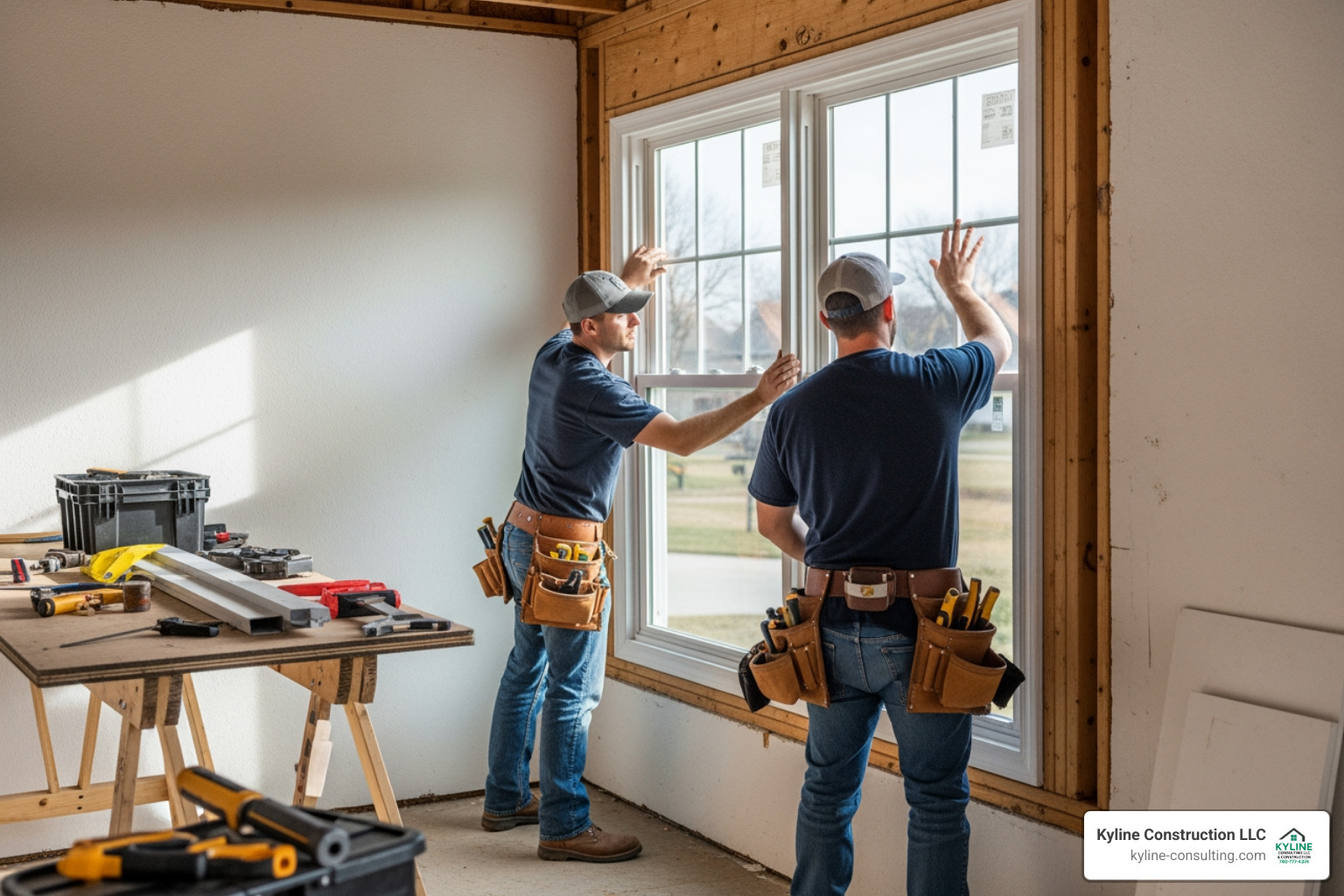
In my 40+ years in the industry, I’ve seen plenty of houses in Columbus and Circleville that are basically “sieves” for air. You’re paying to heat the neighborhood, not your living room. Space heating and cooling account for the lion’s share of your energy use, and in our climate, that means your HVAC system is working overtime.
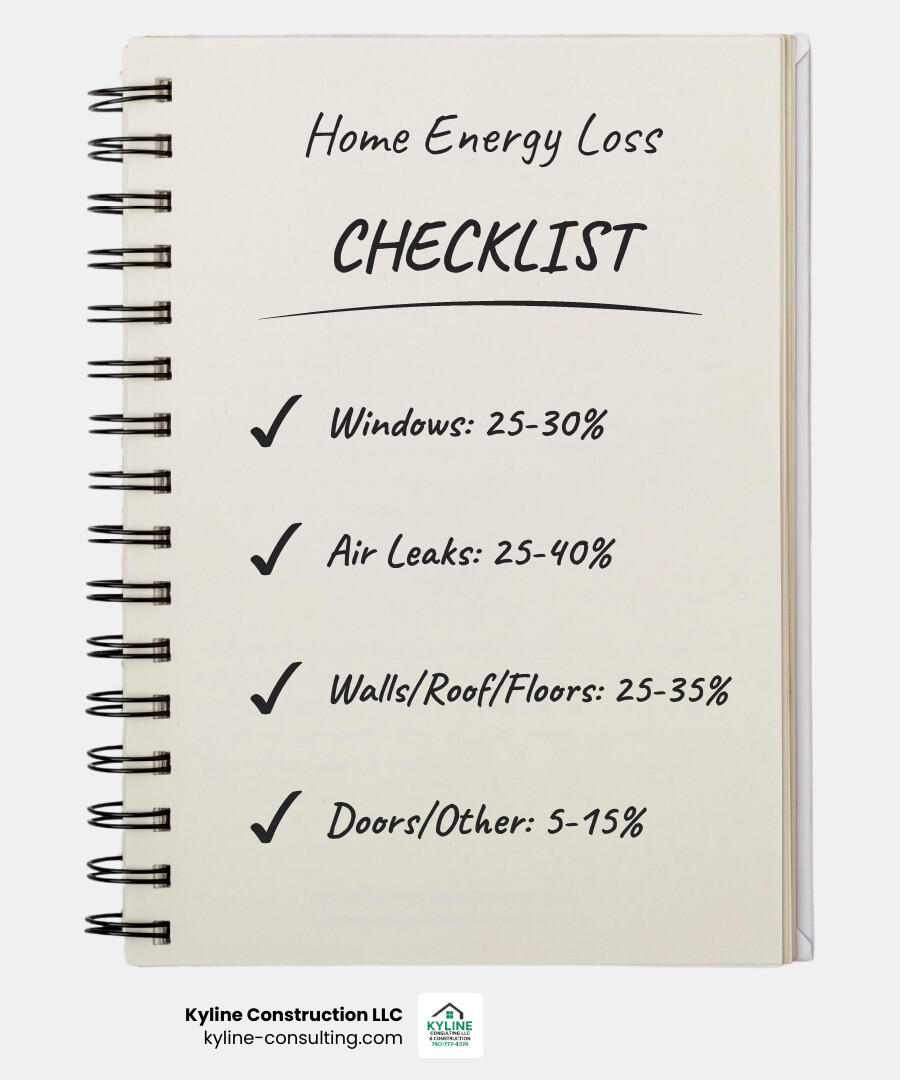
When we talk about energy efficient home improvements, we’re really talking about the “building envelope.” This is the shell of your house—the windows, doors, siding, and insulation. If this envelope is tight, your furnace doesn’t have to kick on every ten minutes. Creating a tighter building envelope through air sealing and insulation can cut your home energy use by roughly 10%.
Beyond the monthly savings, these upgrades are a massive win for your property value. Roughly 90% of home buyers today prioritize low utility bills. They want a home that’s comfortable and sustainable. If you’re looking to sell down the road, having high-performing features like energy-efficient Ohio replacement windows is a major selling point. It’s an investment that pays you back every month and again at the closing table. To understand exactly what to look for in a product, check out this smart shoppers guide to window performance ratings.
Small DIY Energy Efficient Home Improvements
You don’t always need a full crew like mine to start saving. There are plenty of “weekend warrior” projects that make a dent in those bills.
- Caulking and Weatherstripping: Grab a caulk gun and seal the gaps around window frames. Use weatherstripping for drafty doors. These simple steps stop the “whistle” of air escaping your home.
- LED Lighting: Swapping out old incandescent bulbs for LEDs is one of the fastest ROIs you’ll find.
- Programmable Thermostats: Setting your thermostat to 68°F during winter days (and lower when you’re sleeping) can save a bundle. A smart thermostat does this automatically so you don’t have to think about it.
- Water Savings: Low-flow showerheads and faucet aerators reduce the amount of hot water you use, which in turn reduces the load on your water heater.
For more quick wins, you can find energy saving tips from Energy.gov that are easy to implement today.
Financing Your Energy Efficient Home Improvements
I know that the upfront cost of a new roof or a full set of windows can be daunting. However, there are ways to make the math work. Some homeowners use a Home Equity Line of Credit (HELOC) to fund major projects, allowing them to pay for the upgrade over time while enjoying the energy savings immediately.
There are also Energy Efficient Mortgages (EEMs) that allow you to add the cost of energy-saving improvements into your primary loan. The goal is “positive cash flow”—where your monthly energy savings are actually higher than the increase in your mortgage payment. You can also search the DSIRE incentive database to find specific utility rebates and state-level programs available here in Ohio.
Maximizing Federal Tax Credits: The $3,200 Opportunity
Thanks to the Inflation Reduction Act, the federal government is basically helping you pay for these upgrades. Through December 31, 2025, you can claim up to $3,200 annually in tax credits for energy efficient home improvements.
This isn’t just a one-time lifetime limit like the old days. These are annual limits. This means you can strategically plan your upgrades. Maybe you do insulation and windows this year, and then switch to a heat pump next year to maximize your credits. To claim these, you’ll need to file IRS Form 5695 with your tax return.
One big change to watch out for: starting in 2025, the IRS will require a “Qualified Manufacturer Identification Number” (PIN) for many products to be eligible for the credit. Make sure your contractor is providing you with certified products that meet these new standards.
The Energy Efficient Home Improvement Credit
This credit covers 30% of the cost for several key upgrades, up to a $1,200 annual limit. Here is how that breaks down:
- Exterior Doors: You can claim 30% of the cost, up to $250 per door (max $500 total).
- Windows and Skylights: You can claim 30% up to $600 total. This includes specialized options like energy efficient glass block windows if they meet the efficiency requirements.
- Insulation: 30% of the cost of materials like batts, rolls, or spray foam.
- Home Energy Audits: 30% of the cost, up to $150.
For the nitty-gritty details on how to fill out the paperwork, refer to the instructions for Form 5695.
Residential Clean Energy Credit
If you’re going big with renewable energy, this is the credit for you. It offers a 30% tax credit for solar electric, wind, geothermal, and even battery storage. Unlike the $1,200 limit mentioned above, this credit has no annual maximum or lifetime limit through 2032. If you spend $30,000 on a solar array, you could potentially see a $9,000 credit on your taxes. You can explore an interactive guide to energy credits to see how these might apply to your specific project.
High-Impact Upgrades: Windows, Siding, and Insulation
If you want to see a real change in your comfort level, you have to look at the big three: windows, siding, and insulation.
Old, drafty windows are responsible for as much as 30% of a home’s energy loss. When we install windows at Kyline Construction, we look for Low-E coatings and low U-factors. Low-E (low-emissivity) coatings are thin layers of metallic oxide that reflect heat while letting light through. This can reduce energy loss by 30-50%. To get the full story, read everything you need to know about energy efficient windows.
| Feature | What to Look For | Why It Matters |
|---|---|---|
| U-Factor | Lower is better (0.20–0.30) | Measures how well the window prevents heat from escaping. |
| SHGC | Lower for cooling, higher for heating | Solar Heat Gain Coefficient; controls how much sun heat enters. |
| Air Leakage | < 0.3 | Measures how much air “blows through” the window frame. |
When it comes to siding, composite materials are a fantastic choice for Central Ohio. We use circular saws to get those precise cuts on composite siding, which boasts a lifespan of 25 to 50 years. It’s durable, low-maintenance, and provides an extra layer of protection for your home’s envelope.
Advanced Insulation and Air Sealing
Most older homes in the Columbus area are under-insulated. If you go up into your attic and can see the floor joists, you don’t have enough. The Insulation Institute recommends 16-18 inches of blown-in attic insulation for our northern climate.
We often recommend blown cellulose because it fills in all the nooks and crannies that fiberglass batts might miss. This effectively stops “thermal bridging”—where heat travels through the wood studs of your house. The ENERGY STAR Home Upgrade program emphasizes attic sealing as one of the most cost-effective ways to save up to 10% on your annual bills.
Finding Affordable Window Replacement in Ohio
You don’t have to break the bank to get quality. For a standard window replacement, you should expect to see prices in the $400 to $900 range per window, depending on the material and features. If someone is quoting you $2,000 a window, they’re likely a “paper contractor” with a high-pressure sales pitch and a massive markup to cover their sales commissions. These middlemen often have no technical background; if their installation crew walks off the job, they are physically unable to complete the work themselves.
We focus on providing Buckeye bargains for window replacement by using ENERGY STAR certified products that offer high UV protection and a solid long-term ROI. Replacing old windows with certified ones lowers household energy bills by an average of 12%.
Smart Systems: Heat Pumps and Clean Energy
Once your home’s envelope is sealed, it’s time to look at the systems inside. The biggest trend right now is the shift to heat pump technology.
A heat pump doesn’t “create” heat; it moves it. In the winter, it pulls heat from the outside air (even when it’s cold!) and moves it inside. In the summer, it works like an air conditioner in reverse. These systems are incredibly efficient. In fact, heat pump sales surpassed gas furnaces by nearly 630,000 units in 2023.
Water heating is usually the second-largest energy consumer in an Ohio home, taking up nearly 20% of your energy consumption. Switching to a hybrid heat pump water heater can save a household of four about $550 every single year. Plus, there’s a separate $2,000 annual tax credit limit for heat pumps and heat pump water heaters. You can find more about these Federal Tax Credits for Energy Efficiency on the ENERGY STAR website.
The Shift to Heat Pump Technology
Many people worry that heat pumps can’t handle a Central Ohio winter. Modern “cold climate” heat pumps are designed to work efficiently even when temperatures drop well below freezing. However, have your system seasonally maintained to ensure it’s running at peak performance.
If you’re not ready for a full HVAC swap, you can make your home “electric ready.” This means ensuring your electrical panel has the capacity for future electric appliances, like induction cooktops or EV chargers. Induction cooktops are safer, easier to clean, and much more efficient than traditional gas or electric stoves. For more information on these transitions, the Office of State and Community Energy Programs provides great resources.
Planning Your Project: Audits and Real Contractors
Before you start tearing things out, I always recommend a home energy audit. A professional auditor will use tools like blower doors and thermal cameras to find exactly where your home is leaking money. This identifies the most cost-effective improvements for your specific house.
You can get a $150 tax credit for this audit, and it often provides you with a Home Energy Score—a national rating system developed by the DOE. To find certified pros, look for individuals certified by the Building Performance Institute (BPI) or RESNET.
Now, let’s talk about who does the work. In this industry, there’s a massive, often overlooked difference between a “paper contractor” and a “real contractor.”
- Paper Contractors: These guys are essentially sales organizations. They have fancy offices and high-pressure sales reps, but they don’t actually know how to swing a hammer or install a window. They sub out 100% of their labor. The danger? If their sub-contractor quits halfway through or gets a better offer elsewhere, the paper contractor is completely stuck. They don’t have the skills or the tools to step onto your property and finish the job themselves, leaving your home exposed and your project in limbo.
- Real Contractors: These are the pros who have spent decades on-site. At Kyline Construction, we are real contractors. We don’t just manage schedules; we manage the craft. If a sub doesn’t show up, I don’t make excuses—I get out there myself to finish the siding or set the windows. We provide the security of knowing that the person you hired is the person capable of doing the work from start to finish, regardless of staffing hiccups. We pride ourselves on precision craftsmanship and ensuring the job is done to Central Ohio standards.
Frequently Asked Questions about Energy Efficiency
Who is eligible for these tax credits?
Most of these credits are for primary residences—the home you live in most of the year. However, the Residential Clean Energy Credit (for solar, etc.) can also be used for second homes. Renters may even be able to claim certain improvements if they pay for them out-of-pocket, though it’s less common. Landlords generally cannot claim these credits for rental properties they don’t live in. For the full breakdown, check the IRS Energy Efficient Home Improvement Credit details.
How much can I actually save on my utility bills?
While every home is different, the averages are encouraging:
- Windows: ~12% savings.
- Insulation/Sealing: ~10% savings.
- Heat Pump Water Heater: $200–$550 annually.
- Heat Pump HVAC: Up to $900+ compared to older, inefficient systems. You can find more ENERGY STAR savings data to help estimate your specific ROI.
What scams should I watch out for?
Be wary of any company that makes “guaranteed” savings claims that sound too good to be true. High-pressure sales tactics—like “this price is only good for today”—are a huge red flag. Always verify your contractor’s physical address and check their references. The IRS has issued scam warnings regarding companies that misrepresent how tax credits work just to close a sale. A real contractor will give you a free, no-obligation estimate and let the quality of their work speak for itself.
Conclusion
Making energy efficient home improvements is one of the best things you can do for your wallet and your comfort here in Central Ohio. From sealing up drafts to installing high-performance windows and heat pumps, the technology and the tax incentives have never been better.
My final advice? Don’t settle for a “paper contractor” who is just a middleman with a clipboard. If their subcontractors quit, your project stops because they lack the technical skills to step in. Look for real craftsmanship and a team that has the hands-on skills to finish what they start. At Kyline Construction LLC, we’ve been serving the Circleville and Columbus areas for over 40 years. We know what works, we know how to install it right, and we’re always here to finish the job personally.
If you’re ready to stop heating the neighborhood and start saving, give us a call. We’ll provide a free, no-obligation estimate and help you navigate the best upgrades for your home. Start your energy-efficient window upgrade today and let’s make your home a high-performing sanctuary.