After an Ohio Hail Storm: What to Document Before You File a Hail Damage Claim
A hail damage claim is decided on evidence. Most of that evidence is easiest to collect in the first day or two after the storm. The Ohio Department of Insurance tells homeowners to document losses with photos, video, and a written list of damage before debris is cleared. It also says to contact the insurer promptly, because policies usually require notice within a set time frame (Ohio Department of Insurance). Ohio homeowners who do the boring paperwork first tend to have the shortest insurance claims.
This guide covers what to record after hail hits, how to describe the storm, and what to expect once the file is open. A hail damage insurance claim is easier to run when the steps are written down first.
Step 1: Measure the hail before you open a hail damage claim
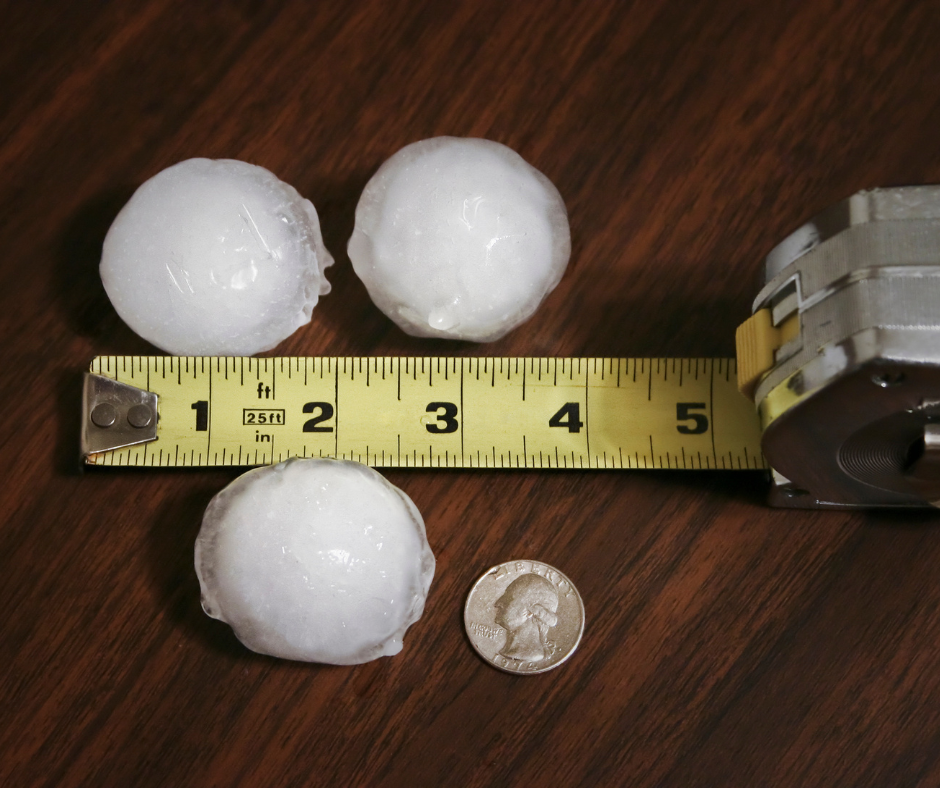
Hail size is the most useful fact in the file. It tells the adjuster how plausible your damage is. The National Weather Service asks people to measure stones rather than estimate them, and it publishes a standard object-to-size table so reports stay consistent (NOAA Storm Prediction Center). Severe hail begins at 1 inch across — a quarter. Anything smaller is classed as sub-severe (NWS La Crosse reference table).
| Measured diameter | Common object | NWS classification |
|---|---|---|
| 1/4 in | Pea | Sub-severe |
| 3/4 in | Penny | Sub-severe |
| 1 in | Quarter | Severe threshold |
| 1 1/4 in | Half dollar | Severe |
| 1 3/4 in | Golf ball | Severe |
| 2 3/4 in | Baseball | Severe |
| 4 in | Softball | Severe |
Sizes and object comparisons: NOAA Storm Prediction Center hail size table; severe threshold per NWS.
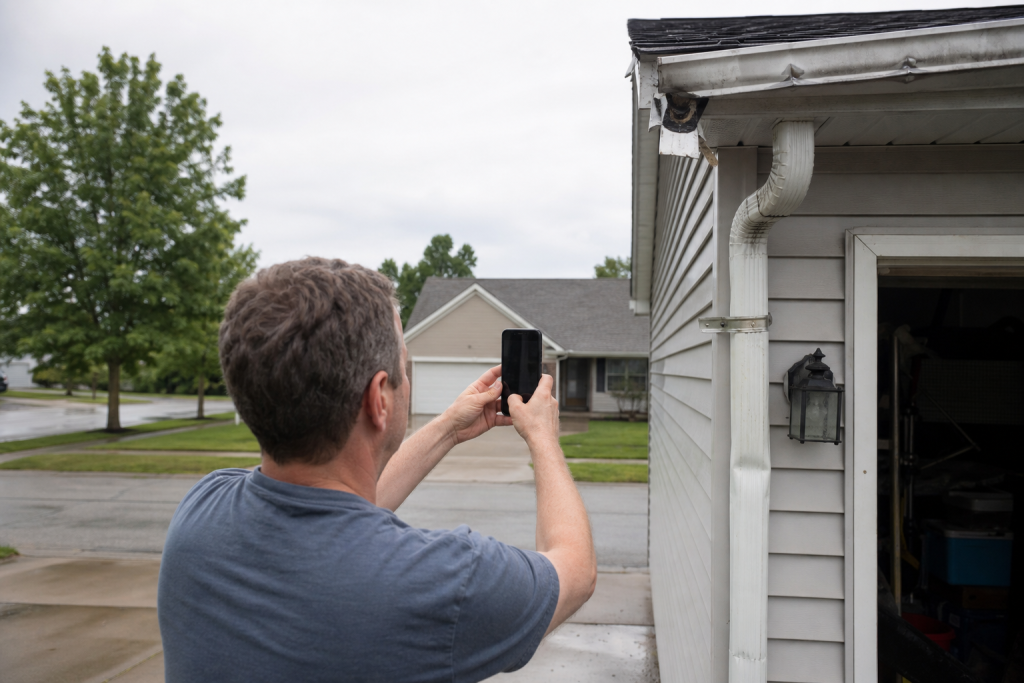
Put a ruler or a coin in the frame when you photograph stones, and note the time. Did the stones melt before you got outside? Photograph the splash marks in mulch, the dents in a grill lid, or the shredded leaves under trees. An adjuster knows those signs too.
Step 2: Photograph the whole envelope, not only the roof
Hail arrives at an angle, so damage shows up on the elevations facing the storm. Work around the house and shoot from the ground with a zoom instead of climbing up. Unprotected work at 6 feet or more requires a real fall protection system under federal rules (OSHA 29 CFR 1926.501).
Cover this list:
- Gutters, downspouts, and drip edge — soft aluminum dents first, and it dates the event.
- Window wraps, trim, garage doors, and siding — dents and cracked laps on the storm-facing walls.
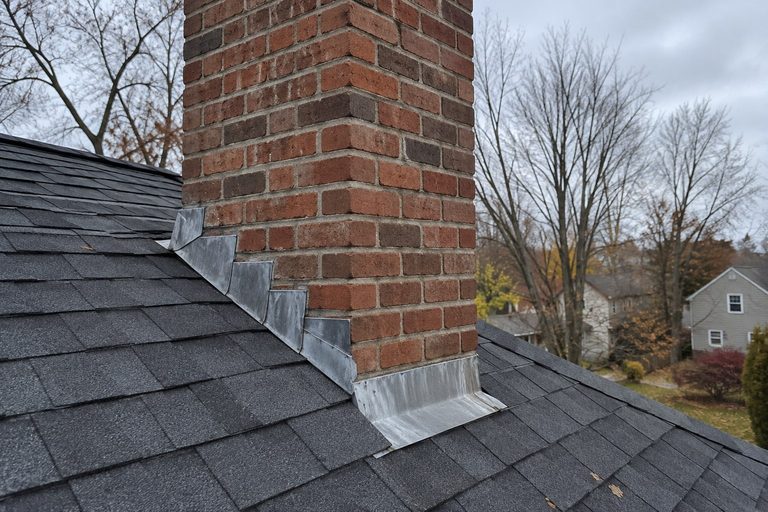
- Roof vents, pipe boots, and flashing — dents in metal parts are strong proof.
- Air conditioner condenser fins — a classic place to check.
- Screens, decks, fences, and yard furniture — cheap items still belong in the loss list.
- Interior ceilings and attic sheathing — any new stains since the storm.
Shoot wide, then close. A wide photo proves location. A close photo proves damage. Ohio’s insurance regulator also asks you to take reasonable steps to stop more harm, such as covering an opening. It says insurers usually pay back those temporary steps as part of the claim (Ohio Department of Insurance).
Step 3: Pin the storm to a date and a place
Insurers verify that a storm actually passed over your address on the date you report. You can look up that record yourself. NOAA’s Storm Events Database holds documented hail and wind reports by county and date (NOAA Storm Events Database). The Storm Prediction Center publishes annual severe report data going back decades (SPC severe weather data).
Write down four things while they are fresh:
- The date
- The rough start and end time of the hail
- The wind direction, if you noticed it
- Any neighbors who also had storm damage
That short note does more for a hail damage claim than a long phone call from memory.
Step 4: Know the claim clock before you call
Ohio’s unfair claims practices rule sets concrete response times for insurers. Knowing them keeps hail damage claims from drifting. Under Ohio Administrative Code 3901-1-54, an insurer must acknowledge a claim within 15 days of notice. It must respond to your communication within 15 days when a response is appropriate. It must accept or deny within 21 days of receiving a properly executed proof of loss. And if it needs more time, it must notify you in writing and update you at least every 45 days (Ohio Administrative Code 3901-1-54).
| Milestone | Deadline for the insurer | Source |
|---|---|---|
| Acknowledge your claim | 15 days from notification | OAC 3901-1-54 |
| Reply to your question or letter | 15 days | OAC 3901-1-54 |
| Accept or deny after proof of loss | 21 days | OAC 3901-1-54 |
| Written status update if more time is needed | Every 45 days | OAC 3901-1-54 |
Two more things are worth knowing before you file a claim. First, a standard homeowners policy does not cover flooding. That takes a separate flood policy, so water rising into the house is a different talk (Ohio Department of Insurance, FloodSmart). Second, you may receive more than one payment. An early advance often comes first, then more funds as the scope firms up (Insurance Information Institute).

Step 5: Bring a contractor in for the roof assessment
An adjuster measures loss. A contractor measures the building. Get a roofer up there before or during the adjuster’s visit. Then the two scopes can be compared line by line: bruising counts per square, damaged accessories, ice barrier and underlayment condition, and the code work a tear-off triggers. A hail damage roof inspection also tells you what is repair and what is replacement. Replacement roofing in Ohio has to meet the Residential Code of Ohio’s roof assembly rules. That includes ice barrier provisions where ice damming has a history (Residential Code of Ohio, OAC 4101:8, Chapter 9 roof assemblies).
Ohio has rules for the paperwork side of home contracting. Home construction service suppliers may not start work without a written contract that complies with the law. They may not charge excess costs the owner has not approved, and they may not fail to perform in a workmanlike manner (Ohio Revised Code 4722.03). Somebody knocks after a hail storm and wants a signature before anything is written down? That is your cue to slow down.
Impact-rated roofing is worth asking about while the roof is open. UL 2218 is the impact-resistance test standard for prepared roof coverings. It produces Class 1 through Class 4 ratings, and Class 4 is the most resistant (UL Standards & Engagement, UL Solutions). IBHS publishes research on how roof coverings perform in hail, and it is worth a read before you pick materials (IBHS). Ask your agent whether your policy would cover hail damage differently on an impact-rated roof.
Frequently asked questions
How soon do I have to report hail damage in Ohio? Your policy sets the notice requirement. Ohio’s insurance department says to call your agent or claims hotline right away. Notice is likely due within a set time frame (Ohio Department of Insurance).
Can I clean up broken siding and shingles before the adjuster arrives? Document first. Ohio’s guidance is to photograph and list the damage before you remove debris, while still taking reasonable steps to prevent further harm (Ohio Department of Insurance).
What size hail actually damages a roof? There is no single cutoff. One inch is where the National Weather Service classifies hail as severe, and impact standards such as UL 2218 rate coverings by resistance to steel-ball impacts (NWS, UL). Smaller stones can still damage a roof that is older or brittle.
How do I prove a storm happened on the date I reported? Look up the county and date in NOAA’s Storm Events Database, which records documented hail and wind events (NOAA).
Why did my insurer send a check that seems too small? The first payment is often an emergency advance, not the full settlement. More payments can follow as the scope is finalized (Insurance Information Institute).
Is storm-driven flooding covered by my homeowners policy? Flood damage is generally covered by a separate flood insurance policy, not a standard homeowners policy (Ohio Department of Insurance, FloodSmart).
Good documentation shortens the claim, and a tight roof protects everything under it. Kyline handles storm work across central Ohio. See our roofing services and our emergency repair services for tarping. We also do roof repair in Lancaster, Ohio. If hail just moved through your neighborhood, contact our team to schedule an inspection and get a written scope you can hand to your adjuster.