What Ohio Homeowners Need to Know About Vinyl Siding Asbestos Concerns
Vinyl siding asbestos concerns are something every Central Ohio homeowner with a pre-1980 house should take seriously before starting any exterior renovation.
Here is the short answer most homeowners are looking for:
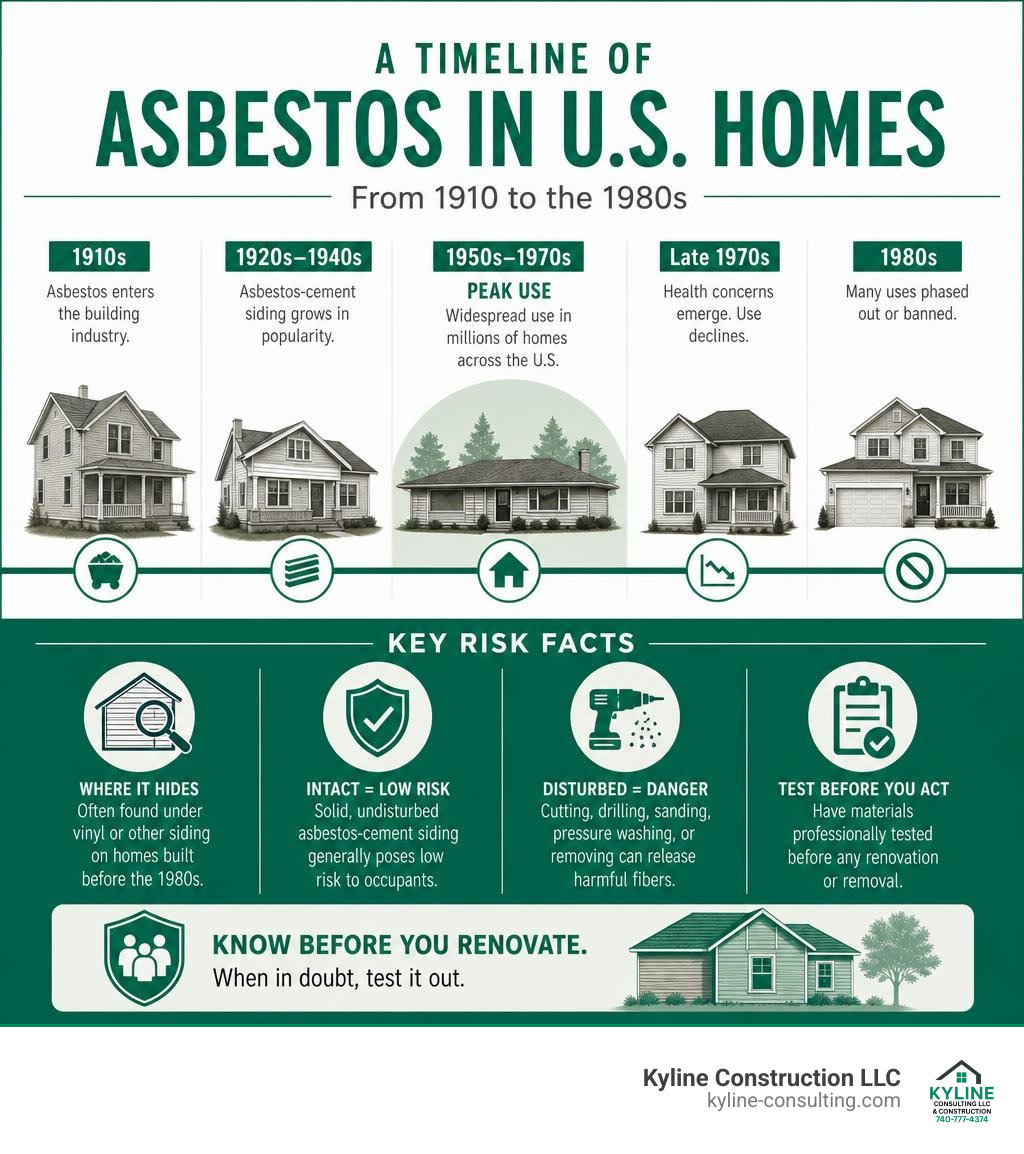
- Is asbestos siding dangerous right now? Not necessarily. Intact, undisturbed asbestos-cement siding generally poses low risk to occupants.
- Does vinyl siding cover asbestos siding? Yes — in most cases, covering intact asbestos siding with new vinyl is legal, safer than removal, and far less expensive.
- When does it become dangerous? When asbestos-containing material is cut, drilled, sanded, pressure washed, or pried off — that is when fibers become airborne and the health risk becomes real.
- What should you do first? Have the material professionally tested before any work begins. Do not disturb it in the meantime.
Asbestos was added to building materials — including siding — for its fire resistance and durability. It was used widely in U.S. home construction from the early 1900s through the late 1980s, with peak installation between the 1920s and 1970s. That means a large number of Central Ohio homes built during that era may still have original asbestos-cement siding underneath newer layers of material — sometimes directly beneath vinyl siding installed decades later.
The problem is not always visible. Homeowners often discover it mid-renovation, which is exactly the worst time to find out.
The risk starts when someone sands it, drills through it, or pulls it off without knowing what they are dealing with.
Understanding Asbestos Siding vs. Modern Vinyl Siding
To understand why we have these conversations, we have to look at what asbestos-cement siding actually is. Developed in 1905 by Johns-Manville using the patented Eternit process, asbestos-cement siding was manufactured by mixing Portland cement with roughly 12% to 15% chrysotile asbestos fibers. This created an incredibly rigid, fireproof, and rot-resistant material. Millions of homes built between the 1920s and the 1970s used these cementitious shingles because they were advertised as permanent and maintenance-free.
Modern vinyl siding, on the other hand, is made of polyvinyl chloride (PVC) resin. It is lightweight, flexible, and designed to expand and contract with Ohio’s changing temperatures. Unlike old cement shingles, vinyl does not crack when hit by a stray baseball, nor does it contain toxic mineral fibers.
When homeowners ask us if they should swap their old siding for vinyl, we look at the structural integrity of what is currently on the house. If you want to dive deeper into how vinyl compares to other traditional materials, you can read our detailed guide on Is Replacing Cedar Siding with Vinyl Worth the Investment?.
While asbestos siding was incredibly durable for its time, it has one massive disadvantage: it is extremely brittle. If you tap an asbestos-cement shingle with a hammer, it produces a sharp, metallic ringing sound. If it breaks, it snaps like a slate tile, leaving rough, flaky, sharp edges that can release microscopic fibers into the air.
To learn more about the history and structural characteristics of these older materials, check out the comprehensive overview on What is Asbestos Siding? Pros, Cons, and What to Do If You Have It .
How to Identify Asbestos Siding on Your Home
If your Central Ohio home was built before 1978, there is a strong chance you have asbestos-cement shingles. Here is how you can perform a preliminary visual inspection:
- Shingle Dimensions: Most asbestos siding was installed as rigid, rectangular shingles measuring 12×24 inches.
- Surface Texture: They often feature a heavy, pressed wood-grain pattern or a lightly dimpled, chalky texture.
- Bottom Edges: Look for wavy, scalloped, or straight-cut bottom edges that feel like thin stone or slate.
- Fasteners: You will typically see two or three exposed nail holes pre-drilled near the bottom of each shingle.
However, visual identification is never 100% accurate. The only way to know for sure is through laboratory testing. We always advise homeowners to have a certified professional collect a sample or use a DIY mail-in test kit.
The testing process involves wetting a small area to prevent fiber release, scoring a tiny fragment from an inconspicuous spot (such as behind a downspout), and sending it to an accredited laboratory for Polarized Light Microscopy (PLM) analysis. For a step-by-step breakdown of this process, see the Asbestos Siding Identification and Removal Guide 2026 | AsbestosHQ .
Addressing Vinyl Siding Asbestos Concerns: Can You Cover It?
The short answer is yes. In fact, covering intact asbestos siding with new vinyl siding is often the safest, most cost-effective, and most practical option available to homeowners.
This process is known in the building industry as encapsulation or overcladding. Because asbestos fibers only pose a health risk when they are disturbed and become airborne (a state known as being “friable”), leaving the shingles flat on the wall and sealing them behind a protective barrier of vinyl keeps them stable.
When we encapsulate old siding, we are essentially locking those non-friable cement shingles in a permanent envelope. This avoids the physical disruption of prying the brittle tiles off the wall, which is when the real hazard occurs. If you are weighing whether to repair, cover, or completely replace your exterior, our guide on Restore, Replace or Reside: Making the Most of Your Exterior Siding Renovation offers a great decision-making framework.
To understand why encapsulation is so widely recommended by environmental agencies and professional contractors alike, you can read the building science perspective detailed in What is Asbestos Siding and Can it Be Covered? | EHS .
Common Vinyl Siding Asbestos Concerns for Central Ohio Homeowners
Many homeowners in our area worry that covering the material is just “kicking the can down the road.” They wonder if the asbestos underneath will degrade over time and eventually leak fibers into their yard or home.
In Central Ohio, our weather is a major factor. In cities like Columbus and Circleville, we experience dramatic freeze-thaw cycles. Moisture can seep into unprotected cementitious siding, freeze during January, expand, and cause the brittle shingles to crack and spall. Over many decades, constant exposure to UV rays and rain can break down the cement binder, making the outer surface of the shingles chalky and more prone to releasing fibers.
This weathering process means that while undisturbed siding is generally safe, neglected and exposed asbestos shingles can slowly transition from a safe, non-friable state to a hazardous, friable condition. According to local legal and environmental experts, failing to address deteriorating exterior materials can lead to unexpected exposure risks during routine yard maintenance or windstorms. For more details on these localized risks, refer to the legal insights in Asbestos exposure could result from siding on older homes .
How We Resolve Vinyl Siding Asbestos Concerns Safely
At Kyline Construction LLC, we don’t just slap vinyl panels directly over old, crumbling shingles. That is a recipe for trapped moisture, wavy walls, and future structural rot.
To resolve these concerns safely and correctly, we follow a strict, professional installation protocol:
- Pre-Inspection and Prep: We inspect the existing wall for any loose or broken shingles. If a single shingle is loose, we secure it using specialized fasteners without drilling or cutting.
- Furring Strips: We install vertical wood furring strips over the existing siding. This creates a flat, secure nailing surface for the new vinyl.
- Rainscreen and Vapor Barrier: We install a high-quality house wrap over the furring strips. This creates a rainscreen detail—a small air gap that allows any moisture to drain away safely through the weep holes in the bottom of the vinyl panels rather than getting trapped against your home’s original walls.
- Thin, Durable Vinyl Panels: We install premium, lightweight vinyl panels. Because vinyl is thin and flexible, it doesn’t put unnecessary weight on the older wall structure, and it provides a beautiful, clean finish that is expected to last 30 to 40 years.
If you want to explore the top-performing vinyl options we recommend for Central Ohio homes, take a look at our analysis where We Researched the Best Vinyl Siding Brands So You Don’t Have To.
The Real Contractor Difference: Safe Handling and Abatement in Central Ohio
When dealing with potential asbestos-containing materials, the contractor you hire matters immensely. This is where the critical distinction between a “paper contractor” and a “real contractor” becomes a matter of safety, legality, and quality for your home.
A paper contractor is essentially a middleman—a salesman with a laptop, a polished pitch, and a phone, but absolutely no hands-on construction expertise. They bid on your vinyl siding project, sign the contract, and then immediately subcontract the entire job to the cheapest, unvetted crew they can find. Because they lack actual trade skills, they rarely step foot on the job site. If those subcontractors run into a surprise layer of old, brittle asbestos-cement shingles and walk off the job, the paper contractor is left completely helpless. They have no idea how to handle hazardous materials safely, they lack the licensing to manage abatement, and they don’t have the hands-on skills to pick up a tool and resolve the issue themselves. You are left with an exposed, dangerous home and a contractor who can only make phone calls.
At Kyline Construction LLC, we are real contractors. We don’t hide behind desks or pass your project off to strangers. Our team has over 40 years of hands-on, boots-on-the-ground experience specifically in exterior remodeling and vinyl siding installation. If our crew encounters a challenge mid-job, we have the practical skills, specialized training, and proper licensing to handle it personally and safely. We manage our projects from start to finish, ensuring that strict safety protocols are followed, hazardous materials are never dangerously disturbed, and your home is treated with the highest level of care. When you hire us, you get real craftsmen who know how to do the work, not just sell it.
To learn more about how to vet your contractor and avoid the pitfalls of hiring a paper contractor, read our guide on Beyond the Hammer: Choosing the Right Vinyl Siding Installers for Your Home.
Legal and Regulatory Requirements for Ohio Homeowners
Before you touch any older siding, you must understand the legal framework. In Ohio, single-family residential owner-occupied dwellings are often exempt from some of the strict federal National Emission Standards for Hazardous Air Pollutants (NESHAP) notifications. However, local building codes in Columbus and surrounding municipalities have strict rules regarding the disposal of asbestos waste.
You cannot simply throw asbestos-cement shingles into a standard residential trash bin or construction dumpster. All asbestos waste must be wetted, double-bagged in certified 6-mil plastic bags, labeled clearly, and hauled to a licensed hazardous waste landfill that is authorized to accept asbestos.
Furthermore, Ohio law requires home sellers to disclose any known hazardous materials—including asbestos—to potential buyers. This disclosure obligation typically survives even if you cover the old siding with brand-new vinyl. If you want to read more about the specific inspection and regulatory guidelines for these materials, see Understanding Asbestos Cement Siding: Facts, Risks, and … .
The Financials: Costs of Removal vs. Encapsulation
Let’s talk numbers. Remodeling your home’s exterior is a significant investment, and understanding the financial difference between full abatement and encapsulation will help you make the right choice for your budget.
Below is a realistic cost breakdown for a typical 1,500-square-foot home in Central Ohio:
| Remediation Option | Average Cost per Sq. Ft. | Estimated Total Cost (1,500 Sq. Ft. Home) | Key Considerations |
|---|---|---|---|
| Encapsulation / Overcladding (Vinyl) | $3 – $7 | $4,500 – $10,500 | Safest option, zero disturbance, adds insulation value, covers old shingles completely. |
| Full Professional Abatement & Disposal | $8 – $15 | $12,000 – $22,500+ | Requires specialized containment, permits, and certified hazardous waste fees. |
| Full Siding Replacement (New Siding Installed) | — | $11,000 – $17,000 | The cost to install high-quality new vinyl siding after the old material is gone. |
As you can see, if you choose full professional abatement, you have to pay $12,000 to $22,500 just to get the old material off your house and hauled away. After that, you still have to pay for the installation of your new siding. By choosing to safely encapsulate the intact material with vinyl, you save thousands of dollars while keeping the asbestos completely sealed and stable.
If you are planning your exterior remodeling budget, you can find more detailed breakdowns in our articles Your Guide to Siding Replacement Costs and The Siding Swap: Budgeting for Your Home’s New Look.
Bundling Siding and Window Projects for Maximum Savings
If we are already on-site installing new vinyl siding over your old exterior, it is the absolute best time to replace your old, drafty windows.
When you bundle these projects, we can coordinate the exterior trim, flashing, and capping perfectly. We install high-quality vinyl replacement windows—typically running between $400 and $900 per window—and integrate them seamlessly with the new siding’s rainscreen system. This ensures that water is shed away from your window frames, preventing hidden wall rot.
Bundling also saves you money on labor, scaffolding, and permitting fees. To see how much you can save by combining these two major exterior upgrades, check out The Ultimate Siding Windows Estimate: What to Expect When You Bundle.
Frequently Asked Questions
Is it safe to cover asbestos siding with vinyl?
Yes, it is highly safe and is the preferred method recommended by most exterior remodeling professionals and environmental agencies. As long as the old asbestos-cement shingles are intact and flat, covering them with a protective vapor barrier, furring strips, and new vinyl siding seals the material safely. This process avoids the physical breaking, sawing, and prying that causes toxic dust to become airborne.
Do I have to disclose asbestos siding when selling my Ohio home?
Yes. Ohio residential property disclosure laws require sellers to disclose any known hazardous materials, including lead-based paint, toxic mold, and asbestos. Even if you have safely covered the old cement shingles with brand-new vinyl siding, the material is still physically present on the house, and you must disclose this to potential buyers in writing.
How much does professional asbestos siding removal cost in 2026?
In 2026, professional asbestos siding removal and disposal in the Central Ohio area typically costs between $8 and $15 per square foot. For a standard 1,500-square-foot home, this translates to an abatement cost of $12,000 to $22,500, which does not include the cost of installing the new replacement siding afterward.
Conclusion
Managing vinyl siding asbestos concerns doesn’t have to be a stressful or frightening experience. When handled with the proper building science, old asbestos-cement siding can be safely encapsulated behind beautiful, low-maintenance vinyl siding that will protect your home for decades to come.
The key to a successful, safe renovation is avoiding paper contractors who merely broker jobs, and instead partnering with a real contractor who brings hands-on craftsmanship, structural expertise, and a deep understanding of local building codes. At Kyline Construction LLC, we are real contractors with over 40 years of local experience serving Circleville, Columbus, and throughout Central Ohio. We don’t cut corners, we don’t pass your home off to unvetted subcontractors, and we stand by our work from start to finish.
If you suspect your older home has asbestos siding and you want to explore your options for a beautiful, safe vinyl siding upgrade, we are here to help. We provide honest advice, clear communication, and free, no-obligation estimates.
Schedule a consultation for your exterior renovation with the team at Kyline Construction LLC today, and let’s make your home safe, efficient, and beautiful.