What Does Window Replacement Actually Cost? Here’s the Short Answer
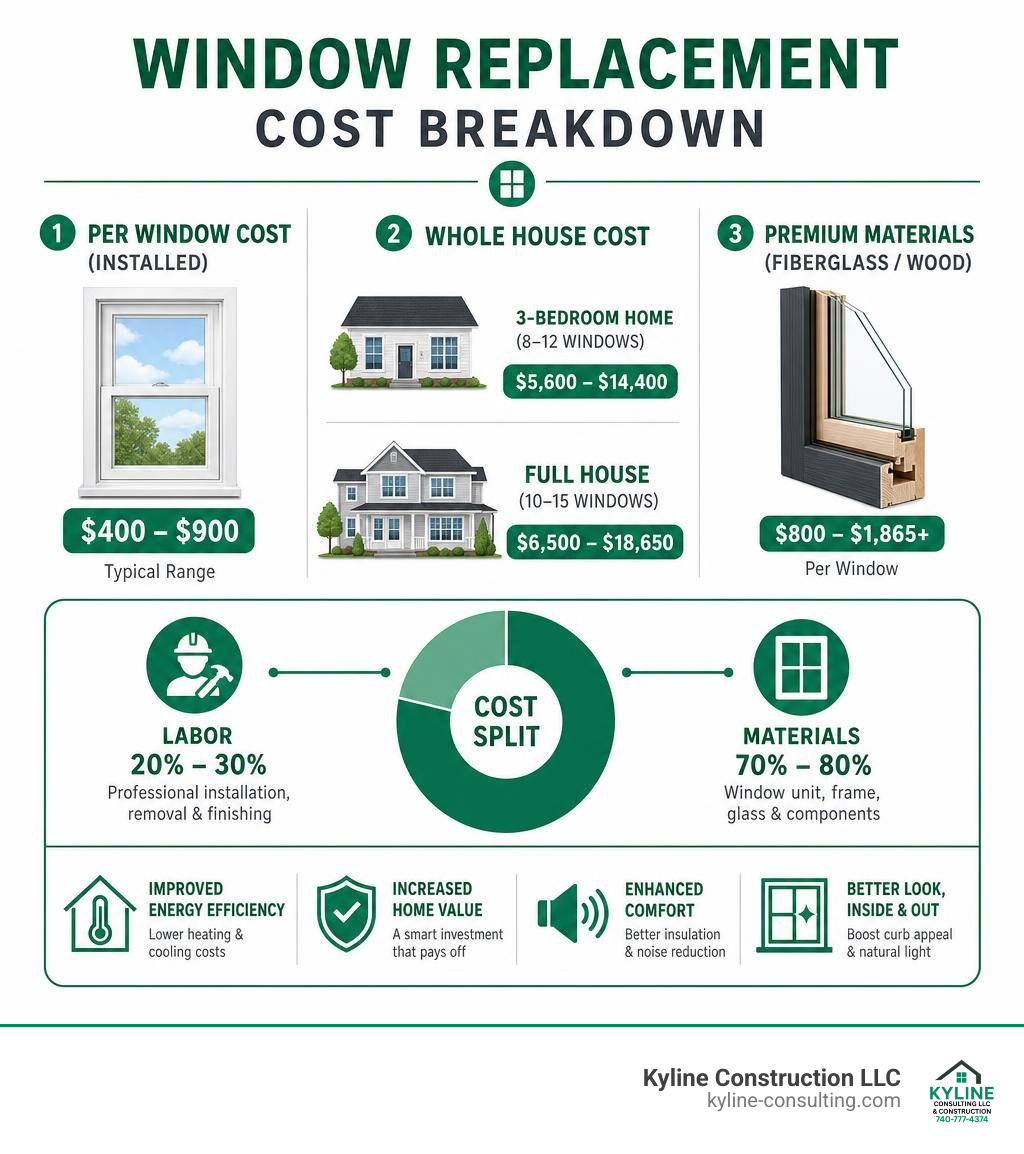
The average cost of window replacement in 2026 runs between $400 and $900 per window installed — but most Ohio homeowners budget somewhere in the middle, around $600–$750 per window for a standard vinyl double-hung.
Here’s a quick snapshot before we dig into the details:
| Project Scope | Typical Cost Range |
|---|---|
| Single window (vinyl, installed) | $400 – $900 |
| 3-bedroom home (8–12 windows) | $5,600 – $14,400 |
| Full house (10–15 windows) | $6,500 – $18,650 |
| Premium materials (fiberglass/wood) | $800 – $1,865+ per window |
These numbers cover materials and labor. What moves the needle most: frame material, window style, installation type, and — critically — who you hire.
Outdated windows don’t just look bad. They quietly drain your wallet through higher heating and cooling bills every single month. According to the U.S. Department of Energy, heating and cooling already account for roughly 40% of the average utility bill. Inefficient windows can be responsible for 25–30% of that heat loss on their own.
That’s a real problem for a lot of Central Ohio homes — especially older houses where the original windows are decades past their prime.
Terms related to average cost of window replacement:
The Average Cost of Window Replacement in 2026: National vs. Ohio Pricing
When you start searching for estimates, you’ll see a massive range of numbers. Nationally, the average window replacement cost lands in a predictable band of $450 to $1,200 per window, with a national midpoint of around $750 per window installed.
But here in Ohio, our local market looks a little different. Because our cost of living and local labor rates are closer to the national average—and occasionally slightly below it—the typical average cost of window replacement in Ohio ranges from $475 to $1,000 per window, with a sweet spot of about $540 to $750 for a high-quality, energy-efficient vinyl unit.
In the Columbus and Circleville markets, pricing is heavily driven by our local climate demands. We get freezing winters and hot, humid summers. That means we can’t get away with cheap, single-pane builder-grade windows without paying for it on our AEP Ohio or Columbia Gas bills. To understand how regional factors, design choices, and construction methods influence what you pay locally, check out our deep dive on Ohio replacement windows.
How Frame Materials Impact the Average Cost of Window Replacement
The material you choose for your window frames is the single biggest factor in your overall material costs. It affects everything from your home’s curb appeal and insulation performance to how much maintenance you’ll have to do over the next thirty years.
Here is how the main frame materials stack up in 2026:
| Frame Material | Average Cost Per Window (Installed) | Expected Lifespan | Maintenance Level |
|---|---|---|---|
| Standard Vinyl | $400 – $800 | 20 – 40 Years | Very Low (Wipe down occasionally) |
| Fiberglass | $500 – $1,500 | 30 – 50 Years | Low (Extremely durable) |
| Wood / Wood-Clad | $875 – $1,865+ | 50+ Years (With care) | High (Requires regular painting/staining) |
Let’s break down these options:
- Vinyl Frames: Vinyl is America’s favorite window material for a reason. It offers the best performance-to-price ratio. Modern, high-quality virgin vinyl windows provide exceptional insulation, never need to be painted, and won’t rot. They are the most cost-effective way to update your home. For a detailed breakdown of how vinyl compares to other materials, read through the ultimate guide to window replacement costs.
- Fiberglass: Fiberglass is incredibly strong, mimics the clean profile of painted wood, and expands and contracts at almost the exact same rate as the glass pane itself. This reduces the risk of seal failure over time. However, you will pay a 30% to 50% premium over vinyl.
- Wood: Wood is the gold standard for historic homes and high-end architectural styles. It offers unmatched natural beauty and excellent insulation. The catch? Wood windows require regular painting or staining to protect them from rot, and they sit at the absolute top of the pricing scale.
Window Styles and Glass Packages: From Double-Hung to Egress
Not every window opening in your house is the same, which means your costs will vary based on the style of window you need to install.
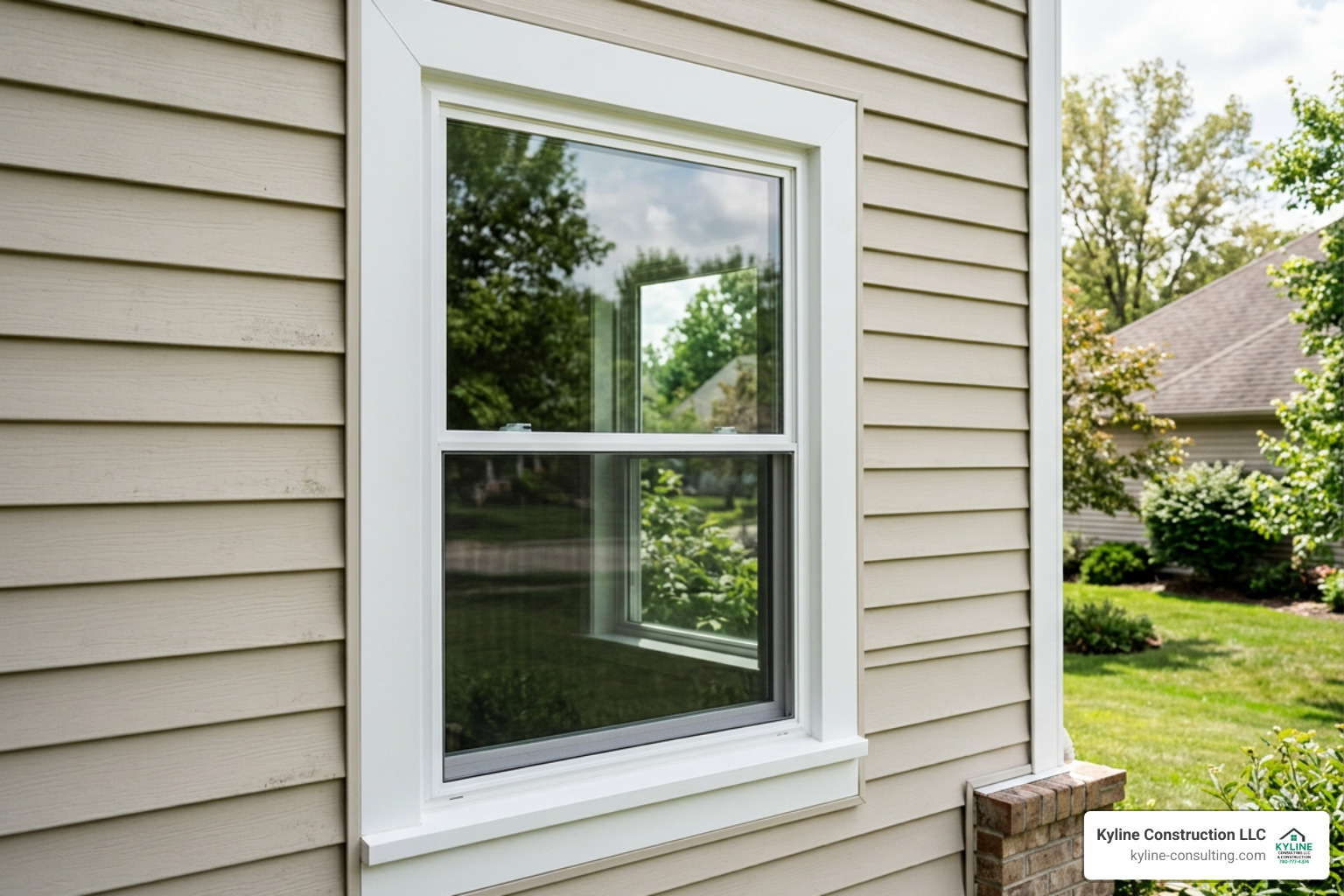
- Double-Hung Windows ($300 – $850): The classic American window where both the top and bottom sashes slide vertically. They are highly functional, easy to clean, and represent the baseline for most replacement projects.
- Casement Windows ($300 – $1,000): These windows crank outward like a door. They offer excellent ventilation and a very tight seal when closed, making them slightly more energy-efficient than double-hung styles.
- Bay and Bow Windows ($2,000 – $6,000): These are large, multi-panel structural projections that extend outward from your home. Because they require structural support, custom framing, and multiple window units joined together, they are a major investment.
- Egress Windows ($3,000 – $8,000): Typically installed in basements to meet safety codes for living spaces. The high cost reflects the excavation, concrete cutting, and specialized drainage systems required to install them safely.
Beyond the style, your glass package plays a massive role in energy efficiency.
- Double-pane glass with a Low-E (low-emissivity) coating and argon gas fill between the panes is the modern standard. It blocks harmful UV rays and prevents heat transfer.
- Triple-pane glass adds a third layer of glass and a second chamber of gas. While it offers superior sound dampening and minor efficiency gains, it typically costs 50% to 200% more than double-pane. In Central Ohio’s climate, double-pane Low-E with argon is generally the “sweet spot” where you get the fastest return on your investment.
Key Cost Drivers: Labor, Installation Types, and Contractor Quality
It is easy to get hyper-focused on the cost of the window unit itself, but the physical window is only half of the equation. Labor and installation complexity typically account for 40% to 55% of your total quote.
When you receive a professional estimate, it should cover:
- The window units and custom sizing.
- Basic installation labor and site preparation.
- Insulation, weatherproofing, and exterior trim wrapping.
- Removal and disposal of your old windows (disposal fees can add up quickly).
- Local permit fees (which vary by township across Central Ohio).
To get a clearer picture of how these elements combine for your specific home size, you can use a window replacement cost calculator to map out your raw numbers.
Full-Frame vs. Retrofit Pocket Installation
When replacing windows, you have two primary installation paths:
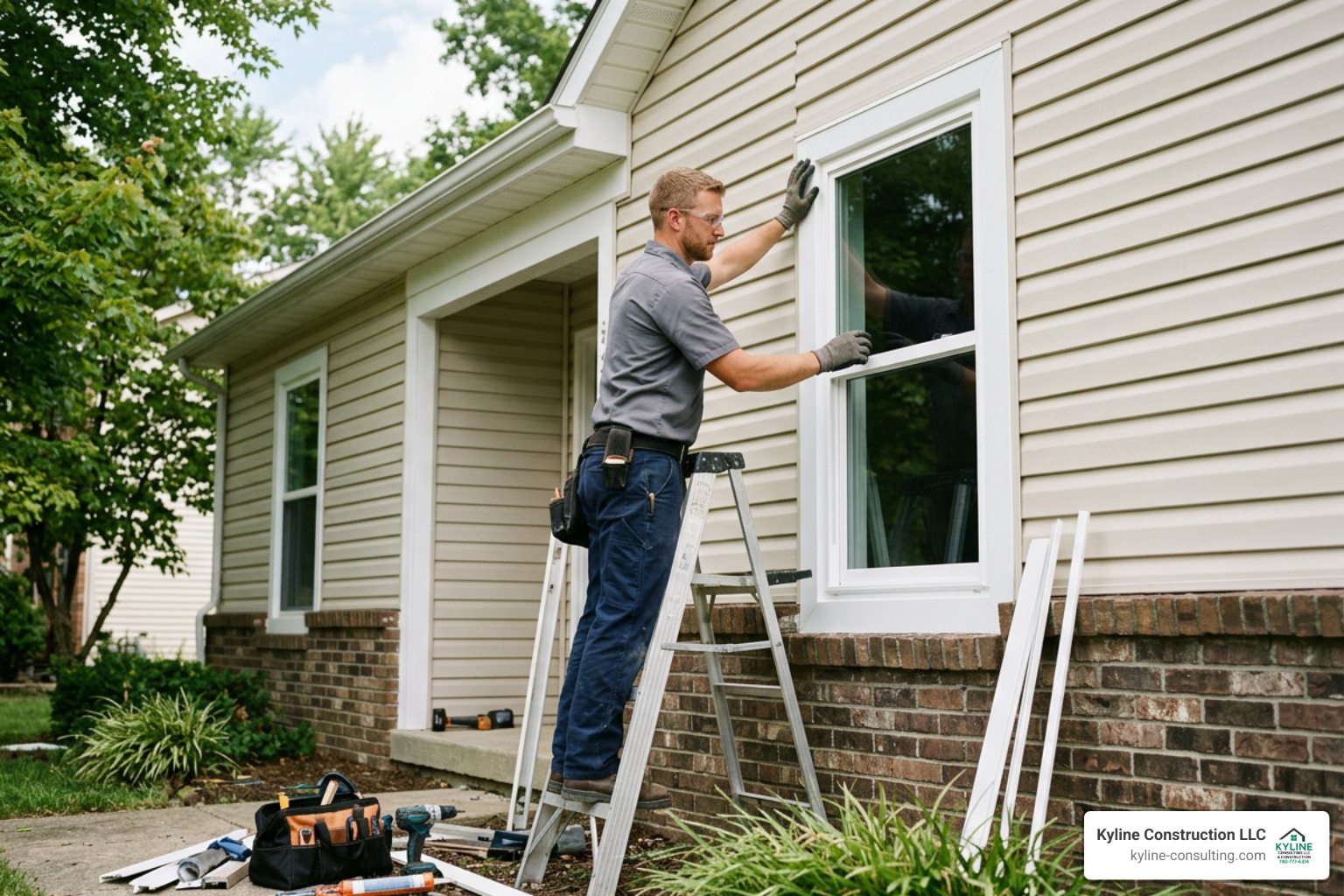
- Retrofit (or Pocket) Installation: If your existing window frames are completely square, structurally sound, and free of rot, we can slide a new window unit directly into the existing frame. This preserves your interior trim and exterior vinyl siding, taking less time and saving you 20% to 30% on labor.
- Full-Frame Installation: If your old frames are warped, drafty, or suffering from structural wood rot, we must strip everything down to the rough stud opening. This requires replacing the frame, sill, trim, and flashing. It is a more invasive process, but it is the only way to guarantee a leak-free, structurally sound window.
Real Contractors vs. Paper Contractors in Central Ohio
Here is where I want to give you some straight talk from my years in the field. When you are looking for window replacement in Columbus, you will find two very different types of businesses bidding on your job: paper contractors and real contractors.
Understanding this distinction is absolutely critical. A paper contractor is a sales company disguised as a construction business. They have slick offices, aggressive sales reps who push for a signature on the first visit, and absolutely zero mud on their boots. They don’t employ installers; they simply sub out 100% of the work to the cheapest crew they can find on any given Tuesday. If that subcontractor walks off the job, cuts corners, or does a sloppy job, the paper contractor has no physical ability to step in and fix it because they don’t actually know how to install a window themselves. You are essentially paying a massive premium just to hire a middleman who manages spreadsheets rather than construction quality.
A real contractor is a craftsman first. At Kyline Construction LLC, we are hands-on. We don’t hide behind high-pressure sales scripts. If a subcontractor gets sick or a crew faces an unexpected challenge on-site, we have the actual tools, experience, and knowledge to grab a circular saw, step in, and finish the job personally to our exact standards. A real contractor understands the structural integrity of your home, how to properly integrate windows with your vinyl siding, and how to ensure a lifetime weather-tight seal.
When you are investing thousands of dollars into your home, you want to make sure you are hiring someone who knows how to build, not just how to sell. Choosing a real contractor ensures your money goes directly into skilled labor and high-quality materials, rather than a paper contractor’s bloated marketing budget.
Financial Return: Energy Savings, ROI, and Tax Incentives
Is replacing your windows actually worth the cost? From a financial perspective, the answer is a resounding yes.
First, let’s talk about home equity. According to recent remodeling cost-vs-value data, a quality vinyl window replacement project typically recovers 65% to 75% of its upfront cost in added home resale value immediately. If you plan to sell your home in the next few years, updated windows are a massive selling point that can help your home sell up to 8% faster.
Second, you will see immediate relief on your monthly utility bills. Swapping out drafty, single-pane windows for Energy Star certified double-pane windows can save the average Central Ohio homeowner anywhere from $125 to $465 per year in heating and cooling costs.
Finally, there are great incentives available in 2026. Under the federal Energy Efficient Home Improvement Credit, you can claim a 30% tax credit on qualifying energy-efficient window replacements, up to $600 per year. When you combine federal tax credits with local utility rebates from companies like AEP Ohio, the long-term payback period of your windows shrinks significantly.
Smart Budgeting: How to Plan Your Project
The best way to prevent your remodeling budget from spiraling out of control is to go into the process with a clear plan. If you are starting from scratch, take a look at our step-by-step guide on how to estimate your window replacement budget to establish a solid baseline.
Whole-House vs. Phased Projects: Budgeting the Average Cost of Window Replacement
One of the most common questions we get is: “Should I replace all my windows at once, or can I do them in phases?”
While doing a few windows at a time is easier on your short-term cash flow, replacing all your windows at once is significantly cheaper per window.
Installers have fixed “mobilization costs” for every project. This includes setting up scaffolding, bringing out dump trailers, paying for permits, and travel time. When we can mobilize once and knock out 10 to 15 windows in a single, continuous job, we work much more efficiently. Most manufacturers also offer volume discounts on materials for orders of 10 or more windows, which we pass directly along to you.
Another smart way to maximize your budget is to bundle your windows with other exterior projects. For example, if your home’s exterior needs a complete face-lift, combining window replacement with a vinyl siding project is incredibly cost-effective.
To give you an idea of bundling costs, a full siding repair or replacement typically runs between $11,000 and $17,000, with high-quality vinyl siding costing around $4.50 to $8.00 per square foot installed. When you open up the walls for siding, it is the perfect, lowest-labor-cost moment to pop in new windows. You can learn more about how this works in our guide on what to expect when you bundle siding and windows.
When to Repair vs. Replace Your Windows
You might not need to replace every window in your home. If a window is less than 15 years old and only has a minor issue, a repair might buy you several more years of use.
However, you should start planning for replacement if you notice any of these warning signs:
- Condensation between the glass panes: This means the insulated glass seal has failed, and the insulating gas has escaped. The window is now performing no better than a single sheet of glass.
- Persistent drafts: If you can feel cold air blowing in even when the window is locked tight, the frame has likely warped or the weatherstripping has completely decayed.
- Soft, rotting wood frames: If you can press a screwdriver into your wooden window frame or sill and it feels spongy, water has penetrated the wood. This can lead to structural mold issues inside your walls.
- Difficulty operating: If you have to fight, prop open, or struggle to lock your windows, they are a safety hazard.
Frequently Asked Questions About Window Costs
Is it cheaper to replace all windows at once?
Yes, absolutely. Replacing your windows in bulk lowers the per-window cost because the installation crew only has to set up and clean up the job site once. You also avoid paying repeated permit fees, disposal fees, and mobilization charges, saving you up to 15% to 25% overall compared to doing the project in small phases.
How much does labor cost to install a window?
In 2026, installation labor typically runs between $100 and $300 per window for standard retrofit installations. If your project requires full-frame replacement, extensive rot repair, or working on a complex second-story opening, labor costs will adjust upward to reflect the extra time and safety equipment required.
Do new windows really save money on energy bills?
Yes. Upgrading from old, drafty single-pane windows to Energy Star certified double-pane windows with Low-E glass and argon gas can cut your heating and cooling costs by 10% to 25%. Given that HVAC costs make up nearly half of your home’s energy footprint, those savings add up to hundreds of dollars back in your pocket every single year.
Conclusion
At the end of the day, understanding the average cost of window replacement is all about clarity, honesty, and finding the right fit for your home. You don’t need to overpay a paper contractor’s massive sales markup to get high-performing, beautiful windows.
At Kyline Construction LLC, we bring over 40 years of hands-on professional experience to every single home improvement project in Circleville, Columbus, and throughout Central Ohio. We don’t believe in high-pressure sales tactics or hidden fees. We believe in precision craftsmanship, transparent pricing, and standing behind the work we do with our own hands.
If you are ready to stop throwing money out of your drafty old windows, let’s talk. Schedule a professional window consultation today for a free, no-obligation estimate, and let us help you transform your home.