What You Need to Know About General Window Replacement
Quick answer: Here’s what most Ohio homeowners want to know upfront:
| Question | Quick Answer |
|---|---|
| When should I replace windows? | Every 15–30 years, or sooner if you notice drafts, fog, or rot |
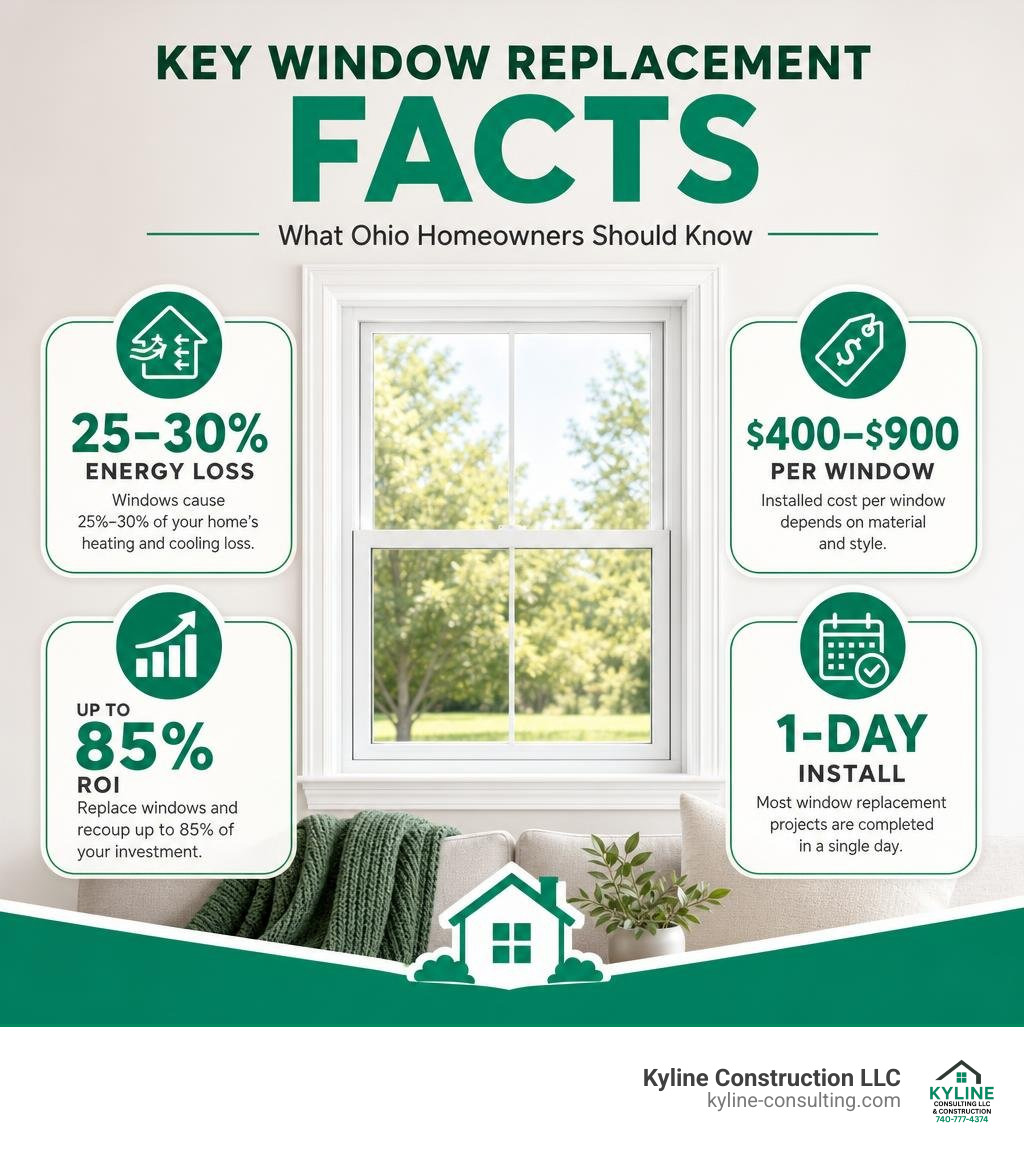
| How much does it cost? | $400–$900 per window installed, depending on material and style |
| What’s the ROI? | Up to 85% return on your investment |
| How long does it take? | Most projects finish in a single day |
| What materials are available? | Vinyl, wood, and fiberglass — vinyl is most popular for Ohio homes |
| What ratings matter? | Look for ENERGY STAR certification and NFRC labels |
General window replacement is one of the most impactful home improvements you can make — and one of the most misunderstood.
Most homeowners don’t think about their windows until something goes wrong. A draft in January. A foggy pane that won’t clear. An energy bill that keeps climbing for no obvious reason.
Here’s something worth knowing: windows are responsible for 25%–30% of your home’s heating and cooling energy use. That’s not a small number. For Central Ohio homeowners dealing with cold winters and humid summers, old or failing windows aren’t just an annoyance — they’re quietly costing you money every month.
The good news? Replacing your windows is a straightforward project when you know what to look for — the right materials, the right ratings, and the right contractor.
This guide walks you through everything: how to spot the signs you need new windows, how to compare materials and performance ratings, what it costs, and how to avoid the contractors who will waste your time and money.
Signs Your Home Needs a General Window Replacement
When you live in Central Ohio, your home has to withstand a wide swing of seasonal weather. From freezing, windy winter nights in Columbus to humid, heavy summer afternoons in Circleville, your windows act as the primary defense system for your indoor comfort. But how do you know when your current windows have officially retired on the job?
In my experience, windows generally need to be replaced every 15 to 30 years. However, elapsed time isn’t the only indicator. You should look out for these clear warning signs:
- Drafts and Cold Spots: If you stand near your window on a windy January day and feel a distinct breeze, your seals have failed. Drafty windows make your HVAC system work twice as hard to maintain a steady temperature. If you want to dive deeper into why this happens, check out this guide on Single Pane Windows: The Good, the Bad, and the Drafty.
- Condensation Between the Panes: When you see fog, moisture, or water droplets trapped inside a double-pane or triple-pane window, it means the insulated glass unit (IGU) seal is broken. Once that seal pops, the insulating gas (usually argon) escapes, leaving you with zero thermal protection.
- Spiking Energy Bills: If your heating and cooling costs are climbing but your local utility rates haven’t changed drastically, your windows are likely letting heat escape in the winter and pour in during the summer.
- Rotting Wood and Water Damage: For older homes with wood frames, water infiltration can lead to mold, decay, and structural soft spots. If the wood is soft to the touch or peeling, the window’s structural integrity is compromised.
- Difficulty Operating: If you have to fight your window to slide it up, or if it won’t stay open without a prop, the balance mechanism is broken or the frame has warped. This isn’t just annoying; it’s a major safety hazard in an emergency.
If you are dealing with severely drafty windows and need immediate, budget-friendly assistance before committing to a full upgrade, you might qualify for state-level support. Take a look at the Home Weatherization Assistance Program | Ohio.gov to see if your household meets the criteria for energy-saving home modifications.
Understanding Window Materials, Styles, and Performance Ratings
When planning a general window replacement, you will face an overwhelming number of choices. To make the best decision for your home, you need to break these options down into three main categories: materials, styles, and performance ratings.
Let’s start with materials. The three most common frame options are vinyl, fiberglass, and wood. Each has its own set of pros and cons:
| Frame Material | Average Cost | Expected Lifespan | Maintenance Level | Best For |
|---|---|---|---|---|
| Vinyl | $400 – $900 | 20 – 30 Years | Very Low (No painting) | Budget-conscious homeowners wanting maximum efficiency |
| Wood | $700 – $1,200 | 30 – 50+ Years (If maintained) | High (Requires regular painting/staining) | Historic homes where architectural authenticity is required |
| Fiberglass | $800 – $1,500+ | 35 – 50 Years | Low | Extreme climates and large, heavy glass expanses |
For most Central Ohio homeowners, vinyl is the clear winner. Modern vinyl windows are constructed with multi-chambered frames that trap air, providing outstanding thermal insulation. They don’t rot, they never need to be painted, and they fit comfortably within a reasonable home improvement budget.

To learn more about selecting the right materials and balancing performance with aesthetics, read The Smart Homeowner’s Guide to Energy Efficient Windows.
Choosing the Right Style for Your General Window Replacement
The style of your windows dictates both how they operate and how they complement your home’s exterior. Here are the most popular styles we install in Central Ohio:
- Double-Hung Windows: The classic American window. Both the top and bottom sashes move up and down, and they tilt inward for incredibly easy cleaning from inside your house.
- Casement Windows: These windows are hinged on one side and crank outward. Because the sash presses firmly against the frame when closed, they offer an exceptionally tight seal against drafts.
- Sliding Windows: These operate like a double-hung tipped on its side. They slide horizontally and are perfect for wide openings where you want an unobstructed view.
- Picture Windows: Fixed windows that do not open. They are highly energy-efficient because they don’t have moving parts, making them perfect for letting in natural light in living rooms or stairwells.
- Architectural Windows: Custom-shaped windows (arches, circles, polygons) designed to match unique home designs.
Deciphering Energy Ratings for Your General Window Replacement
You shouldn’t buy windows based on looks alone. You need to look at the National Fenestration Rating Council (NFRC) label. This label acts like the nutrition facts on a cereal box, telling you exactly how the window performs.
- U-Factor: This measures how well the window prevents non-solar heat from escaping. The lower the number, the better the window is at keeping heat inside your home during winter. For Ohio, look for a U-factor of 0.27 or lower.
- Solar Heat Gain Coefficient (SHGC): This measures how much solar radiation enters your home as heat. In Ohio, where we get cold winters and hot summers, a moderate SHGC (around 0.25 to 0.40) is ideal to balance winter warmth with summer cooling.
- Air Leakage Rating: This measures how much air passes through the window’s joints. ENERGY STAR requires a rating of 0.30 or less, but the best-performing windows achieve ratings under 0.10.
Understanding these numbers is key to maximizing your return on investment. If you want to decode these labels like a pro, consult our Smart Shopper’s Guide to Window Performance Ratings. To see how these ratings translate directly into lower utility bills, check out Crunching the Numbers: Your Guide to Energy Savings with New Windows.
Cost, ROI, and Budgeting for New Windows
Let’s talk numbers. I always tell my clients that a general window replacement is an investment, not an expense.
For a standard residential vinyl window replacement, you can expect to pay between $400 and $900 per window, fully installed. If you prefer high-end wood windows, the price can climb to $700–$1,200 per opening, while premium fiberglass options can range from $800 to over $1,500.
If you are planning a larger exterior remodel, you might also be looking at your home’s siding. For context, a full siding repair or replacement typically ranges from $11,000 to $17,000, with high-quality vinyl siding costing around $4 to $9 per square foot installed. Combining siding and window projects can often save you money on labor and setup costs.
Here is the good news: according to industry data, window replacement projects offer an ROI of up to 85%. This return comes in three ways:
- Immediate Energy Savings: By upgrading from drafty single-panes to double-pane windows with low-E glass and argon gas, you can slash your heating and cooling bills. To learn more about this, check out Why Energy Conserving Windows are a Pane-less Way to Save.
- Increased Home Resale Value: Buyers in Columbus and Circleville pay a premium for homes with updated, energy-efficient mechanicals and exteriors.
- Reduced HVAC Wear and Tear: When your home holds its temperature, your furnace and air conditioner don’t have to cycle constantly, extending their lifespan.
To get a clear picture of what your specific project will cost, you can read How to Estimate Your Window Replacement Budget. You can also compare local pricing trends and services using the Window Replacement in Columbus, OH – The Home Depot portal.
Choosing the Right Contractor: Paper Contractors vs. Real Contractors
This is where I need to give you some honest, unfiltered advice. The window industry is packed with what I call “paper contractors,” and understanding the massive gulf between them and real contractors is the single most important factor in the success of your project.
The Paper Contractor: A Sales Machine, Not a Builder
A paper contractor is a salesperson with a fancy iPad, a polished pitch, and a pickup truck they only use to drive to sales meetings. They don’t actually know how to install a window, nor do they want to. When you sign their contract, they immediately turn around and hire the cheapest, uncertified subcontractors they can find on the internet to do the actual work.
This creates a dangerous disconnect:
- Zero Accountability: If those subcontractors walk off the job, install your windows crooked, or damage your home, the paper contractor has no idea how to fix it because they lack the hands-on skills to do the work themselves.
- Inflated Costs: You are paying a massive premium just to fund the paper contractor’s sales commission and marketing budget, while the actual workers are being squeezed to work as fast and cheap as possible.
- The Blame Game: If a window leaks a year later, the paper contractor will blame the manufacturer, the manufacturer will blame the subcontractor, and the subcontractor will have changed their phone number. You are left holding the bag.
The Real Contractor: Hands-On Expertise and Accountability
A real contractor is entirely different. A real contractor has spent years on ladders, holding circular saws, running flashing tape, and mastering the physical craft of exterior remodeling.
At Kyline Construction LLC, we are real contractors. This distinction matters because:
- Direct Supervision and Skill: If our crew gets sick or a subcontractor quits mid-job, I have the skills, the tools, and the experience to step in and finish the installation personally.
- No Middlemen: We don’t hide behind slick sales pitches. The person who estimates your job understands the structural reality of your home’s walls and vinyl siding, ensuring your windows are integrated perfectly with your home’s weather barrier.
- Uncompromising Quality Control: Because we know how the work is supposed to be done, we don’t accept shortcuts. Every flashing detail, every bead of sealant, and every insulation pocket is executed to perfection.
That is the level of security you deserve when you are investing thousands of dollars in your home.
When evaluating local contractors, make sure to:
- Ask if the person selling you the job can personally install a window.
- Check local reviews and portfolios. You can browse THE BEST 10 WINDOWS INSTALLATION IN COLUMBUS, OH – Yelp to see how different companies stack up.
- Ensure they understand Central Ohio building codes and proper moisture management. Improperly flashed windows will leak water into your walls, causing thousands of dollars in structural damage.
- Read Don’t Get Paned: Finding the Best Window Glass Replacement in Columbus to learn how to spot red flags before signing a contract.
FAQ: How long does the installation process take?
For a standard home needing 10 to 15 windows, the physical installation is almost always completed in a single day.
We typically send a highly trained 4-to-5-person crew to your home. We work systematically, replacing one window at a time to minimize the time your home is exposed to the outdoor elements. We lay down drop cloths, protect your furniture, and perform a meticulous cleanup, ensuring we leave your home cleaner than we found it.
FAQ: What warranties should I look for?
When investing in new windows, you want to ensure your investment is protected for decades. Look for a comprehensive, multi-layered warranty package that includes:
- A Transferable Manufacturer Warranty: This covers the window itself (the vinyl frames, the insulated glass units, the balances, and the locks) against defects. If you sell your house, this warranty transfers to the next owner, which is a massive selling point.
- A Solid Labor/Workmanship Warranty: This covers the installation itself. Even the best window will fail if it isn’t installed straight, level, and sealed correctly. Make sure your contractor stands behind their physical labor with a written guarantee.
- Glass Breakage Coverage: Some premium brands offer coverage that replaces the glass sash for free if a stray baseball or lawnmower rock shatters your window pane.
FAQ: Can windows be replaced during the winter in Central Ohio?
Yes! We install windows year-round, even in the dead of an Ohio winter.
We use specialized cold-weather installation techniques to protect your home. Instead of removing all your windows at once, we work on one window at a time. We close the doors to the room we are working in to prevent heat loss to the rest of the house. We also use high-performance, low-temperature sealants and expanding foams designed to cure properly in freezing temperatures, ensuring an airtight seal regardless of the season.
Conclusion
Upgrading your home with a general window replacement is one of the smartest decisions you can make to lower your energy costs, boost your home’s value, and improve your daily comfort. But remember: a window is only as good as the hands that install it.
Avoid the paper contractors who hide behind slick sales pitches. Choose a team of real, hands-on professionals who have the skills, the experience, and the dedication to do the job right the first time.
At Kyline Construction LLC, we bring over 40 years of professional home improvement experience to every job site in Columbus, Circleville, and the surrounding Central Ohio areas. We don’t believe in high-pressure sales tactics — just honest advice, precision craftsmanship, and beautiful results.
Ready to transform your home? Schedule your free estimate with Kyline Construction LLC today, and let’s discuss how we can make your home warmer, safer, and more energy-efficient.