Siding Replacement in Central Ohio: How Vinyl, Fiber Cement, Engineered Wood, and Metal Handle Freeze-Thaw
Central Ohio exteriors run the same cycle every year: soaking spring rain, humid summers, and winters that swing above and below freezing more than once in a week. That repeated freeze-thaw movement loosens fasteners, opens joints, and lets water behind cladding. Choosing the right material and installing it the way its manufacturer requires is what makes a siding replacement last.
Why freeze-thaw is the real test for siding
Water is the mechanism. Moisture that gets behind or into cladding expands when it freezes and relaxes when it thaws, working the panel, the fastener, and the sheathing a little looser each time. Each material also expands and contracts with temperature, just at different rates, which is why flashing, clearance, and fastening details matter as much as the brand on the box.
James Hardie builds this into its product line: fiber cement is engineered by climate zone, and its HZ5® quick-start installation guide is the version for the freeze-thaw half of the country, including Ohio (James Hardie HZ5 Quick Start Installation Guide).
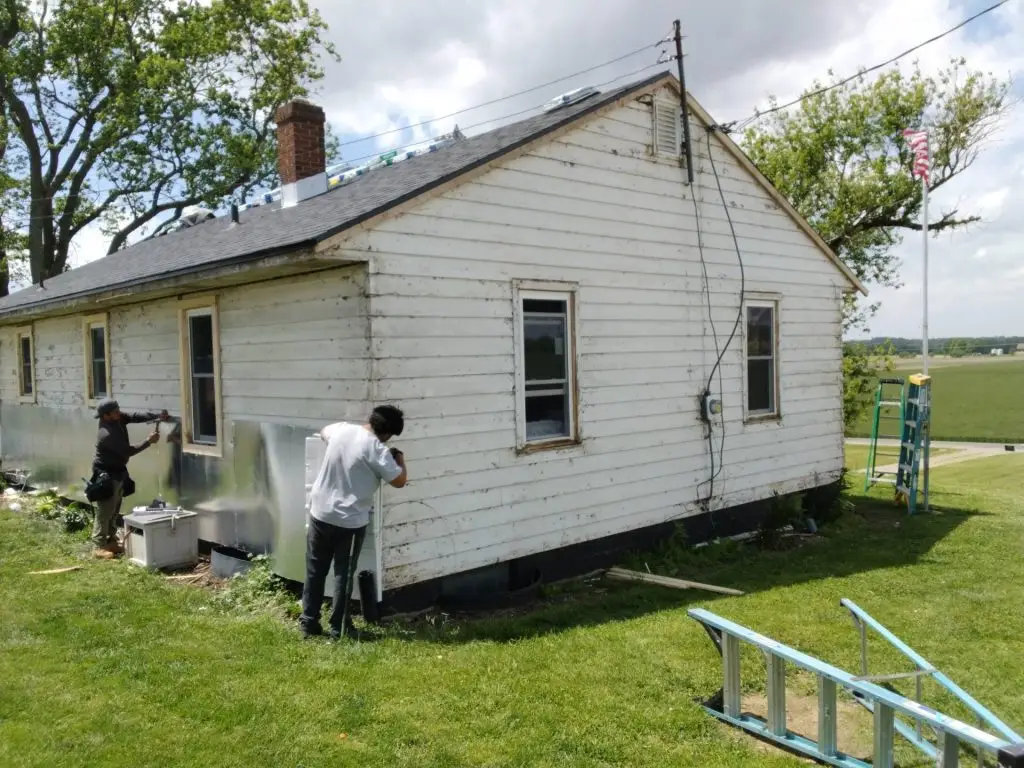
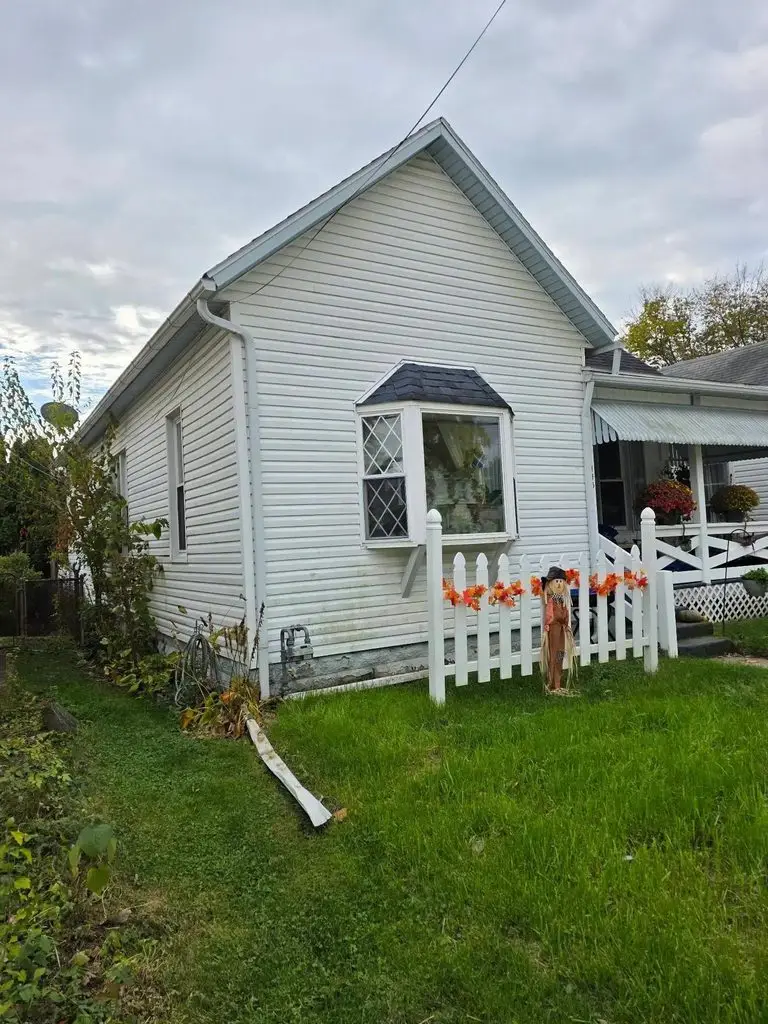
Before: decades of paint failure on the original wood siding.
Signs your siding is losing the freeze-thaw fight
Most homeowners here replace siding because water has found a way in, not because of how it looks.
- Cupped, waved, or buckled courses. On vinyl that usually means panels were fastened too tightly. On wood-based products it usually means moisture.
- Chalky, flaking, or peeling paint. The finish is the waterproofing on painted siding; once it fails, the substrate is bare.
- Soft trim or soft spots near grade, porch slabs, and steps. Splash-back and piled snow are the most common sources of chronic wetting.
- Stains or streaks below a roof-to-wall intersection. That pattern usually points at missing or undersized kickout flashing rather than at the siding.
If two or more show up on the same wall, a repair buys a season; a full siding replacement fixes the assembly.
The four materials homeowners actually choose between
Vinyl
Vinyl is the volume choice for good reasons: light, fast to install, no painting. The Polymeric Exterior Products Association (formerly the Vinyl Siding Institute) describes vinyl and related polymeric exteriors as requiring no repainting, resisting rot and insects, and cleaning with mild soap and water (PEPA — Low Maintenance).
PEPA also lists resistance to UV, rain, wind, and temperature change, resistance to cracking, bowing, and buckling, and moisture repellency as core attributes of the category (PEPA — Performance).
The catch is that vinyl is hung, not nailed tight- it must move as temperatures change, which is why PEPA maintains an installation manual and a certified-installer program (PEPA — Installation). Nailed too tightly, it buckles in July and stresses fasteners in January.
Fiber cement
Fiber cement is the heavyweight option, a cement-and-fiber board that holds paint well and does not feed insects. James Hardie is the largest name in the category in North America (Hardie® Plank Lap Siding).
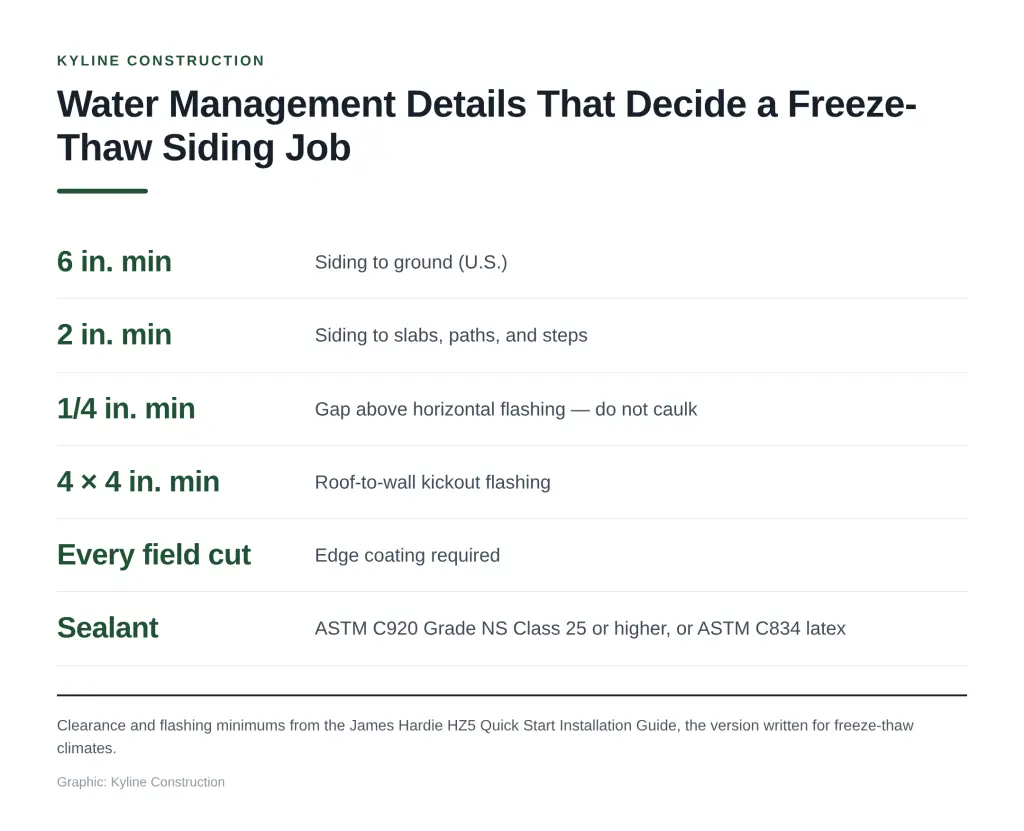
Its freeze-thaw performance depends on water management at the details. The HZ5 guide sets minimum clearances so the board never sits in standing water or snowmelt: at least 6 inches from siding to the ground in the U.S., a minimum 2 inches at slabs, paths, and steps, and a minimum 1/4-inch gap above horizontal flashing that is specifically not to be caulked, so any water that gets in can drain out (James Hardie HZ5 Quick Start Installation Guide).
The same guide requires kickout flashing of at least 4 inches by 4 inches where a roof meets a wall, edge coating on every field cut, keeping the product dry before installation, and sealants meeting ASTM C920 Grade NS Class 25 or higher (or ASTM C834 latex). Those are the steps a rushed job skips, and they decide whether the wall stays dry through a wet Ohio March.
Engineered wood
Engineered wood siding is a treated wood-strand product that ships primed or pre-finished. It cuts and nails much like wood and gives a deeper texture than most vinyl profiles. LP publishes product specifications by profile for its SmartSide® lap, panel, shake, and trim lines (LP SmartSide Product Specifications).
Because the substrate is wood-based, cut ends, seams, and broken paint film are where problems start. It rewards a crew that seals cuts, and it needs periodic repainting.
Metal
Steel and aluminum panels do not absorb water, rot, or feed insects, and modern profiles include board-and-batten and plank looks. Metal moves noticeably with temperature, so attachment and trim details must allow for that movement.
The tradeoffs are practical: metal dents from impact, cut edges and scratches need attention to stay corrosion-free, and finish quality varies between coating systems. It suits a homeowner who wants a hard, low-upkeep surface and a modern look.
Side-by-side comparison
The useful question is not which siding is strongest, but what happens to it when it gets wet and then freezes. In all four cases the weather barrier, flashings, and drainage path behind the siding do more work than the material itself.
| Material | Best for | Maintenance | Main tradeoff |
|---|---|---|---|
| Vinyl | Budget-conscious re-sides, fast schedules, low upkeep | Wash with mild soap and water; no painting | Must hang loose to move with temperature; buckles if over-nailed |
| Fiber cement | A painted, substantial look with insect and rot resistance | Repaint on a long cycle; keep caulk and flashing intact | Heavier, slower install; unforgiving of skipped clearance and flashing steps |
| Engineered wood | Deep wood texture, easier handling than solid wood | Repaint periodically; reseal cut or damaged finish | Wood-based substrate: cut ends and broken paint film admit moisture |
| Metal | Hard, non-absorbent surface and modern profiles | Rinse; touch up scratches and cut edges | Dents from impact; movement and finish details demand care |
What drives the price of a siding replacement
We do not publish a per-square-foot number, because two homes on the same street can price very differently. What moves a quote most:
- Material and profile. The four materials sit at different price points, and specialty profiles cost more than standard lap.
- Wall area and complexity. Gables, dormers, bays, multiple stories, and tight access all add labor.
- Trim scope. Window and door trim, soffit, fascia, and corners are often a large share of the work.
- What tear-off reveals. Damaged sheathing or a failed weather barrier must be corrected first.
- Flashing and drainage corrections. Adding missing kickout flashing is small money that prevents large money.
- Finish level. Pre-finished and factory-color products cost more up front but remove field painting.
How we approach a Central Ohio siding replacement
Our siding installation and replacement work starts with what is on the wall and what is behind it. Wall condition, existing flashing, exposure, and how the home sheds water narrow the material list faster than a color sample, and we select products and methods with Central Ohio’s moisture, wind, and temperature swings in mind (Kyline siding services).
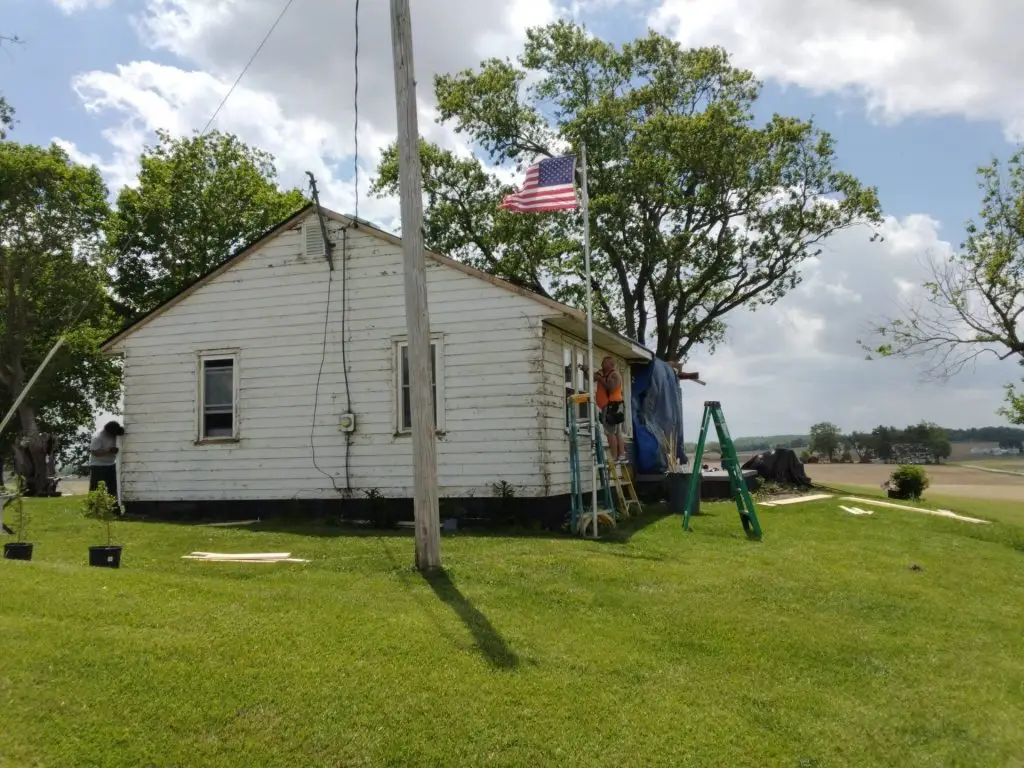
During: new courses going on over prepped walls.
Warranties: product versus workmanship
Two separate coverages apply, and they get conflated. The product warranty comes from the manufacturer; workmanship comes from the contractor. They are linked: the HZ5 guide states that failure to install and finish the product per applicable building codes and James Hardie’s published instructions may affect system performance and void the product warranty (James Hardie HZ5 Quick Start Installation Guide). Our siding work is installed to manufacturer specification and offered with manufacturer-backed warranties (Kyline siding services).
Questions worth asking any siding contractor
- What clearance are you leaving at grade and at the porch slab or steps?
- Where does kickout flashing go on this roof-to-wall intersection?
- Which joints get sealed, and which are left open to drain?
- How are field cuts finished on this product?
- Which manufacturer installation guide are you following for this climate?
If a bid cannot answer those, its number is not comparable to one that can.
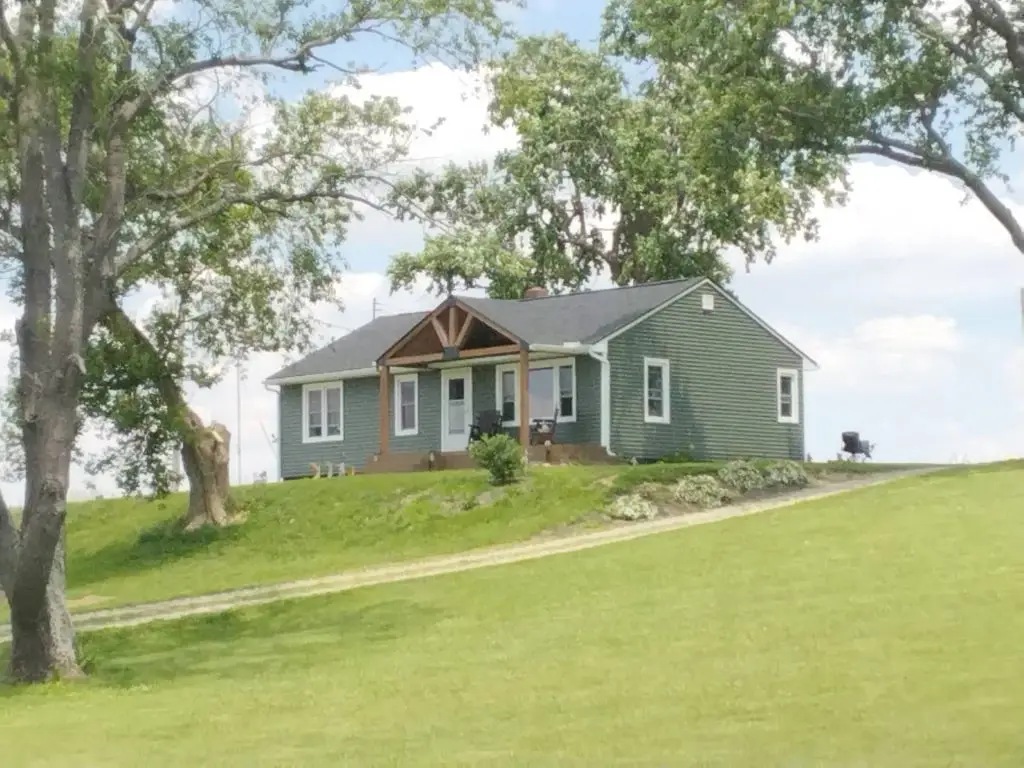
After: completed siding, trim, and a rebuilt covered porch.
Talk through your options with us
Kyline Construction provides siding installation and replacement across Central and Southern Ohio, including Lancaster, Circleville, Newark, Pickerington, Grove City, Delaware, and Columbus-area communities (service locations). Estimates are free with no obligation.
Call (740) 777-4374 or email info@kyline-consulting.com to schedule a look at your exterior, or start at kyline-consulting.com.