What Every Ohio Homeowner Should Know About Roofing Maintenance and Replacement
Roofing maintenance and replacement is one of the most important — and most overlooked — parts of owning a home. Here’s a quick answer to what most homeowners are trying to figure out:
Quick Answer: Repair or Replace?
| Situation | Recommended Action |
|---|---|
| Roof under 15 years old, isolated damage | Repair |
| Granule loss, curling shingles, minor leaks | Repair + inspection |
| Roof 18–25+ years old with recurring issues | Full replacement |
| Repair costs exceed 30% of replacement cost | Full replacement |
| Sagging deck, widespread rot, two layers already present | Full replacement (tear-off) |
What a basic maintenance program includes:
- Visual inspection of shingles, flashing, and pipe boots
- Gutter and downspout cleaning
- Debris removal from roof surface
- Inspection of attic for moisture or staining
- Minor repairs like nail pops and loose shingles
Most homeowners don’t think about their roof until something goes wrong inside the house — a water stain on the ceiling, a damp attic, or shingles showing up in the yard after a storm. By then, a small problem has usually become a bigger one.
The good news: most major roof failures are preventable. Regular care and early detection can add years to a roof’s life and keep replacement costs from creeping up on you.
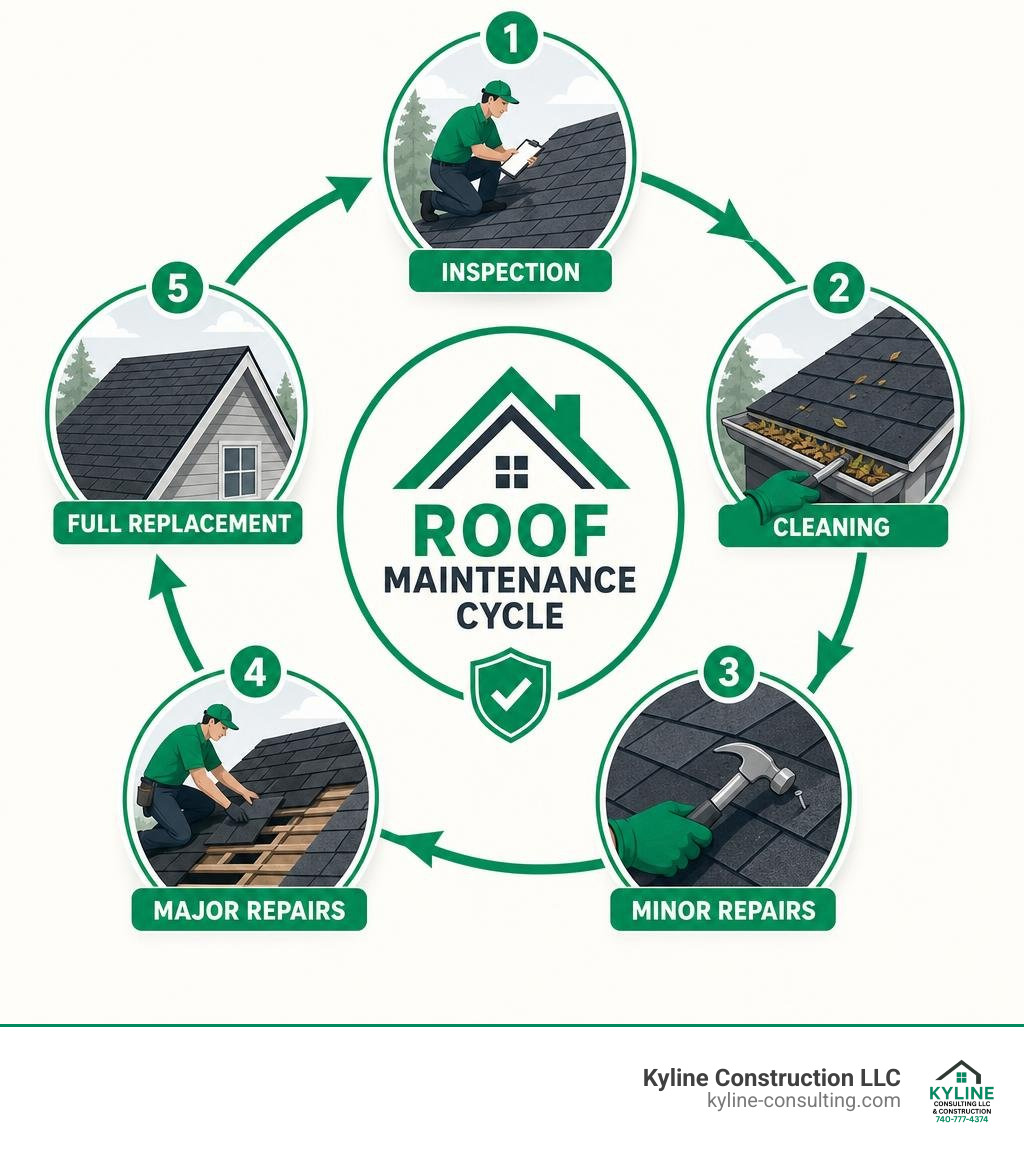
Essential Roofing Maintenance and Replacement terms:
Signs Your Roof Needs Attention: Repair vs. Full Replacement
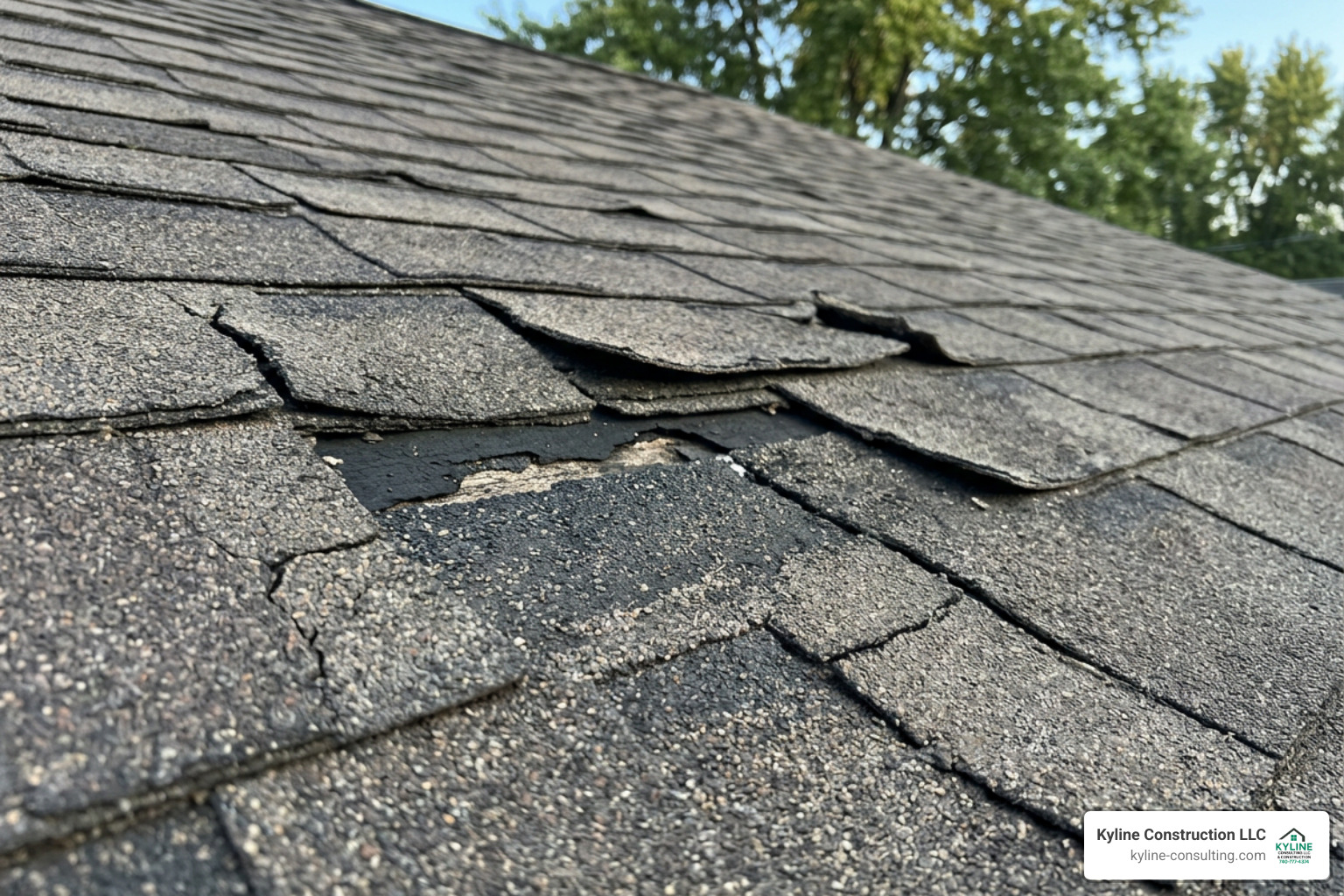
When we look at a roof in Central Ohio, the big question is always whether we can get away with a targeted repair or if it is time to bite the bullet on a full tear-off. Making the wrong call here can cost you thousands. If you patch a roof that is structurally failing, you are just throwing good money after bad. On the flip side, replacing a whole roof when a simple flashing repair would have done the job is an expense you don’t need.
As a general rule, if your roof is under 15 years old and the damage is confined to a specific area — say, a few shingles blew off during a spring storm — a repair is usually the smartest, most cost-effective path. However, if you find that you are constantly patching leaks, or if cumulative repair costs over a 12-month period exceed 30% of what a total replacement would cost, it is time to stop patching.
To help you assess your home, we use a strict checklist of critical inspection areas. You can do a preliminary check from the ground with a pair of binoculars:
- Shingle Condition: Look for bald spots where protective granules have washed away, as well as shingles that are cracked, buckling, or curling at the edges.
- Roofline Straightness: Step back and look at the ridge and valleys. Any sagging or dipping indicates structural deck rot underneath.
- Attic Inspection: Take a flashlight up into your attic on a rainy day. Look for active drips, damp insulation, mold growth, or daylight peeking through the roof deck boards.
- Gutter Debris: Check your gutters for a heavy accumulation of shingle granules. If your gutters look like they are filled with dark sand, your shingles are reaching the end of their functional life.
For a deeper dive into managing these issues safely, check out our guide on More info about residential roof repairs.
Spotting Early Warning Signs with Regular Roofing Maintenance and Replacement
The trick to avoiding a sudden emergency is catching the small stuff during routine roofing maintenance and replacement checks. Shingles do not just fail overnight; they give you warning signs.
In Central Ohio, our hot summers and freezing winters cause shingles to expand and contract. Over time, this causes shingles to curl at the edges or buckle in the middle. Once a shingle curls, wind can easily get underneath it and tear it away.
Another major culprit is the plumbing pipe boot. In my experience, old, cracked neoprene pipe boots are the single most common cause of residential roof leaks. While asphalt shingles can last 15 to 30 years, standard rubber pipe boots often crack and rot after just 8 to 10 years. If you don’t swap them out during regular maintenance, water will run straight down the pipe into your drywall.
Flashing around chimneys, dormers, and valleys is another high-risk area. If the sealant has cracked or the metal has pulled away from the wall, water will find its way in. If you have recently experienced high winds or hail, you can learn how to navigate the recovery process with our Guide to storm damage repair.
When a Full Tear-Off is the Only Safe Option
There are times when repairs simply won’t cut it, and a full tear-off is your only safe option. The most critical trigger for a full replacement is structural deck rot. If water has bypassed your shingles and underlayment for an extended period, the wood sheathing (plywood or OSB) underneath will soften and decay. Walking on a rotting deck is incredibly dangerous, and shingles cannot hold nails securely in soft wood.
Another major factor is the “two-layer rule.” While some building codes historically allowed contractors to lay a second layer of shingles directly over an existing roof (an overlay), nearly all modern model building codes limit residential roofs to a maximum of two layers. However, laying new shingles over old ones is a practice we strongly advise against. An overlay traps heat between the shingle layers, which accelerates the deterioration of the new shingles and often voids the manufacturer’s warranty.
Furthermore, you cannot inspect the wood deck during an overlay. If you have hidden rot, you are simply nailing new materials over a failing foundation. For detailed industry specifications on steep-slope roof systems, you can review the NRCA steep-slope guidelines. To understand the entire reroofing timeline and what to expect, read through the Complete 2026 roof replacement guide.
The Real Cost of Roofing Maintenance and Replacement in 2026
Let’s talk numbers. Planning a budget for roofing maintenance and replacement in 2026 requires understanding both local pricing and what actually goes into a professional estimate. In Central Ohio, pricing is influenced by your roof’s size, pitch (steepness), and the complexity of its design (gables, valleys, and dormers).
To give you a realistic idea of what to expect, here is a comparison of typical costs for repairs versus full replacements in our region:
| Service Type | Scope of Work | Typical Cost Range (2026) |
|---|---|---|
| Minor Repair | Replacing a few shingles, sealing a pipe boot, patching flashing | $350 – $900 |
| Major Repair | Fixing a valley leak, replacing a small section of rotted decking | $1,500 – $3,500 |
| Full Replacement (Asphalt) | Full tear-off, deck inspection, new underlayment, architectural shingles (2,000 sq ft) | $11,000 – $18,000 |
| Full Replacement (Metal) | Full tear-off, standing-seam metal roofing installation (2,000 sq ft) | $20,000 – $34,000 |
For a comprehensive breakdown of national averages and material-specific costs, you can consult the 2026 roof replacement price guide.
Why Proactive Roofing Maintenance and Replacement Saves Money
I always tell folks in Columbus and Circleville that the cheapest roof to install is rarely the cheapest roof to own. If you neglect your roof, a tiny leak can quietly ruin your attic insulation, rot your rafters, and destroy your interior plaster or drywall.
Proactive maintenance programs are incredibly affordable compared to major renovations. For example, a standard bi-annual maintenance service typically costs around $97 per year for two visual inspections and basic debris clearing. A quarterly service program runs about $194 per year for four inspections.
During these visits, a professional will clean out your gutters, remove accumulated leaves and branches from valleys, check your flashing sealants, and secure any loose shingles. Keeping your gutters clean is especially important; when gutters clog, water backs up under the lower edge of your roof, leading to rotted fascia boards and ice dams in the winter. If you live in the Franklin County area, you can find localized assistance through our team offering Roofing services in Grove City.
Material Lifespans and Climate Performance in Central Ohio
The weather in Central Ohio can be brutal on exterior materials. We get humid, scorching summers, heavy spring rains, and freezing winter snows.
- Asphalt Shingles: These remain the most popular choice for local homes, typically lasting between 15 and 30 years depending on the quality of the shingle and how well the attic is ventilated.
- Metal Roofing: If you are looking for a long-term solution, standing-seam metal roofs can easily last 40 to 60+ years, though they require a higher upfront investment.
- Vinyl Siding: When we look at the whole exterior envelope, protecting your home goes beyond the shingles. High-quality vinyl siding is our exclusive recommendation for Central Ohio homes due to its exceptional durability, low maintenance, and resistance to extreme temperature swings. Installing vinyl siding typically costs between $3.50 and $8.50 per square foot, with a complete siding replacement or repair project running between $11,000 and $17,000. Unlike other heavy materials, vinyl siding does not require painted touch-ups, will not rot, and provides a clean, modern aesthetic that lasts for decades.
- Windows: To keep your home energy-efficient, pairing your exterior upgrades with professional window replacements (typically costing $400 to $900 per window) prevents drafts and moisture intrusion.
If you are looking to update your home’s exterior in the northern Columbus suburbs, you can connect with us for specialized Roofing services in New Albany.
Choosing a Real Contractor vs. a Paper Contractor
This is where I need to give you some straight talk. The roofing and siding industry is flooded with what we call “paper contractors,” and understanding the massive difference between them and a real contractor can save you from a home improvement nightmare.
A paper contractor is essentially a sales broker. They sit in a nice office with a laptop, a fancy website, and a smooth sales pitch. They don’t own trucks, they don’t own tools, and they don’t know how to install a shingle or a piece of vinyl siding themselves. When you sign a contract with them, they immediately turn around and hire the cheapest, lowest-bidding subcontractor they can find to do the actual work. This creates a dangerous gap in quality control. Because the paper contractor doesn’t understand the trade, they cannot properly supervise the crew. If a leak occurs or the vinyl siding is buckled due to improper nailing, the paper contractor will blame the subcontractor, and the subcontractor will blame the paper contractor, leaving you caught in the middle with zero accountability and a voided warranty.
A real contractor, on the other hand, is a tradesperson first. They have spent years on roofs and scaffolding. They understand the physics of water shedding, the mechanics of ventilation, and the structural limits of a rafter. They employ skilled, trusted crews and are physically present on-site to oversee the craftsmanship. They know exactly how a roof should be nailed and how vinyl siding must be hung to allow for natural expansion and contraction.
The biggest test of a real contractor is this: If the subcontractors quit or walk off the job, does the contractor have the actual physical skills to pick up the tools, get up on the roof, and finish the job personally? A paper contractor will leave your home exposed to the elements while they scramble to find another cheap crew. A real contractor will grab their tool belt, step onto the roof, and get the job done right.
At Kyline Construction LLC, we believe in hands-on expertise. We don’t hide behind paperwork. We manage our projects directly, ensuring that every nail is driven correctly and every safety standard is met. This is incredibly important because construction is a high-risk trade; falls from height make up a huge portion of annual construction safety incidents. Working with a real contractor who prioritizes on-site safety and proper training protects both the workers and you as the homeowner.
For a step-by-step guide on how to vet local professionals and protect your investment, read our Checklist for choosing high-quality roofing services. You can also check out local reviews and contractor directories, such as the Top 10 Best Roofing Near Columbus, Ohio – With Real Reviews – Yelp or the Top 10 Best Roofers in Circleville, OH | Angi to see how local businesses compare.
Frequently Asked Questions about Roofing Maintenance and Replacement
Navigating exterior home improvements can bring up a lot of questions. Here are the answers to the most common concerns we hear from homeowners in Central Ohio.
How often should I schedule a professional roof inspection?
We recommend scheduling a professional roof inspection at least once a year, with twice a year (spring and fall) being the ideal standard.
A spring inspection ensures your roof didn’t suffer damage from heavy winter snows, ice dams, or freezing temperatures. A fall inspection prepares your roof for the upcoming winter by ensuring your gutters are clear, flashing is sealed, and no shingles are loose or missing. Additionally, you should always schedule an inspection immediately following any major storm event involving high winds or hail.
Catching a small issue early can save you thousands of dollars down the road. If you are located in Pickaway County, you can learn more about local services by visiting our page on Roofing services in Circleville.
Will homeowners insurance cover my roof replacement?
Homeowners insurance is designed to cover sudden, accidental damage from covered perils—such as severe windstorms, hail, fallen trees, or lightning strikes.
Insurance will not cover a roof replacement if the damage is due to gradual wear and tear, neglect, or old age. For example, if your 25-year-old roof simply starts leaking because the shingles have worn out, that is considered standard homeowner maintenance and will not be covered.
When you file a storm-related claim, your insurance company will send an adjuster to inspect the damage. If approved, they will pay the replacement cost minus your deductible. To understand how roofing and siding projects fit into your overall home budget, check out our guide on The total price tag for a new roof and siding.
What is the difference between a real contractor and a paper contractor?
The fundamental difference lies in hands-on capability, technical expertise, and ultimate accountability.
A paper contractor acts strictly as a middleman or sales broker. They focus on marketing and sales volume rather than craftsmanship. If a subcontractor walks off your job, cuts corners, or does poor quality work, a paper contractor lacks the technical knowledge to even identify the mistake, let alone fix it themselves. They are entirely dependent on finding another subcontractor to solve the problem, which often leads to lengthy delays and finger-pointing.
A real contractor has the tools, the trucks, and the hard-earned physical skills to do the work. They understand the actual mechanics of roofing and vinyl siding installation. If a crew gets backed up or a subcontractor quits, a real contractor can step in, grab a hammer or a circular saw, and personally complete the project to ensure your home isn’t left exposed to the Ohio weather. Always ask a contractor about their personal experience in the field and whether they can physically perform the work before signing on the dotted line.
Conclusion
Your roof and siding are your home’s first line of defense against the elements. Taking a proactive approach to roofing maintenance and replacement is the single best way to protect your family, preserve your home’s structural integrity, and keep long-term costs down.
At Kyline Construction LLC, we transform Ohio homes with precision craftsmanship in siding, windows, and decks. With over 40 years of combined experience, our professionals ensure quality, safety, and honest communication on every single job. We proudly serve homeowners across Central Ohio, including Circleville and Columbus, providing beautiful, durable vinyl siding and exterior solutions.
If you suspect your roof has storm damage, or if you simply want an honest, professional opinion on its current condition, we are here to help. Contact us today to get a free, no-obligation estimate from a team of real contractors who know how to get the job done right.