Roof Inspection Checklist for Central Ohio Homes Before Winter
A roof inspection checklist is more important in September than it is in January, because once the roof is wet or icy, every item on it gets harder to fix. Central Ohio gives you a short, mild window between the last summer storms and the first hard freeze, and that’s when small problems cost small money.
Most winter leaks start long before winter actually begins. A lifted shingle, a cracked pipe boot, or a clogged downspout sits there all summer before it meets freezing water. Below is a shingle roof inspection checklist you can work through this month, plus what the weather will do to the roof and where a homeowner check ends and a contractor call begins.

What Central Ohio winter actually does to a roof
The damage isn’t really related to the cold temperatures. It’s about how many times the water freezes, thaws, and refreezes inside a crack or under a shingle edge. The 1991-2020 climate normals for Columbus (John Glenn International, the closest long-record station to most of our service area) shows how the season builds. November brings the first regular sub-freezing nights. From December through February, the normal low sits below 32°F while the normal high climbs above it nearly every day.
| Month | Normal high (°F) | Normal low (°F) | Normal snow (in.) | Days with normal low ≤32°F and high >32°F |
|---|---|---|---|---|
| October | 65.5 | 44.9 | 0.2 | 0 |
| November | 52.4 | 35.0 | 1.2 | 6 |
| December | 41.5 | 27.5 | 5.1 | 31 |
| January | 37.2 | 22.0 | 9.5 | 31 |
| February | 40.8 | 24.2 | 7.6 | 28 |
| March | 51.2 | 32.1 | 4.1 | 17 |
Source: daily 1991-2020 normals from the National Weather Service Wilmington, Ohio office (CMH climate normals), summed and averaged by month. The last column counts days when the normal low is at or below freezing and the normal high is above it. That’s the freeze-thaw setup.
That’s about 113 days a year when an average day crosses the freezing line, before any cold snap or thaw. Water that gets under a shingle in December has a hundred chances to expand and pry the opening wider by March, plus roughly 27 inches of normal snow to feed it.
Your fall roof inspection checklist, item by item
Run this residential roof inspection checklist from the ground with binoculars, from a ladder at the eave, and from inside your attic. Climbing onto the roof isn’t worth the fall risk, and walking on brittle shingles can cause the same type of damage you went up to find in the first place.
From the ground, all four sides:
- Shingles that are lifted, curled, cupped, or missing, especially along the ridge and the windward slope.
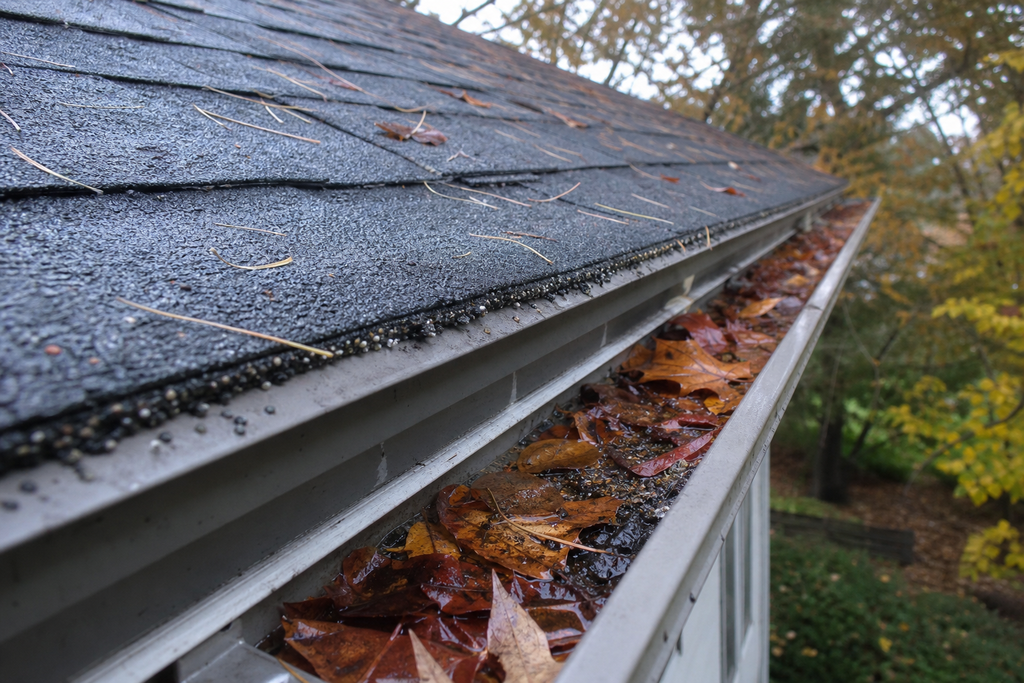
- Dark patches, or granules collecting in the gutters and at downspout outlets, which is shingle surfacing washing away.
- Sagging rooflines or a dip between rafters, which points at roof sheathing or framing trouble rather than a surface problem.
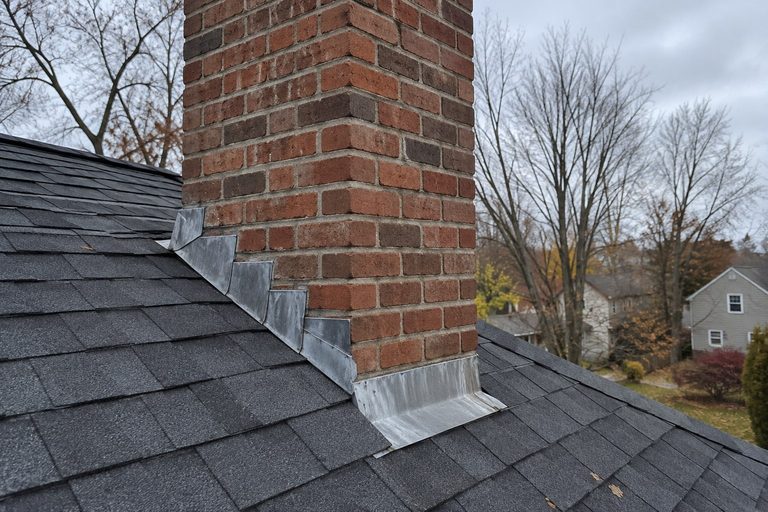
- Rusted or lifting metal at valleys, chimney flashing, and roof-to-wall joints.
- Tree limbs within about ten feet of the roof surface. Ice loading on trees has the potential to drop limbs here every winter. A quick fall pruning costs far less than a puncture repair would.
At the eave and gutter line:
- Gutters holding leaves, grit, or standing water. Water that can’t drain will freeze.
- Downspouts discharging next to the foundation.
- Soft, stained, or peeling fascia and soffit, a sign water has run behind the gutter for a while.
- Soffit vents blocked by insulation, paint, or nests.
Inside the attic, with a flashlight on a bright day:
- Daylight showing through the roof sheathing at nail holes, vents, or the ridge.
- Dark staining on rafters and sheathing, and any spot that feels damp or spongy.
- Matted or wet insulation, especially near the eaves.
- Frost under the deck on a cold morning, which means warm indoor air is condensing there.
At the penetrations, from the ladder or by binoculars:
- Cracked rubber pipe boots, a leading leak source on any roof over ten years old.
- Failed sealant at chimney counterflashing, skylight edges, and satellite mounts.
If you’re already weighing when to replace a roof in Central Ohio, treat this as the evidence step. Photograph what you find, date the photos, and keep them together.

Ice dams are an attic problem, not a shingle problem
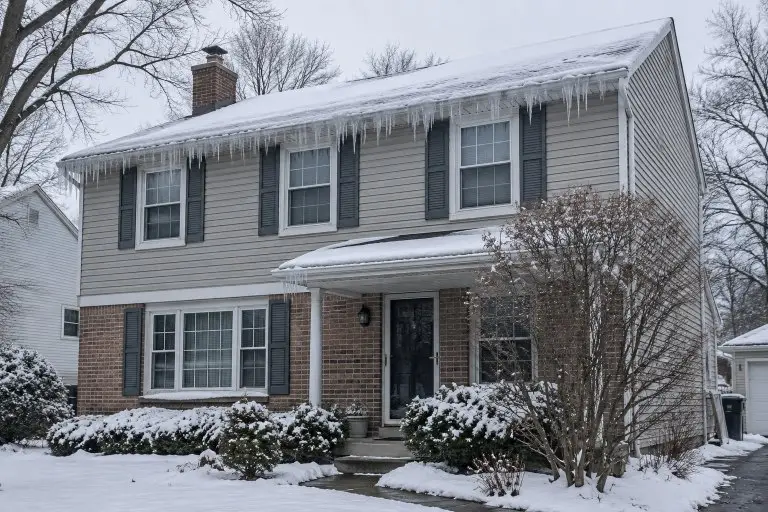
When a roof leaks in January, most homeowners blame the shingles. An ice dam forms when the upper roof surface stays above 32°F while the lower part of the roof surface stays below freezing. Melting snow runs down, refreezes at the cold eave, and backs up behind the ridge of ice until it finds a crack and flows into the attic (University of Minnesota Extension). The heat warming that upper roof is coming out of your house.
That’s why the attic items above carry weight in the fall. Sealing air leaks at the ceiling, and keeping the attic cold is the real fix. ENERGY STAR makes the same point: natural airflow through the attic keeps it cold and cuts the chance of ice damming at the eaves (ENERGY STAR). The Insurance Institute for Business & Home Safety has studied ice dams alongside code requirements for ice barrier membrane at the eaves, and its research treats water getting in from ice as a damage amplifier (IBHS).
Ask any contractor who inspects your roof whether intake and exhaust ventilation are balanced. The Asphalt Roofing Manufacturers Association gives two common design ratios: one square foot of net free ventilation area per 150 square feet of attic floor, or one per 300 square feet where conditions allow. Either way, the airflow should split evenly between intake at the eaves and exhaust at the ridge (ARMA). Ridge vents with no working soffit intake show up often on older homes, and they don’t move much air.
When a checklist item becomes a repair call
Anything involving flashing, roof sheathing, structure, or an active leak requires a contractor. Fall schedules will fill up fast. Granule loss on a roof older than twenty years usually means excess wear, so plan for the work ahead of time rather than treating it as an emergency. Missing shingles after a wind event, a soft spot in the deck, staining that spreads between checks, or daylight through the sheathing all justify a professional look before the first freeze.
Document storm damage separately from wear, since insurers treat sudden accidental damage differently from maintenance. Photograph it with the date and note the storm. If water is coming in right now, temporary protection comes first, and Kyline’s emergency repair services cover that window of time between the leak first showing up and the permanent fix being finished.
For everything else, a professional roofing inspection in September or October buys you time to schedule work while the weather still cooperates. Asphalt shingles seal faster in warm conditions, so an October repair sets up differently than the same repair in January.
Working your roof inspection checklist into a yearly habit
An annual roof inspection checklist works best run twice: once in spring after hail and wind season, once in fall before the freeze-thaw stretch from December through March. Write down what you find each time, because the comparison shows the wear that actually occurs over a season. A stain that looks identical two inspections running is old, while a stain that grew is a live leak.
Keep the photos and the dates, and your roof inspection checklist becomes a record of how the roof is actually aging. That’s how you protect the house, keep repair bills small, and stop guessing about the roof over your head. Ready for the parts you shouldn’t check yourself? Book a fall roof inspection with Kyline Consulting at 740-777-4374 before the first freeze.
Frequently Asked Questions
How often should I inspect my roof in Ohio?
Twice a year, in spring and fall, plus after any hail or high-wind storm. The fall check matters most here because December through March average sub-freezing nights with above-freezing days, and that freeze-thaw cycle works on any opening already in the roof.
Can I inspect my roof myself?
You can do most of it from the ground with binoculars, from a ladder at the eave, and from inside your attic. Walking on the roof is a fall risk and can damage aging or cold shingles, so leave the on-roof portion to a contractor.
What are the most common things found on a fall roof inspection?
Clogged gutters, cracked pipe boots, failed sealant at chimney and skylight flashing, wind-lifted shingles, blocked soffit vents, and insulation packed against the eaves.
Why does my roof leak only in winter?
That pattern usually points to ice dams rather than a shingle failure. Heat escaping into the attic melts snow on the upper roof, the water refreezes at the colder eave, and it backs up under the roof covering until it finds a way in.
Does attic insulation affect my roof?
Yes. Insulation and air sealing keep heat from reaching the roof deck, and ventilation keeps the attic cold. Insulation stuffed into the eaves blocks intake airflow, which raises deck temperature and moisture and makes ice dams more likely.
Should I get a roof inspection before winter if my roof is new?
A quick check is still worth it. Sealant, flashing, and pipe boots are the usual failure points, and confirming clear gutters and a dry attic takes very little time on a newer roof.
Protect the house before the first freeze: call Kyline Consulting at 740-777-4374 to schedule your fall roof inspection.