Why Deck Post Replacement Is One of the Most Critical Repairs You Can Make
Deck post replacement is one of those repairs that can’t wait. Here’s the short answer if you need it fast:
Quick Answer: When Do You Need to Replace a Deck Post?
| Situation | Action |
|---|---|
| Soft wood sinks more than 1/4 inch with a screwdriver | Replace immediately |
| Rot covers more than 25% of the post’s cross-section | Replace immediately |
| Post is visibly leaning or sinking | Replace immediately |
| Small, localized soft spot, no structural movement | Epoxy repair may work |
| Surface discoloration or minor cracking only | Seal and monitor |
What it typically costs:
- DIY replacement: $100 – $250 per post
- Professional replacement: $400 – $900 per post
- Epoxy repair (DIY): $75 – $200
Think of your deck posts as the legs on a table. One bad leg and the whole thing wobbles. Two bad legs and you have a collapse waiting to happen.
Here in Central Ohio, the freeze-thaw cycle is brutal on wood that sits close to the ground. Moisture wicks up through concrete footings, soaks into the end grain of the post, and rot sets in — often before you ever notice it from the surface. By the time a post looks bad, it may already be structurally compromised.
This isn’t a cosmetic problem. A failed deck post puts real load onto adjacent posts and framing. If your deck supports a hot tub, a crowd of people, or a second story, the stakes are even higher.
When to Choose Deck Post Replacement vs. Repair
Determining whether to repair a damaged post or perform a full deck post replacement comes down to structural integrity. If you catch rot early, you can sometimes get away with a localized repair. If you wait too long, the decision is made for you.
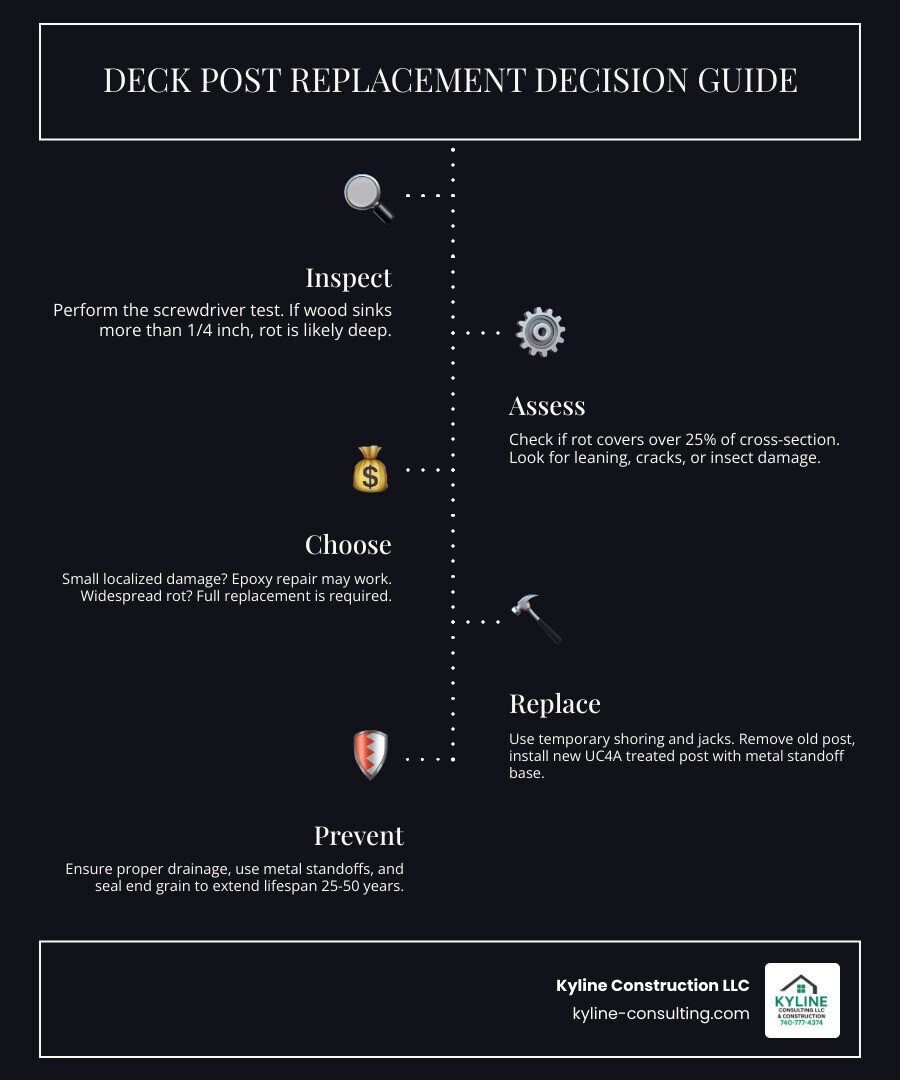
To find out where your deck stands, you need to perform the “screwdriver test.” Take a flat-head screwdriver or a sharp awl and press it firmly into the wood near the base of the post where it meets the ground or concrete footing. If the metal tool sinks more than 1/4 inch into the wood with ease, you have active rot.
As a general rule, if wood rot has compromised more than 25% of the post’s cross-section, a repair is no longer safe. The post has lost its load-bearing capacity and must be replaced.
Moisture wicking is the primary culprit here. Concrete is highly porous; it acts like a sponge, pulling moisture out of the surrounding soil and feeding it directly into the end grain of the wood post. Over time, this constant dampness invites fungal decay that eats the wood fibers from the inside out.
To understand the financial trade-offs of ignoring these signs, check out our breakdown on More info about deck rot costs. For help diagnosing exactly what is going wrong beneath your deck boards, you can read How to identify structural deck post issues.
Here is a quick look at how the options compare:
| Option | Average DIY Cost | Average Pro Cost | Lifespan | Best For |
|---|---|---|---|---|
| Epoxy Repair | $75 – $200 | $300 – $500 | 3 – 5 years | Minor, localized surface rot |
| Full PT Wood Replacement | $100 – $250 | $400 – $800 | 10 – 15 years | Deep rot, structural instability |
| Full Composite Replacement | $300 – $600 | $1,000 – $2,500+ | 25 – 50 years | Long-term durability and low maintenance |
Identifying Structural Rot and Damage
When inspecting your deck, look for these key warning signs of severe structural distress:
- Soft Wood: If the base of your post feels spongy, looks dark and waterlogged, or crumbles under light pressure, fungal decay has taken hold.
- Insect Infestation: Wood-boring insects like termites and carpenter ants love damp, rotting wood. Look for small exit holes, fine sawdust (frass), or active tunneling.
- Structural Cracks: While minor surface checking is normal as wood dries, deep structural splits that run completely through the post compromise its capacity to hold weight.
- Leaning Posts: If a post is no longer perfectly vertical (plumb), the footing may have settled, washed out, or shifted during a winter freeze.
Cost Comparison: Repair vs. Replacement
A quick surface fix using a two-part epoxy wood filler might keep a DIY budget under $100, but it only buys you a few years if the rot is deep. Hiring out an epoxy repair can run $300 to $500, which is often very close to the cost of a permanent, professional deck post replacement.
When you invest in a full replacement, you are paying for long-term safety and value. Upgrading to ground-contact rated lumber or high-end composite posts ensures you won’t have to worry about structural failures for decades. While professional replacement ranges from $400 to $900 per post, it guarantees the work is done to local building codes, protecting your home’s resale value and your family’s safety.
Step-by-Step Guide to Swapping Out Support Columns
Replacing a load-bearing support column is a serious undertaking. You are temporarily transferring thousands of pounds of deck weight off the old post and onto temporary shoring. Safety must be your absolute number-one priority.
To safely lift and support the deck frame, we use heavy-duty bottle jacks or hydraulic post jacks alongside temporary 4×4 or 6×6 wood studs. We build a temporary support beam by fastening two 2×6 boards together, propping them directly under the joists near the post we want to replace.
When choosing materials for your new post, always select UC4A ground-contact rated pressure-treated lumber. This wood contains twice the chemical preservative levels of standard above-ground lumber, offering superior resistance to fungal decay and insect attacks. If you are upgrading to composite posts for a 25-50 year lifespan, you must use circular saws to make clean, straight cuts through these dense materials.
For a deeper dive into the physics of shoring up a heavy deck, read the Step-by-step guide to shoring up a deck.
Preparing for Your Deck Post Replacement
Before you cut any wood, you must gather the proper safety gear and tools:
- PPE: Safety glasses, heavy work gloves, a dust mask (especially when cutting pressure-treated wood or composite), and steel-toe boots.
- Tool Checklist: Reciprocating saw, circular saw, hammer drill, impact wrench, post level, chalk line, temporary jacks, and galvanized fasteners.
- Call 811: In Ohio, you must call 811 at least 48 hours before doing any digging to have underground utility lines marked.
- Frost Line Depth: In Columbus and Circleville, the local building codes require concrete footings to extend below the frost line — typically 32 to 36 inches deep — to prevent winter frost heave from shifting your deck.
For more information on navigating local codes, check out More info about deck building regulations.
Executing the Deck Post Replacement Safely
Once your temporary shoring is securely in place and taking the weight of the deck (the structure should not drop more than 1/16 of an inch during this process), you can begin:
- Cut and Remove: Use a reciprocating saw with a metal-cutting blade to cut through the old fasteners connecting the post to the beam and the footing. Carefully pull the old post out.
- Prep the Concrete Pier: Clean the top of the existing concrete footing. If there is an old metal pin protruding, cut it flush with the concrete using your reciprocating saw.
- Install the Metal Standoff Base: Drill a 1/2-inch diameter, 3-inch deep hole into the concrete pier using a hammer drill. Secure a heavy-duty, galvanized metal standoff post base to the concrete using an expansion anchor, tightening it down with an impact wrench. This base lifts the bottom of the wood post 1 inch off the concrete, preventing moisture wicking.
- Treat the New Post: Cut your new UC4A pressure-treated post to size. Generously coat the cut end grain with a copper naphthenate wood preservative, letting it soak in for 10 to 15 minutes before installation.
- Set and Plumb: Drop the new post into the metal standoff bracket. Use a 4-foot level to verify the post is perfectly plumb on all four sides.
- Secure the Connections: Fasten the post to the standoff base using structural screws or galvanized hanger nails. Secure the top of the post to the deck beam using approved metal connector plates. Once everything is bolted tight, you can slowly lower your jacks and remove the temporary shoring.
For a detailed look at how to pull this off without disturbing the rest of your outdoor living space, read How to replace a rotted post without tearing down the deck.
Preventing Future Rot and Extending Post Lifespan
Once your new post is installed, you want to make sure you never have to do this job again. The key to wood longevity is moisture management.
Using a metal standoff post base is the single most effective way to prevent future rot. By elevating the wood post 1 inch above the concrete pier, you break the path of capillary action that allows water to travel from the damp concrete into the wood fibers.
Additionally, pay close attention to the surrounding drainage grading. The soil around your deck footings should slope away from the posts to prevent rainwater from pooling at the base. Keep mulch, soil, and heavy vegetation at least 6 inches away from the wood to maximize airflow and allow the post to dry quickly after a storm.
If your deck connects directly to your home, proper flashing is critical. Water running down your house walls can seep behind the ledger board, rotting both the deck structure and your home’s rim joist. When we install decks over vinyl siding in Columbus or Circleville, we use specialized flashing techniques to shed water safely away from the wood. You can read more about this in our guide on More info about vinyl siding ledger flashing.
If you want an incredibly durable, low-maintenance alternative, consider upgrading to composite posts. While they cost more upfront, composite posts boast a 25-50 year lifespan and are completely impervious to rot and insect damage. For tips on managing composite materials, take a look at More info about composite deck repair.
Hiring a Real Contractor in Central Ohio
When it comes to structural home repairs like deck post replacement, understanding the massive, high-stakes difference between “paper contractors” and “real contractors” is absolutely critical for your safety and your wallet.
A paper contractor is nothing more than a middleman with a slick website and a sales pitch. They don’t own tools, they don’t know how to calculate structural loads, and they don’t step foot on your job site to do the actual work. Instead, they sit in an office, pocket a massive markup, and sub out 100% of the labor to the cheapest, lowest-bidding crew they can find that week. If a subcontractor walks off, makes a dangerous structural mistake, or cuts corners on your deck’s load-bearing posts, a paper contractor is completely helpless—they lack the hands-on skills, knowledge, and licensing to step in and fix the problem themselves. You are left holding the bag for a failing structure.
At Kyline Construction LLC, we are real contractors. With over 40 years of hands-on building experience in our team, we are true craftsmen who understand the physics of structural loads and proper framing. We don’t hide behind desks. If a crew member gets sick or a subcontractor falls short, I personally roll up my sleeves, grab my tool belt, and execute the structural work myself to guarantee your home is safe and built to code. We handle everything from historic home window replacements to vinyl siding installations and heavy-duty deck framing with our own hands. When you hire a real contractor, you get accountability, decades of field-tested expertise, and the peace of mind that the person running the company is actually capable of building your deck.
Working with a local expert who understands Central Ohio’s specific soil conditions, frost lines, and municipal building codes is invaluable. If you want to make sure your deck repair is handled safely, look at our advice on More info about finding top-rated deck repair near you.
Frequently Asked Questions
Do I need a permit to replace a deck post?
In most Central Ohio municipalities, including Columbus and Circleville, a permit is required for any structural alteration. Because deck posts are critical load-bearing components that prevent structural collapse, replacing them usually requires a minor structural repair permit to ensure the work complies with local safety codes.
Can I reuse my old concrete footings?
You can reuse your old concrete footings only if they are structurally sound, free of major cracks, and extend below the local frost line (32 to 36 inches). During our inspection, we check the concrete’s integrity. If it passes, we clean the surface, cut old pins flush, apply a concrete bonding agent if any leveling adjustments are needed, and secure a new metal standoff base using heavy-duty expansion anchors.
How long do pressure-treated vs. composite posts last?
Standard pressure-treated wood posts typically last 10 to 15 years, depending on moisture exposure and maintenance. High-quality composite posts can easily last 25 to 50 years because they do not absorb moisture, warp, split, or rot.
Conclusion
At the end of the day, your deck is where you host family barbecues, watch your kids play, and unwind after a long week. Don’t let a rotting support post turn your favorite outdoor space into a safety hazard.
If your deck is showing signs of wobble, soft wood, or settling, let our team of real, hands-on professionals take a look. At Kyline Construction LLC, we pride ourselves on precision craftsmanship and honest communication. We provide free, no-obligation estimates to homeowners across Circleville, Columbus, and the surrounding Central Ohio communities.
Ready to secure your deck for the future? Schedule a professional deck consultation with Kyline Construction LLC today, and let’s make sure your outdoor living space is built to last.