Why Energy Efficient Windows Matter for Central Ohio Homeowners
Energy efficient windows are windows designed to reduce heat loss and heat gain in your home — lowering your utility bills and improving year-round comfort.
Here’s a quick look at what makes them worth considering:
| Feature | What It Means for You |
|---|---|
| Double or triple panes | Extra insulation layers reduce heat loss |
| Low-E glass coating | Blocks UV and infrared heat without blocking light |
| Argon gas fill | Denser than air, slows heat transfer between panes |
| ENERGY STAR certified | Independently verified to meet efficiency standards |
| NFRC label | Shows U-factor, SHGC, and other performance ratings |
The numbers back it up. According to the U.S. Department of Energy, 25% to 30% of residential heating and cooling energy is lost through windows. In a typical Ohio home, that’s a significant chunk of your monthly utility bill going straight out the glass.
Replacing single-pane windows with ENERGY STAR certified windows can cut energy bills by up to 13%, saving homeowners roughly $101 to $583 per year depending on their home and climate. Even upgrading from older double-pane windows can save $27 to $197 annually.
And it’s not just about savings. Drafty windows make rooms uncomfortable in January and stuffy in July — a problem Shawn sees constantly in older Central Ohio homes.
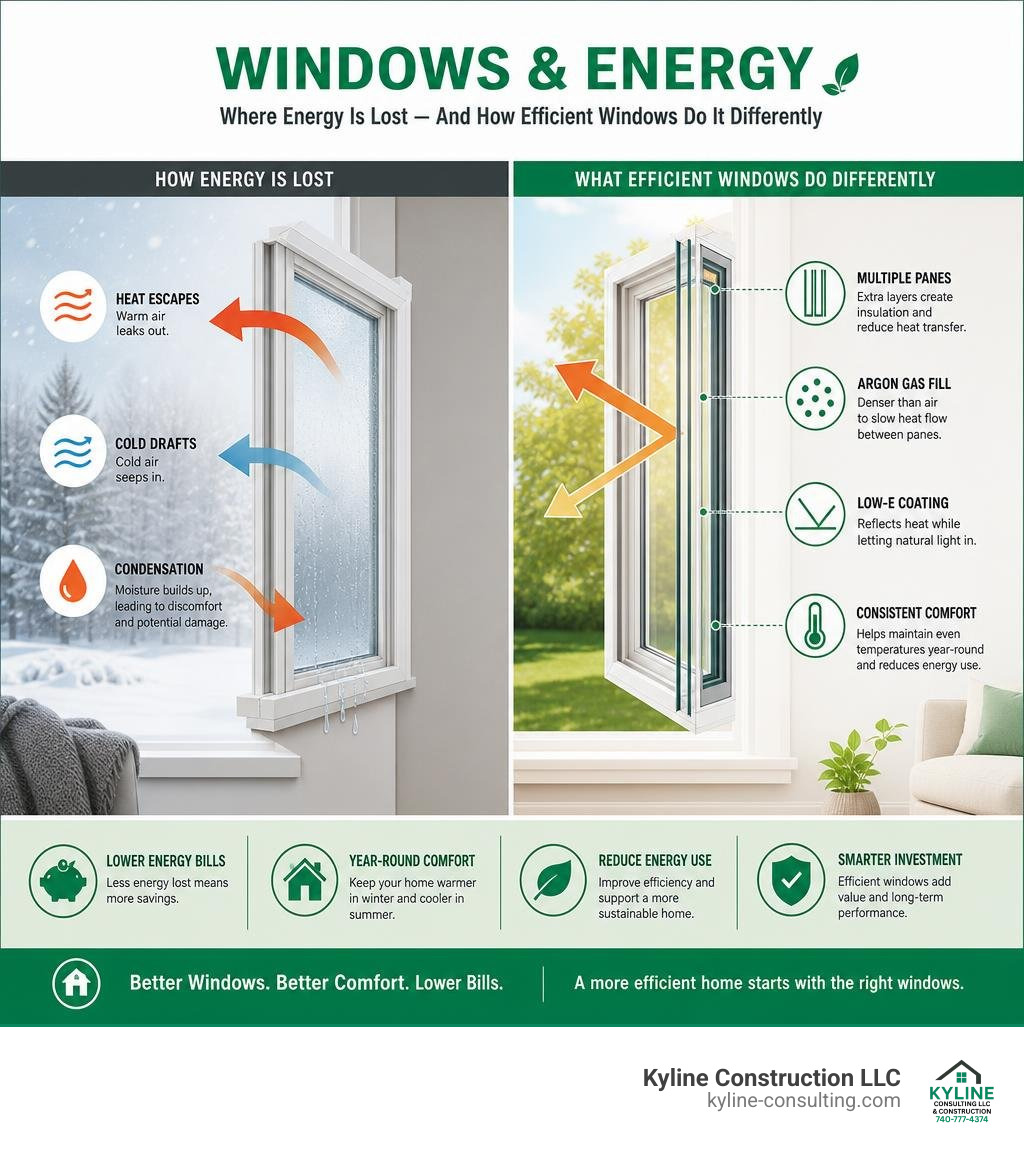
Energy efficient windows definitions:
What Are Energy Efficient Windows and How Do They Work?
When we talk about energy efficiency in residential construction, we are ultimately talking about controlling heat transfer. In the dead of winter in Columbus or Circleville, heat wants to escape from your warm living room to the freezing outdoors. In the humid dog days of July, that outdoor heat is trying its hardest to force its way inside. Standard, older single-pane windows do almost nothing to stop this movement. They act like a thermal highway, allowing conduction to rapidly drain your heated or cooled air.
Modern high-performance windows work by blocking this heat transfer through a combination of physical barriers and advanced material engineering. Instead of a single piece of glass, these windows use multiple layers of glass separated by sealed air spaces. This design creates a highly effective thermal break.
To understand the full scope of how these systems protect your home, you can read more in our detailed guide, Beyond the Pane: Everything You Need to Know About Energy Efficient Windows.
The magic lies in how those spaces between the glass are handled. While some budget options use dry air, high-quality models utilize dense, inert gases like argon or krypton to fill the gaps. Because these gases are much heavier and denser than regular air, they drastically slow down convective currents inside the window unit, keeping the interior pane closer to your home’s indoor temperature.
Key Features of Modern Energy Efficient Windows
To truly understand what you are buying, we need to break down the anatomical components of an energy-efficient window. It is not just a frame with some glass slapped inside; it is a highly engineered system.
- Low-E (Low-Emissivity) Glass: This is a microscopically thin, non-toxic metal oxide coating applied directly to the glass surface. Think of it as a two-way mirror for heat. It allows visible light to pass through so your home stays bright, but it reflects infrared and ultraviolet light. In the winter, it bounces your home’s radiant heat back inside. In the summer, it reflects solar heat back out.
- Multiple Glass Panes: Double-pane windows are the standard today, but triple-pane windows offer the ultimate thermal barrier. Adding that third pane provides an extra insulating chamber and a second surface for Low-E coatings, which is highly beneficial for our freezing Central Ohio winters.
- Gas Fills (Argon vs. Krypton): Argon gas is the most popular choice because it offers excellent thermal performance at a very reasonable price point. Krypton is even denser and performs exceptionally well in narrower gaps (like those in triple-pane units), though it does come with a higher price tag.
- Warm-Edge Spacers: Older windows used highly conductive metal spacers to hold the glass panes apart, which caused cold spots, drafty edges, and heavy condensation. Modern units use non-metal, structural foam spacers (like silicon desiccant systems) that eliminate metal-to-glass contact, maintaining a warm edge and preventing seal failure.
To see how these elements combine to maximize your home’s comfort, check out our guide on Double the Panes Double the Gains With Low E Windows.
Frame Materials and Vinyl Options
While the glass makes up roughly 80% of a window’s surface area, the frame material plays a massive role in both the structural integrity and thermal performance of the unit. Common options include wood, fiberglass, composite, and vinyl.
While wood frames look beautiful, they require relentless maintenance and are highly susceptible to rotting and warping in Ohio’s humid summers and wet winters. Fiberglass is incredibly strong but carries a premium price tag that can easily blow a budget out of the water.
For the vast majority of homeowners in Columbus and Circleville, high-quality vinyl frames represent the absolute sweet spot of durability, low maintenance, and thermal performance. Vinyl does not conduct heat, meaning it forms an excellent thermal barrier. Premium vinyl windows are engineered with multi-chambered profiles. These internal chambers trap air to add extra insulation, and some manufacturers even fill these chambers with dense polyurethane foam to boost performance further.
To learn more about why vinyl is such a powerhouse material for local homes, dive into our article Go Green Save Green Why Energy Efficient Vinyl Windows Are a Smart Choice.
When we look at siding and window projects together, vinyl’s low-maintenance nature is unmatched. At Kyline Construction LLC, we often bundle vinyl window replacements with full vinyl siding installations. For a standard home, a vinyl siding project typically runs between $11,000 and $17,000, and vinyl siding materials generally cost between $4.50 and $9.50 per square foot depending on the profile and insulation options. Matching your new windows with fresh vinyl siding creates a completely maintenance-free exterior envelope that keeps your home protected for decades.
Decoding NFRC Labels and Performance Metrics
If you have ever shopped for appliances, you are familiar with the bright yellow EnergyGuide labels. Windows have something similar, but far more detailed: the National Fenestration Rating Council (NFRC) label. The NFRC is an independent, non-profit organization that tests and certifies window performance.
Understanding this label is the single most important step in comparing window options objectively. Without it, you are just relying on a salesperson’s promises. For a complete breakdown of how to read these tags like a pro, read our Smart Shopper’s Guide to Window Performance Ratings.
The NFRC label breaks down performance into four key metrics:
- U-Factor: This measures the rate of non-solar heat transfer. In simple terms, it tells you how well the window keeps heat from escaping your home. The lower the U-factor, the better insulated the window is. For our Central Ohio climate, you want to pay very close attention to this number.
- Solar Heat Gain Coefficient (SHGC): This measures how much solar radiation passes through the window, heating up your home. SHGC is expressed as a number between 0 and 1. A lower SHGC means the window blocks more solar heat. In hot southern states, you want a very low SHGC. In Ohio, we need a balanced number so we can get some “free” solar heating during our cold, sunny winter days.
- Visible Transmittance (VT): This measures how much natural light actually comes through the glass. It is also expressed as a number between 0 and 1. A higher VT means a brighter room. High-quality Low-E coatings manage to achieve low U-factors and balanced SHGCs while keeping the VT quite high, so you don’t feel like you’re living in a cave.
- Air Leakage (AL): This measures how much air passes through the window’s joints and seals. A lower AL rating means fewer drafts. You want a rating of 0.30 cfm/ft² or lower.
How to Read NFRC Ratings for Energy Efficient Windows
When comparing windows, look for the NFRC block on the packaging or glass.
In our region, look for windows that carry the ENERGY STAR certification. To see a directory of top-performing models that meet these strict national standards, you can browse the official ENERGY STAR Certified Windows, Doors & Skylights | EPA ENERGY STAR database.
Here is a quick cheat sheet for what those numbers mean in real-world performance:
- U-Factor Range: Typically ranges from 0.20 to 1.20. For premium efficiency in our zone, look for a U-factor of 0.22 or lower (which aligns with the strict ENERGY STAR Version 7.0 standards for Northern zones).
- SHGC Range: Typically ranges from 0.20 to 0.60. A balanced rating of 0.20 to 0.40 works beautifully in Central Ohio, blocking harsh summer heat while still allowing some winter warmth to penetrate.
- Condensation Resistance: Some labels include a rating from 1 to 100 showing how well the window resists moisture buildup on the inside. A higher number is better, especially if you run a humidifier in the winter.
Costs, Savings, and ROI in Central Ohio
Let’s address the elephant in the room: how much is this going to cost, and is it actually worth the investment?
When we talk to homeowners in Columbus and Circleville, we emphasize that window replacement is an investment in your home’s equity, comfort, and monthly cash flow.
To get a clear picture of how to budget for this project, you can read our comprehensive article, The Ultimate Guide to Window Replacement Costs.
Upfront Costs and Return on Investment
On average, high-quality energy efficient windows cost between $400 and $900 per window, depending on the size, style (double-hung, casement, sliding), and the specific glass package you select. If you are replacing windows across an entire typical home (usually 10 to 20 windows), the total project cost can range from $4,000 to $18,000.
While that upfront cost can seem daunting, the return on investment (ROI) is incredibly strong. According to national remodeling data, wood window replacements return an average of 69.5% of their cost in added home value when you sell. Premium vinyl windows perform similarly, often outclassing other common renovations like major kitchen remodels or bathroom additions in terms of pure financial recovery.
For a deeper dive into these figures, read our analysis on the Average Cost of Window Replacement a Guide to Not Throwing Money Out the Window.
Annual Energy Savings and Climate Zone Selection
The immediate financial benefit comes from your monthly utility bills. Because heat loss and gain through windows are responsible for roughly 30% of your home’s heating and cooling energy use, upgrading to ENERGY STAR certified windows makes an immediate impact.
- Replacing Single-Pane Windows: If your home currently has drafty single-pane windows, upgrading to ENERGY STAR certified models can save you between $101 and $583 per year on your heating and cooling bills. That is a direct 12% to 13% reduction in your energy usage.
- Replacing Older Double-Pane Windows: Even if you already have double-pane windows, if they are 15 to 20 years old, their seals are likely shot and their coatings are outdated. Upgrading to modern certified windows can save you between $27 and $197 annually.
To see how these savings compound over a decade, check out Crunching the Numbers Your Guide to Energy Savings With New Windows.
Because Ohio falls into the Northern/North-Central climate transition zone, selecting windows optimized for cold winters is paramount. This means prioritizing a low U-factor to keep your furnace from running constantly.
Tax Credits, Financing, and Choosing a Real Contractor
Now that you know the costs and the savings, let’s look at how to make the project much more affordable. Between federal incentives, flexible financing, and choosing the right team, you can get high-performance windows installed without draining your savings account.
To explore these federal incentives in greater detail, take a look at our guide, Windows of Opportunity for Federal Energy Savings.
Federal Tax Credits and Rebates
Under the Energy Efficient Home Improvement Credit (Section 25C), homeowners can claim a federal tax credit for 30% of the product cost of qualifying energy-efficient upgrades.
For windows and skylights, this credit is capped at $600 per year.
- The Catch: To qualify for this tax credit, the windows must meet the strict ENERGY STAR Most Efficient criteria for your specific climate zone. Standard ENERGY STAR windows do not qualify; they must carry that “Most Efficient” designation.
- Labor Costs: The tax credit only applies to the cost of the window units themselves — labor and installation costs are completely excluded from the calculation. Make sure your contractor provides an itemized invoice that separates material costs from labor so you can easily file IRS Form 5695.
To understand the exact steps to claim this credit, check out Seal the Deal How to Apply for Federal Window Assistance.
Financing Your Window Project
Most homeowners do not pay cash upfront for a full-house window replacement. Instead, they leverage smart financing options to spread the cost over time:
- Home Equity Lines of Credit (HELOCs) or Home Equity Loans: Because window replacements add tangible equity to your property, utilizing your home’s equity is often the lowest-interest option for a whole-house project.
- Personal Loans: Many homeowners opt for unsecured personal loans, which offer fixed monthly payments and competitive interest rates without putting your home up as collateral.
- Credit Cards: If you are only replacing one or two damaged windows, utilizing a credit card with a 0% introductory APR period can be a great way to fund the project while earning rewards, provided you pay off the balance before the promotional rate expires.
For help planning your project’s financial layout, read our guide on How to Estimate Your Window Replacement Budget.
Real Contractors vs. Paper Contractors in Central Ohio
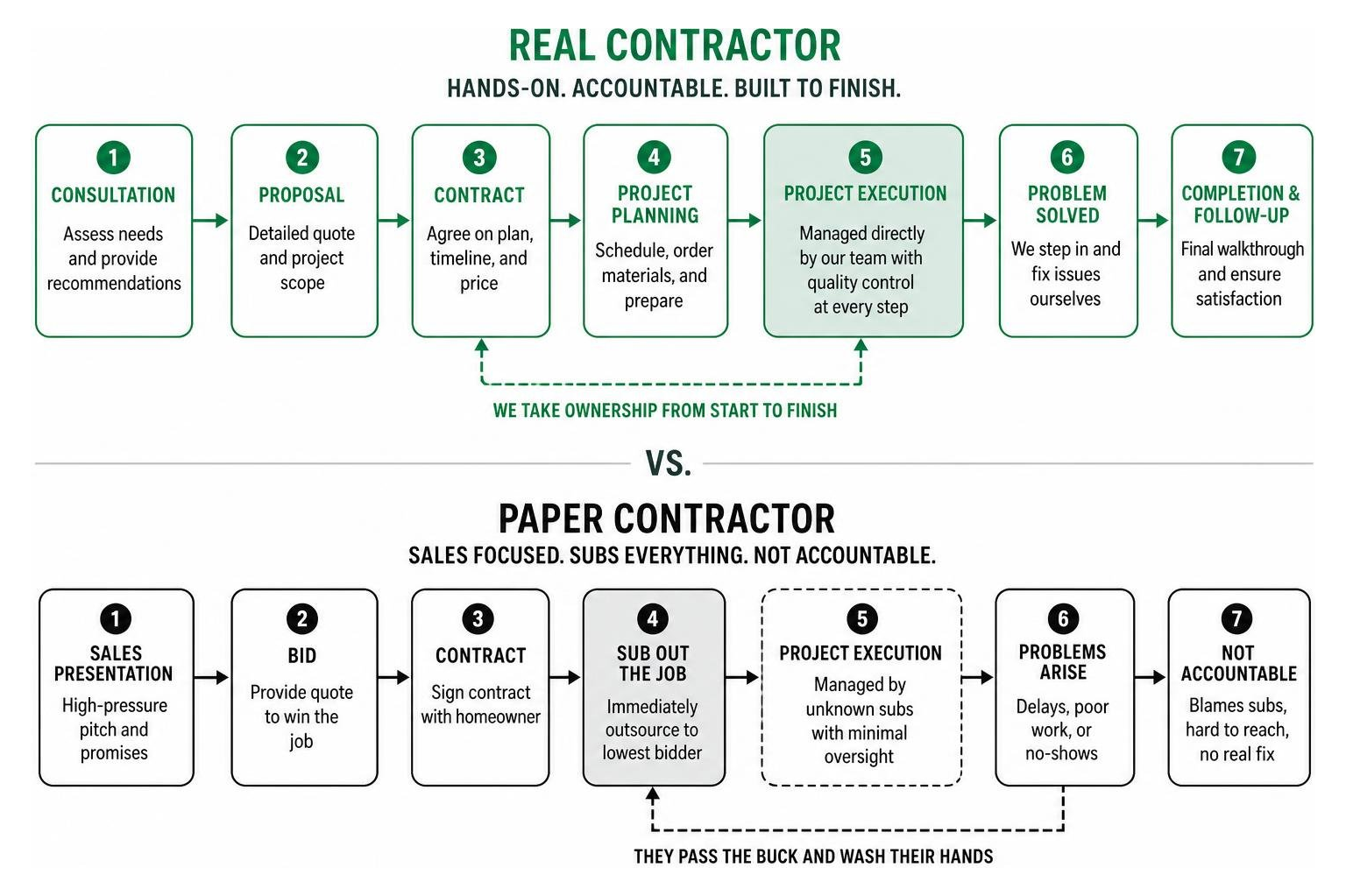
This is where Shawn always gets passionate. In the home improvement industry, there is a massive, critical difference between what we call “paper contractors” and “real contractors” — and choosing the wrong one can turn your home improvement project into an absolute nightmare.
A paper contractor is nothing more than a glorified sales organization. They have beautiful, high-end offices, slick sales presentations, and aggressive marketing budgets, but zero actual construction skills or hands-on experience. They bid your job, sign the contract, and then immediately wash their hands of the physical work by subbing the entire project out to the cheapest, lowest-bidding crew they can find online. If those subcontractors walk off the job, cut corners, or do a terrible job, the paper contractor has absolutely no idea how to fix it because they don’t know how to swing a hammer or properly seal a window. They are just middle-men pushing paper, collecting a massive markup while offering zero quality control or accountability.
A real contractor — like our team at Kyline Construction LLC — is run by hands-on, seasoned professionals who live and breathe construction. We don’t hide behind fancy sales scripts or pass your home off to anonymous third-party crews. We manage our projects directly from start to finish. More importantly, we possess the actual, hands-on skills to personally step in, pick up the tools, and finish the job ourselves if a subcontractor ever walks off or fails to meet our uncompromising quality standards. When you hire a real contractor, you are hiring decades of real-world construction experience, direct accountability, and a team that actually knows how to build — not just a guy with a clipboard, a shiny suit, and a sales script.
To learn more about how to vet local professionals and avoid common hiring mistakes, check out our resource on the Best Window Contractors for Beginners.
Frequently Asked Questions About Window Upgrades
Is it better to replace windows or add insulation first?
If you have a limited budget, we almost always recommend starting with air sealing and attic insulation first. Upgrading your attic insulation and sealing major air leaks around your home’s foundation and attic flat is highly cost-effective and offers an immediate, massive return on your energy bills.
Once your home’s thermal envelope is sealed at the top and bottom, upgrading to energy efficient windows is the logical next step to seal the sides of your home. You can read more about balancing these upgrades on the High Performing Windows or Storm Windows | ENERGY STAR page.
How much can I save by replacing single-pane windows?
Replacing drafty, single-pane windows with ENERGY STAR certified double-pane windows can reduce your heating and cooling bills by an average of 12% to 13%. In Central Ohio, this translates to roughly $101 to $583 in annual savings, depending on the size of your home and how warm you like to keep your thermostat in the winter.
To read more about the dramatic difference this upgrade makes, read our article Single Pane Windows the Good the Bad and the Drafty.
What is the best window frame material for Central Ohio winters?
For durability, thermal performance, and low maintenance during our harsh winters, vinyl windows are the clear winner. Unlike wood, they won’t rot, warp, or paint-stick when the weather gets wet and freezing. Unlike aluminum, they do not conduct cold air into your home.
High-quality vinyl frames feature multi-chambered designs that trap air and create an exceptional thermal barrier against freezing winds. For more details on why vinyl is the smart choice for our local climate, check out Go Green Save Green Why Energy Efficient Vinyl Windows Are a Smart Choice.
Conclusion
Upgrading to energy efficient windows is one of the smartest long-term investments you can make for your Central Ohio home. By choosing high-performance vinyl frames, understanding NFRC ratings, and leveraging federal tax credits, you can dramatically lower your utility bills and enjoy a draft-free, comfortable home all year long.
At Kyline Construction LLC, we have spent over 40 years helping homeowners across Columbus and Circleville transform their homes with precision craftsmanship. We don’t believe in high-pressure sales tactics, and we certainly aren’t paper contractors. Our experienced professionals handle your project with the care and safety it deserves.
Ready to take the next step? Get a free estimate on your home exterior services today, and let Shawn and the team help you build a more comfortable, energy-efficient home!