Storm Damage Insurance Claim Questions Ohio Homeowners Ask Most
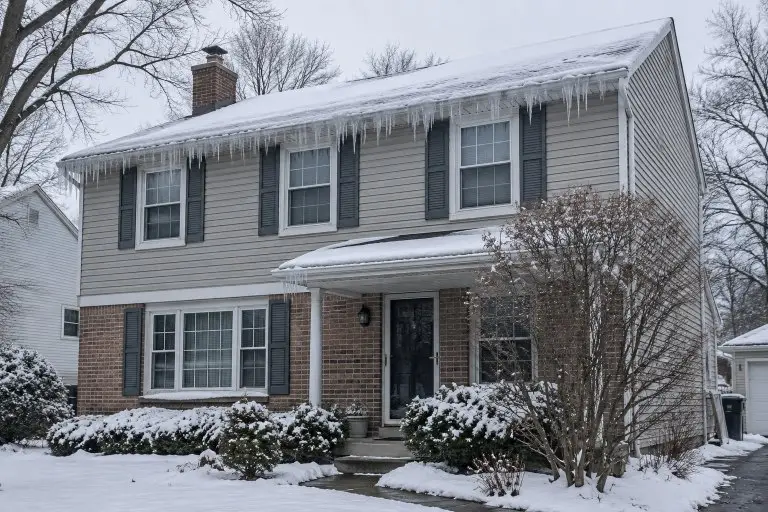
Filing a storm damage insurance claim raises a couple of questions about the roof and a dozen more about how these claims work. You want to know who has to answer you and by when, what a contractor can ask you to sign, and what happens if you sign and then think better of it. Ohio law covers most of it in plain words. Here are the questions homeowners ask us most often once they file a storm claim, each with the rule behind it.

How fast does my insurer have to move on a storm damage insurance claim?
Faster than most people expect, and the clock starts the day you report the loss. Ohio’s rule on unfair claims practices gives your insurer 15 days from notice to acknowledge the claim, and 15 days to reply when a response is called for. After that it has 21 days from a properly executed proof of loss to accept or deny. If the company needs longer, they owe you a written update at least every 45 days (OAC 3901-1-54).
| What you’re waiting on | The insurer’s deadline |
|---|---|
| Acknowledgment of your claim | 15 days from notification |
| Reply to your letter or question | 15 days |
| Accept or deny after proof of loss | 21 days |
| Written update when more time is needed | At least every 45 days |
All four deadlines: Ohio Administrative Code 3901-1-54.
Write down the date you first called it in and keep it handy. Each of those clocks runs from notice, not from the storm.
Your policy wording decides whether your homeowners insurance covers storm damage, so read it before you argue about it. If you believe an insurer is misrepresenting what your homeowners policy covers, Ohio law defines that conduct as an unfair and deceptive act in the business of insurance (Ohio Revised Code 3901.21).
A contractor knocked on my door. Can I sign right there?
You can, and you can also change your mind after, which nobody mentions while standing on the porch. Ohio’s home solicitation sale rules cover sales made at your home. For those sales you may cancel until midnight of the third business day after the day you sign (ORC 1345.22). The seller has to leave you a signed copy of the deal with a bold-type cancellation notice, and the statute spells out that language and the separate notice of cancellation form that comes with the contract (ORC 1345.23).
Plenty of good crews knock on doors after a hail storm, so the knocking itself doesn’t tell you much. Watch out for pressure to sign before anything is in writing. Ask for the full scope on paper and wait until you have it in hand.
What has to be in the contract?
On a larger job the answer isn’t a matter of taste. When a home construction service costs $25,000 or more, Ohio law bars the supplier from doing the work without a written home construction services contract with the owner. The statute lists what goes in that contract (ORC 4722.02):
- The supplier’s name, physical business address, business phone number, and taxpayer identification number
- Your name, address, and phone number
- The address of the property where the work happens
- A general description of the work, including goods and services furnished
- The anticipated date or time period for the work
Ohio also lists what a supplier may not do, including starting work without a compliant written contract, and charging the owner for costs they did not approve (ORC 4722.03). Take the contract inside and read the whole thing on your own time. Any crew worth hiring will wait.

Can someone else negotiate the claim for me?
Only if they hold the license for it. No person or company in Ohio may act as a public insurance adjuster without a certificate of authority from the superintendent of insurance. The same rule covers anyone taking pay for adjusting a claim under the listed types of policies. A holder of that certificate is known as a certified public insurance adjuster (ORC 3951.02).
This is the line storm-chasing crews cross most often, usually by offering to “handle the insurance company for you.” Your roofer can document the damage, write a detailed scope of work, and meet the adjuster on the roof to walk through it. All of that helps your file. Being paid to negotiate the claim itself is licensed work under the statute above, so an offer to do it tells you something about how that crew operates.

Which evidence actually moves the file?
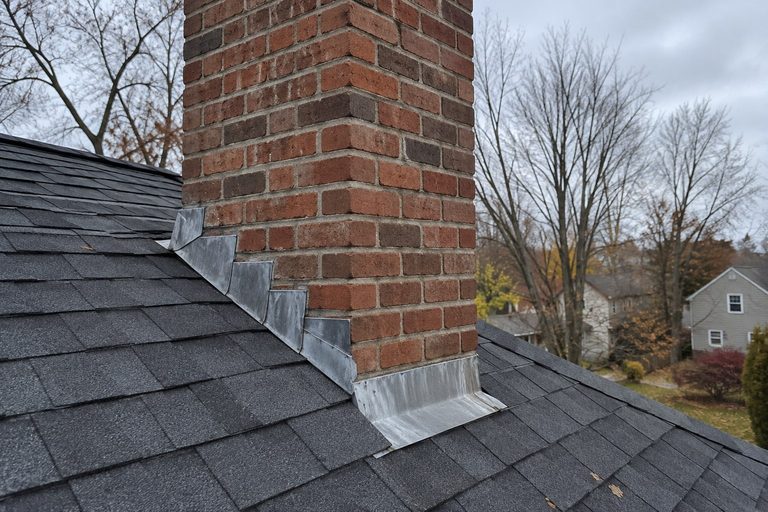
Evidence, mostly, plus the public storm record that backs it up. Adjusters look at hundreds of roofs a season, and insurance claims tend to move fastest when the homeowner has already done the documenting. Damage caused by wind and hail leaves a trail after a storm, so capture it before anyone clears the yard.
- Measured hail size instead of a guess. The National Weather Service publishes a standard object-to-size reference, and severe hail starts at 1 inch across (NOAA Storm Prediction Center, NWS).
- The storm record for your county and date. NOAA’s Storm Events Database holds documented wind and hail reports you can look up yourself and cite in the file (NOAA).
- Photos taken from the ground. Unprotected work at 6 feet or more requires fall protection under federal rules (OSHA 29 CFR 1926.501), so use a zoom lens and leave the ladder alone.
- Receipts for temporary protection. Tarping and board-up work you paid for belongs in the file, which is why our emergency repair services crews document what they cover and when.
- The code work a replacement triggers. Ohio roof assemblies have to meet the Residential Code of Ohio, and that affects scope (OAC 4101:8, Chapter 9 roof assemblies).
If you’re picking materials during a rebuild, ask about impact ratings while the scope is still open. UL 2218 is the impact-resistance test standard for prepared roof coverings. It runs from Class 1 to Class 4, and Class 4 is the most resistant (UL Standards & Engagement). IBHS publishes hail research on roof coverings that is worth a read first (IBHS). Insurers treat impact-rated coverings differently, so ask your agent what your homeowners policy says about them.
Frequently asked questions
How long does my insurance company have to decide on my roof claim?
Twenty-one days from receipt of a properly executed proof of loss. Acknowledgment is due within 15 days of notice, and written status updates are due at least every 45 days if the company needs more time (OAC 3901-1-54).
Can I cancel a roofing contract I signed at my front door?
For a home solicitation sale, you may cancel until midnight of the third business day after the day you signed, by written notice delivered the way the statute describes (ORC 1345.22).
Do I need a written contract with my roofer?
For home construction services costing $25,000 or more, yes. The supplier may not do the work without a written contract containing the items the statute lists (ORC 4722.02).
Is my roofer allowed to negotiate with my insurance company?
Acting as a public insurance adjuster, or being paid to adjust a claim, requires a certificate of authority from Ohio’s superintendent of insurance (ORC 3951.02). Documenting damage and preparing a scope of work is a different job from adjusting the claim.
My insurer wants proof a storm hit my address. Where do I get it?
Search your county and date in NOAA’s Storm Events Database, which records documented hail and wind events (NOAA).
How big does hail have to be to count as severe?
One inch in diameter, roughly a quarter, is the National Weather Service threshold for severe hail (NWS, NOAA Storm Prediction Center).
How a storm damage claim turns out comes down to what you can show and when you showed it, and that part is yours to control. Kyline works on storm damage across central Ohio, so start with our roofing services if you want the damage documented right. Call us for an inspection and a written scope you can hand your adjuster, and get the house buttoned up before the next front rolls through.