What Ohio Homeowners Need to Know About Vinyl Siding
Vinyl siding Ohio is one of the most practical and cost-effective ways to protect and refresh a home – but with dozens of contractors, brands, and price points across the state, knowing where to start isn’t always easy. The most important factor isn’t just the material; it’s choosing a real contractor over a paper contractor.
Here’s a quick overview to answer the most common questions:
| Question | Quick Answer |
|---|---|
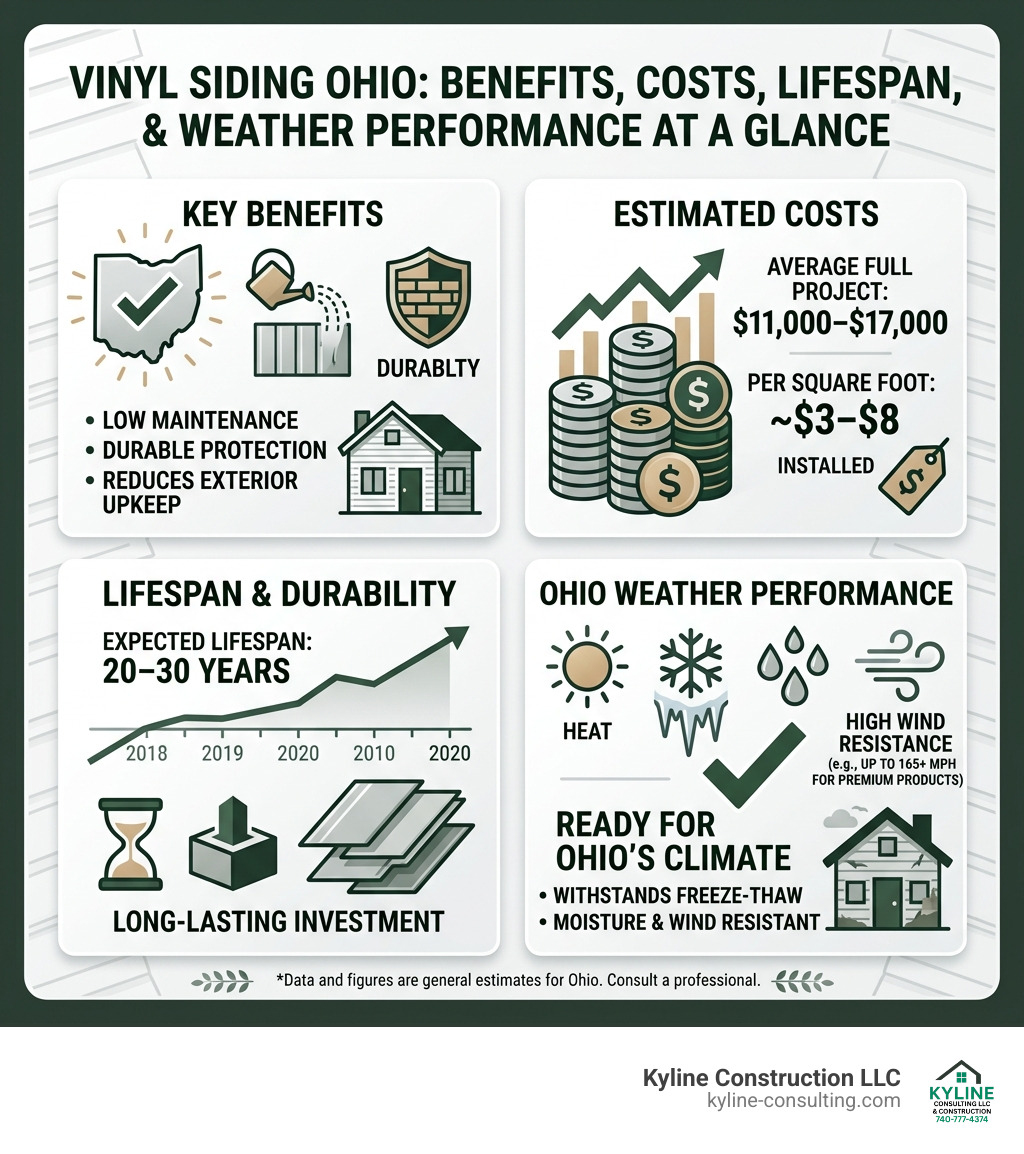
| Average full project cost | $11,000-$17,000 for most homes |
| Cost per square foot | Roughly $3-$8/sq ft installed |
| How long does it last? | 20-30 years with proper installation |
| Wind resistance | Premium products rated 165-193 MPH |
| Maintenance required | Low – rinse once or twice a year |
| Best for Ohio weather? | Yes – handles freeze-thaw, wind, and moisture well |
Ohio’s climate is no joke. Winters bring freeze-thaw cycles that crack and warp lesser materials. Summers bring humidity, heat, and the occasional severe storm. The siding on your home isn’t just cosmetic – it’s your first line of defense.
That’s what makes the choice of product and contractor so important. Not every company bidding your job has the skills or experience to back it up. Many are just paper contractors who outsource your safety to the lowest bidder.
I’m Shawn, owner of Kyline Consulting LLC in Circleville, Ohio – I’ve spent my entire working career in construction, and vinyl siding Ohio projects are a core part of what my team handles across Central Ohio. In the sections below, I’ll walk you through everything you need to make a confident, informed decision.
Vinyl siding Ohio resources:
Why Vinyl Siding Ohio is the Smart Choice for Central Ohio Homeowners
When I talk to folks in Circleville or Columbus about their exteriors, the conversation usually starts with one word: maintenance. Nobody wants to spend their Saturdays on a ladder with a scraper and a paintbrush. That’s the first big “win” for Vinyl siding Ohio. It’s virtually maintenance-free. You aren’t dealing with rot, and you certainly aren’t repainting every five years.
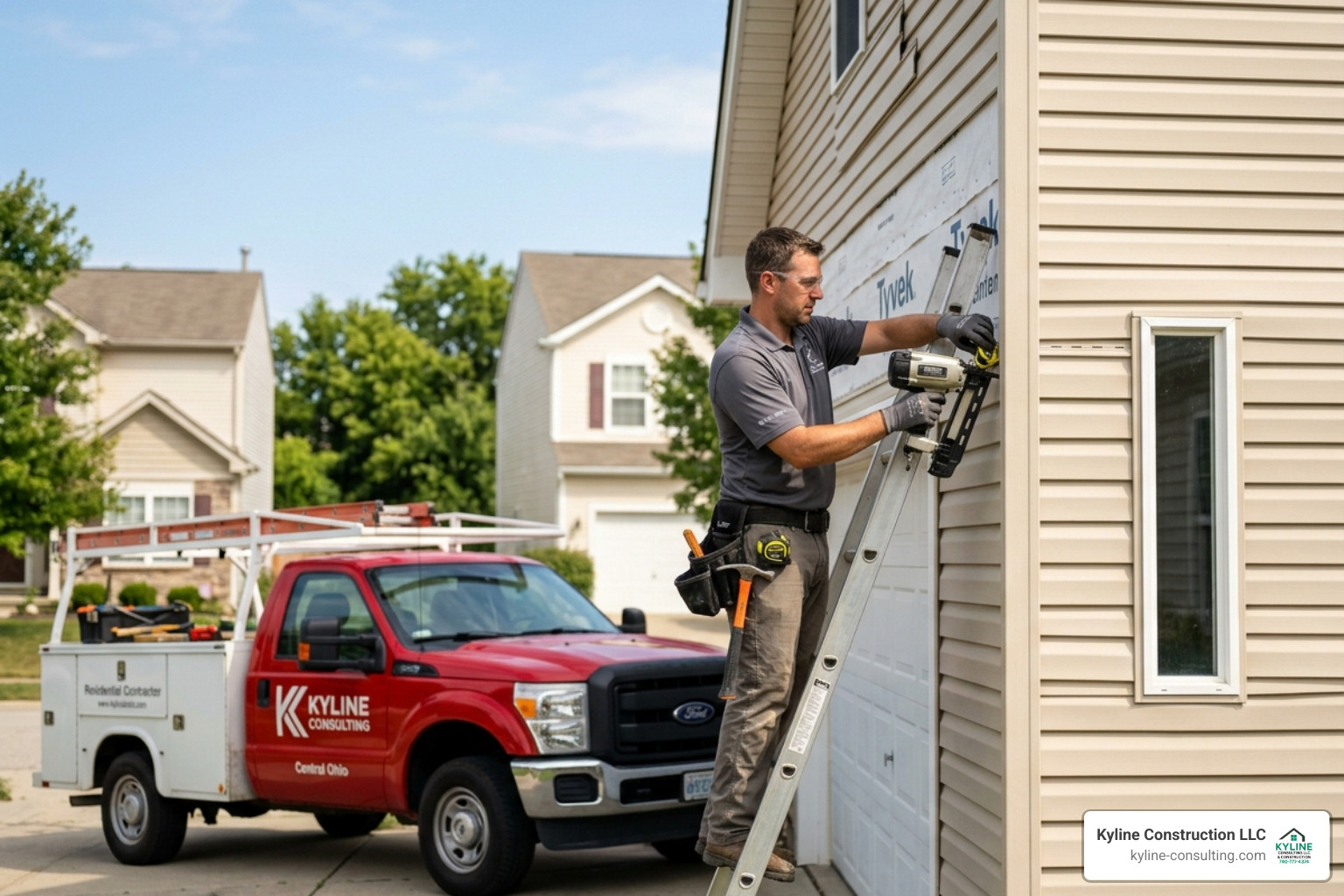
But beyond just saving you a headache, modern vinyl is a powerhouse for energy efficiency. When we install Siding with a high-quality foam backing, we’re essentially wrapping your home in a thermal blanket. This stops “thermal bridging,” which is a fancy way of saying heat escaping through your wall studs. In the middle of a Columbus January, that extra insulation makes a world of difference on your utility bill.
Curb appeal is the other major factor. Back in the day, vinyl looked like, well, plastic. Today, we have textures that mimic deep wood grain so closely you’d have to touch it to know the difference. It also offers:
- Moisture Resistance: Vinyl doesn’t absorb water. This means no mold, no mildew, and no structural rot.
- Pest Protection: Termites and carpenter ants find zero nutritional value in PVC. They’ll move on to other homes with vulnerable materials instead.
- Noise Reduction: Quality siding can provide up to a 45% reduction in outside noise. If you live near a busy road in Columbus, you’ll appreciate the silence.
Performance and Styles: Navigating Ohio’s Harsh Weather
Ohio weather is temperamental. We get gale-force winds, humid summers, and those brutal freeze-thaw cycles where the temperature jumps 40 degrees in a day. Cheap siding will buckle or crack under that stress. That’s why we look for products with serious wind resistance ratings.
Many of the premium lines we use, like Polaris WeatherTech, are tested to withstand winds up to 193 MPH. Even standard “builder grade” options often handle up to 165 MPH. This is achieved through advanced locking systems and double-thick nail hems that keep the panels pinned to the wall when the wind starts howling.
When it comes to style, you aren’t stuck with just one look. Here are the popular profiles we’re seeing across Central Ohio:
- Dutch Lap: This has a decorative groove at the top of each panel, creating a shadow line that looks great on traditional homes.
- Board & Batten: This vertical style is exploding in popularity right now. It gives a “modern farmhouse” vibe that looks incredible in rural areas near Circleville.
- Beaded: For a more historic, upscale look, beaded siding offers a rounded edge at the bottom of each course.
Performance-wise, we often point homeowners toward CedarMAX profiles. These are engineered for impact resistance and offer R-values ranging from 2.2 to 2.8. If you want to compare siding materials and standards from a neutral industry resource, the Vinyl Siding Institute is a solid place to start. And if you want to dive deeper into which manufacturers lead the pack, check out our guide where We Researched the Best Vinyl Siding Brands (So You Don’t Have To).
The Real Cost of Vinyl Siding Installations
Let’s talk turkey. I know the first thing everyone wants to know is: “Shawn, what’s this going to cost me?” For a standard-sized home in Central Ohio, a full siding replacement typically falls between $11,000 and $17,000.
On a square-foot basis, you’re looking at roughly $3 to $8 per square foot installed. Now, why is that range so big? Because every house is a unique puzzle. If I’m siding a simple ranch, it’s a lot cheaper than a two-story Victorian with twelve corners and a wraparound porch.
Key cost factors include:
- Material Thickness: You want a panel that is at least .040 inches thick. The thicker the vinyl, the better it resists “oil canning” (that wavy look) and hail damage.
- Old Siding Removal: We don’t just “side over” your old problems. We strip it down, inspect the sheathing for rot, and start fresh. That labor adds to the bill but saves you thousands in future repairs.
- Labor: Good crews aren’t cheap, and cheap crews aren’t good.
To get a better handle on your specific numbers, try out our 2026 Vinyl Siding Cost Calculator: Estimate Your Project Per Square Foot. It’s also worth reading Is Your Siding Estimate Too High? A Homeowner’s Guide to Fair Pricing so you don’t get sticker shock or, worse, fall for a “too good to be true” low-ball bid.
Factors Affecting Vinyl Siding Ohio Pricing
Don’t forget the “extras” that turn a job from okay to outstanding. Insulation backing adds to the material cost but pays for itself in energy savings. Trim packages (the stuff around your windows and doors) can significantly impact the price depending on whether you want standard white or custom-bent aluminum. Lastly, don’t forget permit fees. In places like Columbus, we have to play by the city’s rules, and those administrative costs are part of the reality of doing business legally.
Choosing a Real Contractor vs. a Paper Contractor
This is where I get a little passionate. In Vinyl siding Ohio, the most critical choice you’ll make isn’t the color—it’s the distinction between ‘real contractors’ and ‘paper contractors.’ This difference determines whether your home is protected for decades or becomes a liability.
A paper contractor is essentially a middleman with a marketing budget. They bid your job, sign the contract, and then immediately outsource the work to the cheapest crew they can find on a job board. They often don’t know the installers’ names or their skill levels. If the crew cuts corners or disappears mid-project, the paper contractor is helpless because they lack the technical skills to pick up a tool and fix the problem themselves. You are paying for a salesperson, not a craftsman.
A real contractor—the standard we set at Kyline Construction—is a master of the trade. I’ve spent over 40 years in construction. If a subcontractor isn’t available, I have the expertise and the tools to step in and complete the installation to my exacting standards personally. We don’t just manage paperwork; we understand the structural physics of your home. When you hire a real contractor, you are hiring accountability and decades of hands-on experience.
When vetting companies, ask: “If your crew doesn’t show up, can you personally finish my siding?” If they hesitate, you’re talking to a paper contractor. For more tips on vetting, check out Ohio Siding Contractors: What Every Homeowner Needs to Know.
Top Brands and Maintenance for Long-Lasting Curb Appeal
We tend to stick with manufacturers who have a proven track record in the Midwest. ProVia and Polaris WeatherTech are two of my favorites. They are engineered for our specific climate and offer incredible color retention.
For standard Vinyl siding Ohio, maintenance is a breeze:
- The Annual Rinse: Once a year, take a garden hose and spray down the siding to get rid of dust and pollen.
- Avoid High Pressure: Don’t get too aggressive with a power washer. If you blast water upward, you can get it behind the weep holes and trap moisture against your house.
- Inspect the J-Channel: Make sure the trim around your windows isn’t clogged with debris.
If you’re a DIY enthusiast looking to learn the ropes, our guide From Noob to Pro: Mastering Vinyl Siding Installation is a great place to start, even if it’s just so you know what to look for when watching your hired crew.
Frequently Asked Questions about Vinyl Siding
How long does vinyl siding Ohio last?
In our Central Ohio climate, you can expect quality vinyl to last 20 to 30 years. Some premium products can even push 40 if they are kept clean and weren’t beat up by major hail. The key isn’t just the plastic; it’s the installation. If the siding is nailed too tight and can’t expand and contract with the temperature, it will warp and fail much sooner.
Can vinyl siding withstand Ohio storms?
Absolutely. Modern vinyl is designed with “impact modifiers” that help it bounce back from hail or a stray baseball. As mentioned earlier, wind ratings on the good stuff range from 165 to 193 MPH. That’s hurricane-force protection in the middle of a Buckeye thunderstorm. The secure locking systems ensure the panels stay “zipped” together even when the wind tries to peel them off.
What are the best colors for vinyl siding Ohio homes?
We’re seeing a big shift toward darker, earthier tones. Deep blues, charcoal grays, and forest greens are very popular in Columbus suburbs right now. Thanks to UV-resistant coatings and technologies like ChromaTrue, these dark colors don’t fade into a chalky mess like they used to twenty years ago. Lighter colors like “Linen” or “Sandstone” are still classic choices that help with resale value because they appeal to almost everyone.
Conclusion
Choosing the right Vinyl siding Ohio for your home is a big decision, but it doesn’t have to be a stressful one. Whether you’re in Circleville, Columbus, or anywhere in between, the goal is the same: a home that looks great, stays warm, and doesn’t require a weekend of chores to maintain.
At Kyline Construction LLC, we define ourselves by being real contractors, not paper contractors. We bring over 40 years of hands-on experience to every job site, ensuring that the person who signs your contract is the same person capable of performing the work. We aren’t just managing a project; we are building a legacy of precision craftsmanship. We believe in doing the job right the first time so you can enjoy your home for decades to come.
Ready to see what we can do for your exterior? We offer free, no-obligation estimates to help you plan your project with confidence. Transform your home with expert siding services and let’s get your house looking its best.