What You Need to Know About Siding for Your Home
Siding is the protective outer layer attached to your home’s exterior walls. It shields your home from rain, wind, heat, and cold — while also giving it its look and curb appeal.
Quick answers for Ohio homeowners:
| Question | Short Answer |
|---|---|
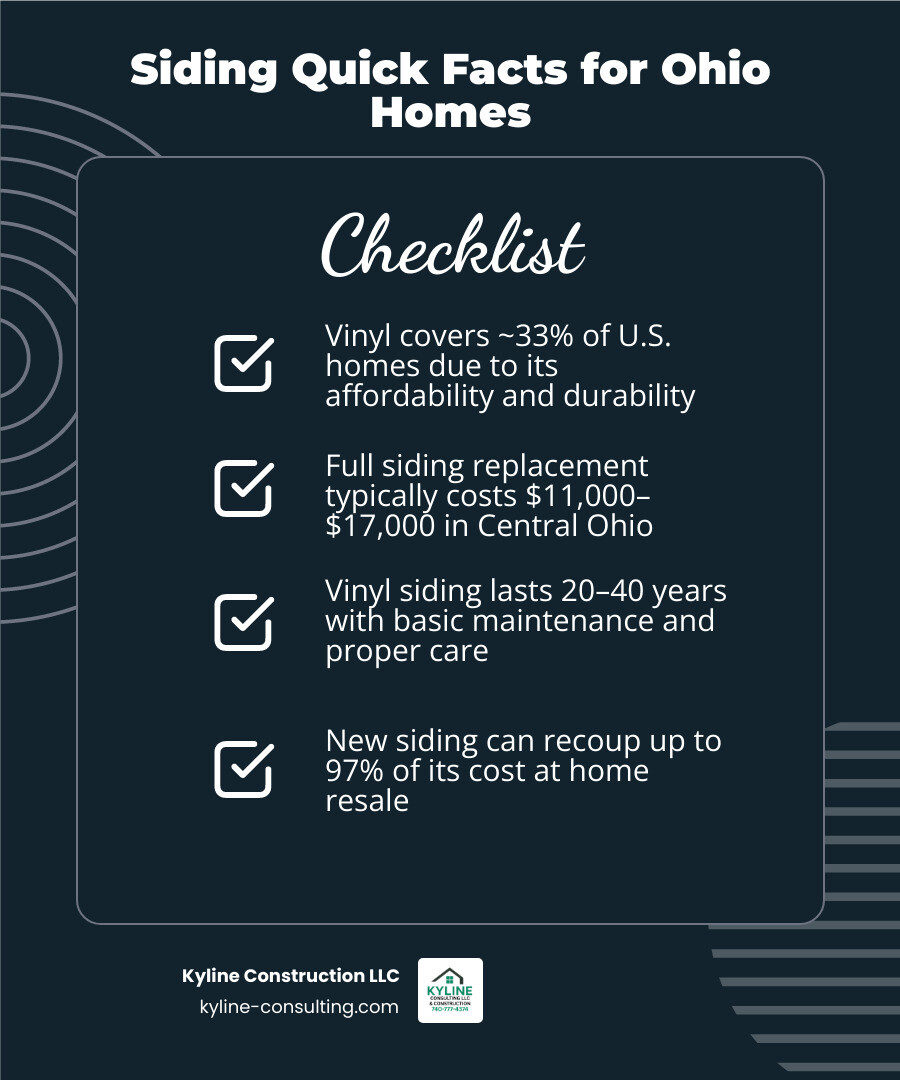
| What is the most popular siding material? | Vinyl — used on roughly 1 in 3 U.S. homes |
| How much does full siding replacement cost? | Around $11,000–$17,000 for most Central Ohio homes |
| How much does vinyl siding cost per sq ft? | Typically $3–$8 per square foot installed |
| How long does vinyl siding last? | 20–40 years with basic maintenance |
| Does new siding add value? | Yes — vinyl recoups ~97% of cost at resale |
Your home’s exterior takes a beating every single year. In Central Ohio, that means summer heat, freezing winters, and everything in between. The right siding protects your walls, keeps energy costs down, and makes a strong first impression.
This guide covers everything — materials, costs, installation, maintenance, and how to tell a real contractor from one who’ll leave you with problems.
I’m Shawn, owner of Kyline Consulting LLC in Circleville, Ohio, and I’ve spent my entire working career in construction with hands-on experience in residential siding projects across Central Ohio. In this guide, I’ll walk you through what actually matters when it comes to protecting your home with quality siding.
Basic siding vocab:
Comparing Popular Materials for Ohio Homes
When you start looking at Siding (construction) – Wikipedia), you’ll see a dozen different ways to wrap a house. But for us here in the Columbus and Circleville areas, we usually narrow it down to five main contenders. Each has its own personality, price tag, and “maintenance chores” list.
| Material | Durability | Maintenance | Cost (Installed) | Best For |
|---|---|---|---|---|
| Vinyl | 20–40 Years | Very Low | $3–$12 /sq ft | Budget & Low Upkeep |
| Fiber Cement | 30–50 Years | Moderate | $5–$14 /sq ft | Fire Resistance |
| Engineered Wood | 25–50 Years | Low | $4–$9 /sq ft | Wood Aesthetic |
| Steel | 40+ Years | Low | $6–$12 /sq ft | Modern Durability |
| Aluminum | 30–50 Years | Low | $6–$10 /sq ft | Coastal/Modern |
According to 4 Types of Siding: Comparing Vinyl, Wood, Metal, and Fiber Cement, the choice often comes down to balancing your upfront budget with how much work you want to do on a Saturday morning ten years from now.
Why Shawn Recommends Vinyl Siding
I’ll be straight with you: if you want the best bang for your buck in Central Ohio, vinyl is king. There’s a reason it holds about 32% of the market share. It’s affordable, it doesn’t rot, and modern manufacturing means the color goes all the way through the panel. That means if a stray pebble hits it, you aren’t looking at a white scratch on a blue board.
We’ve spent a lot of time in the field, and We Researched the Best Vinyl Siding Brands So You Don’t Have to to ensure we only install products that won’t fade or crack after three Ohio winters. Vinyl is versatile enough to mimic cedar shakes or traditional clapboard, giving you that high-end look without the high-end headache.
Performance in the Central Ohio Climate
Our weather is… well, it’s moody. We get humidity that makes you feel like you’re swimming, followed by “Polar Vortex” freezes that can make cheap materials brittle. Professional Siding Installation & Replacement in Columbus, OH | APCO requires understanding these temperature swings.
Vinyl siding is designed to expand and contract. If you nail it too tight, it’ll buckle and ripple when the July sun hits it. If it’s too loose, it’ll rattle in those autumn windstorms. We make sure there’s a “floating” gap so the house can breathe and move as the thermometer jumps around.
The Real Cost of siding Replacement in May 2026

Let’s talk money. I know that’s what everyone wants to get to. As of May 2026, a full siding replacement for a standard home in our area typically runs between $11,000 and $17,000.
If you are looking at vinyl, you can expect to pay roughly $3 to $8 per square foot for the material and labor. It’s one of the best investments you can make; statistics show that vinyl siding replacement can recoup about 97% of its cost at resale. That’s basically like the house paying you back for the upgrade. For more details on the breakdown, check out Your Guide to Siding Replacement Costs and The Square Deal: Unpacking Siding Replacement Costs.
Factors Influencing Your siding Estimate
Why is there such a range in pricing? It’s not just the size of the house.
- Square Footage: Siding is sold by the “square” (100 square feet). A 2,000 sq ft house usually needs about 20–25 squares once you factor in waste and gables.
- Removal Fees: Tearing off old, heavy wood or metal siding takes time and disposal fees.
- Trim and Accessories: The “jewelry” of the house—the soffits, fascia, and mounting blocks—can add a few thousand to the bill.
- Complexity: A two-story home with lots of corners and dormers is harder to wrap than a simple ranch.
Before you sign anything, read Is Your Siding Estimate Too High? A Homeowner’s Guide to Fair Pricing to make sure you’re getting a square deal.
Budgeting for Your Home’s New Look
We always tell folks to look at the “bundled” value. If your windows are twenty years old, doing them at the same time as the siding can save you thousands in labor and setup fees. You can find tips on The Siding Swap: Budgeting for Your Home’s New Look to help navigate financing and material grades. Sometimes, spending an extra $1,000 on a higher-grade, thicker vinyl (.044″ or .046″) pays for itself in durability and wind resistance over the next 30 years.
Choosing a Real Contractor vs. a Paper Contractor
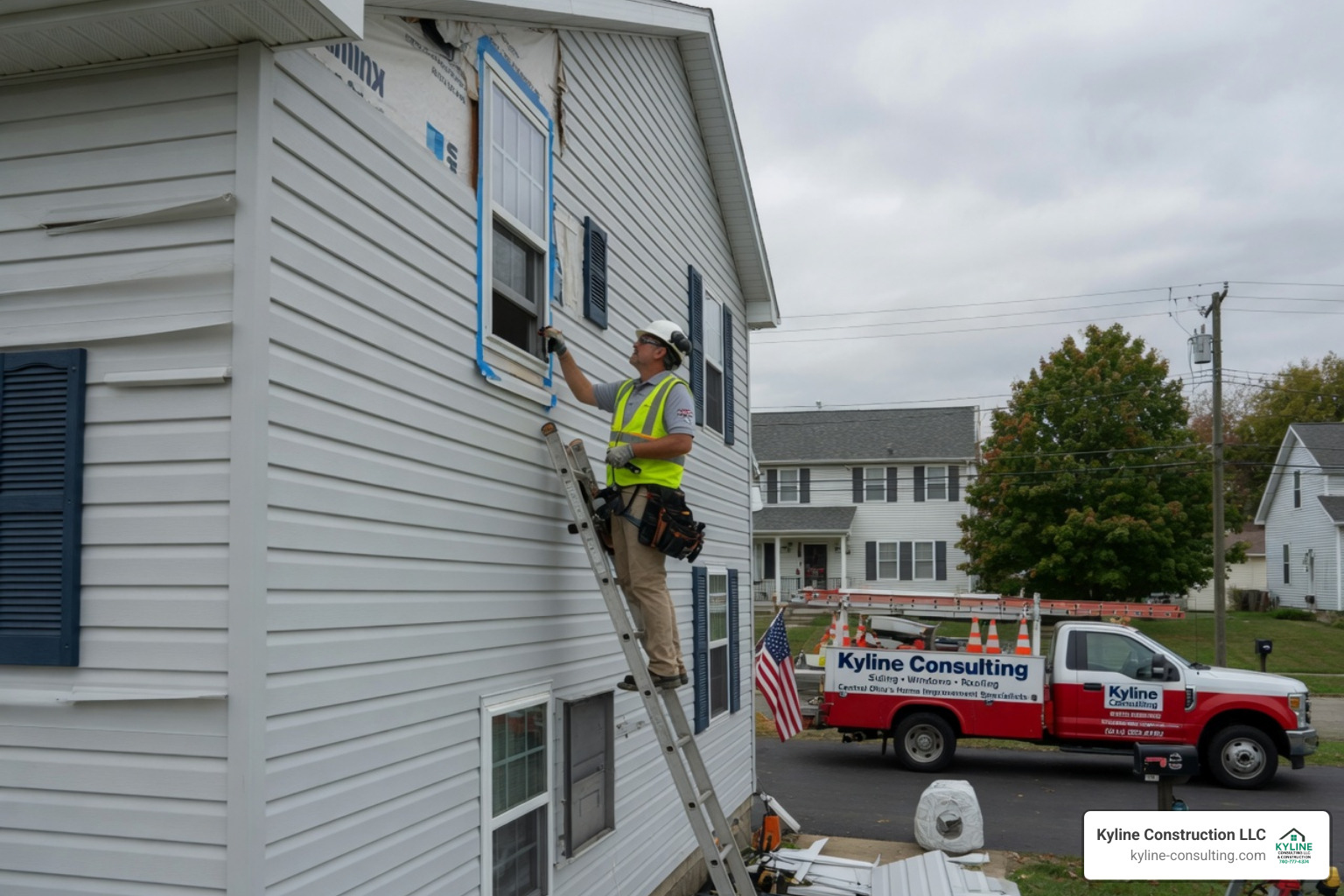
This is the most important part of this whole article. In the construction world, there are “paper contractors” and “real contractors.”
A paper contractor is basically a salesperson with a laptop and a phone. They sell you the job, take your deposit, and then find the cheapest crew on Craigslist to go do the work. If that crew quits halfway through, the paper contractor is stuck. They don’t know how to nail a corner post or flash a window.
At Kyline Construction LLC, we are real contractors. I’ve been in the dirt and on the ladders for 40 years. If a subcontractor doesn’t show up, I have the skills to put on my tool belt and finish the job myself to our standards. You want someone who understands the “why” behind the work, not just the “how much.” For a deeper dive into labor costs, see Don’t Get Sided Tracked: Understanding Your Siding Replacement Labor Bill.
The Importance of Professional Installation
Siding is like a raincoat. If there’s a hole in the shoulder, it doesn’t matter how nice the fabric is—you’re getting wet. Proper installation means:
- Housewrap: A high-quality moisture barrier installed behind the boards.
- Expansion Gaps: Leaving room for the vinyl to move so it doesn’t warp.
- Flashing: Ensuring water is diverted away from window frames and doors.
Getting this wrong leads to mold, rot, and a huge bill down the road. We explain these details in Don’t Get Sided: Understanding Your Siding Replacement Bill.
Why Local Expertise Matters for siding in Central Ohio
A guy from Florida might not realize how much the wind whips across the fields in Circleville or how the freeze-thaw cycle affects a home’s foundation in Columbus. Local expertise means knowing the specific wind load requirements for our county codes and timing the installation so we aren’t trying to snap brittle vinyl in a 10-degree January blizzard. Check out Restore, Replace or Reside: Making the Most of Your Exterior Siding Renovation for more local insights.
Maintaining Your siding for Long-Term Durability
One of the best things about vinyl is that it’s low maintenance, but “low” doesn’t mean “none.” According to Everything You Need to Know about Siding for Your Home – This Old House, a little bit of care goes a long way.
Cleaning and Care Best Practices
Don’t go out there with a high-powered pressure washer and blast away. You’ll likely drive water behind the panels, which is exactly what we don’t want.
- Use a Garden Hose: A soft-bristle brush and a bucket of mild soapy water are usually all you need.
- Spray Downward: Always spray from the top down so water doesn’t get pushed up into the lap joints.
- Watch the Heat: Keep your BBQ grill at least 10 feet away. I’ve seen many “melted” houses because someone got the burgers a little too close to the wall!
As What Is Siding? points out, keeping vegetation trimmed back also prevents mold and keeps pests from finding a bridge into your attic.
Repairing Minor Damage
If a lawnmower kicks up a rock and cracks a panel, don’t panic. Unlike wood, where you might have to replace a whole section and hope the paint matches, vinyl panels can often be “unzipped” and replaced individually. If you’re bundling services, you can see how we handle these small fixes in The Ultimate Siding Windows Estimate: What to Expect When You Bundle.
Frequently Asked Questions about Siding
What is the best siding for Central Ohio?
For most of our neighbors, vinyl is the winner. It handles the humidity and temperature swings without needing to be scraped and painted every five years. If you want something even tougher, fiber cement is great, but it costs more and requires more structural support.
How long does composite siding last?
Composite or engineered wood siding typically lasts 25 to 50 years. It’s incredibly tough and resists impact better than thin vinyl. When we install this, we use circular saws for clean, precise cuts. It gives you the look of real wood without the rot.
Can I install siding over concrete?
Yes, you can! We use a process called “furring.” We attach wooden strips to the concrete block, add insulation, and then nail the siding to those strips. It’s a great way to turn a block garage or an old basement foundation into something beautiful. You can read the step-by-step in From Block to Beautiful: Siding Installation on Concrete.
Conclusion
Choosing new siding is a big deal. It’s the face your home shows to the world and the armor that keeps your family dry. My final advice? Don’t just shop for the lowest price—shop for the best hands. A “paper contractor” might save you a thousand bucks today, but a “real contractor” will save you ten thousand in repairs ten years from now.
At Kyline Construction LLC, we take pride in being the folks who actually know how to do the work. Whether you’re in Circleville, Columbus, or anywhere in between, we’re here to help you get it right the first time.
Ready to upgrade your home? Get a free siding estimate from Kyline Construction LLC today.