What to Do When Your Sliding Glass Door Glass Shatters
Door window replacement doesn’t have to mean replacing the entire door. In most cases, you can swap out just the glass insert — saving hundreds of dollars compared to a full door swap.
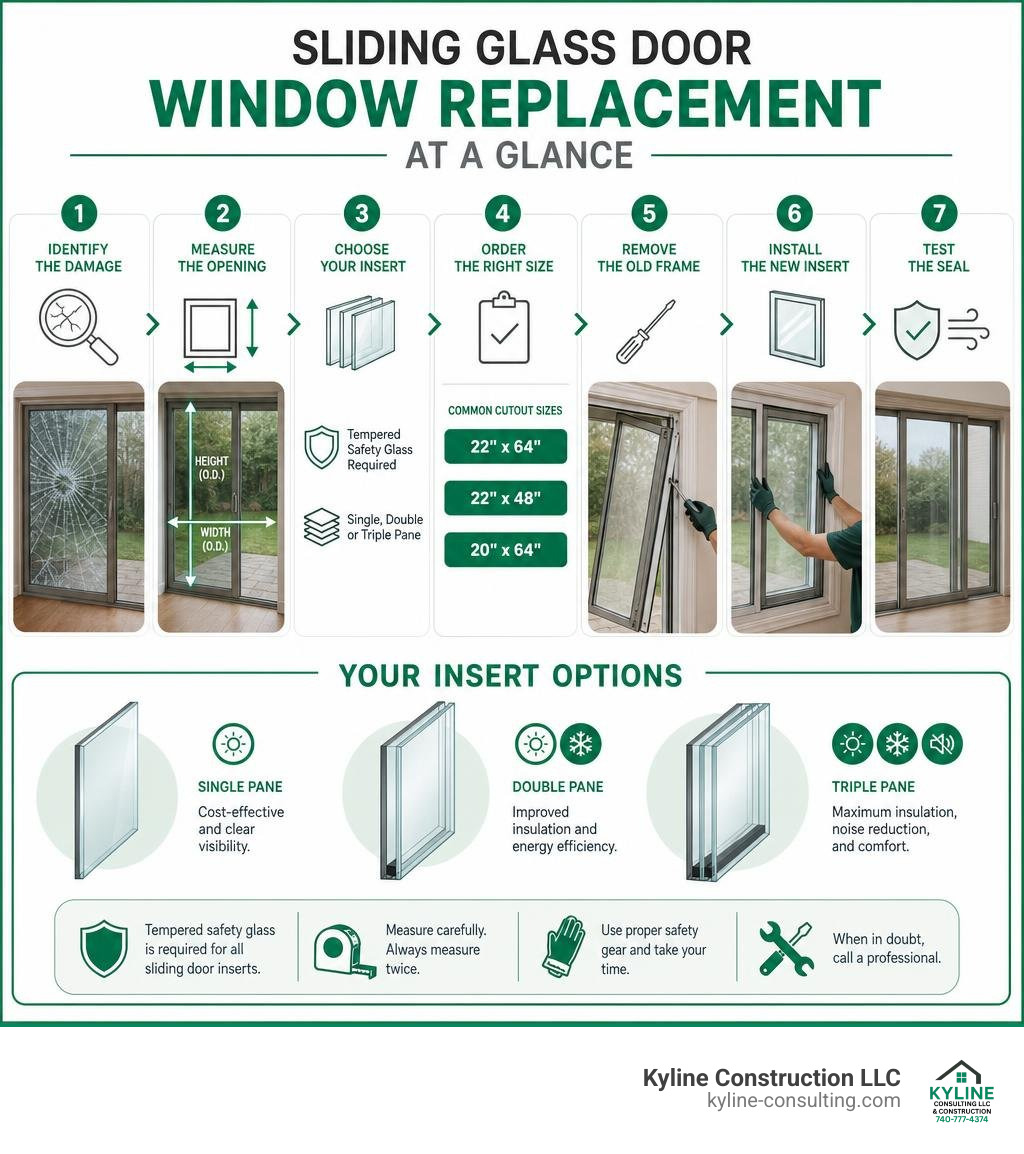
Here’s a quick overview of how sliding door glass replacement works:
- Identify the damage — cracked, fogged, or shattered glass pane
- Measure the opening — visible glass size (VGB) and outside frame dimensions (O.D.)
- Choose your insert — tempered safety glass is required; pick single, double, or triple pane
- Order the right size — standard cutout sizes include 22×64, 22×48, and 20×64 inches
- Remove the old frame — unscrew the interior side and pull out the damaged unit
- Install the new insert — seat the glass unit, attach the interior frame, and snap in the plugs
- Test the seal — check for air gaps and confirm the frame sits flush
A cracked or shattered sliding glass door pane is more than an eyesore. It’s a security gap, an energy leak, and in Ohio winters, a fast way to spike your heating bill. The good news? Replacing the glass insert in an existing door is one of the more straightforward repairs a homeowner can tackle — if you know what you’re measuring, what you’re buying, and when to call in a pro.
I’m Shawn Zeisler, owner of Kyline Consulting LLC out of Circleville, Ohio, and I’ve spent my entire working career in construction — including plenty of door window replacement jobs on Central Ohio homes. In this guide, I’ll walk you through everything you need to know to get your door looking and sealing like new again.
Door window replacement terms you need:
Understanding Your Door Window Replacement Options
When most folks see a cracked pane in their patio door, their first instinct is to panic about the cost of buying an entirely new door system. I always tell our clients in Columbus and Circleville to take a deep breath. In the vast majority of cases, the door frame itself is perfectly fine. What you actually need is a door glass insert replacement.
A door glass insert is a self-contained, sealed insulated glass unit (IGU) that sits inside a plastic or metal frame. This entire assembly is designed to slide directly into a cutout in your existing door slab. Whether you have a steel door, a fiberglass door, or a standard sliding patio door, these inserts make a full door window replacement surprisingly simple and highly cost-effective.
When exploring your options, you will find that suppliers offer an incredible variety of shapes, sizes, and styles. For instance, Pease Doors offers a massive inventory, including 51 Half Lite, 54 Full Lite, and 37 3/4 Lite door glass products. This means you do not have to settle for a boring piece of clear glass if you want to use this repair as an opportunity to upgrade your home’s curb appeal. To understand how this fits into your broader home improvement plans, check out our guide on How to Choose the Best General Window Replacement for Your Home.
Selecting the Right Door Window Replacement Insert Shape and Size
Choosing the right shape and size for your replacement insert is all about matching your door’s existing cutout. If you try to force a mismatch, you will end up with drafts, water leaks, or a piece of glass that simply won’t fit.
The most common configurations you will run across include:
- Full Lite: These inserts run almost the entire height of the door, maximizing natural light.
- Half Lite: These occupy the top half of the door, leaving the bottom half solid.
- 3/4 Lite: A popular middle ground that offers plenty of light while maintaining a bit more privacy at the bottom.
- Sidelites and Transoms: Narrow vertical inserts that flank your door, or horizontal units that sit above it.
Manufacturers build these inserts to standard cutout sizes to keep things uniform. Some of the most common dimensions you will find on the market include 22×64, 22×48, 20×36, and 20×64 inches.
To give you an idea of how standard sizing works across home improvement products, look at retail options like the 27.75 in. x 53.25 in. 70 Pro Series Low-E Argon Glass Double Hung White Vinyl Replacement Window, Screen Incl. Just like standard replacement windows, door inserts are designed to fit snugly into pre-determined openings. If your door has a standard opening, finding a matching insert is a breeze. If you have an older or custom door, we may need to source a custom-cut insert to guarantee a perfect, weather-tight fit.
Choosing Materials and Features for Your Door Window Replacement
Once you know the size you need, it is time to choose the features that will keep your home comfortable and secure. Modern door glass is a far cry from the single sheets of fragile glass used decades ago.
Here are the key materials and features we recommend considering:
- Tempered Safety Glass: This is non-negotiable. Building codes in Ohio strictly require tempered safety glass for all doors and adjacent windows. If tempered glass breaks, it crumbles into small, relatively harmless granular chunks instead of fracturing into dangerous, razor-sharp shards.
- Low-E (Low-Emissivity) Glass: This invisible microscopic coating reflects infrared and ultraviolet light. In the scorching Central Ohio summers, it keeps heat out; during our freezing winters, it keeps your furnace’s warmth inside.
- Argon Gas Fill: Squeezed between double or triple panes, argon gas acts as an invisible thermal blanket, dramatically reducing heat transfer.
- Internal Blinds: If you hate dusting dusty blinds, you will love enclosed blinds. They sit safely sealed between the glass panes, allowing you to control light and privacy with a simple magnetic slider without ever having to clean them.
Investing in these features pays off quickly in comfort and energy savings. For a deep dive into how these technologies work together to lower your utility bills, take a look at Beyond the Pane: Everything You Need to Know About Energy Efficient Windows.
Single-Pane vs. Double-Pane vs. Triple-Pane Inserts
As a contractor who has spent decades working in Central Ohio, I have watched energy codes and home technologies evolve significantly. As we move through July 2026, the standards for home insulation are higher than ever. Choosing the right number of glass panes for your door insert is one of the most important decisions you will make for your home’s long-term energy performance.
To help you compare your options at a glance, we have broken down the key differences:
| Feature | Single-Pane | Double-Pane (IGU) | Triple-Pane (IGU) |
|---|---|---|---|
| Thermal Insulation | Poor (High heat loss) | Excellent (Standard) | Outstanding (Maximum efficiency) |
| Noise Reduction | Minimal | Moderate | Superior (Great for busy streets) |
| Relative Cost | Lowest | Moderate | Higher |
| Weight | Light | Moderate | Heavy (Requires sturdy hinges) |
| Best Suited For | Unheated garages/sheds | Standard residential doors | High-efficiency homes |
Single-pane inserts are essentially obsolete for heated living spaces. They offer virtually no insulation, meaning your air conditioner and furnace have to work double-time.
Double-pane insulated glass units (IGUs) are the modern standard. They feature a dual-seal construction that prevents moisture from getting between the panes, offering reliable thermal sealing and water tightness.
If you want the absolute best in energy efficiency and soundproofing, triple-pane inserts are the way to go. They feature three layers of glass and two insulating gas barriers. While they cost more upfront and add extra weight to your door, they are incredibly effective at blocking outdoor noise and keeping your home quiet and comfortable. Learn more about making the right choice for your budget by reading The Smart Homeowner’s Guide to Energy Efficient Windows.
How to Measure and Replace a Sliding Door Glass Insert
The secret to a flawless door window replacement lies entirely in the prep work. If your measurements are off by even a quarter of an inch, your new insert will either rattle loosely or refuse to fit into the door cutout.
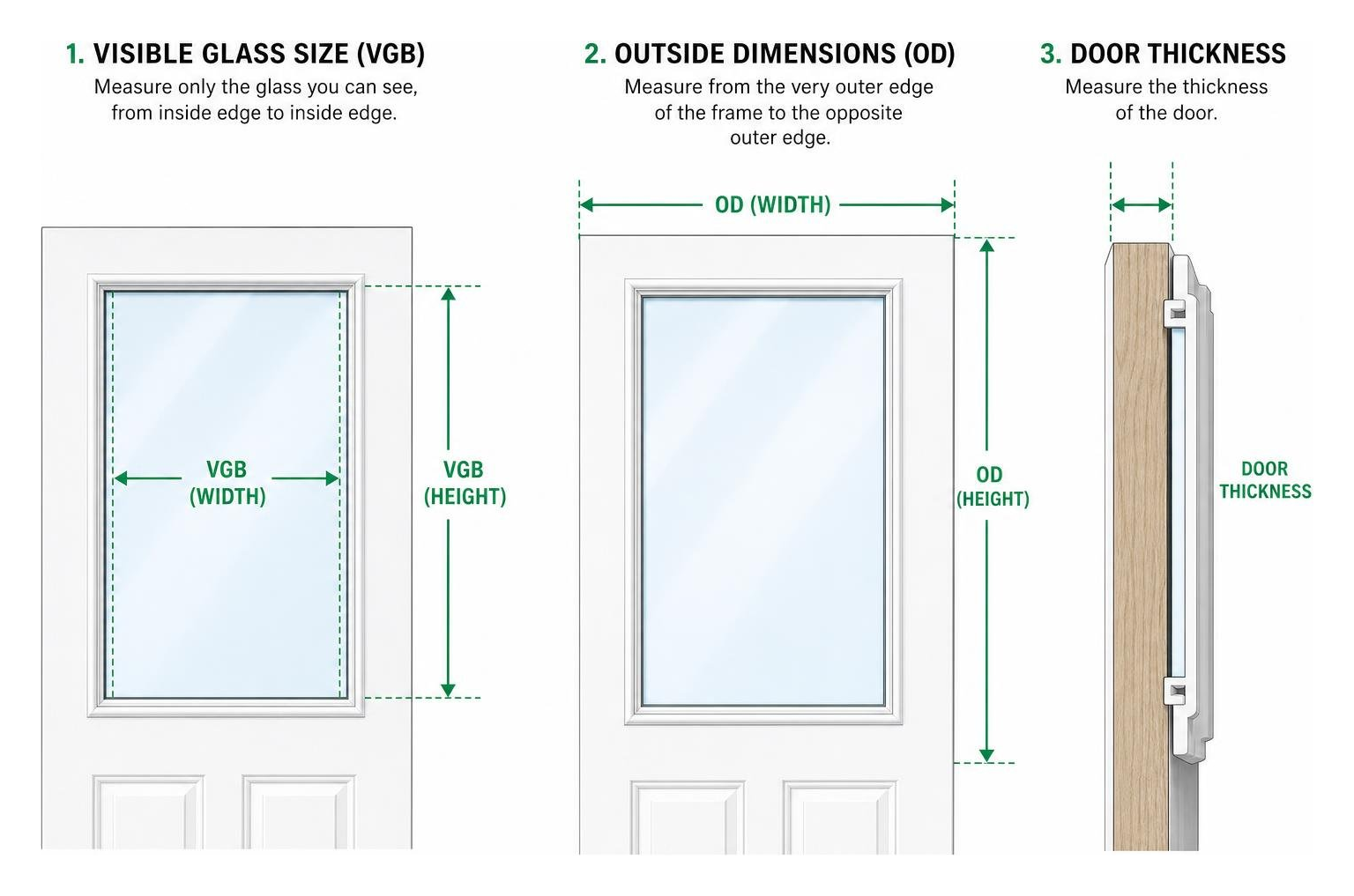
When we measure a door for a replacement insert, we focus on three critical dimensions:
- Visible Glass Size (VGB): Measure only the glass you can actually see, from the inside edge of the frame profile to the opposite inside edge.
- Frame Outside Dimensions (O.D.): Measure from the very outer edge of the plastic frame on the exterior of the door to the opposite outer edge.
- Door Thickness: Most standard residential exterior doors are exactly 1-3/4 inches thick. Confirm this measurement, as inserts are built specifically to clamp tightly onto standard door thicknesses.
While some coastal resources, like the guide on Window Glass Replacement in Miami, FL | Window Door Group, focus heavily on heavy laminated hurricane-impact glass, our primary focus here in Central Ohio is thermal performance and structural integrity during our seasonal freeze-thaw cycles.
Step-by-Step DIY Glass Insert Replacement Process
If you are handy with basic tools, replacing a screw-together door glass insert is a project you can tackle over a weekend. Here is how to do it safely:
- Step 1: Prep your workspace. If possible, unhinge the door and lay it flat on a pair of sawhorses. Trying to replace glass while the door is hanging vertically is a recipe for a dropped, shattered pane.
- Step 2: Remove the old frame. Look at the interior side of the door frame. You will see plastic plugs covering the screw holes. Pop these plugs out with a flathead screwdriver, then use a drill or screwdriver to remove all the screws.
- Step 3: Separate the frames. Have a helper support the glass from underneath. Carefully pry the interior frame away from the door, then lift the door slab up and away from the exterior frame and glass unit.
- Step 4: Clean the cutout. Wipe away old caulking, dirt, or adhesive residue from the door cutout to ensure a clean, flush seal for the new insert.
- Step 5: Set the new insert. Lay the new exterior frame (which contains the glass and a pre-applied sealant gasket) flat on your sawhorses. Lower the door slab carefully over the frame.
- Step 6: Fasten the interior frame. Position the interior frame over the cutout and align the screw holes. Thread the screws by hand first to avoid cross-threading, then tighten them snugly. Do not overtighten, or you might crack the plastic frame.
- Step 7: Pop in the plugs. Once you have tested the seal and confirmed the frame sits flush against the door surface, snap the decorative frame plugs into place.
When to Hire a Real Contractor in Central Ohio
While a DIY replacement is possible for standard entry doors, sliding patio door glass replacement is a completely different beast. Sliding door glass panels are massive, incredibly heavy, and under significant tension within their sliding tracks. One slip can result in a dangerous mess and an expensive mistake.
This is where the critical distinction between “paper contractors” and “real contractors” becomes absolutely vital for your home’s protection.
A paper contractor is essentially a middleman in a fancy truck. They bid your job, hire the cheapest subcontractors they can find on a local listing site, and rarely step foot on your property. If those subcontractors run into a problem, make a mistake, or walk off the job, the paper contractor has absolutely no hands-on skills, tools, or expertise to step in and finish the work themselves. You are left stranded with an open, unsecure home.
At Kyline Construction LLC, we are real contractors. With over 40 years of hands-on experience in Circleville, Columbus, and the surrounding Central Ohio areas, we know exactly how to handle complex glass replacements. If a subcontractor ever leaves a job site, our experienced team has the actual, real-world skills to roll up our sleeves, grab our tools, and finish the job personally to our exacting standards. We don’t hide behind clipboards; we do the real work.
If you want to see who is highly rated in our local area, you can browse the Top 10 Best Windows Installation Near Columbus, Ohio or use our direct tool to assist with Window Installation Find Local Installers Near You.
Cost Considerations and Where to Buy
The cost of a door window replacement varies based on the size of the glass, the frame material, and the energy efficiency upgrades you choose.
If you are shopping online, platforms like Amazon offer a massive selection of door glass inserts with over 1,000 results, showing just how popular this DIY upgrade has become. However, while online retailers are great for basic, standard clear glass inserts, we always recommend sourcing your products through established professional suppliers to ensure you are getting genuine, code-compliant tempered safety glass.
To keep your home improvement budget in perspective, it helps to understand how door glass costs compare to other major exterior projects. For example, a standard window replacement typically runs between $400 and $900 per window, depending on the frame material and glass options. If you are planning larger exterior upgrades, a full vinyl siding installation typically ranges from $11,000 to $17,000, with high-quality vinyl siding costing a realistic $5 to $9 per square foot.
For more detailed budgeting advice, check out The Ultimate Guide to Window Replacement Costs and learn How to Estimate Your Window Replacement Budget.
Frequently Asked Questions about Door Glass Replacement
Can I replace just the glass insert without replacing the entire door?
Absolutely! This is one of the biggest secrets in the home improvement industry. As long as your door slab (whether it is steel, fiberglass, or wood) is structurally sound, square, and free of rot, you can easily swap out the glass insert. It is a highly cost-effective solution that saves you the mess, hassle, and high cost of a full door frame replacement.
How do I know if my sliding door glass is tempered safety glass?
By law, all sliding glass doors must feature tempered safety glass. You can easily verify this by looking closely at one of the four corners of your glass pane. You should find a small, permanent etched monogram or “bug” baked into the glass. This stamp indicates the manufacturer’s name, safety standards compliance (such as ANSI Z97.1), and explicitly states “Tempered.” If you don’t see this stamp on an older door, it may contain dangerous plate glass and should be upgraded immediately.
What is the average cost of replacing a sliding glass door insert?
For a standard double-pane sliding glass door insert, professional replacement typically ranges from $300 to $800, depending on the size, frame type, and whether you opt for energy-efficient Low-E glass coatings. This is a fraction of the cost of replacing the entire sliding door assembly, which can easily run into the thousands. For a complete breakdown of glass and window pricing, consult our Average Cost of Window Replacement: A Guide to Not Throwing Money Out the Window.
Conclusion
Handling a shattered or drafty sliding door doesn’t have to be a stressful, bank-breaking ordeal. By focusing on replacing just the glass insert, you can restore your home’s security, dramatically improve your energy efficiency, and save yourself a ton of money in the process. Just remember to measure twice, choose high-quality tempered Low-E glass, and don’t hesitate to bring in real, experienced professionals when the job calls for heavy lifting.
At Kyline Construction LLC, we have spent more than 40 years helping our neighbors in Circleville, Columbus, and throughout Central Ohio transform their homes with precision craftsmanship. Whether you need a simple glass insert swap, a full set of energy-efficient replacement windows, or a complete exterior upgrade, our team of seasoned, hands-on professionals is here to ensure the job is done safely and correctly.
Ready to get started on your home? Don’t wait for the next drafty winter storm. Schedule Your Complimentary Window Estimate with us today, or Explore Kyline Construction Windows Services to learn more about how we can make your Central Ohio home more comfortable, beautiful, and energy-efficient.